
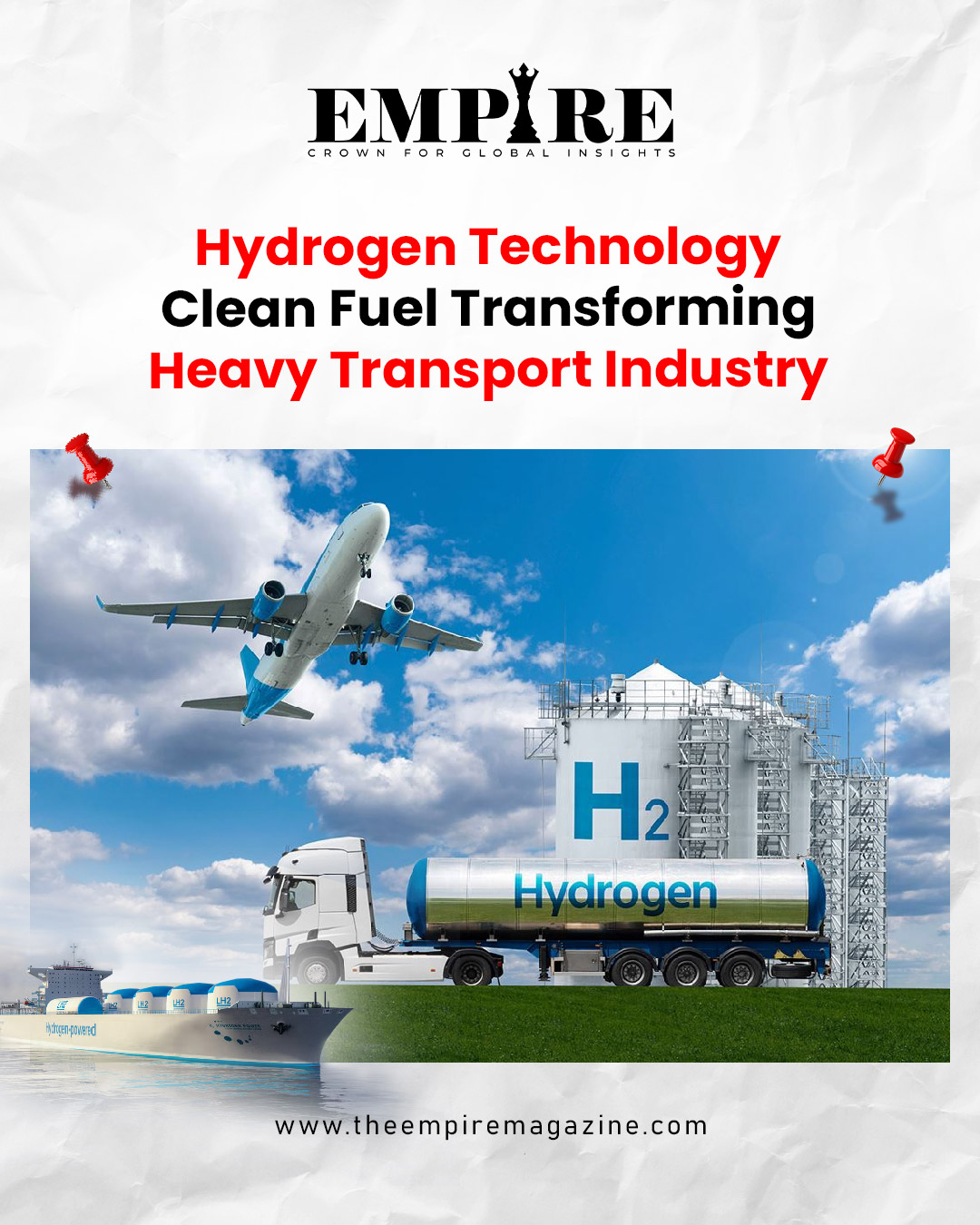
Hydrogen Technology is becoming one of the most important clean fuel discussions in heavy transport. While battery-electric vehicles are growing quickly in cars, vans, and many short-distance fleets, heavy-duty transport has different challenges. Long-haul trucks, buses, ships, trains, port vehicles, and aviation need high energy density, fast refuelling, reliable range, and strong payload performance.
This is where hydrogen is attracting attention. Hydrogen can be used in fuel cells to produce electricity, with water vapor as the main tailpipe emission. It can also be used in combustion engines or converted into hydrogen-based fuels such as ammonia or synthetic fuels for certain transport sectors. The strongest near-term opportunity is often discussed in heavy-duty vehicles and industrial transport routes where batteries may face weight, charging time, and infrastructure limits.
Hydrogen is not a magic solution for every vehicle. Battery-electric trucks are already growing in many regional and urban delivery routes. However, hydrogen may play an important role where long range, heavy payload, quick refuelling, and high vehicle utilization matter. This makes hydrogen technology a key part of the wider clean transport debate.
Hydrogen Technology and Why Heavy Transport Is Hard to Decarbonize
Hydrogen Technology matters because heavy transport is difficult to decarbonize. Heavy trucks and buses represent a smaller share of total vehicles, but they produce a much larger share of road transport emissions. According to the International Energy Agency, trucks and buses are responsible for more than 35% of direct CO₂ emissions from road transport, even though they represent fewer than 8% of vehicles excluding two- and three-wheelers.
Heavy vehicles travel long distances and carry heavy loads. A delivery van may return to a depot every night, but a long-haul truck may travel hundreds of kilometers in a day. A bus fleet may require all-day operation with limited downtime. A ship may operate for days or weeks. These duty cycles make fuel choice more complex.
The clean transport transition must consider cost, reliability, infrastructure, vehicle availability, maintenance, refuelling time, and total cost of ownership. Hydrogen technology is being studied because it may meet some needs that are difficult for batteries alone.
Hydrogen Technology and Long-Haul Trucking
Hydrogen Technology is especially relevant for long-haul trucking. Fuel-cell electric trucks store hydrogen in tanks and use a fuel cell to generate electricity that powers electric motors. This gives them some similarities with battery-electric trucks, but with a different energy storage system.
One of the biggest advantages of hydrogen fuel-cell trucks is refuelling speed. A hydrogen truck can be refuelled faster than many large battery trucks can recharge, depending on infrastructure and vehicle design. This matters for freight companies because time off the road can reduce revenue.
Hydrogen trucks may also help preserve payload capacity on long routes. Large batteries can add weight, which may reduce cargo capacity. Fuel-cell systems also have weight and storage challenges, but they may be more attractive for certain long-distance and high-utilization routes.
Hydrogen Technology and Fuel Cell Vehicles
Hydrogen Technology in transport usually depends on fuel cells. A fuel cell combines hydrogen with oxygen to produce electricity. The electricity powers the vehicle’s motor, while the main byproduct is water. This gives fuel-cell vehicles zero tailpipe carbon emissions when operating.
The climate benefit depends on how the hydrogen is produced. Green hydrogen is produced using renewable electricity and electrolysis. Low-carbon hydrogen can also be produced through other methods, depending on the production pathway and carbon intensity. If hydrogen is produced from fossil fuels without carbon capture, the climate benefit is much weaker.
This is why clean hydrogen supply is central to the future of hydrogen transport. A fuel-cell truck is only as clean as the hydrogen it uses. For hydrogen technology to transform heavy transport, production, delivery, storage, and refuelling infrastructure must all scale together.
Hydrogen Technology and Green Hydrogen
Hydrogen Technology is most powerful when connected to green hydrogen. Green hydrogen is made by using renewable electricity to split water into hydrogen and oxygen. This process avoids direct fossil fuel emissions, but it can be expensive because it depends on electricity costs, electrolyzer costs, and infrastructure.
Green hydrogen can help decarbonize sectors that are hard to electrify directly. Heavy transport is one of those sectors, along with steel, chemicals, shipping fuels, and some industrial heat applications.
However, green hydrogen supply remains limited and costly today. Scaling it requires renewable power, electrolyzers, water access, storage systems, pipelines or delivery networks, and demand from buyers. Heavy transport can become one of the demand sources that helps build the hydrogen economy.
Hydrogen Technology and Refuelling Infrastructure
Hydrogen Technology cannot grow without refuelling infrastructure. A truck operator will not buy hydrogen trucks if there are no reliable hydrogen stations. At the same time, infrastructure companies may not build stations without enough vehicles. This creates a classic early-market problem.
Freight corridors are one practical solution. Instead of building hydrogen stations everywhere, governments and companies can focus on major highway routes, ports, logistics hubs, and industrial zones. This allows early hydrogen trucks to operate on predictable routes with planned refuelling points.
Europe is moving in this direction. Under the Alternative Fuels Infrastructure Regulation, EU Member States must ensure publicly accessible hydrogen refuelling stations at least every 200 km along the TEN-T core network by the end of 2030, with at least one station in each urban node.
Hydrogen Technology and Freight Corridors
Hydrogen Technology may grow fastest in freight corridors. These are routes where heavy trucks travel frequently between ports, warehouses, factories, cities, and distribution centers. If hydrogen refuelling is available along these routes, fleets can operate more confidently.
Ports are especially important because they bring together trucks, ships, cargo equipment, warehouses, and industrial energy demand. A port hydrogen hub can serve drayage trucks, forklifts, yard tractors, buses, backup power, and eventually shipping fuel supply.
This corridor approach may be more realistic than expecting hydrogen to spread evenly across all roads at once. Early success will likely come where demand is concentrated and infrastructure can be used heavily.
Hydrogen Technology and Buses
Hydrogen Technology is also being used in buses. Fuel-cell buses have been tested and deployed in cities around the world. They can be useful where long daily routes, fast refuelling, and cold-weather performance matter.
Transit agencies compare hydrogen buses with battery-electric buses, diesel buses, and hybrid buses. Battery-electric buses are often strong for city routes with depot charging. Hydrogen buses may be attractive when routes are longer, schedules are demanding, or charging infrastructure is difficult.
The key issue is total system cost. A hydrogen bus fleet needs buses, hydrogen supply, refuelling stations, maintenance training, and safety procedures. If the hydrogen is expensive, operating costs can be high. If infrastructure is shared across many vehicles, costs can improve.
Hydrogen Technology and Public Transport Fleets
Hydrogen Technology works best in fleets because vehicles return to planned depots or operate on fixed routes. This makes refuelling easier than in the private car market. A bus depot can install hydrogen refuelling equipment and serve a full fleet from one location.
Public transport also has a policy reason to decarbonize. Cities want to reduce air pollution and greenhouse gas emissions. Fuel-cell buses produce no tailpipe carbon emissions and can reduce local air pollution compared with diesel.
However, hydrogen buses must compete with battery-electric buses, which are improving quickly. The future may not be one technology replacing all others. Many cities may use a mix of battery buses and hydrogen buses depending on routes and operational needs.
Hydrogen Technology and Shipping
Hydrogen Technology is also part of the shipping debate, though usually through hydrogen-based fuels rather than pure hydrogen alone. Large ships need huge amounts of energy, and batteries are not practical for many long-distance ocean routes today.
Green ammonia, methanol made with low-carbon hydrogen, and other synthetic fuels are being studied for shipping. Ammonia does not contain carbon, but it has safety and toxicity challenges. Methanol is easier to handle than some alternatives, but its climate value depends on how it is produced.
Shipping companies, ports, fuel producers, and regulators are studying these options because maritime transport is hard to decarbonize. Ships have long lifetimes, international routes, and complex fuel logistics. Hydrogen-based fuels may become part of the solution, especially for deep-sea shipping.
Hydrogen Technology and Port Decarbonization
Hydrogen Technology can support port decarbonization. Ports use heavy equipment, trucks, ships, cranes, and industrial energy systems. Many ports are testing clean fuels and electrification to reduce emissions.
Hydrogen can be used in port trucks, cargo handling equipment, backup power, and fuel supply for future vessels. If ports become hydrogen hubs, they can connect clean fuel production with multiple transport uses.
This is important because ports are natural energy and logistics centers. They already handle fuel, cargo, storage, and transport flows. Adding hydrogen infrastructure at ports may support both land and maritime decarbonization.
Hydrogen Technology and Aviation
Hydrogen Technology is being explored in aviation, but the challenge is even harder. Aircraft need very high energy density and strict safety standards. Hydrogen can be used in fuel cells for smaller aircraft or burned in modified engines, but storage is difficult because hydrogen has low volumetric energy density.
Liquid hydrogen requires very low temperatures and special tanks. This affects aircraft design, airport infrastructure, safety systems, and operating costs. For long-haul commercial aviation, hydrogen is still a long-term challenge.
In the near term, sustainable aviation fuel is likely to play a bigger role than hydrogen aircraft. However, hydrogen may support future aviation through synthetic fuels or specific aircraft categories.
Hydrogen Technology and Airport Infrastructure
Hydrogen Technology in aviation would require major airport infrastructure changes. Airports would need hydrogen production or delivery, storage, refuelling systems, safety protocols, training, and aircraft compatibility.
This makes aviation one of the most difficult sectors for hydrogen adoption. The potential is real, but commercialization will take time. Heavy road transport and port applications may move faster because the infrastructure and vehicle requirements are easier to control.
Hydrogen Technology and Trains
Hydrogen Technology is already being used in some rail applications. Hydrogen trains can be useful on rail lines that are not electrified. Instead of installing overhead wires across long routes, operators may use hydrogen fuel-cell trains where traffic levels do not justify full electrification.
Battery trains are also an option for shorter non-electrified routes. Hydrogen may be more useful for longer rural routes or services where charging opportunities are limited.
Rail shows the broader pattern in clean transport. The best technology depends on route length, infrastructure, cost, operating schedule, and energy supply. Hydrogen is not always the answer, but it can be useful in specific conditions.
Hydrogen Technology and Cost Challenges
Hydrogen Technology faces major cost challenges. Clean hydrogen is still expensive in many markets. Fuel-cell vehicles can cost more than diesel vehicles or battery-electric alternatives. Refuelling stations are also costly to build and operate.
The total cost of ownership must improve for mass adoption. Fleet operators care about vehicle purchase price, fuel price, maintenance, downtime, resale value, incentives, and infrastructure access. If hydrogen remains too expensive, adoption will be limited.
The International Energy Agency notes that the total cost of ownership for battery and fuel-cell electric trucks is expected to fall in coming years because of improvements in infrastructure utilization and cost reductions for batteries and fuel cells. This is encouraging, but real-world adoption will depend on execution.
Hydrogen Technology and Policy Support
Hydrogen Technology needs policy support because early infrastructure is expensive. Governments can support clean hydrogen through subsidies, tax credits, procurement programs, zero-emission truck rules, infrastructure grants, and public-private partnerships.
The United States has supported hydrogen through federal programs, including hydrogen hubs and Department of Energy research. Europe is using infrastructure regulation and clean transport policy to push alternative fuels. Asia has also been active, with countries such as South Korea and Japan supporting hydrogen mobility and fuel-cell development.
Policy alone cannot guarantee success. Vehicles must work reliably, fuel must be available, and costs must become competitive. But policy can help bridge the early stage of the market.
Hydrogen Technology and Competition With Batteries
Hydrogen Technology is often compared with battery-electric transport. In reality, the future may use both. Battery-electric vehicles are efficient and well-suited to many light-duty, urban, regional, and depot-based transport needs. Hydrogen may be more suitable for long-haul, high-utilization, heavy-payload, and fast-refuelling use cases.
Batteries are more energy-efficient from electricity generation to wheels because hydrogen production, compression, transport, and fuel-cell conversion involve energy losses. This efficiency advantage supports battery vehicles where charging works well.
Hydrogen’s advantage is operational flexibility in certain heavy-duty cases. Fast refuelling and longer range may matter more than energy efficiency for some fleets. The market will likely choose based on practical economics, not only technology theory.
Hydrogen Technology and Fleet Decisions
Hydrogen Technology adoption will depend on fleet decisions. A logistics company will ask simple questions: Can the vehicle complete the route? Is fuel available? What is the cost per kilometer? How much payload is lost? How reliable is the vehicle? Can drivers refuel easily?
If hydrogen answers these questions better than diesel and better than batteries for a specific route, it can win. If batteries are cheaper and easier, batteries will win. This is why heavy transport will likely use different clean technologies across different use cases.
Hydrogen Technology and the Future of Clean Heavy Transport
Hydrogen Technology has the potential to transform parts of heavy transport, but the transition will be selective and infrastructure-driven. Long-haul trucks, buses, port vehicles, rail, shipping fuels, and some aviation applications may all use hydrogen or hydrogen-derived fuels in different ways.
The strongest near-term opportunities are likely in fleets and corridors where refuelling can be planned and vehicle utilization is high. Hydrogen is less likely to dominate private cars, where battery-electric vehicles already have a strong advantage.
For heavy transport, the next stage depends on clean hydrogen supply, refuelling stations, fuel-cell vehicle reliability, government support, fleet economics, and customer demand. The clean fuel transition will not be built by one technology alone. Hydrogen may become one of the key tools for reducing emissions in the hardest transport sectors.
For more clean technology and business insights, read more on The Empire Magazine.
Follow The Empire Magazine on Facebook and Instagram.
– The Empire Magazine
Crown For Global Insights