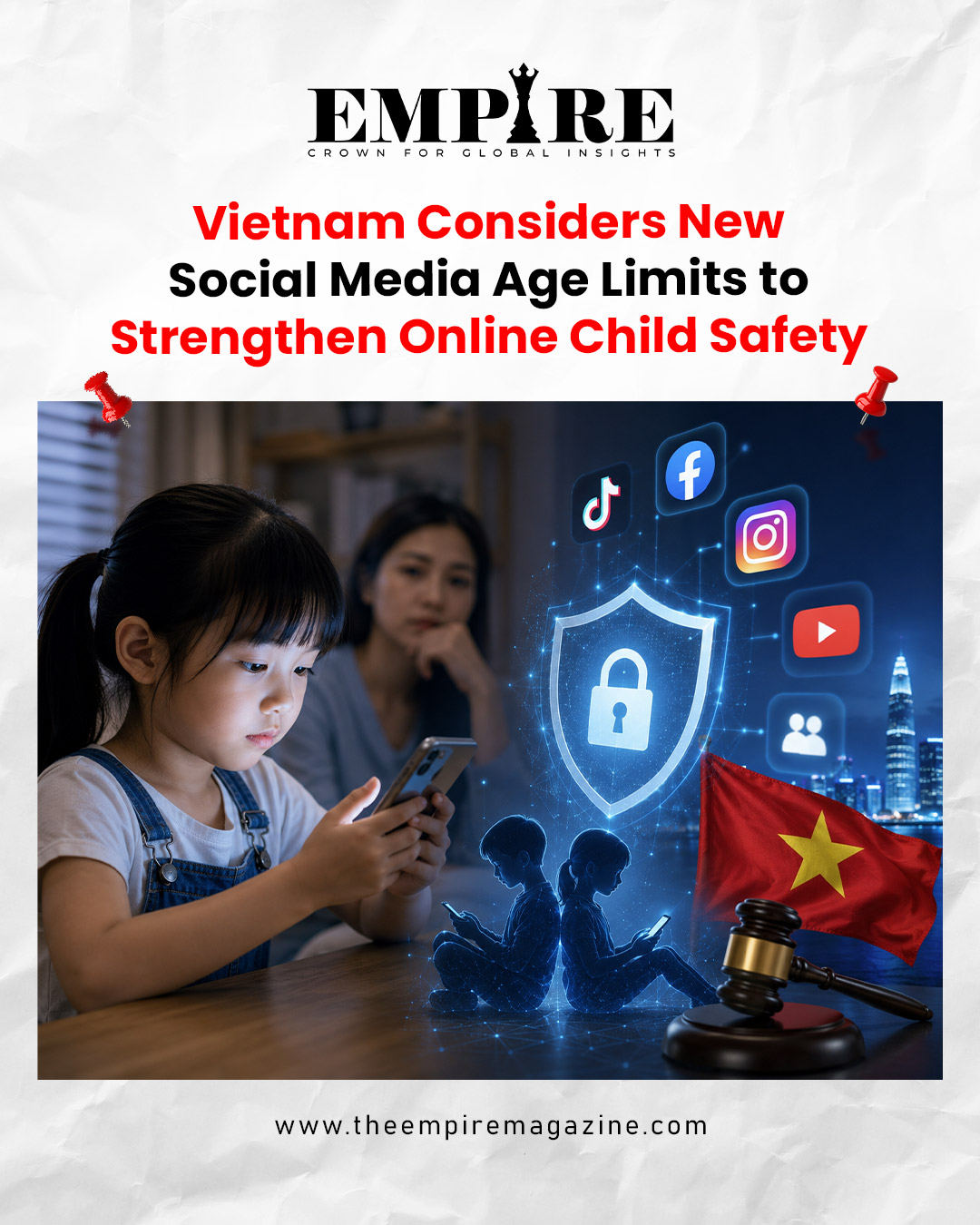
Vietnam is considering new social media age limits to improve online child safety, protect young users from harmful content, and create a safer digital environment.
Vietnam Considers New Social Media Age Limits to Strengthen Online Child Safety
As children spend more time online than ever before, governments across the world are rethinking how digital platforms should protect young users. Vietnam has now joined this growing global movement by considering stricter social media age limits aimed at improving online child safety and reducing children’s exposure to harmful digital content.
The proposed policy comes at a time when social media has become deeply integrated into everyday life, influencing education, entertainment, friendships, and even mental health. While these platforms provide opportunities for learning and creativity, they also expose children to cyberbullying, misinformation, online predators, addictive algorithms, and inappropriate content. Vietnam’s move reflects a broader international concern that technology companies alone cannot be solely responsible for safeguarding children online. Governments are increasingly stepping in to establish clearer rules, stronger age verification systems, and greater accountability for digital platforms. If implemented, Vietnam’s social media age limits could significantly reshape how young people access online services while encouraging global conversations about balancing child safety with digital freedom.
Vietnam Social Media Age Limits Aim to Protect Young Users
Vietnam’s government is currently evaluating proposals that would introduce stricter age requirements for accessing social media platforms, reflecting rising concerns over children’s digital well-being. The discussions are part of wider efforts to modernize the country’s cybersecurity and child protection policies as internet usage continues to rise rapidly among younger generations. Reports indicate that regulators are exploring mechanisms requiring stronger age verification while placing greater obligations on social media companies operating within Vietnam. Authorities believe that children today encounter online risks much earlier than previous generations, making traditional parental supervision increasingly difficult. From exposure to violent content and online scams to privacy violations and harmful social comparison, young users face challenges that can significantly affect their emotional and psychological development. By introducing clearer social media age limits, Vietnam hopes to create safer digital spaces where children can continue benefiting from educational resources and healthy online interactions without unnecessary exposure to harmful content. Rather than restricting digital access entirely, policymakers appear focused on establishing balanced regulations that promote responsible internet use while protecting vulnerable users.
Why Vietnam Social Media Age Limits Are Becoming Necessary
The discussion surrounding Vietnam social media age limits has emerged because children’s online habits have changed dramatically over the past decade. Smartphones have become increasingly affordable, internet connectivity has expanded across urban and rural regions, and social media applications are now among the most frequently used digital platforms by teenagers and younger children alike. Studies conducted worldwide consistently highlight links between excessive social media use and rising anxiety, depression, sleep disorders, reduced concentration, and declining self-esteem among adolescents. Children are also more susceptible to cyberbullying, online grooming, identity theft, misinformation, and dangerous viral challenges. Even recommendation algorithms designed to maximize engagement can unintentionally push harmful content toward younger audiences. Vietnamese policymakers recognize that many children create accounts below existing platform age requirements simply by entering false birthdates, exposing weaknesses in current verification systems. As a result, authorities believe stronger legal requirements could encourage technology companies to implement more reliable verification methods while ensuring platforms take greater responsibility for protecting minors instead of relying solely on users to follow age guidelines voluntarily.
How Vietnam Social Media Age Limits Compare Globally
Vietnam is not alone in examining stricter regulations for children’s social media access. Around the world, governments have intensified efforts to improve online child safety through updated digital legislation. Australia has debated stronger protections for minors, several U.S. states have introduced parental consent laws, while European nations continue strengthening privacy protections under existing regulatory frameworks. The United Kingdom’s Online Safety legislation has also increased pressure on technology companies to minimize children’s exposure to harmful online content. These international developments demonstrate that digital child protection has become a global policy priority rather than an isolated national concern. Vietnam’s proposed approach appears aligned with this broader trend by emphasizing accountability from both technology companies and users. Instead of banning social media entirely, policymakers are seeking practical solutions that balance innovation with responsibility. Effective age verification, improved reporting systems, stronger moderation policies, and clearer parental controls are expected to become essential components of future digital governance. Vietnam’s evolving framework could therefore contribute valuable lessons for other developing nations facing similar digital transformation challenges.
Challenges Facing Vietnam Social Media Age Limits
Although the objectives behind Vietnam social media age limits are widely supported, implementing such regulations presents several practical challenges. Age verification remains one of the biggest obstacles because traditional methods based on self-declared birthdays are easily bypassed. More advanced verification technologies may improve accuracy but also raise concerns regarding user privacy, biometric data collection, and digital surveillance. Policymakers must therefore balance child protection with individual privacy rights while ensuring compliance procedures remain practical for businesses. Another concern involves cross-border enforcement since most major social media companies operate internationally rather than locally. Coordinating regulatory compliance across multinational technology firms requires strong legal frameworks and continuous cooperation between governments and digital platforms. Additionally, experts warn that excessive restrictions could unintentionally encourage children to migrate toward less regulated applications or anonymous online communities where safety protections may actually be weaker. For Vietnam, the long-term success of these regulations will depend not only on legislation but also on effective implementation, transparent enforcement, and continuous public education regarding responsible internet usage.
Technology Companies Face Greater Responsibility
The debate surrounding Vietnam social media age limits also places renewed attention on the responsibilities of global technology companies. For years, critics have argued that many platforms prioritized user growth and engagement over child safety, allowing algorithms to maximize screen time without adequately considering the developmental needs of younger users. Governments now increasingly expect platforms to design products with children’s well-being in mind rather than treating safety as an afterthought. This includes introducing stronger parental control features, age-appropriate content filters, enhanced moderation systems, transparent recommendation algorithms, simplified privacy settings, and faster responses to reports involving minors. Artificial intelligence is also playing a growing role in detecting harmful interactions, identifying suspicious accounts, and limiting the spread of inappropriate material before it reaches children. However, technology alone cannot solve every challenge. Platforms must combine advanced safety tools with human oversight, clear community guidelines, and ongoing collaboration with educators, child psychologists, and policymakers to create healthier digital ecosystems that genuinely prioritize children’s interests over commercial engagement metrics.
Parents Play a Key Role Beyond Vietnam Social Media Age Limits
While stronger regulations can significantly improve online child safety, experts consistently emphasize that parents remain the first and most influential line of protection. Vietnam social media age limits may establish legal safeguards, but they cannot replace active parental involvement in children’s digital lives. Open communication allows children to report uncomfortable online experiences without fear, making early intervention far more effective than reactive punishment. Parents are encouraged to understand the platforms their children use, discuss online risks regularly, establish reasonable screen-time boundaries, and model responsible digital behavior themselves. Schools also have an important role in teaching digital literacy, helping students recognize misinformation, scams, cyberbullying, and privacy threats. Community awareness campaigns can further strengthen these efforts by educating families about emerging online risks and available safety tools. A successful child protection strategy therefore requires cooperation between governments, educators, families, civil society organizations, and technology companies rather than depending on legislation alone. Together, these stakeholders can help children develop healthy digital habits that will benefit them throughout their lives.
Vietnam Social Media Age Limits Could Shape Digital Policy
The proposed Vietnam social media age limits represent more than a national regulatory initiative they signal an evolving philosophy of digital governance where protecting vulnerable users becomes central to technology policy. As internet usage continues expanding across Southeast Asia, policymakers increasingly recognize that digital infrastructure must be accompanied by equally strong digital safeguards. If Vietnam successfully implements balanced age verification systems while maintaining user privacy and encouraging innovation, its regulatory model could influence neighboring countries considering similar reforms. Businesses operating within Vietnam may also need to adapt product designs, compliance systems, and user verification processes to meet evolving legal expectations. At the same time, public discussions surrounding children’s digital rights are likely to become more prominent, encouraging broader conversations about ethical technology development. Ultimately, Vietnam’s policy direction demonstrates that governments are no longer willing to rely exclusively on voluntary platform commitments when children’s online safety is at stake, marking another significant milestone in the global evolution of responsible digital regulation.
The Future of Online Child Safety in Vietnam
As Vietnam continues evaluating its proposed social media age limits, the broader objective extends beyond restricting access to digital platforms. The ultimate goal is to create a healthier online environment where children can safely explore educational opportunities, communicate responsibly, and benefit from technological innovation without facing avoidable risks. Achieving this balance will require thoughtful legislation, effective enforcement, responsible platform design, informed parenting, and continuous public education. Digital technology will remain an essential part of childhood for future generations, making proactive governance increasingly important. Vietnam’s efforts reflect a growing international understanding that online child safety should evolve alongside technological progress rather than lag behind it. Whether these proposals become law in their current form or undergo further refinement, they already demonstrate a strong commitment to placing children’s well-being at the center of digital policymaking. As other countries watch closely, Vietnam may well emerge as an important contributor to the global conversation on building a safer, more responsible digital future for young internet users.
Vietnam’s consideration of new social media age limits represents a timely and significant response to the evolving challenges of the digital era
Vietnam’s consideration of new social media age limits represents a timely and significant response to the evolving challenges of the digital era. As children spend increasing amounts of time online, governments, technology companies, educators, and parents must work together to ensure that the internet remains a place of learning, creativity, and positive social interaction rather than harm. By focusing on stronger age verification, greater platform accountability, and improved online child safety, Vietnam is positioning itself among countries seeking a balanced approach to digital regulation. While implementation will undoubtedly present challenges, the initiative reflects a broader global commitment to protecting future generations in an increasingly connected world. If executed effectively, Vietnam social media age limits could become a model for responsible digital governance while reinforcing the fundamental principle that technological advancement should always be accompanied by meaningful safeguards for children.
For more business and retail insights, read more on The Empire Magazine
Previous article: https://theempiremagazine.com/fifa-world-cup-expansion/
Magazine Feautures | Podcasts: Empire Global Talks
Follow The Empire Magazine on Facebook | Instagram | LinkedIn | YouTube
The Empire Magazine | Crown for Global Insights