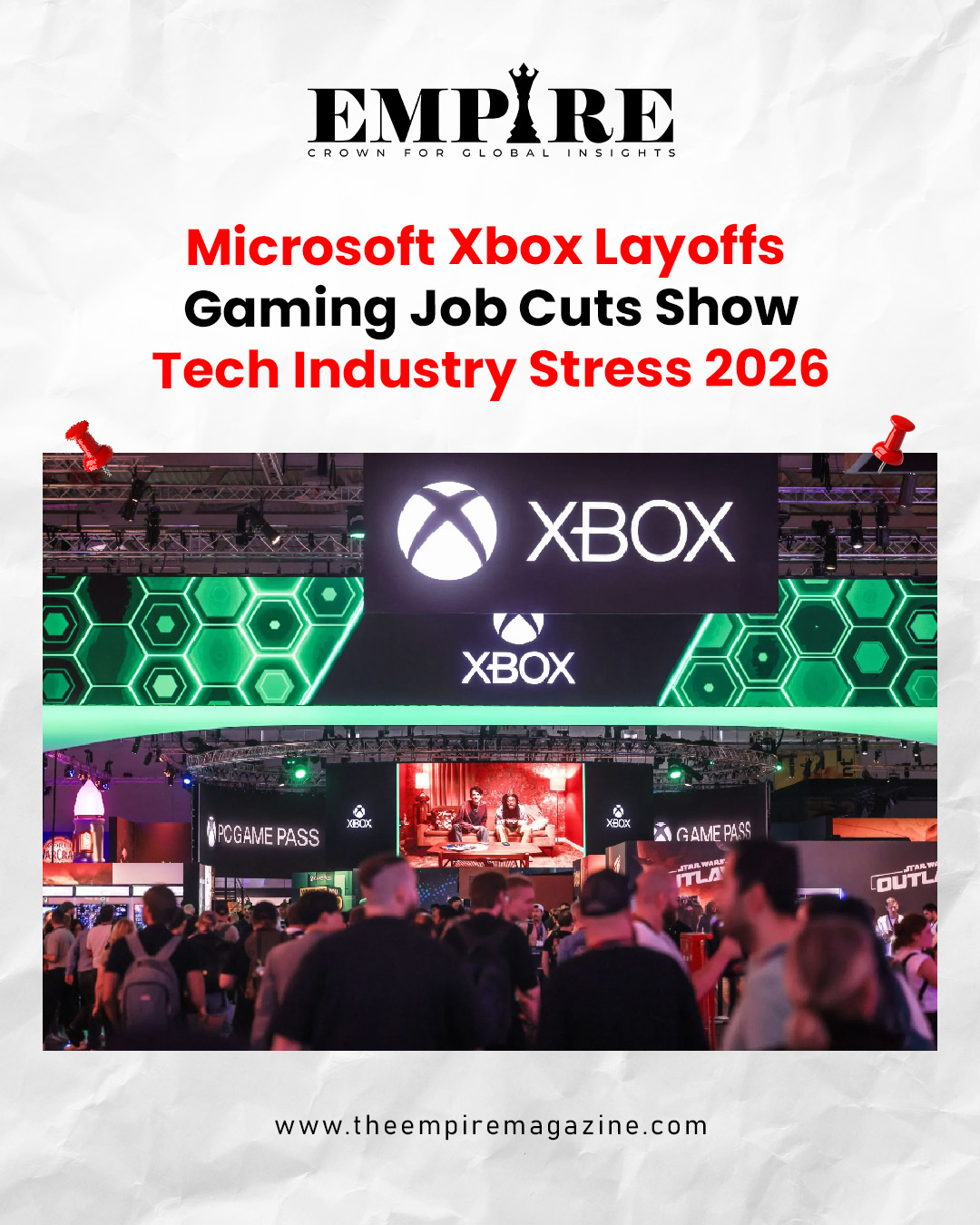
Microsoft Xbox Layoffs have become one of the clearest signs that the gaming industry is facing a deeper business reset. Gaming was once viewed as one of the most reliable growth engines in technology, supported by console sales, blockbuster franchises, online services, cloud gaming, subscriptions, mobile games, and digital storefronts. But the latest job cuts and restructuring plans at Xbox show that even the biggest technology companies are under pressure to reduce costs and rethink long-term strategy.
Microsoft’s Xbox division is reportedly preparing significant layoffs and budget reductions after years of heavy spending across games, hardware, subscriptions, and studio acquisitions. The move follows earlier waves of job cuts and studio closures across Microsoft’s gaming business, including layoffs after the Activision Blizzard acquisition and the 2024 shutdown of studios such as Arkane Austin, Tango Gameworks, and Alpha Dog.
The story matters because Xbox is not a small gaming company struggling for survival. It is part of Microsoft, one of the world’s largest technology companies. When a company with Microsoft’s scale cuts gaming jobs, it shows that the issue is not only weak management at one studio. It reflects broader pressure across gaming, cloud, hardware, subscriptions, and the wider technology industry.
Microsoft Xbox Layoffs and the Cost of Gaming Expansion
Microsoft Xbox Layoffs are connected to the high cost of gaming expansion. Over the last several years, Microsoft invested heavily in content, studios, subscriptions, and cloud gaming. The company completed its $69 billion acquisition of Activision Blizzard in 2023, giving it control of major franchises such as Call of Duty, World of Warcraft, Diablo, Candy Crush, and other valuable gaming assets.
That acquisition made Microsoft one of the most powerful companies in global gaming. But it also increased the pressure to deliver stronger financial results. Large acquisitions bring integration costs, overlapping teams, management complexity, and expectations for higher returns.
Gaming is expensive because major games can take years to develop and require large teams. AAA titles often involve developers, designers, artists, writers, producers, engineers, marketing teams, quality assurance staff, localization teams, and live-service support. If a game underperforms, the financial impact can be serious.
Microsoft Xbox Layoffs and Activision Blizzard Integration
Microsoft Xbox Layoffs also reflect the difficulty of integrating Activision Blizzard into Microsoft’s gaming structure. After a major acquisition, companies often review duplicate roles, overlapping functions, studio priorities, marketing budgets, and support teams.
In 2024, Microsoft cut 650 jobs from its Xbox unit as part of ongoing efforts to manage costs and integrate Activision Blizzard. Earlier that year, Microsoft also announced large gaming layoffs and studio closures. These moves showed that the acquisition did not simply add growth. It also required restructuring.
For employees, this creates uncertainty. A successful franchise or studio history does not always protect jobs when a larger company is focused on efficiency, margins, and portfolio strategy.
Microsoft Xbox Layoffs and Weak Console Hardware Sales
Microsoft Xbox Layoffs are also linked to pressure in console hardware. Microsoft’s FY2025 annual report showed that gaming revenue increased 9%, driven by Xbox content and services, but Xbox hardware revenue declined 25% because of lower console volume.
This contrast is important. Xbox is still making money from content, services, and the Activision Blizzard acquisition, but its console business is under pressure. Console hardware has become harder to grow as players spread across PC, mobile, cloud platforms, and rival consoles.
The traditional gaming model depended heavily on selling hardware, building exclusive game libraries, and keeping players inside one ecosystem. That model is changing. Microsoft has increasingly focused on Game Pass, cloud gaming, PC gaming, and making some games available beyond Xbox hardware.
Microsoft Xbox Layoffs and the Changing Console Model
Microsoft Xbox Layoffs show that the console model is under stress. Hardware is expensive to design, manufacture, distribute, and support. Component costs can rise. Supply chains can be difficult. Consumers may wait longer before upgrading. Competition from PC, mobile, and handheld devices also affects demand.
The future of Xbox may depend less on selling a single console and more on building a broader gaming platform. Microsoft has already expanded its strategy across consoles, PC, cloud, and mobile. But this shift creates difficult questions: how much should Microsoft invest in hardware, how many studios should it operate, and what kind of games should remain exclusive?
These questions are not easy because Xbox must serve both loyal console fans and a wider gaming market that is becoming more platform-flexible.
Microsoft Xbox Layoffs and Game Pass Pressure
Microsoft Xbox Layoffs are connected to the pressure around subscription gaming. Xbox Game Pass has been one of Microsoft’s most important gaming strategies. It gives subscribers access to a large library of games for a monthly fee. The model helped Microsoft build a service-based gaming ecosystem, but it also raised questions about profitability and long-term economics.
Game Pass requires major content investment. Microsoft must offer enough high-quality games to keep subscribers engaged. That means spending on first-party studios, licensing third-party titles, supporting live services, and marketing the platform.
The challenge is that subscription growth must be strong enough to justify the cost. If subscriber growth slows or if day-one releases reduce traditional game sales too much, the model becomes harder to balance.
Microsoft Xbox Layoffs and Subscription Economics
Microsoft Xbox Layoffs highlight a broader problem in tech subscriptions. Many companies built growth strategies around monthly recurring revenue. But subscriptions only work if customer growth, retention, pricing, and content costs remain balanced.
In gaming, this balance is difficult. Players want new games, premium content, multiplayer support, and regular updates. Studios need large budgets to deliver those experiences. If subscription revenue does not cover those costs, companies must cut spending, raise prices, change release strategies, or reduce teams.
This is why gaming job cuts are not only about short-term savings. They are also about restructuring business models for a slower-growth environment.
Microsoft Xbox Layoffs and AI Infrastructure Spending
Microsoft Xbox Layoffs also reflect a wider technology industry pattern: companies are cutting costs in some areas while spending heavily on artificial intelligence. Microsoft has invested aggressively in AI infrastructure, cloud computing, data centers, and AI-powered products.
AI infrastructure is extremely expensive. It requires advanced chips, data centers, electricity, cooling systems, cloud engineering, and long-term capital spending. As a result, even profitable technology companies are reviewing costs across departments to fund strategic priorities.
This does not mean gaming is no longer important to Microsoft. It means gaming must compete internally with AI, cloud, security, enterprise software, and productivity tools for investment.
Microsoft Xbox Layoffs and Big Tech Priorities
Microsoft Xbox Layoffs show how Big Tech priorities are shifting. AI is now one of the most important investment areas for large technology companies. Divisions that do not meet performance expectations may face cost reductions, even if they are culturally important or historically valuable.
This is happening across the technology industry. Companies are trying to protect profit margins while funding AI expansion. That creates a strange environment where firms can report strong revenue while still cutting jobs.
For gaming workers, the challenge is that creative industries are now deeply tied to corporate financial discipline. A game studio may have artistic value, loyal fans, and talented teams, but it still must fit within the parent company’s financial strategy.
Microsoft Xbox Layoffs and the Wider Gaming Job Market
Microsoft Xbox Layoffs are part of a wider gaming job-cut cycle. Since 2023, the gaming industry has seen layoffs across publishers, developers, esports companies, mobile gaming firms, and platform businesses. Many companies expanded during the pandemic gaming boom, when player engagement and digital spending were unusually high.
After the pandemic surge faded, growth became harder. Consumers returned to offline activities, development costs kept rising, and some live-service games failed to gain enough traction. This forced companies to reduce staff and cancel projects.
The gaming industry is also more competitive than ever. Players have many entertainment options, including streaming video, short-form content, social media, mobile games, free-to-play titles, and subscription services. Winning attention is expensive.
Microsoft Xbox Layoffs and Studio Closures
Microsoft Xbox Layoffs are especially painful because they often affect studios with strong creative reputations. The 2024 closure of Tango Gameworks was widely discussed because the studio had released Hi-Fi Rush, a game that received strong critical attention. Arkane Austin also had a respected history before its closure.
Studio closures show how difficult the business has become. A studio can produce creative work and still face shutdown if the larger company decides the financial outlook does not fit its plans.
This creates concern across the industry. Developers worry that creative risk is becoming harder to support. Companies may become more focused on proven franchises, lower-risk sequels, live services, and cost-controlled production.
Microsoft Xbox Layoffs and the Future of Game Development
Microsoft Xbox Layoffs raise questions about the future of game development. Large studios are under pressure to make bigger games with higher production values, but those games are costly and risky. Smaller studios may offer creativity and flexibility, but they can struggle with funding, distribution, and visibility.
AI tools may also change game development. Companies are exploring AI for coding support, art workflows, localization, testing, dialogue, and player support. These tools may increase efficiency, but they also create anxiety among workers who fear automation or reduced hiring.
The future of game development may involve smaller teams using better tools, more outsourcing, fewer risky projects, and stronger focus on franchises that already have large audiences.
Microsoft Xbox Layoffs and Creative Risk
Microsoft Xbox Layoffs may make gaming companies more cautious about creative risk. When budgets tighten, companies often prefer safer projects. This can mean more sequels, remakes, franchise expansions, and live-service updates instead of original concepts.
That may help financial stability, but it can also reduce innovation. Some of the best games in history came from creative risk. If companies become too cautious, players may lose interest.
Xbox faces this balance directly. It needs blockbuster games to compete, but it also needs creative diversity to keep players engaged. Cutting too deeply could weaken future content pipelines.
Microsoft Xbox Layoffs and What It Means for Workers
Microsoft Xbox Layoffs show how unstable technology and gaming jobs have become. Developers, artists, producers, marketers, QA testers, community managers, and support teams can all be affected when companies restructure.
Gaming workers often build careers around specialized skills and passion for the medium. Layoffs can be difficult because studios are concentrated in specific cities, and open roles may be limited when the entire industry is cutting jobs.
The job market may become more competitive. Workers may move into independent development, contract work, adjacent tech roles, animation, media, education, or AI-assisted production. Some may leave gaming entirely if stability does not improve.
Microsoft Xbox Layoffs and Industry Morale
Microsoft Xbox Layoffs can also affect morale across the industry. When workers see repeated layoffs at major companies, they may become less confident about long-term careers in games. This can influence productivity, creativity, and retention.
Companies must manage this carefully. If remaining teams feel insecure or overworked, performance can suffer. Strong communication, realistic planning, and respect for creative labor are essential after layoffs.
A company can cut costs quickly, but rebuilding trust takes longer.
Microsoft Xbox Layoffs and Microsoft’s Gaming Strategy
Microsoft Xbox Layoffs do not mean Microsoft is leaving gaming. The company still owns some of the most valuable gaming assets in the world. Xbox, Game Pass, Activision Blizzard, Bethesda, Minecraft, and cloud gaming remain major parts of its entertainment strategy.
However, the layoffs show that Microsoft is rethinking how gaming should operate inside a larger AI and cloud-focused company. The future may involve fewer experimental projects, more disciplined spending, deeper platform integration, and stronger focus on franchises with global reach.
Microsoft may also continue expanding beyond Xbox consoles. Publishing games across PC, cloud, mobile, and even rival platforms can help the company reach more players. But that shift also changes what Xbox means as a brand.
Microsoft Xbox Layoffs and the Tech Industry Signal
Microsoft Xbox Layoffs send a clear signal about the tech industry: growth alone is no longer enough. Companies want efficiency, margins, and strategic alignment. Even large divisions must prove they can support the company’s long-term priorities.
Gaming is still a powerful market, but it is no longer protected from the same cost discipline affecting the rest of technology. AI spending, hardware pressure, subscription economics, and changing consumer behavior are forcing companies to rethink old models.
Microsoft’s Xbox job cuts show that the next phase of gaming will be more disciplined, more platform-driven, and more financially demanding.
For more technology and business insights, read more on The Empire Magazine.
Follow The Empire Magazine on Facebook and Instagram.
– The Empire Magazine
Crown For Global Insights