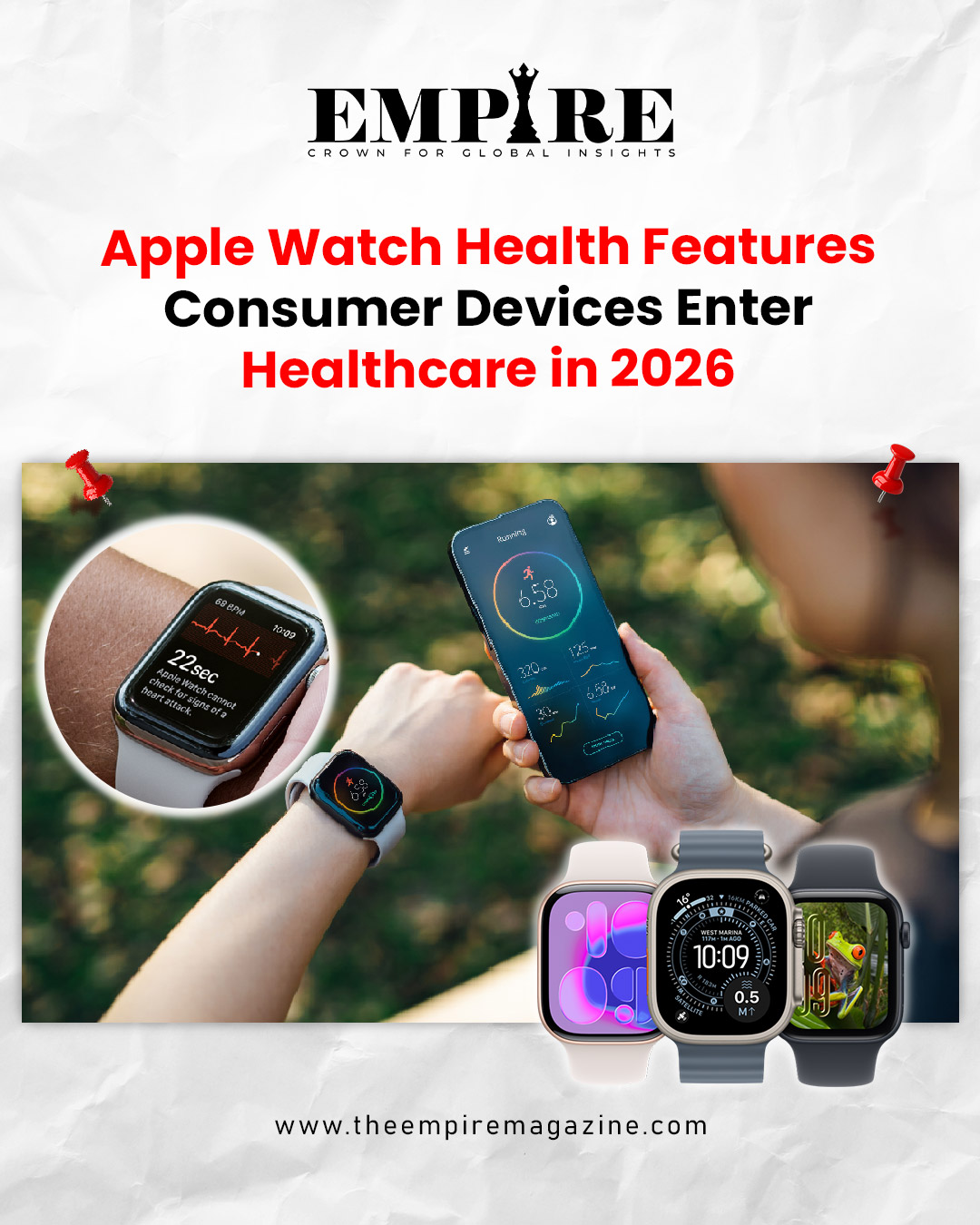
Apple Watch Health Features have changed how people think about consumer devices and healthcare. What began as a smartwatch for notifications, fitness tracking, and daily convenience has become one of the most recognized examples of wearable health technology. Apple Watch is not a replacement for doctors, hospitals, or medical devices used in clinical care, but it has brought health monitoring into everyday life in a way that millions of consumers can understand and use.
The shift is important because healthcare is no longer limited to clinics and annual checkups. People now track heart rate, workouts, sleep, respiratory patterns, cycle insights, mobility, and other wellness signals from the wrist. This creates a new relationship between consumers and personal health data.
Apple Watch helped make health tracking mainstream because it combined sensors, software, design, notifications, and iPhone integration. The device is familiar, wearable, and connected to Apple’s Health app. This makes health information easier to access than traditional medical tools that may only be used during appointments.
Apple Watch Health Features and Heart Monitoring
Apple Watch Health Features are strongly connected to heart monitoring. One of the most important features is the ECG app, available on supported Apple Watch models. The ECG app can generate an electrocardiogram similar to a single-lead ECG. This allows users to record heart rhythm information from the wrist.
Apple Watch also supports irregular rhythm notifications, high heart rate notifications, and low heart rate notifications. These features can alert users when the watch detects patterns that may need attention. The goal is not to diagnose every condition, but to help users become aware of possible warning signs and seek professional medical advice when needed.
Heart-related features helped Apple Watch move closer to healthcare because cardiovascular issues are a major global health concern. Many people do not notice irregular heart rhythms or changes in heart rate. A wearable alert can encourage a user to speak with a healthcare professional earlier than they might have otherwise.
Apple Watch Health Features and the ECG App
Apple Watch Health Features gained medical credibility when the ECG app received FDA De Novo classification in 2018. This was a major milestone because it showed that a consumer smartwatch could include a regulated heart-related software feature.
The ECG app is not the same as a full 12-lead ECG used in hospitals. It provides a single-lead recording and is designed for specific use cases. Still, it created a new category of consumer-accessible heart rhythm monitoring.
This matters because medical-grade insight is moving closer to the consumer. A person can record information from their wrist and share it with a healthcare professional. This does not remove the need for medical evaluation, but it can support better conversations between users and doctors.
Apple Watch Health Features and Irregular Rhythm Notifications
Apple Watch Health Features also include irregular rhythm notifications. This feature uses the optical heart sensor to look for signs that may suggest atrial fibrillation, often called AFib. AFib is a type of irregular heart rhythm that can increase the risk of stroke and other complications.
The feature does not continuously diagnose AFib. It checks heart rhythm in the background when the user is still and sends a notification if it identifies repeated signs of irregular rhythm. This makes the feature useful as an awareness tool.
For consumers, the value is early attention. A person may not feel symptoms, or they may ignore mild signs. A notification can encourage them to consult a doctor and get proper testing.
Apple Watch Health Features and Preventive Awareness
Apple Watch Health Features support preventive awareness. Healthcare systems often focus on treatment after symptoms become serious. Wearable devices can help shift attention toward earlier signals and daily patterns.
This does not mean every alert is an emergency. It also does not mean every wearable reading is medically significant. But regular health insights can encourage people to become more engaged in their health.
For Apple, this is a major business and brand direction. The company has positioned Apple Watch as a device for fitness, safety, wellness, and personal health. That positioning has helped separate it from ordinary smartwatches.
Apple Watch Health Features and Sleep Tracking
Apple Watch Health Features now include more advanced sleep insights. Apple Watch can track sleep duration, sleep stages, respiratory rate, wrist temperature, and other overnight metrics depending on the model and settings. Sleep has become an important part of consumer health because poor sleep can affect mood, energy, metabolism, productivity, and long-term wellness.
Apple has also added sleep apnea notifications on supported models. Sleep apnea is a condition where breathing repeatedly stops or becomes shallow during sleep. Many people may not know they have it because symptoms happen while they are asleep.
Apple’s Sleep Apnea Notification Feature received FDA 510(k) clearance in 2024 as an over-the-counter device to assess risk of sleep apnea. The feature is intended to detect signs of possible moderate to severe sleep apnea in adults who have not already been diagnosed.
Apple Watch Health Features and Sleep Apnea Notifications
Apple Watch Health Features related to sleep apnea show how consumer wearables are moving deeper into health screening. The feature uses breathing disturbance data collected during sleep to identify patterns that may suggest possible sleep apnea.
This is important because sleep apnea can remain undiagnosed for years. A notification may encourage a user to speak with a healthcare provider and seek further evaluation. Proper diagnosis still requires medical assessment, but wearable data can create the first step toward awareness.
Sleep apnea notifications also show how Apple is using existing sensors in new ways. The watch is not only counting steps or tracking workouts. It is using overnight data to identify health patterns that may matter clinically.
Apple Watch Health Features and Fall Detection
Apple Watch Health Features also include safety tools such as fall detection. If Apple Watch detects a hard fall, it can ask the user whether they are okay. If the user does not respond and the watch detects immobility, it can contact emergency services where supported.
This feature is especially important for older adults, people with mobility issues, athletes, and people who live alone. Falls can be dangerous, especially if someone is unable to call for help. A wearable device that can detect a fall and support emergency response can create real safety value.
Apple Watch also includes Emergency SOS, crash detection on supported models, and location-sharing features in emergency situations. These functions move the device beyond wellness tracking into personal safety.
Apple Watch Health Features and Older Adults
Apple Watch Health Features may be especially useful for older adults and caregivers. Heart alerts, fall detection, medication reminders, emergency calling, and activity tracking can support independent living.
For families, wearable safety tools may provide peace of mind. A caregiver may not be physically present all day, but features such as fall detection and shared health data can help support safer routines.
This does not replace professional care, assisted living, or medical monitoring when needed. But it can become one more layer of support for daily health and safety.
Apple Watch Health Features and Fitness Data
Apple Watch Health Features are closely linked with fitness. Activity rings, workout tracking, heart rate zones, cardio fitness estimates, walking steadiness, and mobility metrics help users understand movement and physical activity.
Fitness tracking is important because movement is one of the most accessible forms of preventive health. Apple Watch uses reminders, goals, awards, and progress visuals to encourage activity. These design choices turn health behavior into daily feedback.
For many users, the watch becomes a motivational tool. It reminds them to stand, move, exercise, and track progress. This kind of behavior design is one reason consumer devices are becoming part of health routines.
Apple Watch Health Features and Digital Health Habits
Apple Watch Health Features help create digital health habits. A person may start by checking steps, then begin monitoring workouts, sleep, heart rate, and trends over time. This gradual engagement can make health data less intimidating.
The Health app on iPhone also brings together data from Apple Watch and other connected apps. This creates a personal health record style experience for consumers. Users can see trends, export data, and share certain information with healthcare professionals or family members where supported.
The broader shift is that health data is becoming continuous instead of occasional. Instead of only checking health during appointments, people can see daily patterns.
Apple Watch Health Features and Healthcare Professionals
Apple Watch Health Features are also changing conversations between patients and healthcare professionals. Many users now bring Apple Watch data to doctors, including ECG recordings, heart rate trends, sleep patterns, and exercise data.
This can be helpful when used correctly. A doctor may use the information as context, ask follow-up questions, or order medical tests if needed. Wearable data can help users explain symptoms more clearly.
However, healthcare professionals must also interpret wearable data carefully. Consumer devices can produce false alarms, incomplete data, or readings that require clinical confirmation. This is why Apple Watch data should support medical care, not replace it.
Apple Watch Health Features and Medical Boundaries
Apple Watch Health Features must be understood within medical boundaries. The device can provide insights, alerts, and wellness information, but it is not a full diagnostic system for every condition.
Users should not ignore symptoms because a watch reading looks normal. They should also not panic over every alert without medical guidance. The best use of Apple Watch health data is as a signal for awareness and conversation with qualified healthcare providers.
This balance is important because consumer health technology can empower users, but it can also create anxiety if people misunderstand the data.
Apple Watch Health Features and Apple’s Healthcare Strategy
Apple Watch Health Features are part of Apple’s larger healthcare strategy. Apple has built health-related tools across Apple Watch, iPhone, Health app, Research app, and developer frameworks. The company works at the intersection of consumer electronics, wellness, regulated features, and health data management.
Apple’s advantage is its ecosystem. The watch collects data, the iPhone displays and organizes it, the Health app stores it, and connected apps can add more context. This makes the experience easier for users and creates a strong platform for health technology.
Privacy is also a major part of Apple’s health positioning. Health data is sensitive, and users need trust before they allow devices to collect heart, sleep, cycle, mobility, and wellness information. Apple regularly emphasizes privacy as part of its health strategy.
Apple Watch Health Features and the Consumer Device Market
Apple Watch Health Features have influenced the entire consumer device market. Fitness trackers and smartwatches now compete on health features, not only notifications and design. Heart rate, sleep, stress, oxygen, temperature, and recovery metrics have become important selling points.
This has changed consumer expectations. Buyers now expect wearables to do more than count steps. They want meaningful health insights, safety features, long battery life, app support, and reliable sensors.
Apple Watch helped prove that health features can drive consumer demand. It made wellness and health monitoring a core reason to buy a smartwatch.
Apple Watch Health Features and Healthcare Innovation
Apple Watch Health Features show how healthcare innovation can come from consumer technology companies. Traditionally, healthcare devices were designed mainly for clinics, hospitals, and specialists. Apple Watch brought some health monitoring into a familiar consumer product.
This shift has advantages. Consumer devices are easier to adopt, more stylish, and more connected to daily routines. They can collect data over long periods instead of only during appointments.
But the shift also creates challenges. Consumer technology moves quickly, while healthcare regulation moves carefully. Companies must balance innovation with safety, privacy, accuracy, and responsible communication.
Apple Watch Health Features and the Future of Wearables
Apple Watch Health Features point toward a future where wearable devices become more important in preventive health, remote monitoring, and personal wellness. Future devices may continue improving sensors, algorithms, battery life, and medical-grade features.
Healthcare systems may increasingly use consumer wearable data when it is reliable and clinically useful. Insurers, employers, doctors, and digital health companies may also build services around wearable insights.
The future of healthcare will not be only hospitals and apps. It will include connected devices that help people understand their bodies in daily life. Apple Watch is one of the clearest examples of that shift.
For more healthcare technology and business insights, read more on The Empire Magazine.
Follow The Empire Magazine on Facebook and Instagram.
– The Empire Magazine
Crown For Global Insights