Discover how humanoid robots powered by artificial intelligence are transforming manufacturing, healthcare, retail, logistics, and workplaces while reshaping the future of global industries.
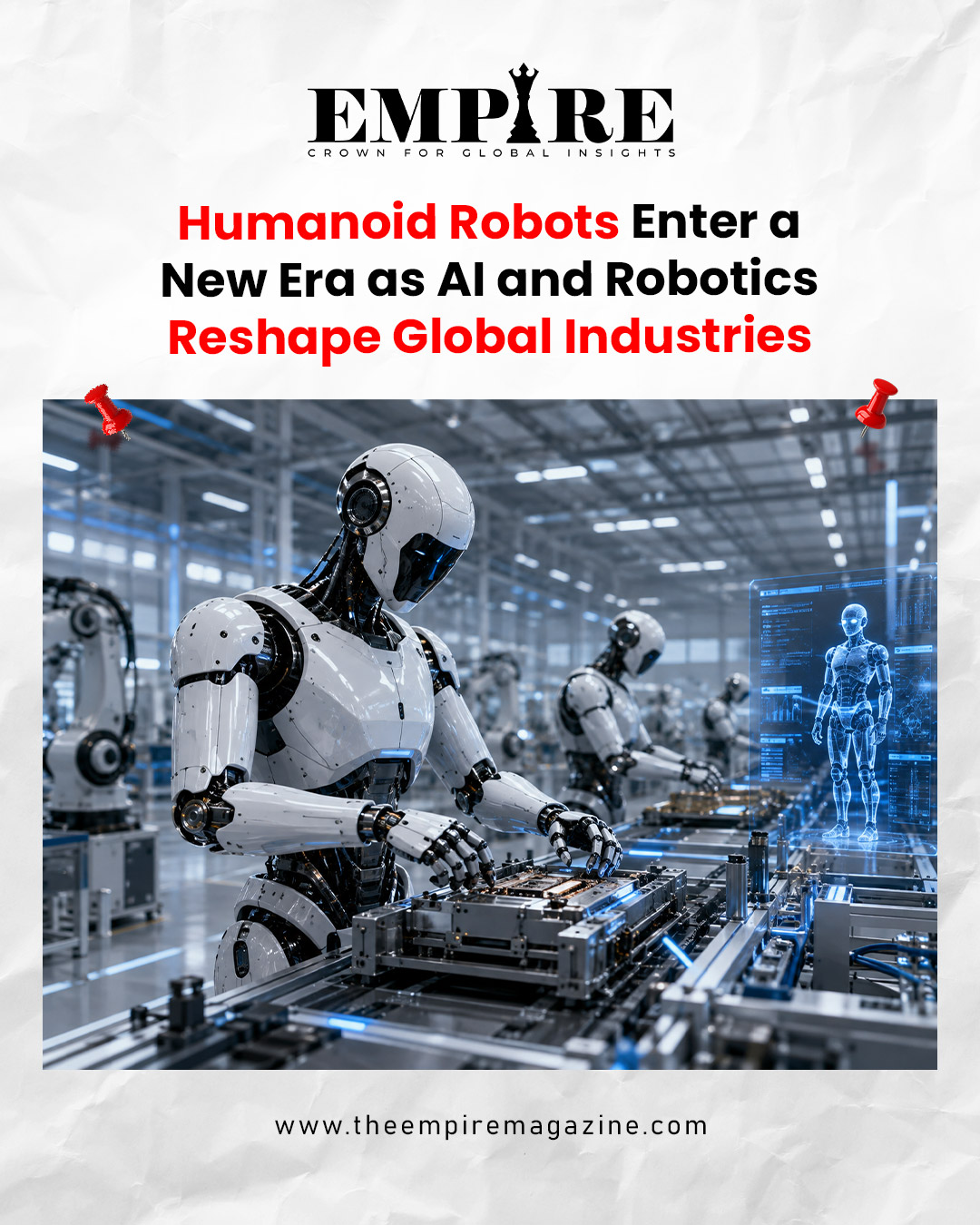
Humanoid Robots Enter a New Era as AI and Robotics Reshape Global Industries
Artificial intelligence is no longer confined to computer screens, smartphones, or cloud servers. It is steadily stepping into the physical world through humanoid robots that can walk, communicate, learn, assist, and even collaborate with humans. Once considered futuristic concepts reserved for science fiction, humanoid robots are now becoming an important part of manufacturing plants, hospitals, warehouses, research laboratories, retail stores, and service industries. Rapid advances in artificial intelligence, machine learning, computer vision, large language models, and robotics engineering have accelerated their capabilities beyond what many experts anticipated just a few years ago. Major technology companies, automotive manufacturers, AI startups, and governments are investing billions of dollars into developing intelligent robots that can perform complex tasks alongside humans. As labour shortages increase, populations age, and industries seek higher productivity, humanoid robots are emerging as a practical solution rather than an experimental innovation. While opportunities continue to expand, questions surrounding employment, ethics, regulation, safety, and human interaction remain equally significant. The next phase of industrial transformation may not simply be powered by AI software—it may walk, observe, understand, and work beside people in the form of humanoid robots.
The Rise of Humanoid Robots Across Industries
Humanoid robots have evolved dramatically over the past decade as breakthroughs in artificial intelligence, advanced sensors, lightweight materials, and powerful computing systems have enabled machines to perform increasingly human-like activities. Unlike traditional industrial robots that remain fixed in factories performing repetitive tasks, modern humanoid robots are designed to move through environments created for humans. They can climb stairs, lift objects, recognise faces, interpret voice commands, understand surroundings through computer vision, and make decisions using sophisticated AI models. Global technology leaders including Tesla, Figure AI, Agility Robotics, Apptronik, Unitree Robotics, Sanctuary AI, and several Japanese and South Korean robotics companies are competing to build commercially viable humanoid robots capable of operating safely in real-world workplaces. Their objective is not merely to automate manufacturing but to develop adaptable workers that can perform multiple functions across industries without requiring extensive redesign of workplaces. Analysts expect the global humanoid robotics market to witness substantial growth over the coming decade as businesses increasingly seek intelligent automation solutions. Investors also see humanoid robots as the next major frontier following the rapid success of generative AI, making robotics one of the most closely watched sectors in global technology.
AI Makes Humanoid Robots More Intelligent
Artificial intelligence has fundamentally transformed what humanoid robots are capable of achieving. Earlier generations of robots relied heavily on pre-programmed instructions and struggled whenever unexpected situations occurred. Today’s AI-powered humanoid robots can interpret natural language, recognise objects, learn from experience, adapt to changing environments, and collaborate with humans with significantly greater efficiency. Large language models now enable robots to understand conversations, answer questions, receive spoken instructions, and execute complex tasks without requiring highly specialised programming. Computer vision allows humanoid robots to identify obstacles, distinguish products, analyse movements, and safely navigate busy workplaces. Reinforcement learning enables machines to improve performance through repeated practice, much like humans acquiring new skills over time. Cloud computing and edge AI further enhance performance by allowing robots to process information both locally and through connected systems. This combination of AI technologies transforms humanoid robots from mechanical machines into intelligent assistants capable of reasoning, planning, and decision-making. As AI models continue improving, experts believe humanoid robots will become increasingly autonomous, opening new possibilities for industries seeking flexible automation without sacrificing adaptability.
Humanoid Robots Transform Manufacturing and Logistics
Manufacturing remains one of the largest opportunities for humanoid robots as industries face persistent labour shortages, rising operational costs, and increasing demand for flexible production systems. Automotive manufacturers are already testing humanoid robots capable of assembling components, transporting materials, inspecting products, and performing repetitive physical tasks that often expose workers to fatigue or injury. Warehousing and logistics companies are similarly exploring robots that can pick inventory, sort packages, load shipments, and operate continuously without requiring frequent breaks. Because humanoid robots are designed around human dimensions, they can use existing tools, navigate standard facilities, and integrate into current infrastructure more easily than specialised robotic systems. This reduces the need for extensive facility redesigns while increasing operational efficiency. Businesses also anticipate improved workplace safety as robots undertake hazardous or physically demanding assignments. Rather than replacing every employee, many organisations envision collaborative workplaces where humanoid robots perform repetitive manual work while human workers focus on supervision, quality control, creativity, customer engagement, and strategic decision-making. Such collaboration could redefine industrial productivity over the coming decade.
Healthcare and Service Industries Welcome Humanoid Robots
Beyond factories, humanoid robots are beginning to reshape healthcare, hospitality, retail, education, and public services. Hospitals facing nursing shortages are testing robots that transport medical supplies, assist patients with mobility, monitor vital signs, and support healthcare professionals with administrative tasks. Elderly care represents another rapidly expanding application, particularly in countries experiencing ageing populations and declining workforces. Humanoid robots can remind patients to take medications, provide companionship, monitor health conditions, and assist caregivers with routine responsibilities. In retail, intelligent robots guide customers, answer product queries, manage inventory, and improve shopping experiences through AI-powered interactions. Hotels are experimenting with humanoid robots for reception services, concierge assistance, and room deliveries. Educational institutions increasingly use robots to support STEM learning while exposing students to emerging technologies. Airports, museums, government offices, and entertainment venues are also exploring customer-facing robotics that combine conversational AI with physical mobility. As natural language capabilities improve, humanoid robots may eventually become trusted assistants capable of handling routine service interactions while enabling human employees to concentrate on more personalised, emotionally complex, and higher-value responsibilities.
Challenges Facing Humanoid Robots Worldwide
Despite rapid technological progress, humanoid robots continue facing significant technical, economic, ethical, and regulatory challenges before widespread adoption becomes reality. High manufacturing costs remain one of the largest barriers, limiting accessibility for many businesses despite growing investment from global technology companies. Battery life, mobility across unpredictable environments, object manipulation, and long-term operational reliability still require continuous improvement. Safety remains another major concern, particularly when robots work alongside humans in busy workplaces where unexpected interactions occur frequently. Governments and regulators must establish comprehensive standards addressing accountability, cybersecurity, privacy protection, and responsible AI deployment. The growing capabilities of humanoid robots have also intensified discussions surrounding employment displacement. While automation may eliminate certain repetitive jobs, it is equally expected to create new opportunities in robotics engineering, AI development, maintenance, programming, data analysis, and workforce management. Organisations adopting humanoid robots must therefore invest in employee reskilling and continuous learning to ensure technological progress benefits both businesses and workers. Public trust will ultimately depend on transparent governance, ethical AI principles, and responsible implementation rather than technological capability alone.
The Future of Humanoid Robots Has Arrived
The emergence of humanoid robots represents one of the most significant technological shifts since the rise of personal computing and the internet. As artificial intelligence continues evolving, these intelligent machines are expected to become increasingly capable of supporting industries ranging from manufacturing and healthcare to logistics, retail, education, agriculture, disaster response, and domestic assistance. Rather than replacing humanity, the most realistic future appears to involve close collaboration between humans and intelligent machines, with each contributing complementary strengths. Humans will continue providing creativity, empathy, ethical judgment, leadership, and innovation, while humanoid robots undertake repetitive, dangerous, physically demanding, or precision-based tasks with remarkable consistency. Governments, businesses, educational institutions, and policymakers now have an opportunity to prepare societies for this transformation through investment in digital skills, AI governance, robotics research, and workforce development. The race to develop humanoid robots is no longer simply about technological leadership; it has become a strategic competition that could reshape global productivity, economic growth, and industrial competitiveness for decades. As AI continues entering the physical world, humanoid robots are poised to redefine how industries operate, how work is performed, and how humans interact with intelligent technology in everyday life.
Humanoid robots have moved beyond ambitious prototypes
Humanoid robots have moved beyond ambitious prototypes to become a defining force in the next wave of artificial intelligence-driven innovation. Their growing presence across manufacturing, healthcare, logistics, retail, and public services highlights how AI is transforming the physical economy alongside the digital one. While technical and ethical challenges remain, continuous advancements in artificial intelligence, robotics engineering, and intelligent automation are steadily making humanoid robots more practical, capable, and commercially viable. Organisations that embrace this transformation responsibly through innovation, workforce development, and ethical governance are likely to gain significant competitive advantages. As global industries enter this new era, humanoid robots are no longer a vision of the distant future but an emerging reality that is reshaping the way businesses operate and societies evolve.
For more business and retail insights, read more on The Empire Magazine
Previous article: https://theempiremagazine.com/vietnam-social-media-limit/
Magazine Feautures | Podcasts: Empire Global Talks
Follow The Empire Magazine on Facebook | Instagram | LinkedIn | YouTube
The Empire Magazine | Crown for Global Insights