Authenticated Resale Is Changing Luxury Shopping
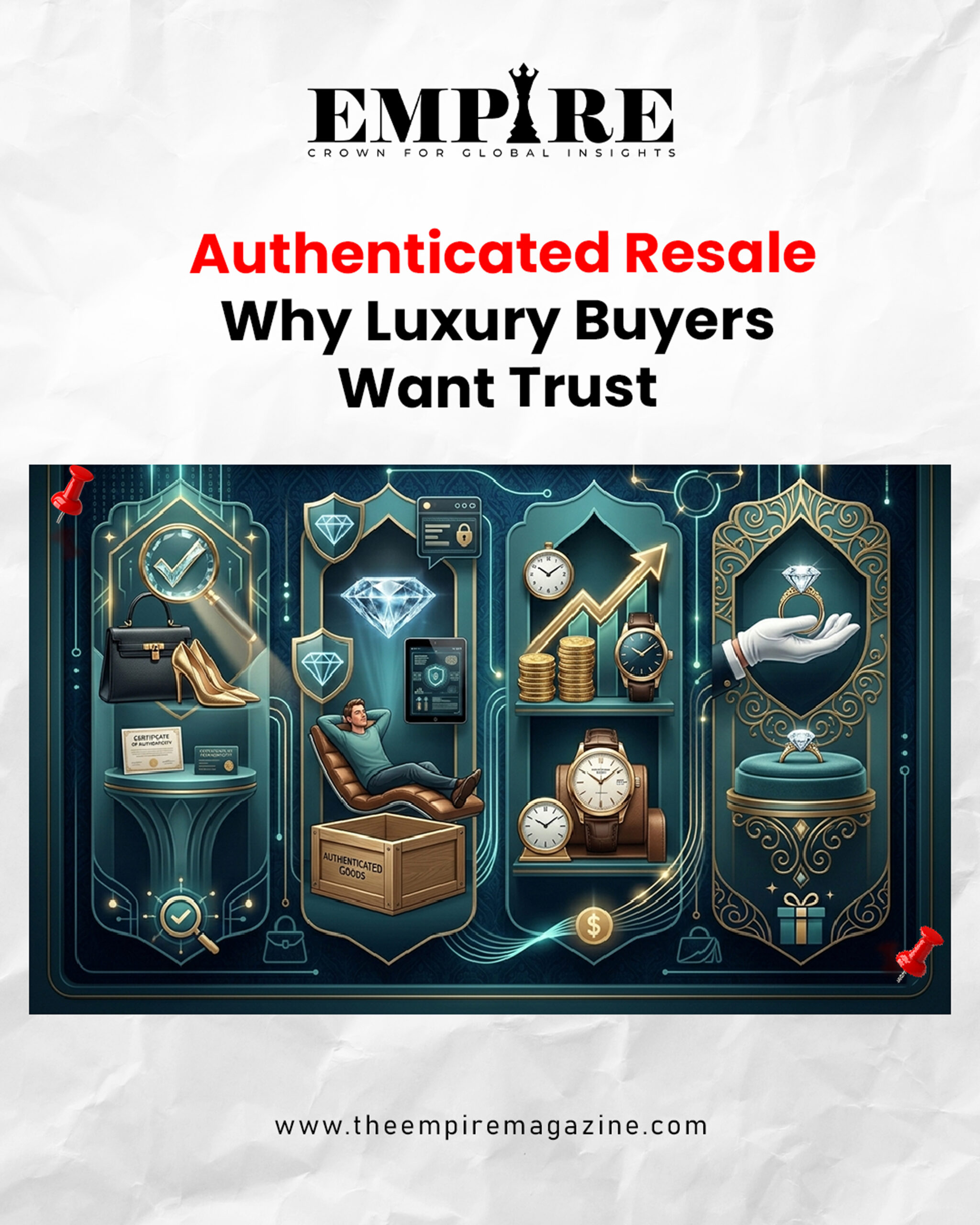
Authenticated Resale is becoming one of the most important trends in luxury fashion, sneakers, watches, handbags, jewelry, and collectibles. Platforms such as The RealReal, Vestiaire Collective, StockX, and Chrono24 show how buyers are increasingly choosing verified secondhand products instead of relying only on traditional retail or unverified marketplaces.
The growth of authenticated resale is connected to several real market forces. Luxury retail prices have increased in recent years. Younger consumers are more open to pre-owned fashion. Buyers want access to rare, discontinued, limited-edition, and investment-value products. Sustainability has also become more important in fashion consumption.
However, trust remains the foundation of this market. Luxury resale involves expensive products, and buyers need confidence that a handbag, sneaker, watch, or designer item is genuine. Authentication helps solve this problem by adding expert review, product checks, verification systems, and marketplace standards before resale items reach buyers.
Why Authenticated Resale Is Growing
The resale market is growing because luxury consumers are changing how they buy. Many shoppers want quality products at lower prices than new retail. Others want items that are sold out, discontinued, vintage, or difficult to find in stores. Some buyers also treat luxury handbags, watches, and limited sneakers as assets that can retain resale value.
ResearchAndMarkets reported that the luxury resale market was valued at $32.47 billion in 2024 and is projected to reach $50.06 billion by 2030. Vestiaire Collective and Boston Consulting Group estimated the broader resale market at $210 billion to $220 billion, with potential growth to $360 billion by 2030.
Trust Is the Main Business Driver
Luxury resale cannot scale without trust. Counterfeit goods remain a major risk in fashion, watches, sneakers, and collectibles. Buyers need proof that a product is authentic, while sellers need platforms that can protect reputation and support fair pricing.
Authenticated resale platforms address this by using expert authenticators, product data, historical pricing, seller checks, inspection centers, and digital verification systems. This trust layer helps convert secondhand luxury from informal peer-to-peer selling into a professional global marketplace.
The RealReal and Luxury Consignment
The RealReal is one of the best-known luxury resale platforms in the United States. The company describes itself as the world’s largest online marketplace for authenticated resale luxury goods. It focuses on categories such as women’s and men’s fashion, handbags, jewelry, watches, home, and art.
The RealReal reported that full-year 2025 gross merchandise value reached $2.13 billion, up 16% from 2024, while total revenue reached $693 million, up 15%. The company also said it has a community of more than 40 million members and uses years of proprietary data and authentication expertise to analyze luxury resale trends.
Consignment and Expert Authentication
The RealReal operates through a consignment model. Sellers submit luxury items, and the platform handles authentication, pricing, listing, selling, and fulfillment. This model is useful for sellers who want professional support instead of managing listings themselves.
Authentication is central to The RealReal’s value proposition because luxury buyers want confidence before purchasing expensive items. The platform’s resale reports also show that consumer behavior is influenced by cultural trends, social media, luxury price increases, and demand for iconic brands.
Vestiaire Collective and Global Fashion Resale
Vestiaire Collective was founded in France in 2009 and has become one of the most recognized global platforms for pre-owned luxury and designer fashion. The platform connects buyers and sellers across many countries and focuses strongly on circular fashion.
Vestiaire Collective says its community includes millions of buyers and sellers in more than 70 countries. Its 2025 report with Boston Consulting Group highlighted that resale is growing faster than first-hand fashion, with high-value categories such as bags and jewelry supporting market expansion.
Circular Fashion and Luxury Value
Vestiaire Collective’s business model is closely linked to circular fashion. Instead of products sitting unused in wardrobes or being discarded, they can re-enter the market through resale. This supports longer product life and gives buyers access to luxury pieces at different price points.
The platform also emphasizes trust and authentication. Vestiaire Collective states that it uses expert authentication processes to support trust in pre-loved luxury goods, including specialist teams and quality checks.
StockX and Verified Culture Products
StockX began as a marketplace strongly connected to sneakers and streetwear, but it has expanded into categories such as electronics, collectibles, trading cards, handbags, and watches. Its model is built around transparent pricing, market demand, and product verification.
StockX’s app listing says every product is verified by expert authenticators, and its marketplace includes sneakers, electronics, streetwear, collectibles, watches, and handbags. This verification-led model is important because many StockX categories involve limited releases, hype products, and items with strong resale demand.
Sneakers, Streetwear, and Market Pricing
StockX helped make resale feel more like a financial marketplace. Buyers and sellers can see pricing trends, bids, asks, and sales history. This creates a more transparent market for products such as limited sneakers and streetwear.
Authentication is especially important in sneaker resale because counterfeit products are common and high-demand releases can sell for far above retail price. Verification helps buyers trust that the product they receive matches the listing.
Chrono24 and the Pre-Owned Watch Market
Chrono24 is one of the most important online marketplaces for luxury watches. It connects buyers and sellers around the world and includes watches from brands such as Rolex, Omega, Patek Philippe, Audemars Piguet, Cartier, and other leading watchmakers.
The pre-owned watch market depends heavily on trust because watches can carry high prices, complex condition details, service histories, serial numbers, original papers, boxes, and authenticity concerns. Buyers often want protection around payment, seller reputation, watch condition, and verification.
Why Watches Need Strong Verification
Luxury watches are different from many fashion items because small details can affect value. The year, reference number, movement, dial, bracelet, condition, service history, and originality can all influence price.
Authenticated resale platforms and specialist marketplaces help buyers evaluate these details. This supports trust in an international watch market where buyers and sellers may be located in different countries.
Why Younger Consumers Are Driving Resale
Younger consumers are helping push resale into the mainstream. Gen Z and millennial buyers often see pre-owned luxury as more normal than previous generations. They are comfortable shopping through apps, comparing prices online, and buying from global sellers.
Sustainability and Access
Resale appeals to younger buyers because it can support sustainability and access. A pre-owned luxury item extends the life of an existing product. It can also allow buyers to enter luxury categories at lower prices than new retail.
This does not mean resale is only about affordability. Many buyers use resale to access rare or heritage pieces that are no longer available in stores.
Authentication as a Competitive Advantage
For The RealReal, Vestiaire Collective, StockX, and Chrono24, authentication is not only a service feature. It is a competitive advantage. Trust helps platforms attract buyers, sellers, investors, and brand partners.
Technology and Expert Review
Authentication often combines human expertise and technology. Experts review stitching, materials, hardware, serial numbers, logos, packaging, product history, condition, and market data. Some platforms also use machine learning, image recognition, and database comparisons to support verification.
This combination is important because counterfeiters continue to improve. Resale platforms must keep investing in stronger systems to protect buyers and maintain marketplace trust.
Challenges in Authenticated Resale
Authenticated resale also faces challenges. Authentication is expensive. Logistics can be complex. Returns and disputes must be managed carefully. Supply depends on sellers choosing to list high-quality items. Profitability can be difficult because platforms need technology, warehouses, experts, customer support, and marketing.
Luxury brands also have mixed relationships with resale. Some brands support circular fashion, while others worry about pricing control, counterfeits, and brand image.
Counterfeits and Consumer Protection
Counterfeit risk remains one of the biggest challenges. Platforms must protect buyers from fake goods and protect sellers from unfair claims. Clear policies, expert inspection, secure payments, and transparent condition reports help reduce risk.
Why Authenticated Resale Matters for Luxury Business
Authenticated resale matters because it changes how luxury value moves after the first sale. A handbag, watch, sneaker, or designer jacket can continue creating economic value through resale. This gives consumers more confidence to buy luxury because they know the item may retain value.
For more luxury and business insights, read this feature on The Empire Magazine.
Follow The Empire Magazine on Instagram and Facebook.
– The Empire Magazine
Crown For Global Insights