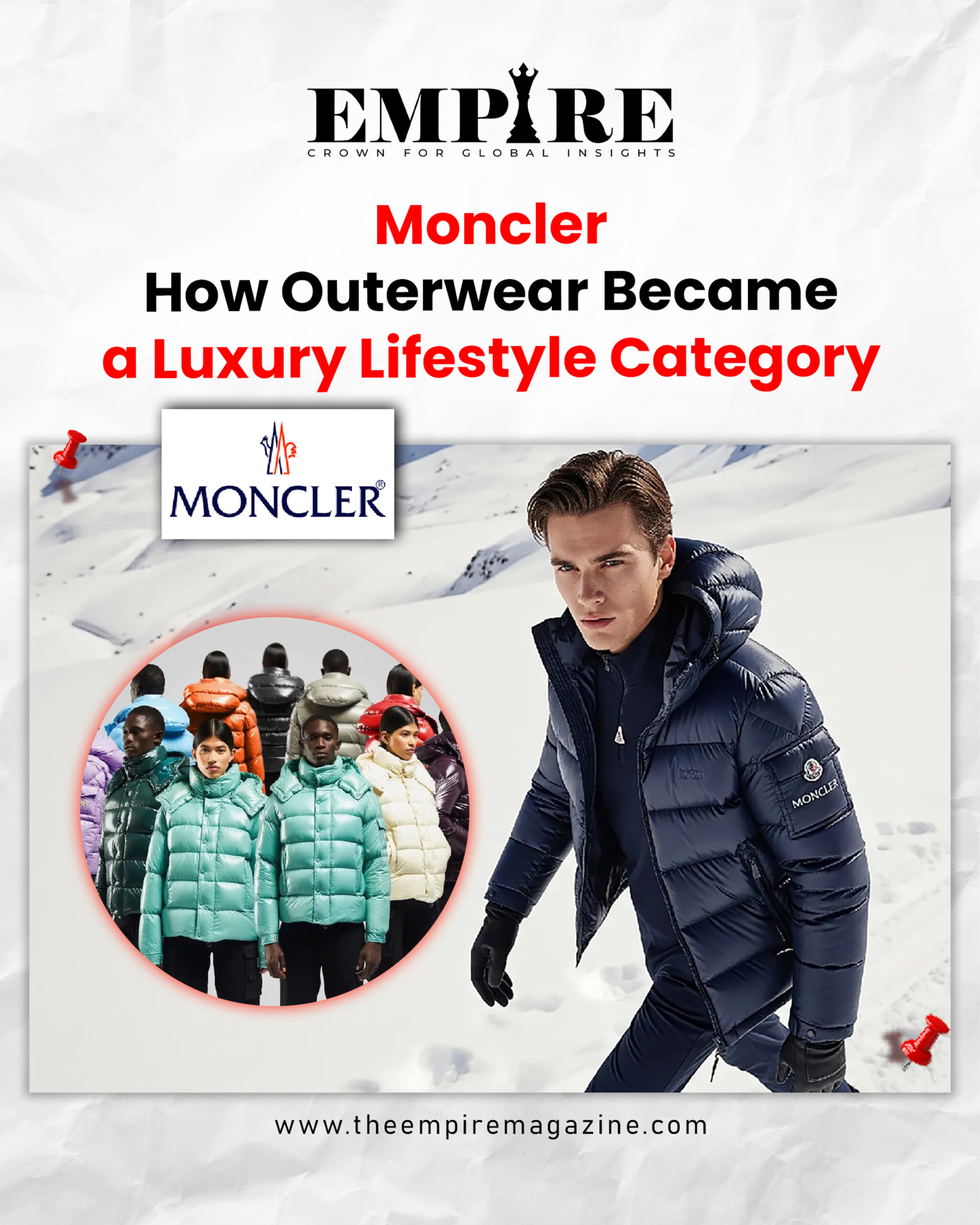
Moncler is one of the clearest examples of how outerwear became a luxury lifestyle category. The brand began with practical mountain clothing and became a global luxury name known for down jackets, technical design, winter performance, fashion collaborations, and premium retail experiences. Its growth shows how a product once linked mainly to alpine protection became part of luxury fashion, street culture, travel, and high-end lifestyle dressing.
Moncler was founded in 1952 in Monestier-de-Clermont, near Grenoble, France. The company’s name comes from the abbreviation of Monestier-de-Clermont. Its early products were connected to mountain equipment and cold-weather protection. Over time, the brand became known for quilted down jackets that combined warmth, performance, and distinctive design.
Today, Moncler is headquartered in Milan and operates as a global luxury group. The company owns the Moncler brand and Stone Island, another important name in premium outerwear and technical fashion. Moncler Group reported 2025 consolidated revenues of €3.13 billion, up 3% at constant exchange rates, while the Moncler brand generated €2.72 billion in revenue.
The Origins of Moncler in Mountain Performance
Moncler’s first identity was built around protection from extreme weather. The brand produced padded sleeping bags, tents, and technical outerwear for mountain use. Its down jackets became associated with cold climates, expeditions, and alpine performance.
From Alpine Equipment to Fashion Recognition
The shift from mountain equipment to fashion recognition happened gradually. Moncler’s jackets were practical, but their volume, quilting, shine, and strong silhouette also made them visually distinctive. This allowed the brand to move beyond sportswear and enter lifestyle fashion.
In the 1960s, Moncler gained visibility through alpine and ski associations. The brand supplied jackets for the French national ski team at the 1968 Winter Olympics in Grenoble, strengthening its reputation in winter sports and technical clothing.
How Moncler Became a Luxury Brand
Moncler’s transformation into a luxury brand accelerated under Remo Ruffini, who acquired the company in 2003 and repositioned it around premium outerwear, high-quality design, and global retail expansion. Ruffini moved Moncler from a functional winterwear label into a fashion-led luxury company.
Premium Positioning and Product Design
Luxury outerwear depends on more than warmth. It requires materials, fit, visual identity, craftsmanship, brand perception, and emotional value. Moncler built this position through high-end down jackets, refined silhouettes, glossy nylon, luxury retail spaces, and strong seasonal campaigns.
The jacket became not only a cold-weather item but also a status product. Consumers could wear Moncler in ski resorts, city streets, airports, luxury hotels, and winter destinations. This helped outerwear become part of daily luxury dressing.
The Power of the Moncler Down Jacket
The down jacket is Moncler’s core product and most recognizable category. Its padded structure, lightweight warmth, and polished design created a strong visual identity. The jacket became a luxury symbol because it combined function with fashion.
Outerwear as Everyday Luxury
Outerwear is highly visible. Unlike shirts or small accessories, jackets are seen immediately in public spaces. This makes outerwear powerful for luxury branding. A Moncler jacket communicates function, lifestyle, travel, and status at the same time.
In colder markets, a luxury coat can become one of the most important wardrobe investments. Moncler used this consumer behavior to turn outerwear into a central luxury category rather than a seasonal utility product.
Moncler Genius and Collaboration Culture
Moncler Genius became one of the brand’s most important creative strategies. Launched in 2018, the concept invited different designers and creative voices to reinterpret Moncler’s identity. The model turned product launches into cultural moments.
Why Moncler Genius Was Important
Moncler Genius helped the brand stay connected to fashion conversation, streetwear, art, and youth culture. Instead of relying only on seasonal collections, Moncler used collaborations to create continuous attention.
The strategy brought different creative interpretations of the down jacket and outerwear. It also positioned Moncler as a platform for ideas, not only a clothing label. This helped the brand expand beyond winter sports and become more connected to culture, music, design, and global fashion communities.
Moncler Grenoble and Technical Luxury
Moncler Grenoble is the brand’s technical performance line, connected to ski and mountain clothing. It reflects the company’s original alpine heritage while using luxury design, premium materials, and modern performance technology.
Performance and Fashion Together
Moncler Grenoble shows how luxury outerwear can combine technical function with fashion identity. Ski jackets, snow pants, base layers, and cold-weather accessories can be designed for performance while still carrying luxury appeal.
This matters because premium consumers often want products that are both useful and stylish. Moncler’s ability to serve both fashion and performance helps it stand apart from traditional luxury fashion houses and pure sportswear brands.
Retail Experience and Global Expansion
Moncler’s growth has also been supported by direct-to-consumer retail. Luxury brands often use flagship stores, boutiques, digital commerce, and controlled wholesale distribution to protect brand image and customer experience.
Direct-to-Consumer Strength
Moncler has focused strongly on direct sales through its stores and digital channels. This gives the company more control over pricing, presentation, customer data, service quality, and brand storytelling. Reuters reported that Moncler’s first-quarter 2025 revenue beat expectations, supported by strong direct-to-consumer sales and demand in Asia.
Direct retail is important in luxury because the store experience becomes part of the product. Customers are not only buying a jacket; they are buying service, packaging, environment, brand history, and exclusivity.
Asia, the Americas, and Global Luxury Demand
Moncler’s global performance shows how luxury outerwear has become international. The brand sells across Europe, Asia, the Americas, and other markets. Asia has been especially important for luxury demand, including China, Japan, and South Korea.
Resilience in a Slower Luxury Market
The luxury industry has faced slower demand in recent years, but Moncler has shown resilience. Reuters reported that Moncler’s 2025 full-year revenues reached €3.13 billion, above analyst expectations, while fourth-quarter revenues rose 7% at constant exchange rates because of solid growth in Asia and the Americas.
This performance shows that luxury outerwear can remain attractive even during broader market uncertainty, especially when brands maintain strong identity and product relevance.
Stone Island and the Outerwear Portfolio
Moncler Group also owns Stone Island, which it acquired in 2020. Stone Island is known for technical fabrics, garment dyeing, research-driven sportswear, and strong links to streetwear and youth culture.
Why Stone Island Fits Moncler Group
Stone Island strengthens Moncler Group’s position in premium outerwear and technical apparel. While Moncler is more connected to luxury down jackets and alpine glamour, Stone Island is known for fabric innovation, utility, and cultural credibility.
Together, the two brands give Moncler Group a broader position in luxury and premium outerwear. The 2025 results included €411.2 million in Stone Island brand revenue.
Outerwear as a Lifestyle Business
Moncler’s growth shows how outerwear became part of lifestyle branding. The company sells more than protection from cold weather. It sells an image connected to winter travel, mountain culture, city luxury, performance, fashion, and global mobility.
Travel, Ski Culture, and Urban Fashion
Moncler products work across different lifestyle settings. A jacket can be worn in a ski resort, on a business trip, in a luxury shopping district, or during everyday city life. This versatility helped outerwear become a luxury category with year-round brand relevance, even if the product has seasonal roots.
Luxury outerwear also benefits from climate, tourism, and destination dressing. Consumers buying for winter travel often choose products that combine warmth with visible brand identity.
Why Moncler Matters in Luxury Fashion
Moncler matters because it built a luxury business around a product category that was once mainly functional. The brand turned the down jacket into a symbol of design, status, and lifestyle. It also showed that luxury does not have to be limited to handbags, tailoring, jewellery, or couture.
The company’s success is based on heritage, innovation, controlled distribution, creative collaborations, and a clear product identity. Moncler’s journey from mountain equipment to global luxury outerwear shows how brands can transform practical categories into premium lifestyle markets.
For more luxury and business insights, read this feature on The Empire Magazine.
Follow The Empire Magazine on Instagram and Facebook.
– The Empire Magazine
Crown For Global Insights