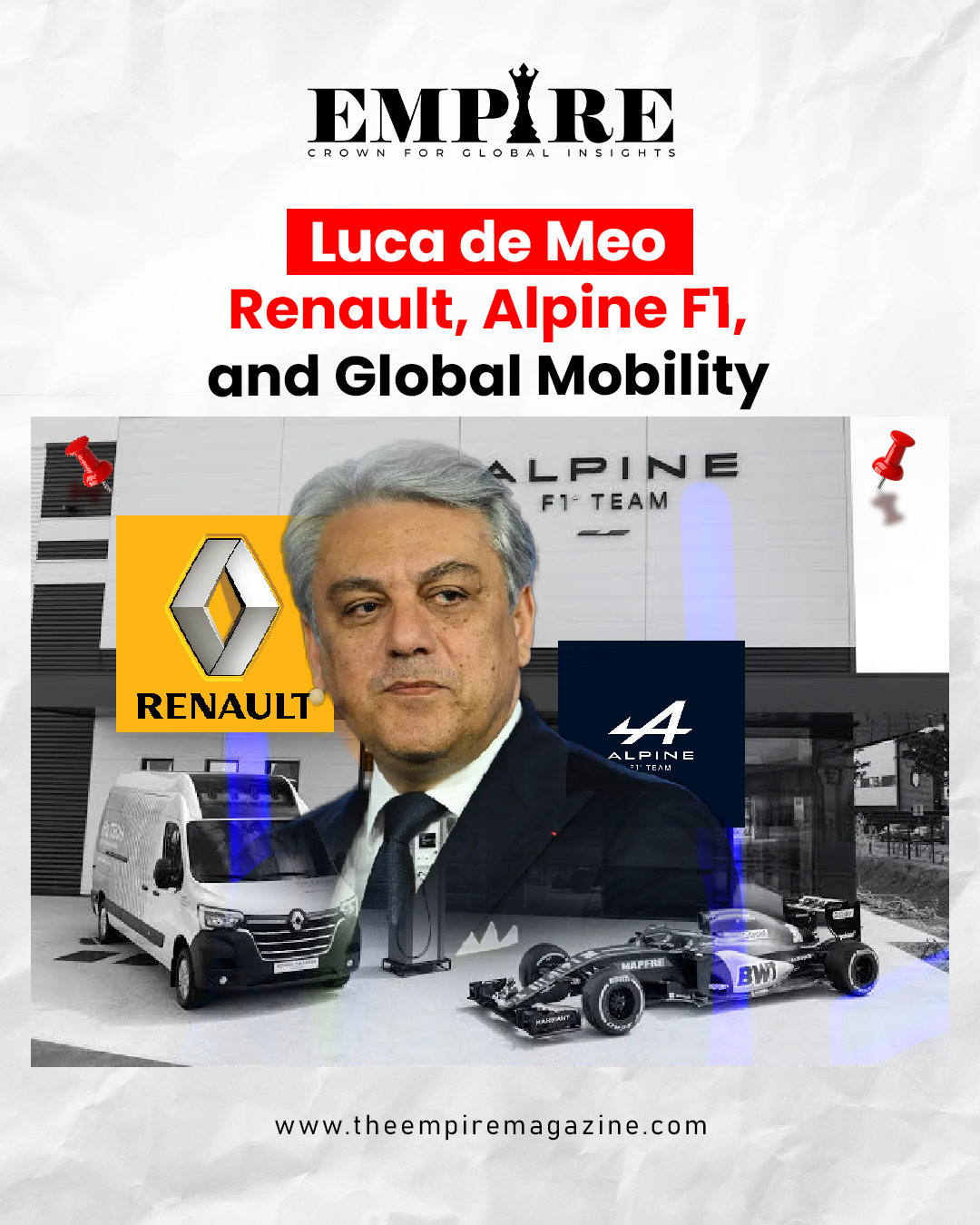
Luca de Meo is one of the most recognized European automotive executives of the modern mobility era. His career has included senior roles at Renault Group, SEAT, Fiat, Toyota Europe, Volkswagen Group, and now Kering, the French luxury group behind Gucci, Saint Laurent, Bottega Veneta, Balenciaga, and other luxury brands.
De Meo became especially visible during his time as chief executive officer of Renault Group. Appointed in July 2020, he led Renault through a major turnaround period after the company faced financial pressure, management instability, and industry disruption. His strategy focused on profitability, electrification, brand repositioning, operational discipline, and the future of mobility.
His leadership also brought renewed attention to Alpine, Renault’s performance and motorsport brand. Alpine became central to Renault’s image in electric sports cars, premium mobility, and Formula 1. De Meo’s strategy showed how modern car companies are no longer only selling vehicles. They are building brands around technology, energy transition, racing, software, lifestyle, and global mobility.
Who Is Luca de Meo?
Luca de Meo is an Italian business executive born in Milan in 1967. He built his career across some of Europe’s most important automotive companies. Before joining Renault, he worked at Toyota Europe, Fiat Group, Volkswagen Group, Audi, and SEAT.
At SEAT, de Meo was credited with improving brand performance and strengthening the company’s position in the Volkswagen Group. He also helped develop Cupra as a performance-focused brand. This experience became important later at Renault, where Alpine played a similar strategic role as a performance and lifestyle brand.
Renault CEO From 2020 to 2025
De Meo became CEO of Renault Group in 2020. His appointment came during a difficult period for the automaker. Renault was dealing with weak profitability, post-pandemic uncertainty, global supply chain pressure, and the need to accelerate its electric vehicle strategy.
His leadership focused on a turnaround plan called Renaulution. The plan moved Renault away from chasing volume at any cost and toward profitability, product discipline, stronger brands, and electric mobility.
In June 2025, Reuters reported that de Meo resigned from Renault, with French newspaper Le Figaro reporting that he would lead Gucci-owner Kering. Kering later confirmed his appointment, and he became CEO of Kering from September 15, 2025.
The Renaulution Strategy
Renaulution was Renault Group’s strategic plan under Luca de Meo. It aimed to reposition the company by focusing on value instead of only sales volume. This was important because the automotive industry was moving through one of its biggest transformations in decades.
Automakers were facing the shift to electric vehicles, stricter emissions rules, software-defined vehicles, battery supply challenges, Chinese EV competition, and changing customer expectations.
From Volume to Value
The Renaulution plan emphasized profitability, brand clarity, operational efficiency, and stronger product portfolios. Renault, Dacia, Alpine, and Mobilize each received clearer business roles inside the group.
Renault focused on mainstream vehicles and electrification. Dacia focused on affordable mobility. Alpine focused on performance, motorsport, and premium positioning. Mobilize focused on new mobility services, leasing, charging, and software-related business models.
This structure reflected the changing automotive market, where car companies need more than manufacturing scale. They need brand strength, technology platforms, software, services, and energy transition strategies.
Alpine as a Performance and Mobility Brand
Alpine became one of the most important parts of de Meo’s Renault strategy. The brand has a long history in sports cars and racing, but Renault repositioned it as a future-facing performance brand.
Alpine was expected to become fully electric, combining French performance identity with new mobility technology. This gave Renault a premium brand story in a market increasingly shaped by electric cars, racing visibility, and lifestyle positioning.
Why Alpine Matters to Renault
Alpine matters because performance brands can create emotional value. Many car companies use motorsport or performance divisions to improve brand image, test technology, and attract passionate customers. Examples include Mercedes-AMG, BMW M, Audi Sport, Porsche Motorsport, and Cupra.
For Renault, Alpine offered a way to compete beyond mass-market vehicles. It also gave the group a platform for Formula 1, electric sports cars, and premium mobility storytelling.
Alpine F1 and Global Brand Visibility
Formula 1 became a major part of Alpine’s global visibility. Renault rebranded its Formula 1 team as Alpine in 2021, giving the performance brand international exposure. F1 has become more than a motorsport championship. It is now a global entertainment, technology, luxury, and media platform.
During de Meo’s Renault years, Alpine F1 was part of a broader effort to connect racing with brand identity. The team helped Alpine reach international audiences and position itself as a performance brand with global ambition.
Formula 1 as Business Strategy
Formula 1 gives automakers a platform for technology, sponsorship, global marketing, and emotional storytelling. The sport attracts major brands, younger fans, luxury partners, and high-value audiences.
Alpine’s F1 strategy also continued after de Meo’s exit from Renault. In 2026, Reuters reported that Gucci would become the title partner of Renault’s Alpine Formula 1 team from the 2027 season, with the team to be rebranded as Gucci Racing Alpine Formula One Team. The move also connected back to de Meo because he had moved from Renault to Kering, Gucci’s parent company.
Renault, Mobility, and Electrification
Luca de Meo’s Renault strategy was closely connected to global mobility trends. The automotive industry is moving from internal combustion engines toward electric vehicles, hybrid powertrains, software systems, charging networks, and connected services.
Renault created Ampere as an electric vehicle and software-focused business. De Meo served as CEO of Ampere from November 2023 to March 2025, according to Kering’s official leadership profile.
Why Ampere Was Important
Ampere was designed to strengthen Renault’s electric vehicle and software strategy. Automakers are increasingly treating EV platforms, batteries, software, and digital services as core business areas.
This shift reflects the global mobility transition. Car companies are not only competing on engines and design. They are competing on battery efficiency, software experience, charging access, connected services, cost control, and data-driven systems.
Mobility Beyond Traditional Car Sales
The global mobility business now includes more than selling vehicles. Companies are exploring leasing, car sharing, charging services, fleet management, subscription models, digital platforms, and energy services.
Renault’s Mobilize brand was created to address this changing market. It focuses on mobility services, financing, charging, and vehicle-related solutions beyond traditional ownership.
Why Mobility Services Matter
Urban customers, businesses, and governments are changing how they think about transport. Cities are dealing with congestion, emissions, parking limits, and changing consumer behavior. Companies are looking for cleaner fleets, electric vans, charging infrastructure, and cost-efficient mobility solutions.
This creates opportunities for automakers to build new revenue streams beyond manufacturing vehicles.
De Meo’s Move From Renault to Kering
Luca de Meo’s move from Renault to Kering was unusual because it shifted him from the automotive industry to luxury fashion. However, the move also reflected the growing overlap between cars, luxury, lifestyle, and global brand management.
Kering shareholders approved de Meo’s appointment as CEO in September 2025. Reuters reported that 98.97% of shareholders backed his appointment, and François-Henri Pinault remained chairman.
Automotive Skills in Luxury Business
De Meo brought experience in brand building, industrial operations, restructuring, and performance management. These skills are relevant to Kering because the luxury group has been working to revive Gucci, improve profitability, strengthen store productivity, and manage manufacturing efficiency.
Reuters reported in 2026 that de Meo pledged to more than double Kering’s operating profit margin, improve Gucci’s appeal, shrink and upgrade the store network, and expand jewellery.
Why Luca de Meo Matters in Global Business
Luca de Meo matters because his career shows how leadership is changing across industries. Automotive companies are becoming technology and mobility businesses. Luxury companies are becoming lifestyle, experience, and global culture businesses. Motorsport is becoming a platform for brands far beyond car manufacturers.
His work at Renault connected turnaround strategy, electric mobility, performance branding, and Formula 1. His move to Kering showed how skills from automotive restructuring and brand management can transfer into luxury business.
Renault, Alpine, and the Future of Mobility
Renault’s future after de Meo continues to be shaped by the same forces he worked on: electrification, software, brand value, cost control, and global competition. Alpine remains part of the group’s strategy, including Formula 1 and premium electric performance.
Formula 1 also remains important to Alpine’s brand future. After de Meo’s departure, Alpine leadership said his exit did not change the team’s direction, and Renault’s new leadership confirmed Alpine’s place in the company’s broader strategy.
The Business Lessons From Luca de Meo’s Renault Era
Luca de Meo’s Renault era offers several business lessons. First, automotive turnarounds require disciplined product strategy, cost control, and brand clarity. Second, electric mobility is not only a technology shift; it is a full business-model shift. Third, performance brands such as Alpine can help mass-market automakers build emotional value and global visibility.
His career also shows that modern executives are increasingly moving across sectors where brand, technology, operations, and global customer experience intersect.
For more business and mobility insights, read this feature on The Empire Magazine.
Follow The Empire Magazine on Instagram and Facebook.
– The Empire Magazine
Crown For Global Insights