Women in Digital Health Powering Global Innovation
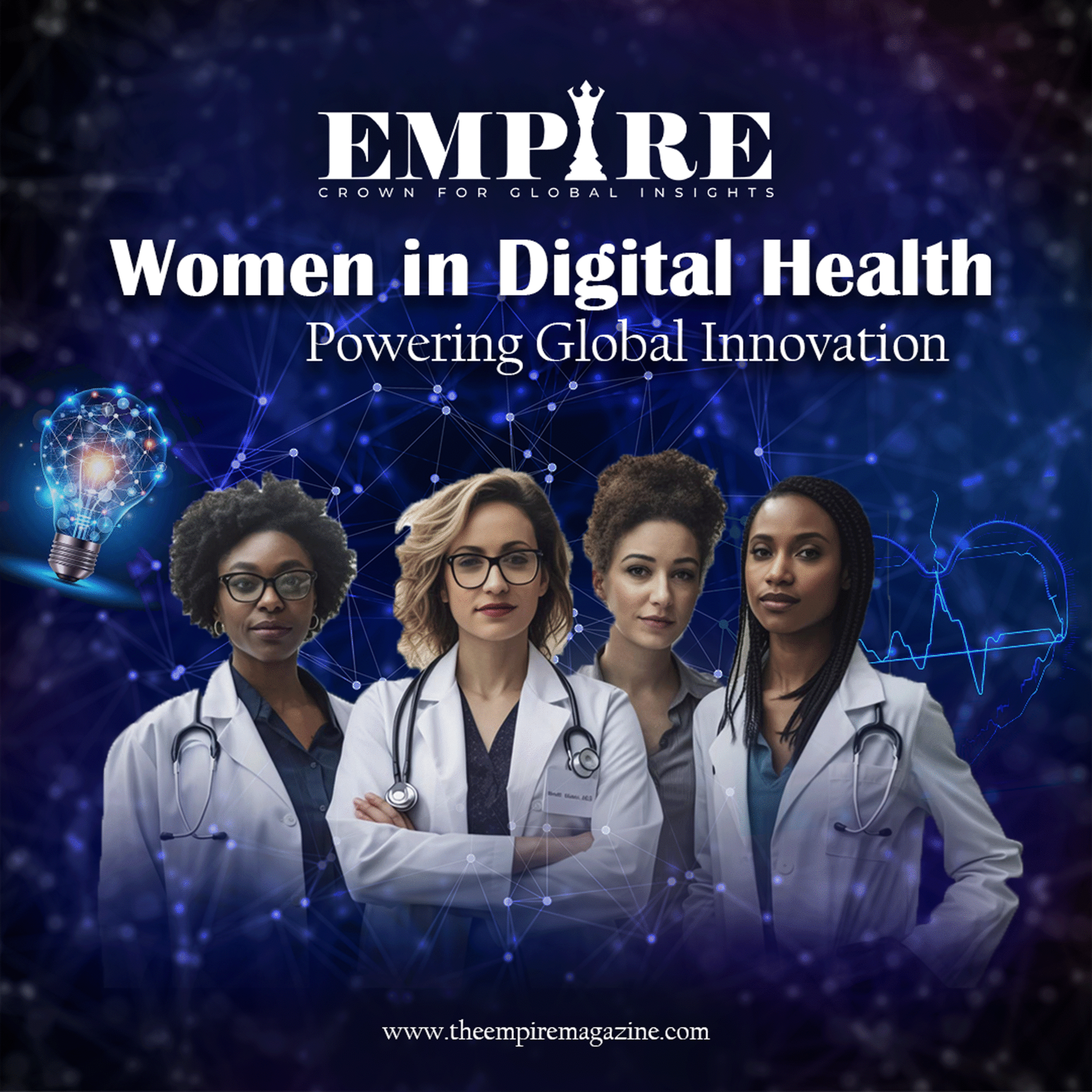
Digital healthcare is entering a transformative era, and Women in Digital Health are leading the movement. From artificial intelligence and telemedicine to biotechnology and wearable diagnostics, women innovators are redefining access, equity, and innovation in global healthcare systems.
This is not simply a technology story. It is a leadership story — one shaped by empathy, resilience, and strategic vision. Across Europe and worldwide, women founders, scientists, and executives are proving that digital health can be both technologically advanced and deeply human-centered.
Bridging the Healthcare Access Gap
One of the most powerful contributions of Women in Digital Health is expanding healthcare access. Digital platforms are eliminating geographical and economic barriers, making medical services more inclusive.
Telemedicine startups led by women are designing intuitive, multilingual platforms that prioritize underserved communities, rural patients, and working families. These solutions are not just convenient — they are essential.
In reproductive and fertility health, innovators like Elina Berglund of Natural Cycles have empowered women through data-driven tools that promote informed decision-making. These technologies allow individuals to take control of their health safely and affordably.
By aligning technology with lived experience, women leaders are ensuring healthcare access becomes a right rather than a privilege.
Advancing Equity Through Innovation
Beyond access, equity defines the work of Women in Digital Health. Historically, healthcare systems overlooked women’s health and minority needs. Today, women leaders are correcting those gaps.
The rise of FemTech is a prime example. Entrepreneurs like Emeline Hahn (Fizimed) are addressing pelvic health, postpartum recovery, and menopause care — areas once marginalized in mainstream healthcare.
Equity also extends to social determinants of health. Women-led platforms integrate factors such as income, housing, and education into digital assessments, delivering more accurate and inclusive outcomes.
Leadership diversity further strengthens equity. Women executives bring broader perspectives to healthcare policy, research pipelines, and boardrooms, influencing structural change at scale.
Purpose-Driven Innovation
Innovation in healthcare must go beyond patents and funding rounds. Women in Digital Health are building solutions grounded in purpose.
Agnès Arbat of Oxolife is advancing fertility treatments to improve embryo implantation success rates. Elizabeth McGloughlin of Tympany Medical is developing advanced endoscopy tools that enhance surgical precision.
These leaders combine science with empathy. Their work reduces suffering, improves patient outcomes, and redefines innovation as service — not spectacle.
Sustainability also plays a role. Women founders are integrating preventive care and environmental responsibility into healthcare models, ensuring the digital health revolution remains ethical and future-ready.
Empathy as a Strategic Advantage
Healthcare is deeply personal. What distinguishes many Women in Digital Health is their emphasis on empathy-driven leadership.
Digital platforms for chronic disease management and mental health increasingly include peer support communities, emotional guidance, and personalized care journeys. These features reflect a deeper understanding of patient psychology.
Empathy also influences company culture. Women-led teams often prioritize collaboration, inclusivity, and well-being — creating organizations that innovate responsibly and sustainably.
Overcoming Industry Barriers
Despite progress, women founders still face funding gaps and underrepresentation. Venture capital allocation remains disproportionately skewed toward male-led startups.
Clinical research bias is another challenge. Historically, many medical studies underrepresented women, creating data limitations. Women leaders are now advocating for inclusive data frameworks that better reflect real populations.
Support networks and accelerators across Europe are helping close these gaps, creating mentorship ecosystems and financial pathways for future innovators.
The Inclusive Future of Digital Health
The rise of Women in Digital Health signals a long-term structural shift. Healthcare’s future will be defined by inclusive leadership, patient-centered technology, and ethical innovation.
Emerging fields such as AI diagnostics, neurotechnology, and personalized medicine will increasingly benefit from diverse leadership perspectives. Innovators like Ana Maiques of Neuroelectrics demonstrate how digital brain stimulation technology can revolutionize neurological treatment.
As digital health evolves, inclusivity will determine its success.
Conclusion
The digital health revolution is not just about algorithms and devices. It is about people — and Women in Digital Health are shaping its direction.
They are closing access gaps, advancing equity, and innovating with purpose. Their leadership blends science with empathy, strategy with social impact.
As healthcare continues its digital transformation, the influence of women leaders will ensure that innovation remains inclusive, ethical, and deeply human.
🔗 Related Insight For deeper insight into how visionary leadership is transforming industries through innovation and strategy, read our previous feature here:
👉 https://theempiremagazine.com/?p=5108&preview=true
– The Empire Magazine
Crown For Global Insights