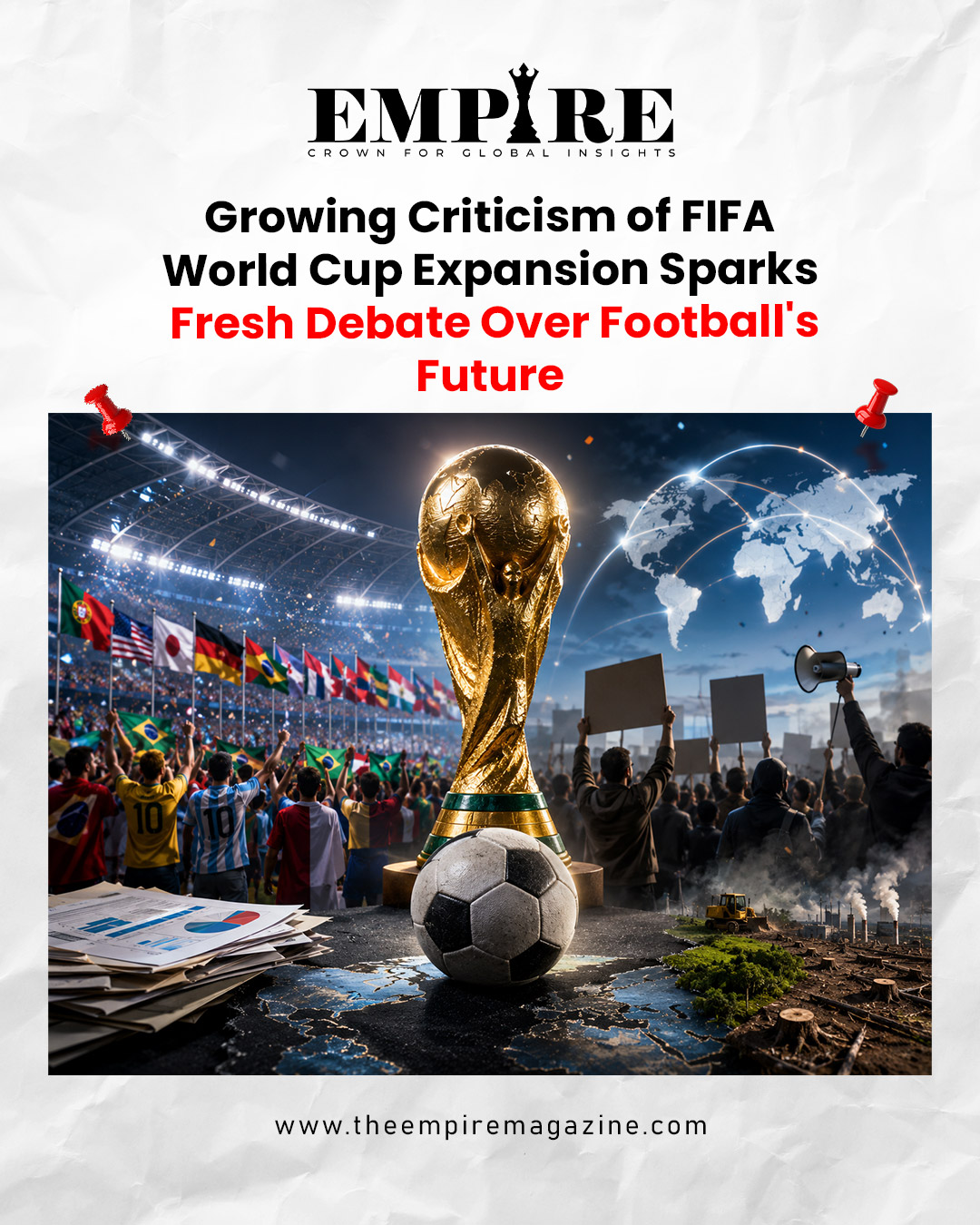
Growing criticism of FIFA World Cup expansion raises concerns over player welfare, tournament quality, fan experience, and the future of global football.
Growing Criticism of FIFA World Cup Expansion Sparks Fresh Debate Over Football’s Future
The FIFA World Cup has long represented the pinnacle of international football, bringing together the finest players, unforgettable moments, and billions of passionate supporters from every corner of the globe. Every four years, the tournament unites cultures, inspires generations, and reminds the world why football remains the most beloved sport on the planet. Yet, as FIFA prepares for the first-ever 48-team FIFA World Cup in 2026, the excitement surrounding the tournament is increasingly being matched by growing criticism of FIFA World Cup expansion.
While FIFA believes the expanded competition will make football more inclusive by offering opportunities to more nations, critics argue that the move risks compromising the very qualities that made the World Cup extraordinary. Former players, managers, football associations, broadcasters, and supporters have all raised concerns about tournament quality, player fatigue, commercial priorities, scheduling challenges, and the long-term future of international football.
The debate has evolved far beyond a discussion about adding more teams. It has become a broader conversation about balancing global growth with sporting excellence. Can football become more inclusive without sacrificing competitiveness? Is expansion driven by sporting values or commercial ambitions? Most importantly, what does this decision mean for football’s future?
As preparations continue for the historic tournament across the United States, Canada, and Mexico, these questions are becoming impossible to ignore.
Why FIFA World Cup Expansion Is Happening
The decision to expand the FIFA World Cup from 32 to 48 participating nations represents one of the biggest structural changes in the tournament’s history since its inception in 1930. FIFA has consistently argued that football has become increasingly global and that more countries deserve the opportunity to compete on the biggest stage. Under the expanded format, 104 matches will be played instead of 64, allowing emerging football nations from Asia, Africa, North America, Oceania, and the Middle East to qualify more regularly. FIFA believes this wider representation will accelerate football development, strengthen national programs, inspire investment in grassroots infrastructure, and create new heroes across regions that have historically struggled to qualify. The governing body also expects greater worldwide television audiences, stronger sponsorship revenues, and increased commercial partnerships, helping fund future football development initiatives. Supporters of expansion view the decision as a natural evolution of a sport that now enjoys unprecedented global participation.
Growing Criticism of FIFA World Cup Expansion and Tournament Quality
Despite FIFA’s optimism, growing criticism of FIFA World Cup expansion centres largely on concerns that increasing the number of participating nations could dilute the tournament’s overall quality. The traditional World Cup earned its prestige through fiercely competitive qualification campaigns, ensuring only the strongest teams reached the finals. Critics argue that automatic inclusion of more countries may produce one-sided matches during the group stage, reducing excitement and competitive intensity. Former international players have questioned whether expanding participation automatically improves football development or simply lowers qualification standards. Analysts also warn that the longer tournament could make it harder for fans to remain emotionally invested throughout more than one hundred matches. Instead of creating additional memorable contests, there are fears that the expanded competition may include more predictable results before the knockout rounds begin. For many football purists, the rarity of qualifying for the World Cup has always contributed to its unique magic, and they worry that expansion may unintentionally weaken that sense of exclusivity.
Growing Criticism of FIFA World Cup Expansion Over Player Welfare
Another major concern surrounding growing criticism of FIFA World Cup expansion involves player welfare. Modern football calendars have become increasingly congested, with elite players competing in domestic leagues, continental competitions, international qualifiers, club championships, and commercial tours almost year-round. Adding significantly more World Cup matches raises concerns about physical exhaustion, muscle injuries, burnout, and declining performance levels. Medical experts have repeatedly warned that inadequate recovery periods can increase long-term health risks for professional athletes. Player unions have also expressed concerns about overloaded schedules affecting mental health and career longevity. Clubs investing millions in their players naturally worry about injuries sustained during extended international tournaments. While FIFA has introduced various scheduling adjustments to reduce travel burdens during the 2026 competition, many stakeholders believe the broader issue extends beyond logistics. The discussion increasingly reflects a fundamental question about whether commercial growth should outweigh the physical wellbeing of the players who ultimately define football’s global appeal.
FIFA World Cup Expansion Creates Financial Opportunities
Supporters of FIFA World Cup expansion argue that the financial benefits cannot be overlooked. A larger tournament generates substantially higher broadcasting revenues, increased sponsorship opportunities, greater ticket sales, expanded tourism, and stronger economic activity for host nations. The United States, Canada, and Mexico are expected to welcome millions of international visitors during the tournament, creating significant opportunities for local businesses, hospitality industries, transportation providers, and infrastructure development. FIFA also expects additional revenue to strengthen football development programs worldwide, particularly in emerging nations that require investment in coaching, youth academies, women’s football, and grassroots facilities. Advocates believe the expanded World Cup will make football more economically sustainable while ensuring that financial gains are distributed across more member associations. However, critics continue questioning whether these commercial benefits genuinely reach developing football communities or remain concentrated within football’s governing institutions and major commercial partners, making transparency an increasingly important aspect of the wider debate.
Fans Remain Divided Over FIFA World Cup Expansion
Football supporters remain deeply divided over FIFA World Cup expansion, reflecting the complexity of the issue itself. Fans from developing football nations often welcome the opportunity to witness their national teams compete on the world’s biggest sporting stage, viewing qualification as transformational for local football culture and national pride. For countries that have narrowly missed qualification for decades, expansion represents hope and recognition rather than compromise. Conversely, many long-time supporters fear the tournament may gradually resemble an extended league competition rather than a rare global spectacle. They argue that the emotional value of the World Cup comes from its exclusivity, where every match feels significant because qualification itself is exceptionally difficult. Social media discussions, football podcasts, supporter forums, and sports broadcasters continue reflecting these contrasting perspectives. While excitement for the 2026 tournament remains remarkably high, public opinion increasingly demonstrates that football fans value both inclusivity and competitive excellence, making the future success of expansion heavily dependent on how effectively FIFA manages this delicate balance.
Growing Criticism of FIFA World Cup Expansion and Football’s Future
Beyond scheduling and finances, growing criticism of FIFA World Cup expansion has opened a much broader discussion about football’s future. Many experts believe the debate represents a wider conflict between sporting tradition and commercial evolution. Football has transformed dramatically over the past two decades through increased broadcasting rights, digital media, private investment, global sponsorships, and international marketing strategies. Expansion fits naturally within this commercial landscape, yet critics caution against allowing business objectives to overshadow sporting integrity. Some analysts suggest that strengthening regional competitions, investing more aggressively in youth football, and improving qualification pathways may deliver greater long-term benefits than simply increasing tournament size. Others argue that football’s global popularity naturally demands broader participation and that resisting change risks excluding emerging football nations from meaningful international competition. As football continues expanding into new markets, governing bodies will face increasing pressure to balance commercial success with fairness, competitiveness, and the emotional connection supporters have built with the sport over generations.
Can FIFA Balance Growth and Sporting Integrity?
The success or failure of FIFA World Cup expansion will ultimately be judged not by the number of participating nations but by the quality of football the tournament delivers. If the expanded competition produces unforgettable matches, new global stars, stronger football development, and broader international engagement without compromising competitive standards, FIFA’s ambitious vision may well be validated. However, if player fatigue worsens, tournament intensity declines, and commercial priorities appear to dominate sporting values, criticism is likely to grow even louder in future editions. Football has always evolved alongside changing audiences, technologies, and global opportunities, but preserving the integrity of the world’s greatest tournament remains essential. The coming years will therefore serve as a defining chapter in international football history, determining whether FIFA World Cup expansion becomes one of the sport’s greatest achievements or one of its most controversial experiments. Whatever the outcome, the debate has already reshaped conversations about football’s future, ensuring that every match played in the expanded World Cup will carry significance far beyond the final score.
For more business and retail insights, read more on The Empire Magazine
Previous article: https://theempiremagazine.com/marine-heatwave-uk/
Magazine Feautures | Podcasts: Empire Global Talks
Follow The Empire Magazine on Facebook | Instagram | LinkedIn | YouTube
The Empire Magazine | Crown for Global Insights