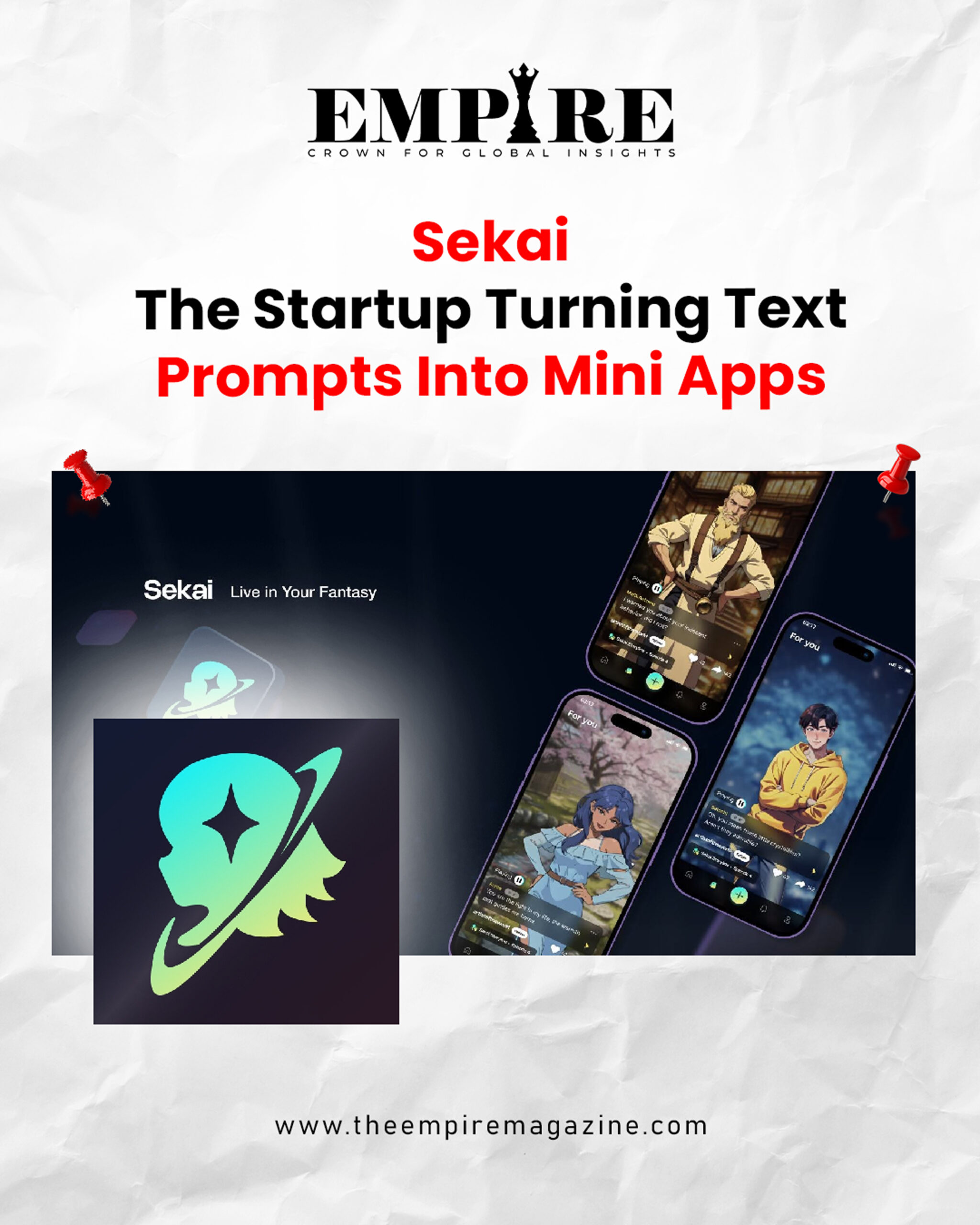
Sekai is an AI-powered startup that allows users to create, play, remix, and share interactive mini apps through simple text prompts. Instead of only watching videos or scrolling through static content, users can describe an idea and turn it into a playable mini app within seconds. This makes Sekai part of a new wave of consumer AI platforms where software creation becomes faster, easier, and more social.
The platform is designed for users who want to create interactive experiences without coding knowledge. A person can make a quiz, party game, digital card, fan interaction tool, mini utility, poll, or creative game by explaining the concept in natural language. Sekai’s AI then turns that prompt into a working interactive experience.
This model shows how artificial intelligence is changing app creation. Earlier, building even a small app required design skills, coding knowledge, development tools, testing, and publishing. Sekai reduces that process into a prompt-based creation flow, making app building more accessible to everyday users.
What Sekai Does
Sekai describes itself as an AI-powered interactive content platform for user-created mini apps. Its core idea is simple: users create apps by writing what they want, play apps made by others, and remix existing apps into new versions.
The platform is available on iOS and Android, making it mobile-first. This is important because many consumer technology platforms grow through smartphones, social sharing, and fast user participation.
Create, Play, and Remix
Sekai’s model is built around three actions: create, play, and remix. Users can create original mini apps through prompts. They can play mini apps made by other users. They can also remix existing apps by changing questions, characters, rules, design, or the overall concept.
This remix feature makes Sekai similar to social content platforms where users do not only consume content but also participate in creating new versions. In this case, the content is not a short video or image. It is interactive software.
Founder and Funding
Sekai was founded in 2024 and is led by founder and CEO Lucky Zhang. According to Axios, Sekai raised a $20 million Series A funding round to expand its AI-powered mini app creation platform. The round was co-led by Khosla Ventures and Connect Ventures, with participation from investors including a16z Speedrun, Mayfield, A*, MVP Ventures, 359 Capital, Parable VC, and 645 Ventures.
Lucky Zhang has a background in consumer technology and startups. Axios reported that Sekai is his fourth venture. His previous startup history includes Yi+ AI, a video e-commerce company acquired by Apple in 2017, and Blacktail, a Latin America-based short-video platform acquired by ByteDance in 2020.
Why Investors Are Interested
Investors are interested in Sekai because it connects several fast-growing technology trends: generative AI, consumer apps, social platforms, app creation, gaming, and user-generated content. The platform is based on the idea that software itself can become a new form of online expression.
Instead of users only posting photos, videos, or text, Sekai allows them to post playable experiences. This creates a new category where users can interact with content more directly.
Why Mini Apps Matter
Mini apps are small, focused applications that serve a specific purpose. They can be games, quizzes, tools, cards, polls, calculators, fan experiences, or interactive stories. Because they are lightweight, they can be created and shared quickly.
Software as Social Content
Sekai’s business idea connects to the concept of software as social content. Traditional apps are usually built by developers and distributed through app stores. Sekai changes that structure by allowing users to generate small interactive apps inside one platform.
This lowers the barrier between idea and execution. A creator can test a concept quickly. A fan can build an interactive experience for a community. A small business owner can create a simple engagement tool. A student can create a quiz or learning activity.
How AI Changes App Creation
Artificial intelligence is making app creation faster because it can translate natural language into functional outputs. With AI-powered tools, users can describe what they want instead of writing code line by line.
From Coding to Prompting
Sekai reflects a broader shift from coding-first creation to prompt-first creation. In this model, the user provides the idea, and the AI handles much of the technical structure. This does not replace professional software engineering for complex products, but it makes simple app creation accessible to more people.
For users, this means creativity becomes more important than technical skill. The better the idea and prompt, the more useful or entertaining the mini app can become.
Sekai and the Consumer AI Market
The consumer AI market is becoming highly competitive. Many startups are building AI tools for images, videos, music, writing, games, coding, avatars, agents, and social experiences. Sekai stands out because it focuses on interactive mini apps instead of only static or passive content.
Beyond Passive Scrolling
Many social platforms are based on passive consumption. Users scroll through videos, images, and posts. Sekai is built around participation. Users can interact with mini apps, change them, and create new versions.
This makes the platform more active. It turns users from viewers into builders and remixers.
Use Cases for Sekai
Sekai’s mini apps can be used for entertainment, personal expression, social engagement, learning, and simple utilities. Examples include personality quizzes, birthday cards, date-idea pickers, party games, polls, spin-the-wheel tools, fan interaction formats, and interactive memes.
Creators and Communities
Creators can use mini apps to engage followers in more interactive ways. A musician, influencer, brand, or fan community could create games, quizzes, or challenges connected to their audience.
This creates a new form of engagement where followers do not only comment or like posts. They play, respond, remix, and share.
Challenges for Sekai
Sekai also faces real challenges. Consumer apps must keep users engaged over time. AI-generated content platforms need quality control, safety systems, moderation, and reliable performance. Mini apps must be fun, useful, and easy to share.
Quality, Safety, and Retention
If users create a large number of low-quality mini apps, the platform may become noisy. Sekai needs strong discovery systems so users can find the best experiences. It also needs safety controls to prevent harmful, misleading, or inappropriate content.
Retention is another major challenge. Many consumer apps gain attention quickly but struggle to keep users returning. Sekai’s long-term success will depend on whether mini apps become a regular habit for creators and players.
Why Sekai Matters in Startup Innovation
Sekai matters because it shows how AI is expanding the definition of software creation. The platform is not only helping developers build faster. It is allowing ordinary users to create small apps from ideas.
This is important for the future of consumer technology. If AI makes app creation as simple as writing a prompt, more people can participate in building digital experiences. That could change how entertainment, education, fan communities, small businesses, and social platforms work.
For more startup and business insights, read this feature on The Empire Magazine.
Follow The Empire Magazine on Instagram and Facebook.
– The Empire Magazine
Crown For Global Insights