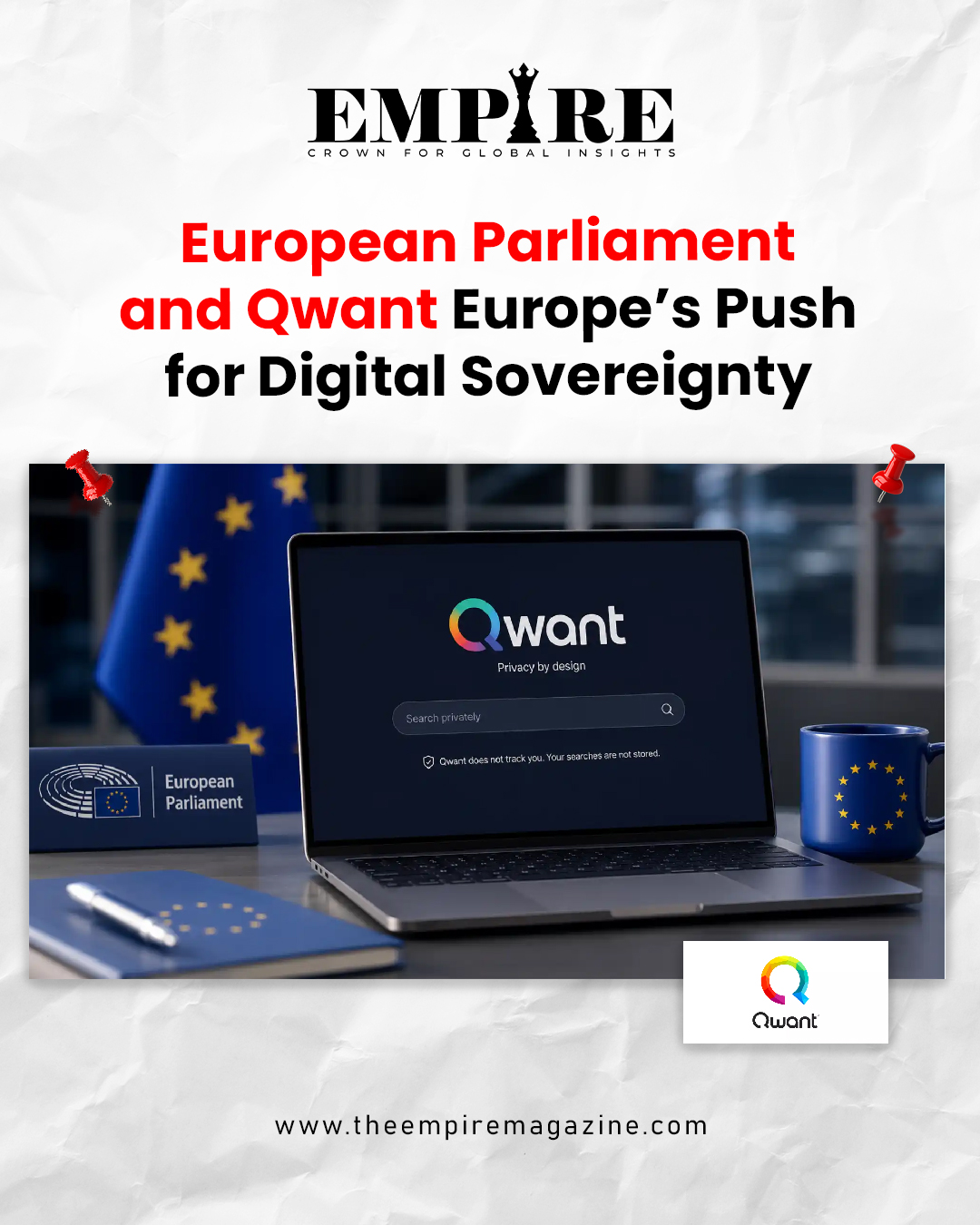
European Parliament and Qwant are now part of a wider European debate about digital sovereignty, privacy, and technology independence. The European Parliament’s decision to make Qwant the default search engine on its internal Microsoft Edge and Mozilla Firefox browsers shows how European institutions are rethinking their dependence on foreign digital platforms.
From June 4, 2026, Qwant, a French search engine, is set to replace Google as the default search option for the European Parliament’s internal browser systems. The change applies to Members of the European Parliament, assistants, and administrative staff. However, users will still be able to choose another search engine if they prefer.
This move is not only about search results. It reflects Europe’s growing effort to support local digital services, strengthen privacy-focused tools, and reduce reliance on non-European technology companies.
European Parliament and Qwant: A Strategic Digital Decision
The decision involving the European Parliament and Qwant comes at a time when European policymakers are paying closer attention to digital independence. For many years, major online services used across Europe have been operated by companies based outside the European Union. Search engines, cloud platforms, workplace tools, browsers, operating systems, and advertising systems are often controlled by global technology giants, especially from the United States.
By choosing Qwant as the default search engine, the European Parliament is sending a symbolic and practical message. The institution is showing that European digital tools can be used inside official public systems. It is also encouraging a broader discussion about whether Europe should build and support more of its own digital infrastructure.
Qwant is based in France and promotes itself as a privacy-focused search engine. According to Qwant, it does not store users’ search data, does not sell personal data, and is hosted in Europe. These points are important for European institutions because privacy, data protection, and user control are major principles within the European digital policy environment.
Why Digital Sovereignty Matters
Digital sovereignty means the ability of a country or region to control its digital infrastructure, data, technology choices, and strategic systems. For the European Union, this idea has become more important as digital tools now influence government operations, business activity, communication, public services, and democratic processes.
When public institutions depend heavily on foreign digital platforms, several concerns can arise. These include data protection, vendor lock-in, foreign legal exposure, market concentration, and limited control over key technology systems.
The European Parliament’s move toward Qwant highlights one part of this larger issue. Even something as simple as a default search engine can carry strategic importance.
Search engines are not just basic internet tools. They shape how users access information, discover sources, and interact with the web. They also involve data flows, advertising models, ranking systems, and technical infrastructure. For a public institution like the European Parliament, choosing a European alternative can be seen as a step toward more control over digital choices.
Privacy as a Core Factor
Privacy is one of the strongest reasons behind Europe’s interest in digital sovereignty. The European Union has already built a global reputation for data protection through rules such as the General Data Protection Regulation. This legal and policy environment makes privacy-focused digital services more attractive for public bodies.
Qwant’s public message is built around respecting users rather than treating them as advertising products. The company says it does not retain search data and does not sell personal information. For an institution that handles political, administrative, and policy-related work, a privacy-first tool can align better with European values.
This does not mean that switching to Qwant solves every digital dependency issue. Search infrastructure is complex, and European digital services still operate in a competitive global market. However, the move gives visibility to European alternatives and supports the idea that public institutions should consider privacy, sovereignty, and strategic autonomy when choosing technology.
Reducing Dependence on Big Tech
The European Parliament and Qwant story is also part of a larger debate about Big Tech dependence. Google has long been the dominant search engine in many markets, including Europe. Its search product is deeply connected to advertising, browser defaults, mobile ecosystems, and online business visibility.
For European policymakers, this dominance raises questions about competition and control. If most users rely on a small number of global platforms, local companies may struggle to grow. Public institutions may also become dependent on systems they do not fully control.
By moving toward Qwant as the default search engine, the European Parliament is supporting the idea that European alternatives deserve space inside official systems. The decision does not ban Google or remove user choice. Instead, it changes the default setting, which is powerful because many users stay with default tools unless they have a specific reason to change.
A Signal to European Technology Companies
This move may encourage other European technology companies by showing that public institutions can adopt local services. For startups and digital service providers, government and institutional adoption can build trust, visibility, and long-term credibility.
Europe has often been strong in regulation but less dominant in consumer-facing digital platforms compared with the United States and China. Supporting European digital tools could help close part of that gap. The European Parliament’s choice of Qwant may therefore be seen as both a technology decision and an economic signal.
It tells the market that European institutions are willing to consider European-based services when they meet privacy, functionality, and policy requirements.
What It Means for Users
For users inside the European Parliament, the immediate change is simple. Qwant becomes the default search engine on Microsoft Edge and Mozilla Firefox browsers used within the institution. However, users can still select another search engine if they want.
This is important because the decision respects user choice while still promoting a European default. It does not force everyone to use one platform permanently. Instead, it changes the starting point and makes Qwant the first option for daily searches.
For everyday internet users outside the Parliament, the decision may increase awareness of Qwant and other European digital alternatives. Many people know Google, Bing, and other global search engines, but fewer users actively explore European search tools. A high-profile institutional switch can bring more attention to privacy-focused search options.
The Bigger European Digital Policy Picture
The European Parliament and Qwant development fits into a wider European policy direction. Europe has been working to strengthen its position in digital infrastructure, data governance, cybersecurity, chips, cloud services, and platform regulation. The goal is not only to regulate global technology companies but also to create stronger European capacity.
Digital sovereignty does not mean cutting Europe off from global technology. Instead, it means ensuring that Europe has dependable choices, stronger local capabilities, and more control over sensitive digital systems. In this context, the Qwant decision is a small but visible part of a bigger strategy.
The move also connects with Europe’s broader concern about strategic autonomy. In areas such as energy, defense, trade, and technology, European leaders have increasingly discussed the need to reduce risky dependencies. Digital tools are now part of that conversation because they support almost every part of modern public and business life.
Challenges Ahead
Even with this symbolic progress, challenges remain. Competing with established search engines is difficult. Large search platforms benefit from massive infrastructure, advertising networks, user habits, data systems, and long-term brand recognition.
Qwant must continue proving that it can offer reliable search quality, strong privacy standards, and a smooth user experience. For digital sovereignty to succeed, European alternatives must not only be European; they must also be useful, secure, and competitive.
Public adoption can help, but long-term success depends on performance and trust. If users feel that an alternative works well, they are more likely to keep using it. If the experience is weaker, they may quickly return to familiar global platforms.
A Turning Point for Digital Independence
The European Parliament and Qwant decision is important because it turns digital sovereignty from a policy phrase into a practical workplace change. It shows that institutions can make direct technology choices that support privacy, competition, and European digital capacity.
For businesses, the lesson is also clear. Technology choices are no longer only about convenience or cost. They are increasingly connected to data protection, brand trust, compliance, and long-term independence. Companies that operate in Europe may see more demand for privacy-first and locally governed digital tools.
Readers interested in global business, luxury, and technology shifts can also explore this related article on US luxury fashion becoming a major global epicenter in 2026.
For more updates from The Empire Magazine, follow us on Facebook and Instagram.
– The Empire Magazine
Crown For Global Insights