
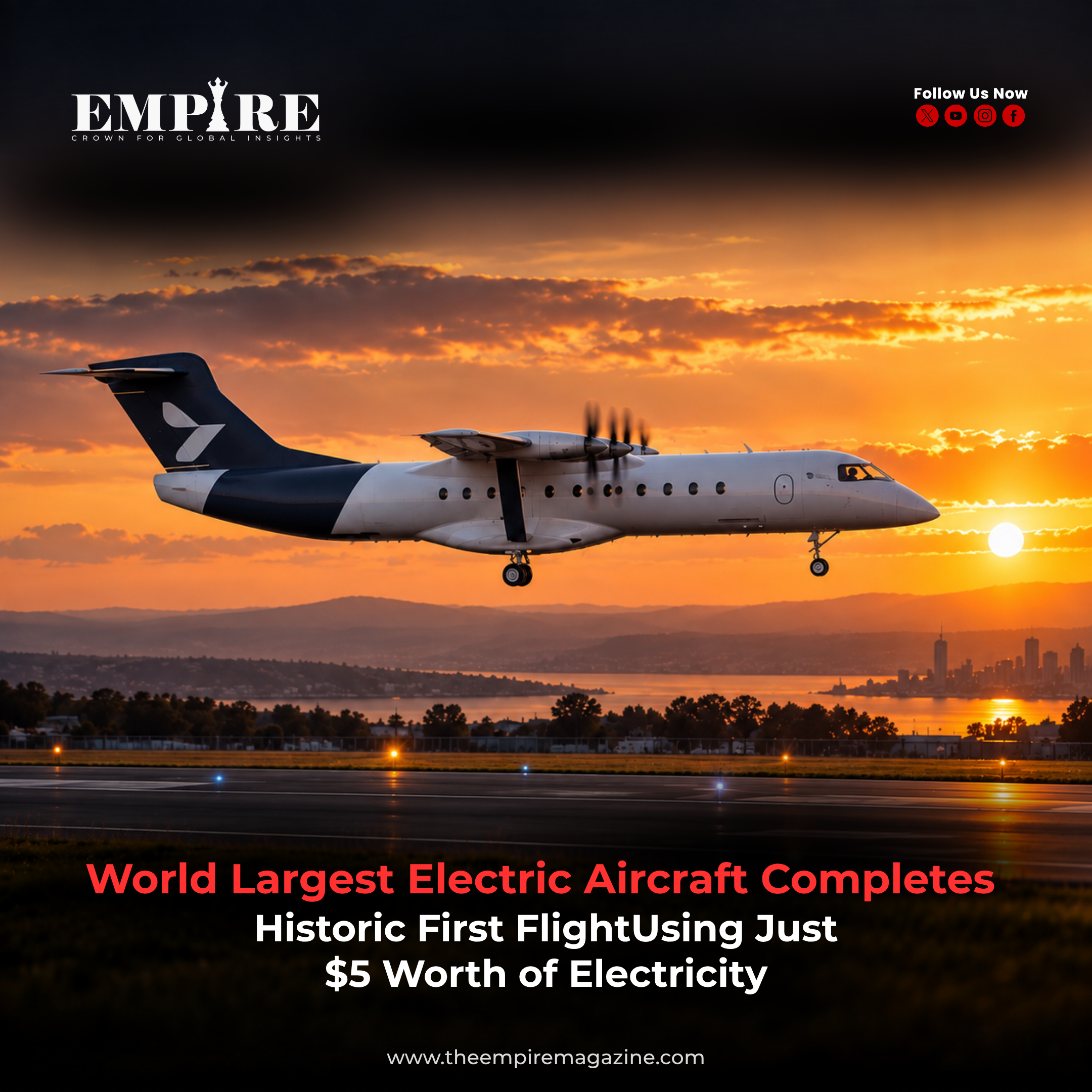
World Largest Electric Aircraft has achieved a historic milestone by completing its first flight while using only a small amount of electricity compared with traditional aircraft operations. The successful test flight represents a major step forward for electric aviation and demonstrates how advances in battery technology, electric propulsion, and aircraft engineering are changing the future of transportation.
The aircraft’s first flight attracted global attention because of its extremely low energy consumption. According to reports, the short demonstration flight required only around $5 worth of electricity, highlighting the potential efficiency advantages of electric aircraft compared with conventional fuel-powered aviation.
The development reflects a growing global effort to reduce carbon emissions from transportation. Aviation remains one of the most challenging industries to decarbonise because aircraft require high energy output and long-distance capabilities. Electric aircraft technology is emerging as one possible solution for reducing emissions, especially for shorter routes and specialised aviation applications.
World Largest Electric Aircraft Demonstrates the Future of Sustainable Aviation
The development of the World Largest Electric Aircraft represents a significant achievement in the transition toward cleaner aviation technologies.
Traditional aircraft rely on fossil fuels such as aviation turbine fuel, creating greenhouse gas emissions during operation. Electric aircraft replace conventional engines with electric motors powered by batteries or other electrical energy sources.
Electric propulsion offers several potential advantages:
- Lower operating emissions
- Reduced energy costs
- Quieter flight operations
- Improved energy efficiency
- Lower maintenance requirements
However, creating large electric aircraft remains a major engineering challenge because aviation requires powerful propulsion systems while keeping aircraft weight low.
The successful flight demonstrates how engineers are working to overcome these challenges through improvements in aircraft design and electric power systems.
World Largest Electric Aircraft Uses Advanced Electric Propulsion Technology
A major component behind electric aircraft development is the advancement of electric propulsion systems.
Unlike traditional aircraft engines that burn fuel to generate thrust, electric aircraft use electric motors powered by energy storage systems.
These systems involve:
Electric Motors
Electric motors convert electrical energy into mechanical power to drive aircraft propellers or propulsion systems.
Battery Technology
High-capacity batteries provide the energy required for flight operations.
Lightweight Aircraft Design
Reducing aircraft weight is essential because batteries are heavier than traditional aviation fuel for the same amount of stored energy.
The development of larger electric aircraft depends heavily on continued improvements in battery energy density and efficiency.
World Largest Electric Aircraft Highlights the Growing Electric Aviation Industry
The electric aviation sector has expanded rapidly as companies and governments invest in cleaner transportation technologies.
Several aviation companies are developing electric and hybrid aircraft designed for different purposes, including:
- Urban air mobility
- Short-distance passenger flights
- Cargo transportation
- Training aircraft
- Regional aviation
The World Largest Electric Aircraft flight represents progress in this broader industry movement.
While fully electric commercial aviation for long-distance flights remains challenging, smaller aircraft and short-distance operations are considered more achievable in the near term.
World Largest Electric Aircraft Shows How Technology Can Reduce Aviation Costs
One of the most discussed benefits of electric aircraft is the potential reduction in operating costs.
Electric motors generally have fewer moving parts compared with traditional combustion engines, which may reduce maintenance requirements.
Electricity can also be cheaper than aviation fuel, depending on energy sources and market conditions.
The reported $5 electricity cost for the aircraft’s first flight demonstrates the potential efficiency of electric propulsion during short test flights.
However, the total cost of aircraft operations includes additional factors such as:
- Aircraft manufacturing
- Battery replacement
- Infrastructure development
- Maintenance
- Charging systems
Electric aviation must become economically competitive while maintaining safety standards.
World Largest Electric Aircraft Faces Challenges Before Commercial Adoption
Despite major progress, electric aviation still faces several challenges before widespread adoption.
Battery Limitations
Current battery technology does not yet provide the same energy density as aviation fuel.
This limits the distance and payload capacity of fully electric aircraft.
Charging Infrastructure
Airports and aviation facilities will require new charging systems to support electric aircraft operations.
Aircraft Size and Range
Large passenger aircraft require enormous amounts of energy, making full electrification difficult with current technology.
Researchers and companies are continuing to explore solutions including improved batteries, hybrid-electric systems, and alternative fuels.
World Largest Electric Aircraft Represents a New Era of Clean Transportation
The successful first flight represents more than an aviation achievement. It reflects a wider transformation happening across transportation industries.
From electric vehicles to renewable energy systems, technology companies and manufacturers are exploring ways to reduce dependence on fossil fuels.
Electric aircraft development is part of this global movement toward cleaner transportation.
Similar technology-driven transformations are also reshaping industries worldwide, including artificial intelligence, advanced manufacturing, and sustainable energy solutions.
Read more technology insights here: https://theempiremagazine.com/japan-carbon-recycling-technology/
World Largest Electric Aircraft and the Future of Aviation Innovation
The future of aviation is expected to involve multiple technologies working together.
Electric aircraft may become an important solution for specific aviation segments, while hybrid systems and sustainable aviation fuels may support larger aircraft.
The achievement of the World Largest Electric Aircraft shows how engineering innovation is pushing the boundaries of what is possible in aviation.
As battery technology improves and infrastructure develops, electric aircraft could become an increasingly important part of the global transportation ecosystem.
Follow The Empire Magazine for global business, technology, innovation, and leadership insights:
Facebook: https://www.facebook.com/profile.php?id=61573749076160
Instagram: https://www.instagram.com/the_empire_magazine/
The Empire Magazine | Crown For Global Insights