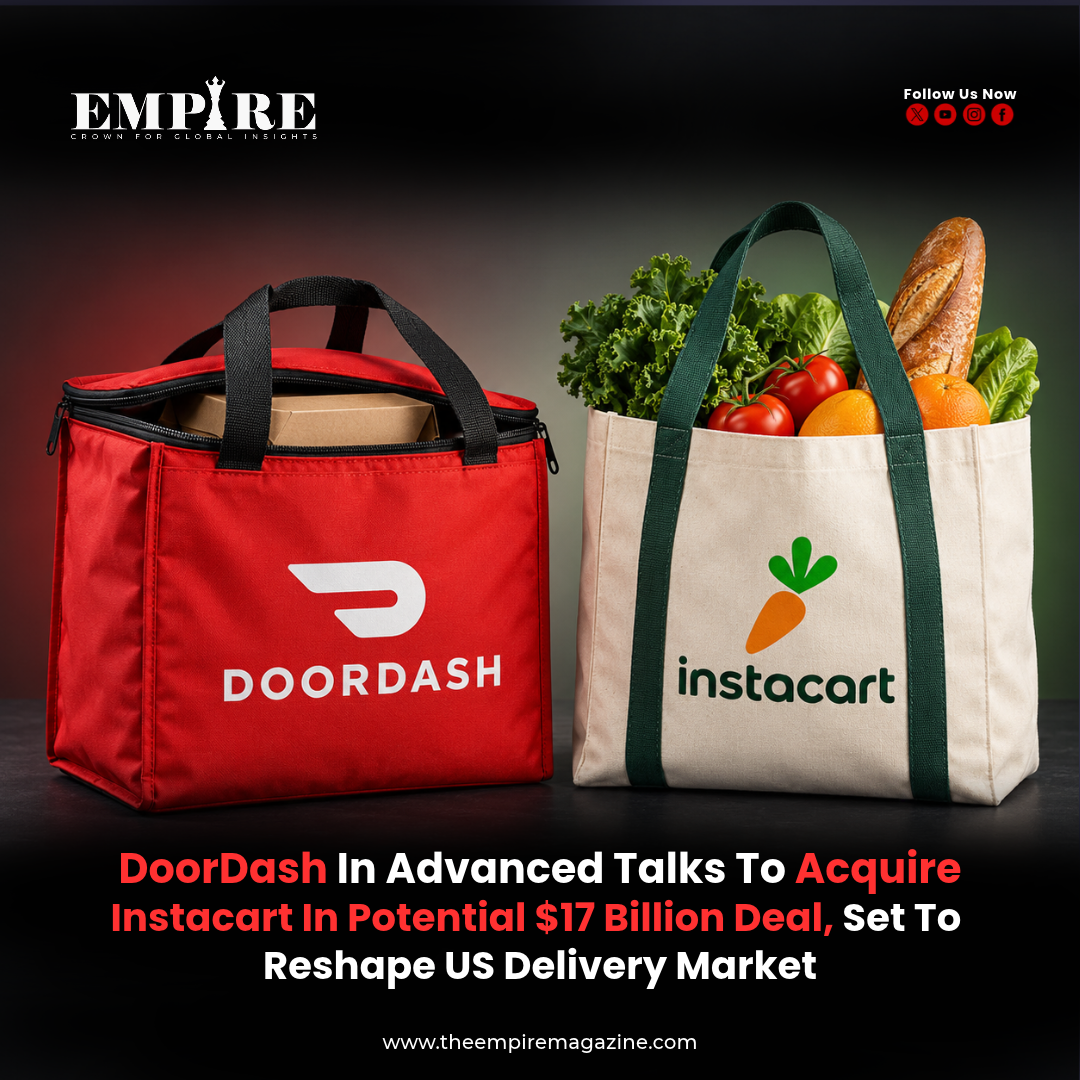
The proposed combination could expand DoorDash’s grocery delivery business, bringing together Instacart’s retailer relationships, shopping platform and advertising operations with DoorDash’s delivery network.
United States | Business News, Technology & Retail
Information checked on 27 October 2026.
A potential DoorDash Instacart deal could reshape competition in US delivery, with the companies reportedly in advanced acquisition talks that could value Instacart at approximately $17 billion.
The Wall Street Journal reported the discussions on 26 October 2026, citing people familiar with the matter. Reuters separately reported the potential valuation and advanced negotiations.
No definitive acquisition agreement had been announced in the material reviewed for this article. Negotiations could still change or end without a transaction.
The strategic attraction is clear: combining DoorDash’s delivery operations with Instacart’s grocery marketplace and retailer technology could give the businesses more ways to serve households throughout the week. Turning that opportunity into a successful acquisition would depend on the terms, integration and competitive response.
What Is Known About the DoorDash Instacart Deal?
The reported discussions concern DoorDash acquiring Instacart, the grocery technology company whose corporate name is Maplebear Inc.
Semafor also reported that the companies were in exclusive talks, while cautioning that a deal remained uncertain.
Reported Valuation and Timing
The approximately $17 billion figure is a reported potential valuation, rather than a publicly agreed purchase price.
The Wall Street Journal said an agreement could emerge during the week of 26 October. The reports did not establish final financing arrangements or whether shareholders would receive cash, shares or a combination.
Those details would be important in assessing the cost to DoorDash and the value delivered to Instacart shareholders.
An Agreement Would Still Precede Completion
Reaching an agreement and completing an acquisition are separate stages.
If the companies announce a transaction, its terms would specify the conditions that must be satisfied before ownership transfers. Until then, the story remains about negotiations.
Why Instacart Could Appeal to DoorDash
DoorDash already operates across restaurant, grocery and retail delivery. Its second-quarter 2026 results show that expansion beyond prepared meals is an established part of its business.
The company reported 27% year-on-year growth in total orders and 36% revenue growth during the quarter. Excluding the contribution from Deliveroo, the respective growth rates were 17% and 24%.
DoorDash also reported growth in its US grocery and retail categories alongside improvements in unit economics.
More Reasons for Customers to Return
From a business perspective, restaurant meals and grocery shopping serve different household needs.
A customer might order dinner on one evening, arrange a weekly grocery shop at the weekend and request household essentials between those purchases. A broader service could create more opportunities to serve that customer.
However, the commercial benefit would depend on repeat use, delivery reliability and the cost of fulfilling each order. A larger range of services does not automatically produce a more profitable customer relationship.
Established Retailer Relationships
Instacart brings relationships with grocers and other retailers, alongside technology supporting online shopping and store operations.
Those relationships could be strategically valuable to DoorDash. Maintaining them would require attention to the priorities of individual retailers, including customer ownership, service standards and the economics of using the platform.
Instacart’s Business Extends Beyond Grocery Delivery
Instacart’s financial results show a business supported by both transactions and advertising.
For the quarter ended 30 June 2026, the company reported:
| Financial or operating measure | Second-quarter 2026 result |
|---|---|
| Gross transaction value | $10.351 billion |
| Completed orders | 90.3 million |
| Total revenue | $1.043 billion |
| Transaction revenue | $746 million |
| Advertising and other revenue | $297 million |
Gross transaction value and total revenue each increased 14% year on year. Advertising and other revenue grew 16%.
Transaction Value and Revenue Measure Different Things
Gross transaction value describes the value of transactions passing through the platform. Revenue measures what Instacart records from its services and other business activities.
The distinction matters when considering the proposed acquisition. A platform handling billions of dollars in shopping transactions retains only a portion of that activity as revenue.
Advertising Adds Another Commercial Dimension
Instacart’s advertising business gives brands a way to reach customers while they are shopping.
For a potential buyer, that creates an opportunity beyond delivery fees. The value would depend on advertiser demand, the effectiveness of campaigns and the quality of the shopping experience.
Any future integration would also need to preserve the usefulness of search results and product recommendations for customers.
Instacart Is Separately Changing Its In-Store Technology Strategy
On 26 October 2026, Instacart announced that it would wind down its Caper Cart smart-shopping-cart business.
The company said retailer adoption had not expanded quickly enough to justify continued investment. It described a shift in emphasis towards software, data and AI tools for physical stores.
Its published in-store offerings include order-management technology, electronic shelf-label software and tools that help retailers understand product availability.
The Caper Decision Is a Separate Announcement
Instacart said it had been evaluating Caper’s progress and investment requirements over several months.
The announcement provides evidence of a change in the company’s product strategy. It does not establish that DoorDash requested the decision or that ending Caper Cart is a condition of a potential acquisition.
For readers assessing Instacart, the development highlights the importance of distinguishing its delivery marketplace, advertising operations and individual technology investments.
How Investors Responded to the Acquisition Reports
Reuters reported that Instacart shares rose approximately 8% in regular trading on 26 October, while DoorDash shares fell around 6%.
Those movements show different initial reactions to the potential transaction. They do not establish whether the acquisition will proceed or whether it would ultimately create value.
An investor assessing DoorDash would need to consider the purchase price, financing, integration costs and expected benefits. For Instacart shareholders, the final consideration and conditions would be central.
A reported headline valuation alone cannot answer those questions.
What a Combination Could Mean for Customers and Retailers
A combined business could potentially connect more shopping occasions through a wider delivery platform. The practical effect would depend on how the companies organise their services.
Customer Experience
Customers would want clarity on subscription benefits, delivery charges, product availability and support.
The reports do not establish whether the DoorDash and Instacart apps would remain separate, how memberships might change or whether prices would rise or fall.
Those decisions would be part of any subsequent operating plan.
Retailer Choice and Competition
DoorDash and Instacart already overlap in grocery delivery. Combining their operations would therefore raise questions about retailer choice, commercial terms and competition.
Amazon, Walmart and other delivery providers would remain relevant to the wider market, but their presence alone would not resolve every question about a proposed transaction.
The competitive implications would need to be assessed against the actual agreement and the services involved.
What Would Determine the Deal’s Business Value?
The potential acquisition would need to deliver benefits beyond a larger combined customer base.
Important tests would include retaining retailer partners, improving the economics of orders and integrating technology without disrupting service.
Grocery shopping also presents different fulfilment demands from collecting prepared restaurant meals. Product substitutions, availability and customer preferences can affect whether an order is completed satisfactorily.
A successful combination would need to preserve the capabilities customers and retailers already value while making the broader service easier to use.
What Happens Next?
The next decisive development would be an official transaction announcement setting out the price, financing, expected timetable and closing conditions.
Until then, claims about merged subscriptions, lower fees, workforce changes or guaranteed savings would go beyond the disclosed information.
For now, the reported talks point to a possible major combination in US delivery. Whether it proceeds—and how much it changes the market—will depend on the agreement the companies reach and their ability to carry it out.
Explore more global business, technology and innovation coverage in The Empire Magazine’s article archive.
Read our related coverage:microsoft-voluntary-buyouts-60000-employees/
Follow The Empire Magazine:
Facebook | Instagram
The Empire Magazine | Crown For Global Insights