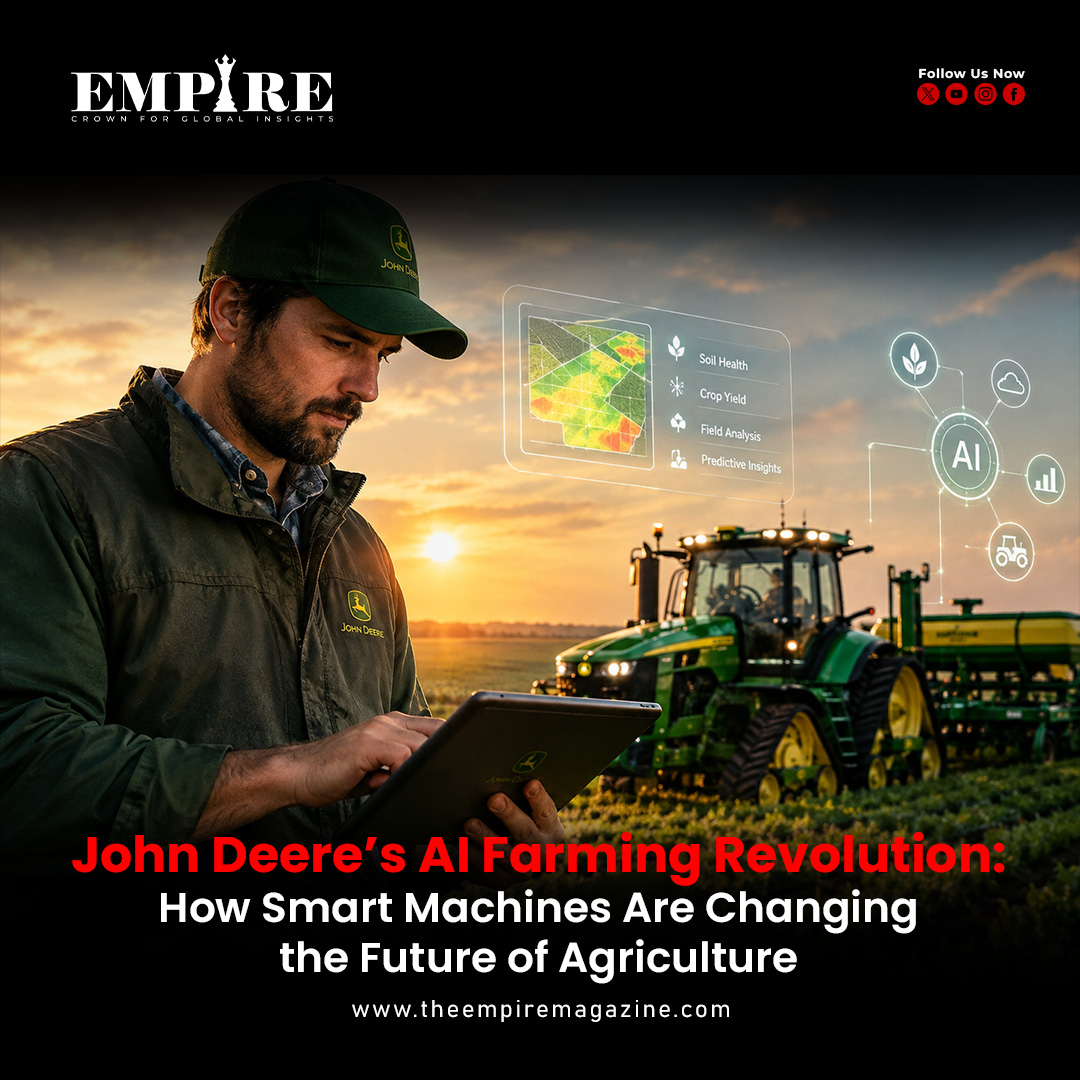
John Deere AI Farming Revolution is transforming the agriculture industry by combining artificial intelligence, robotics, automation, and precision farming technologies to create smarter and more efficient farming systems. The company is developing advanced machines that can analyse field conditions, make real-time decisions, and help farmers improve productivity while reducing resource waste.
Agriculture has always depended on human experience, environmental knowledge, and machine capability. However, rising global food demand, labour shortages, climate challenges, and the need for sustainable farming practices are encouraging the industry to adopt new technologies.
John Deere, one of the world’s leading agricultural equipment manufacturers, is using artificial intelligence to redesign how modern farming works. Through autonomous tractors, computer vision systems, smart spraying technology, and data-driven farming solutions, the company is building a future where machines can support farmers with greater accuracy.
John Deere AI Farming Revolution Is Bringing Intelligence to Agricultural Machines
John Deere AI Farming Revolution represents a major shift from traditional farming equipment toward intelligent agricultural systems.
For decades, tractors and farming machines primarily depended on human operators for decision-making. Today, advanced technologies allow machines to collect information, analyse data, and perform certain tasks with limited human involvement.
John Deere has invested heavily in technologies that combine:
- Artificial intelligence
- Machine learning
- Computer vision
- GPS technology
- Data analytics
- Automation
These technologies allow farmers to understand their fields in greater detail and make more informed decisions.
The goal is not to replace farmers but to provide them with better tools that improve efficiency and support decision-making.
John Deere AI Farming Revolution and the Rise of Autonomous Farming
One of the most important developments in John Deere AI strategy is autonomous farming technology.
The company has introduced autonomous tractor technology designed to allow machines to perform agricultural tasks with minimal operator involvement.
John Deere autonomous systems use multiple technologies, including cameras, sensors, GPS positioning, and artificial intelligence models, to understand field environments.
These systems can help farmers with activities such as:
- Tilling fields
- Planting crops
- Moving equipment
- Monitoring machine performance
Autonomous farming can be especially valuable as agriculture faces labour shortages and increasing operational challenges.
Farmers can use technology to improve productivity while focusing more time on planning, management, and decision-making.
John Deere AI Farming Revolution Uses Computer Vision for Precision Agriculture
Computer vision has become a key part of John Deere agricultural innovation.
Computer vision allows machines to identify and analyse objects using cameras and artificial intelligence.
In farming, this technology can help machines distinguish between crops, weeds, soil conditions, and other field elements.
John Deere See & Spray technology is one example of AI-powered agricultural innovation. The system uses cameras and machine learning to identify plants and selectively apply herbicides where needed.
Improving Resource Efficiency
Traditional spraying methods often apply treatments across entire fields. AI-powered systems can target specific areas, helping reduce chemical usage.
Supporting Sustainable Farming
More precise application methods can contribute to more efficient resource management.
Improving Farm Productivity
Farmers can make better decisions using detailed information collected from smart agricultural systems.
John Deere AI Farming Revolution Is Changing Crop Management
Modern agriculture depends increasingly on data.
Farmers need information about soil conditions, weather patterns, crop health, and equipment performance to make effective decisions.
John Deere digital farming ecosystem collects and analyses agricultural data to support better farm management.
Through connected machines and digital platforms, farmers can monitor:
- Equipment performance
- Field conditions
- Crop-related information
- Operational efficiency
Data-driven agriculture allows farmers to move from traditional reactive approaches toward more predictive farming strategies.
Instead of responding only after problems occur, farmers can use technology to identify potential issues earlier.
John Deere AI Farming Revolution Helps Address Global Agriculture Challenges
Agriculture faces several major challenges, including climate change, increasing food demand, and limited natural resources.
Technology-driven farming solutions are becoming increasingly important as farmers look for ways to produce more while using fewer resources.
John Deere AI-powered solutions aim to support:
Higher Productivity
Automation and intelligent machines can help farmers complete tasks more efficiently.
Better Resource Management
Precision technology can help optimise the use of water, seeds, and agricultural inputs.
Reduced Operational Challenges
Smart machines can support farmers dealing with labour shortages and complex farming conditions.
The integration of AI into agriculture represents a broader movement toward smarter and more sustainable food production systems.
John Deere AI Farming Revolution and the Future of Autonomous Agriculture
The future of agriculture is expected to become increasingly connected and automated.
John Deere continues developing technologies that combine artificial intelligence with advanced agricultural equipment.
The company’s vision includes farms where machines can communicate, analyse conditions, and perform tasks with greater independence.
However, the adoption of AI farming technology also requires addressing challenges such as:
- Technology costs
- Digital infrastructure availability
- Farmer training
- Data management
Successful adoption will depend on making advanced technology accessible and practical for farmers worldwide.
John Deere AI Farming Revolution Shows How AI Is Expanding Beyond Technology Industries
Artificial intelligence is no longer limited to software companies and digital services. Industries such as agriculture are increasingly using AI to solve real-world challenges.
John Deere approach demonstrates how traditional industries can transform through advanced technology.
From autonomous vehicles to intelligent decision-making systems, AI is becoming an important tool across multiple sectors.
The same global technology transformation can also be seen in areas such as artificial intelligence platforms and emerging digital ecosystems. Read more technology insights here: https://theempiremagazine.com/sakana-ai-japanese-ai-startup/
John Deere AI Farming Revolution Is Building the Future of Smart Agriculture
John Deere investment in artificial intelligence shows how farming is entering a new era of technological innovation.
By combining autonomous machinery, computer vision, and data-driven solutions, the company is creating tools designed to help farmers work more efficiently and sustainably.
The future of agriculture will likely depend on collaboration between human expertise and intelligent machines. Farmers will continue providing essential knowledge and experience, while AI-powered technology will provide deeper insights and automation capabilities.
John Deere AI Farming Revolution represents a major step toward a future where agriculture becomes smarter, more precise, and better prepared for global challenges.
Follow The Empire Magazine for global business, technology, innovation, and leadership insights:
Facebook: https://www.facebook.com/profile.php?id=61573749076160
Instagram: https://www.instagram.com/the_empire_magazine
The Empire Magazine | Crown For Global Insights