
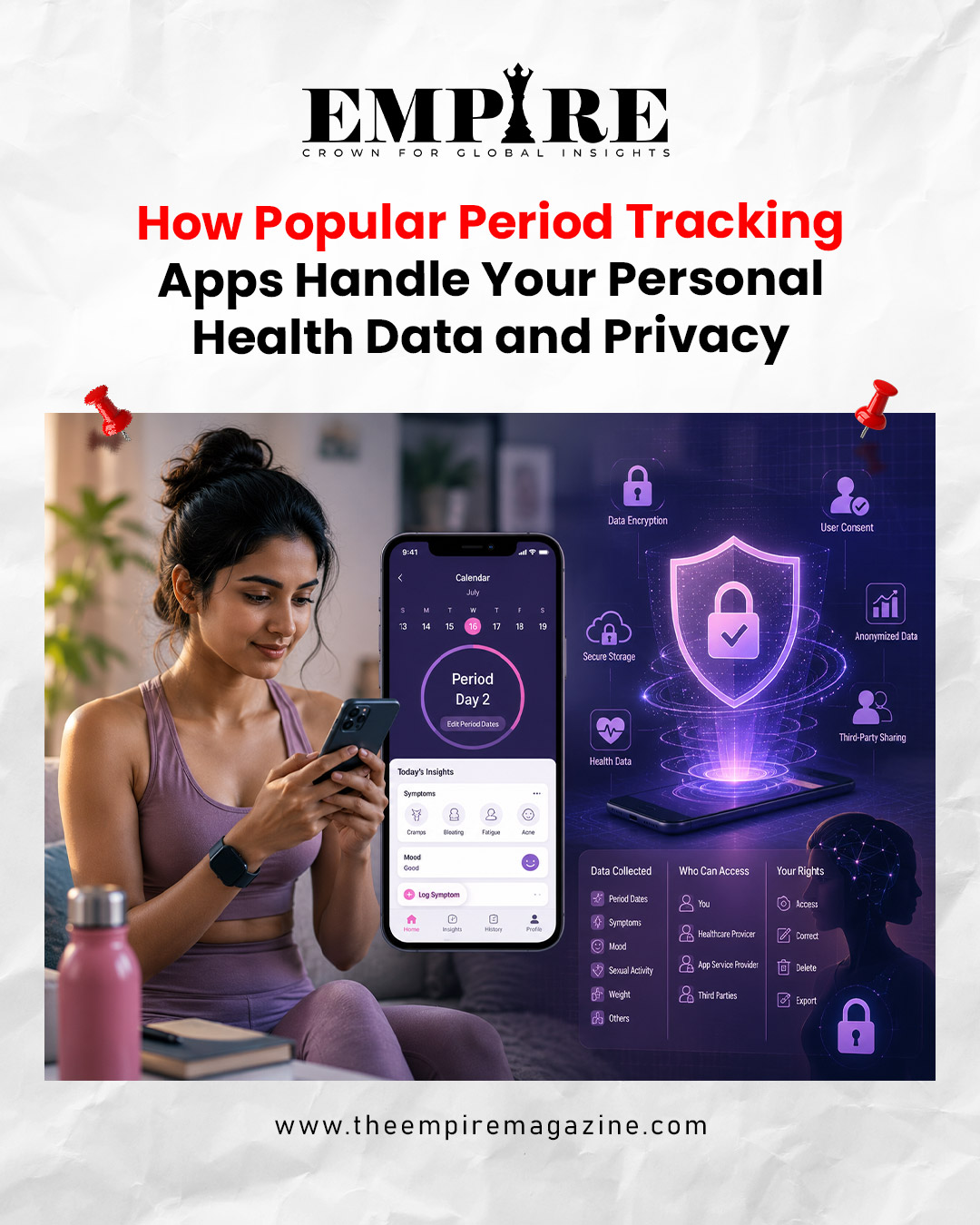
Discover how period tracking apps collect, store, and protect your personal health data. Learn privacy risks, security practices, and tips to safeguard your reproductive information. Period Tracking Apps Privacy has become a growing concern as millions of users rely on digital tools to monitor menstrual cycles, fertility, and overall reproductive health. While these apps offer convenience and personalized insights, they also collect sensitive personal health data, raising important questions about data security, transparency, and user control.
The Growing Importance of Period Tracking Apps Privacy
For millions of women across the world, period tracking applications have quietly become an essential part of everyday life. What began as simple digital calendars has evolved into sophisticated health platforms capable of predicting menstrual cycles, fertility windows, ovulation, pregnancy timelines, hormonal changes, and even potential health conditions. These applications empower users to understand their bodies better, prepare for symptoms, plan pregnancies, or simply manage their reproductive health more effectively. However, as their popularity has grown, so has an important conversation surrounding Period Tracking Apps Privacy. Behind every symptom logged, mood recorded, medication entered, and cycle predicted lies an enormous amount of deeply personal health information. Unlike social media preferences or shopping habits, reproductive health data reveals intimate details about a person’s physical and emotional wellbeing. As governments strengthen privacy laws and consumers become increasingly aware of digital surveillance, users are beginning to ask critical questions. Who owns this data? Where is it stored? Can it be shared with advertisers, insurers, employers, or third parties? Understanding how period tracking apps manage personal health information has become just as important as understanding the health insights they provide.
What Personal Health Data Period Tracking Apps Collect
One of the biggest reasons Period Tracking Apps Privacy deserves attention is the sheer volume of information these applications can gather. Most users willingly enter the dates of their menstrual cycles, but the collection rarely stops there. Many apps encourage users to record symptoms such as cramps, headaches, fatigue, mood swings, sleep quality, weight fluctuations, exercise routines, medications, sexual activity, contraception use, pregnancy attempts, fertility indicators, cervical mucus observations, body temperature, and mental health changes. Some applications even integrate with wearable devices, collecting heart rate, sleep patterns, activity levels, and other biometric information. Depending on permissions granted, apps may also access location data, device identifiers, contact information, email addresses, and analytics that track user behavior inside the application. While this extensive information helps generate personalized health insights, it also creates detailed digital health profiles that could become highly valuable if accessed by unauthorized parties. Because reproductive health information is among the most sensitive categories of personal data, users should recognize that every data point they enter contributes to a much broader picture of their private lives.
Why Period Tracking Apps Need Your Health Data
The success of many menstrual tracking platforms depends on the quality and consistency of the information users provide. Better data allows algorithms to predict cycles more accurately, identify irregularities, estimate ovulation windows, monitor pregnancy progress, and deliver personalized wellness recommendations. This explains why many companies encourage users to log daily symptoms and health observations. In terms of Period Tracking Apps Privacy, this creates a delicate balance between personalization and privacy. Artificial intelligence and predictive analytics rely on historical health records to improve accuracy over time, meaning the more information users provide, the smarter these applications become. Some apps also use anonymized or aggregated datasets to improve product development, conduct medical research, or enhance machine learning models. While anonymization can reduce privacy risks, experts caution that combining multiple datasets sometimes makes re-identification possible under certain circumstances. Transparency therefore becomes essential. Users deserve to understand exactly which information is necessary for providing health services and which data may be used for analytics, research, marketing, or business partnerships beyond the core functionality of the application.
How Period Tracking Apps Privacy Policies Actually Work
Privacy policies are often the least read yet most important documents attached to digital health services. Many users simply accept lengthy terms without fully understanding how their information may be processed. In reality, Period Tracking Apps Privacy policies explain what data is collected, how long it is retained, whether it is encrypted, which third parties receive access, and under what circumstances data may be disclosed. Some leading applications emphasize end-to-end encryption, local device storage, or anonymous accounts that reduce the amount of personally identifiable information collected. Others rely on cloud storage to synchronize data across devices, requiring users to trust the company’s cybersecurity infrastructure. Many reputable developers now offer clearer explanations regarding advertising partnerships, analytics providers, and data deletion options, reflecting increasing public demand for transparency. Nevertheless, privacy experts consistently encourage users to review permission settings, understand whether account deletion permanently removes stored information, and verify whether exported health records remain protected after leaving the platform. Clear communication between app developers and users remains one of the strongest foundations of digital trust.
The Business Behind Period Tracking Apps Privacy
Although many period tracking applications appear free, maintaining sophisticated digital health platforms requires significant investment in software development, cloud infrastructure, cybersecurity, artificial intelligence, customer support, and medical research. This economic reality shapes the business models behind Period Tracking Apps Privacy. Subscription-based platforms generally generate revenue directly from users, often reducing dependence on advertising networks. Free applications, however, may rely on advertising, affiliate partnerships, premium upgrades, or data-driven analytics to support operations. Importantly, reputable companies increasingly state that they do not sell personally identifiable reproductive health information, but they may still share anonymized analytics or aggregated insights with technology partners, researchers, or service providers. The distinction between anonymous analytics and identifiable personal information is critical, yet often misunderstood by consumers. As digital health becomes an expanding industry within FemTech, companies face growing pressure to demonstrate ethical data governance while maintaining financially sustainable business models. Ultimately, user confidence increasingly depends on transparent business practices rather than marketing promises alone.
Privacy Risks Every User Should Understand in Period Tracking Apps
Despite ongoing improvements in cybersecurity, no digital platform is entirely immune to risk. Cyberattacks, accidental data exposure, weak passwords, phishing attempts, and software vulnerabilities remain persistent threats across the technology industry. For users concerned about Period Tracking Apps Privacy, understanding these risks helps promote informed decision-making rather than unnecessary fear. Data breaches involving health information can expose highly sensitive records that individuals never expected to become public. Additionally, changing legal environments across different countries have intensified discussions about reproductive data access and digital rights. These developments have encouraged both users and developers to pay closer attention to encryption, consent mechanisms, and secure authentication practices. Privacy also extends beyond hacking. Excessive app permissions, unnecessary location tracking, and broad data-sharing agreements may expose information that users never intended to disclose. Responsible developers continue investing in stronger security measures, but users also play a vital role by using unique passwords, enabling multi-factor authentication where available, updating applications regularly, and carefully reviewing permission requests before granting access.
How Regulations Shape Period Tracking Apps Privacy
Governments worldwide have recognized that health information deserves stronger legal protection than ordinary consumer data. As a result, Period Tracking Apps Privacy is increasingly influenced by evolving privacy regulations designed to strengthen user rights and corporate accountability. Laws such as the European Union’s General Data Protection Regulation (GDPR), California’s Consumer Privacy Act (CCPA), and similar privacy frameworks introduced in many countries require organizations to improve transparency, obtain informed consent, minimize unnecessary data collection, and provide users with greater control over their personal information. These regulations also encourage companies to strengthen cybersecurity, report significant breaches, and offer mechanisms for accessing or deleting stored data. While legal compliance varies across jurisdictions, the broader trend is clear: regulators increasingly expect digital health companies to treat reproductive information with exceptional care. For consumers, stronger regulation represents an important safeguard, although reading privacy notices and understanding individual rights remains equally important.
How to Protect Your Personal Health Data with Period Tracking Apps
Protecting personal information begins with informed digital habits rather than relying entirely on technology providers. Users who value Period Tracking Apps Privacy should compare applications before downloading them, paying attention to privacy policies, encryption practices, account deletion options, and the company’s reputation for transparency. Choosing strong passwords, enabling multi-factor authentication, limiting unnecessary permissions, avoiding public Wi-Fi for sensitive account access, and keeping applications updated significantly improve personal security. Users should also periodically review stored entries and remove information they no longer wish to retain. Before synchronizing health records across multiple devices, it is worth understanding where those records will be stored and who manages the underlying cloud infrastructure. Most importantly, individuals should remember that convenience and privacy are not mutually exclusive. Selecting trustworthy platforms that clearly communicate their data practices enables users to benefit from personalized health insights without compromising control over their most personal information.
The Future of Period Tracking Apps Privacy
The future of Period Tracking Apps Privacy will likely be defined by greater transparency, stronger encryption, privacy-first design principles, and increased user control over personal health information. Artificial intelligence will continue improving cycle predictions and wellness recommendations, while decentralized storage, on-device processing, and advanced privacy technologies may reduce the need for extensive cloud-based data collection. Consumers are becoming more privacy-conscious than ever before, encouraging developers to compete not only on features but also on trust. Healthcare professionals, policymakers, technology companies, and privacy advocates will all play important roles in shaping digital reproductive healthcare that respects both innovation and individual rights. As digital health becomes increasingly integrated into everyday life, protecting sensitive reproductive information will remain essential for maintaining confidence in the technologies designed to improve human wellbeing.
Period Tracking Apps Privacy is no longer a niche technology issue but a fundamental aspect of digital healthcare that affects trust, safety, and individual autonomy
Period tracking applications have transformed the way millions of people understand and manage their reproductive health, offering convenience, personalization, and valuable medical insights. Yet with these benefits comes the responsibility of protecting highly sensitive personal information. Period Tracking Apps Privacy is no longer a niche technology issue but a fundamental aspect of digital healthcare that affects trust, safety, and individual autonomy. By understanding how health data is collected, stored, shared, and protected, users can make informed choices about the applications they rely upon every day. At the same time, technology companies must continue raising the standard for transparency, security, and ethical data management. The future of digital health will ultimately belong to platforms that demonstrate innovation without compromising the privacy and confidence of the people they serve.
For more business and retail insights, read more on The Empire Magazine
Previous article: https://theempiremagazine.com/amazon-cloud-gaming/
Magazine Feautures | Podcasts: Empire Global Talks
Follow The Empire Magazine on Facebook | Instagram | LinkedIn | YouTube
The Empire Magazine | Crown for Global Insights