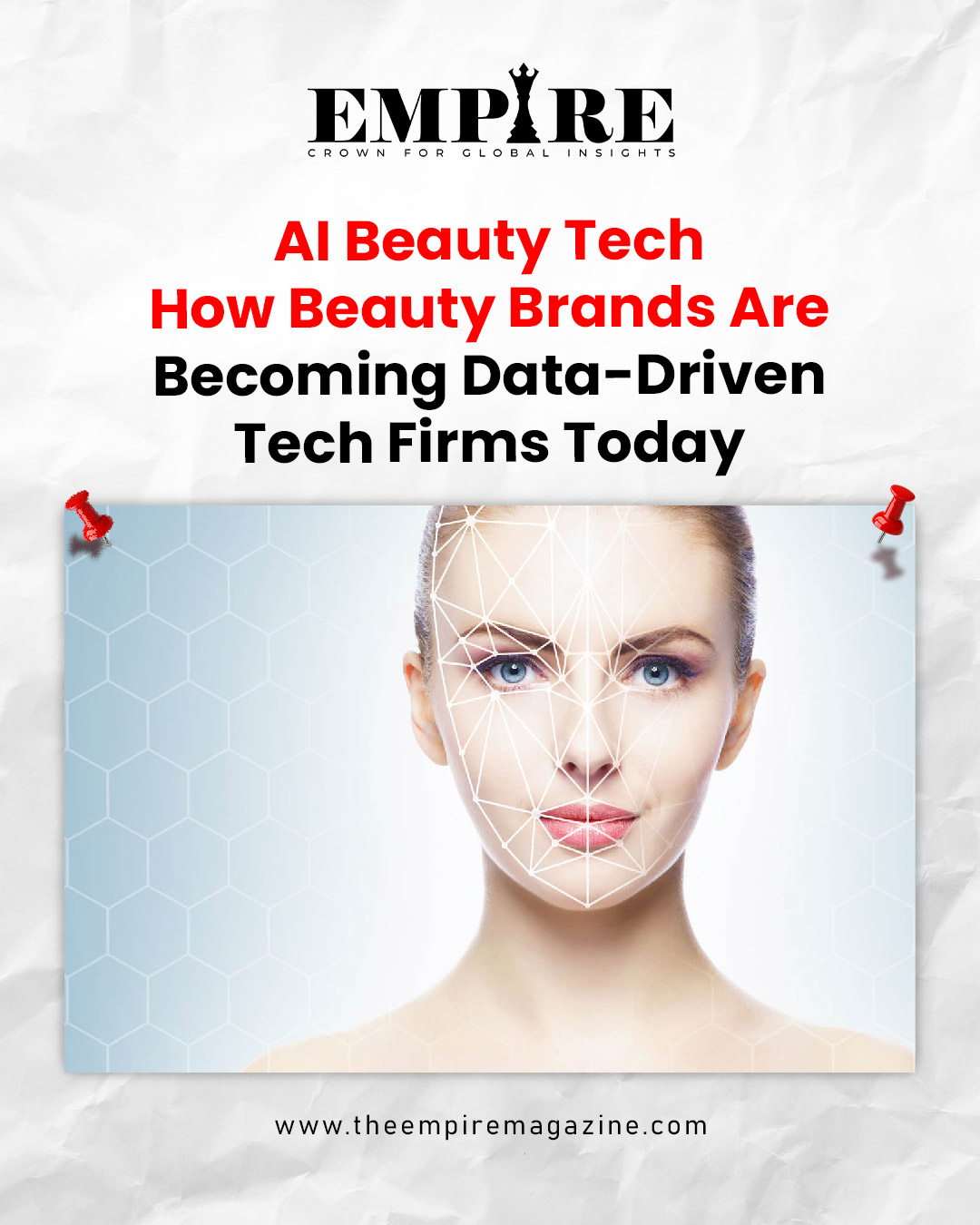
The beauty industry has always evolved alongside changing consumer preferences. What has changed over the past few years, however, is the force driving that evolution. Increasingly, it is no longer fashion trends or celebrity endorsements alone that shape buying decisions. Artificial intelligence, data analytics, and connected technologies are becoming equally influential.
Beauty companies today are investing as heavily in software engineers, machine learning specialists, and data scientists as they once did in product chemists and marketing teams. From AI-powered skin diagnostics to personalized product recommendations and virtual try-on experiences, technology is redefining how cosmetics are developed, marketed, and sold.
The shift is significant enough that many global beauty brands now resemble technology companies as much as traditional consumer goods businesses. Data has become one of their most valuable assets, helping them understand customer preferences, accelerate product development, and create highly personalized shopping experiences.
As AI adoption continues to accelerate across retail and consumer industries, beauty brands are positioning themselves at the intersection of cosmetics, healthcare, and digital technology.
The Rise of AI Beauty Tech
Beauty has traditionally been viewed as a product-driven industry. Success depended on launching innovative formulations, attractive packaging, and effective advertising campaigns. Today, software is becoming just as important as skincare ingredients.
Consumers increasingly expect brands to understand their individual skin concerns, recommend suitable products, and deliver personalized routines instead of generic beauty advice. Artificial intelligence makes that possible.
Modern AI systems can analyze thousands of skin images, identify concerns such as pigmentation, acne, wrinkles, hydration levels, and texture, and generate tailored skincare recommendations within seconds. Instead of relying solely on beauty consultants in physical stores, customers can now receive detailed digital consultations directly from their smartphones.
This combination of convenience and personalization has made AI one of the fastest-growing investments across the beauty industry.
Why Data Has Become Beauty’s Biggest Competitive Advantage
Every digital interaction generates valuable information. When customers complete online skin assessments, browse products, leave reviews, purchase cosmetics, or use connected beauty devices, they create datasets that help companies better understand consumer behavior.
Rather than relying only on annual market research, beauty companies now receive continuous streams of customer insights.
These insights influence nearly every business function. Product teams identify emerging skincare concerns before they become mainstream trends. Marketing departments deliver more relevant campaigns based on customer preferences. Supply chain managers improve inventory forecasting by anticipating regional demand patterns. The result is faster decision-making supported by real-time analytics rather than intuition alone.
Data has effectively become a strategic asset, allowing beauty companies to respond more quickly to rapidly changing consumer expectations.
Personalization Is Redefining Customer Experience
Perhaps the biggest impact of AI beauty technology can be seen in personalization. Consumers no longer want universal skincare routines. They expect recommendations that consider their age, skin type, climate, lifestyle, allergies, and even seasonal changes.
AI-powered recommendation engines combine multiple data points to create individualized beauty routines that evolve over time.
Virtual skin consultations are also becoming increasingly sophisticated. Instead of simply suggesting products, many platforms now monitor skincare progress across weeks or months, adjusting recommendations based on visible improvements or changing conditions.
Virtual try-on technology has become another major driver of digital engagement. Using augmented reality, customers can visualize lipstick shades, foundation colors, hair colors, and makeup styles before making a purchase. This reduces uncertainty while improving customer confidence during online shopping. The result is a more interactive shopping experience that closely resembles personalized in-store consultations.
AI Is Transforming Product Development
Artificial intelligence is also influencing what happens long before products reach store shelves. Traditionally, cosmetic companies relied on lengthy consumer surveys and trend forecasting reports when developing new products.
Today, AI analyzes millions of online conversations, product reviews, search behavior, and social media discussions to identify emerging consumer needs.
If growing numbers of consumers begin discussing skin barrier repair, microbiome-friendly skincare, or fragrance-free cosmetics, companies can identify these signals far earlier than conventional market research would allow.
This enables research teams to prioritize product innovation based on measurable demand rather than assumptions. AI is also helping manufacturers optimize formulations, evaluate ingredient compatibility, and simulate product performance during research and development, shortening innovation cycles while reducing costs. Instead of reacting to market trends, companies are increasingly predicting them.
Smart Beauty Devices Expand the Digital Ecosystem
Beauty technology is extending beyond software into connected hardware. Smart mirrors, AI-enabled facial analysis tools, connected skincare devices, and intelligent haircare products are creating entirely new consumer experiences.
Many of these devices collect usage data, helping customers monitor skincare routines while providing brands with anonymized insights into product performance and user behavior.
This creates an ongoing relationship between brands and consumers rather than a single purchase transaction. For businesses, connected devices strengthen customer loyalty while generating valuable feedback that supports future product development.
For consumers, they offer greater visibility into skincare progress through measurable data rather than subjective observation. The integration of hardware, software, and cloud analytics is gradually transforming beauty into a connected digital ecosystem.
Generative AI Is Changing Beauty Marketing
Marketing is undergoing a similar transformation. Generative AI allows beauty companies to create personalized content at unprecedented scale.
Instead of producing one advertising campaign for millions of customers, brands can now develop multiple versions tailored to different age groups, geographic markets, purchasing behaviors, and individual preferences.
AI also assists with product descriptions, multilingual content creation, customer service automation, influencer discovery, and campaign optimization. Retailers increasingly use AI-powered chat assistants to answer skincare questions, recommend routines, and guide customers throughout the purchasing process.
Meanwhile, predictive analytics helps marketers allocate advertising budgets more efficiently by identifying which audiences are most likely to convert. These capabilities improve both customer engagement and marketing efficiency without replacing human creativity.
Creative professionals continue to define brand identity, while AI supports faster execution and data-informed decision-making.
Privacy and Consumer Trust Remain Essential
Despite its advantages, AI beauty technology introduces important responsibilities. Beauty platforms often collect sensitive information, including facial images, skin conditions, purchasing history, and behavioral data.
Consumers are becoming more aware of how personal information is collected, stored, and used. As a result, transparency is becoming just as important as technological innovation.
Companies that clearly communicate their data policies, obtain meaningful user consent, and invest in strong cybersecurity measures are more likely to earn long-term consumer trust.
Bias in AI models also remains an industry challenge. Skin analysis systems must accurately evaluate diverse skin tones, ethnic backgrounds, and facial characteristics. Companies continue investing in broader datasets to improve fairness and accuracy across global populations.
Responsible AI development is increasingly becoming a competitive differentiator rather than simply a compliance requirement.
The Future of Data-Driven Beauty
Artificial intelligence is no longer an experimental technology within the beauty industry. It is becoming part of everyday business operations.
Over the coming years, beauty experiences are likely to become even more predictive.
Instead of recommending products after customers identify a concern, AI may anticipate skincare needs based on weather conditions, hormonal changes, environmental exposure, or historical purchasing patterns.
Wearable health devices may eventually integrate with skincare platforms to provide more comprehensive wellness recommendations. Retail stores could combine AI-powered diagnostics with human consultants, creating hybrid experiences that merge digital intelligence with professional expertise.
For beauty companies, competitive advantage will increasingly depend not only on product quality but also on how effectively they use data to deliver personalized, trustworthy, and seamless customer experiences. The companies investing in responsible AI today are building capabilities that extend well beyond cosmetics. They are creating digital ecosystems where technology, personalization, and consumer insights become central to long-term growth.
The beauty industry’s next chapter will not be defined solely by new ingredients or attractive packaging. It will be shaped by algorithms, intelligent software, connected devices, and data-driven decision-making. As AI continues to mature, beauty brands are evolving into technology-enabled businesses, demonstrating that the future of beauty is as much about data science as it is about skincare.
For more business and retail insights, read more on The Empire Magazine
Previous articles: Mushroom Leather Luxury Bags
Magazine Edits: Magazines
Podcasts: Empire Global Talks
Follow The Empire Magazine on Facebook | Instagram | LinkedIn
The Empire Magazine | Crown for Global Insights