Dubai Mall Sales Pressure is becoming an important business topic as regional conflict, travel disruption, and luxury market uncertainty affect consumer behavior across the Middle East. Dubai remains one of the world’s strongest retail and tourism hubs, but luxury spending depends heavily on visitor confidence, stable travel routes, high-income shoppers, and strong regional sentiment.
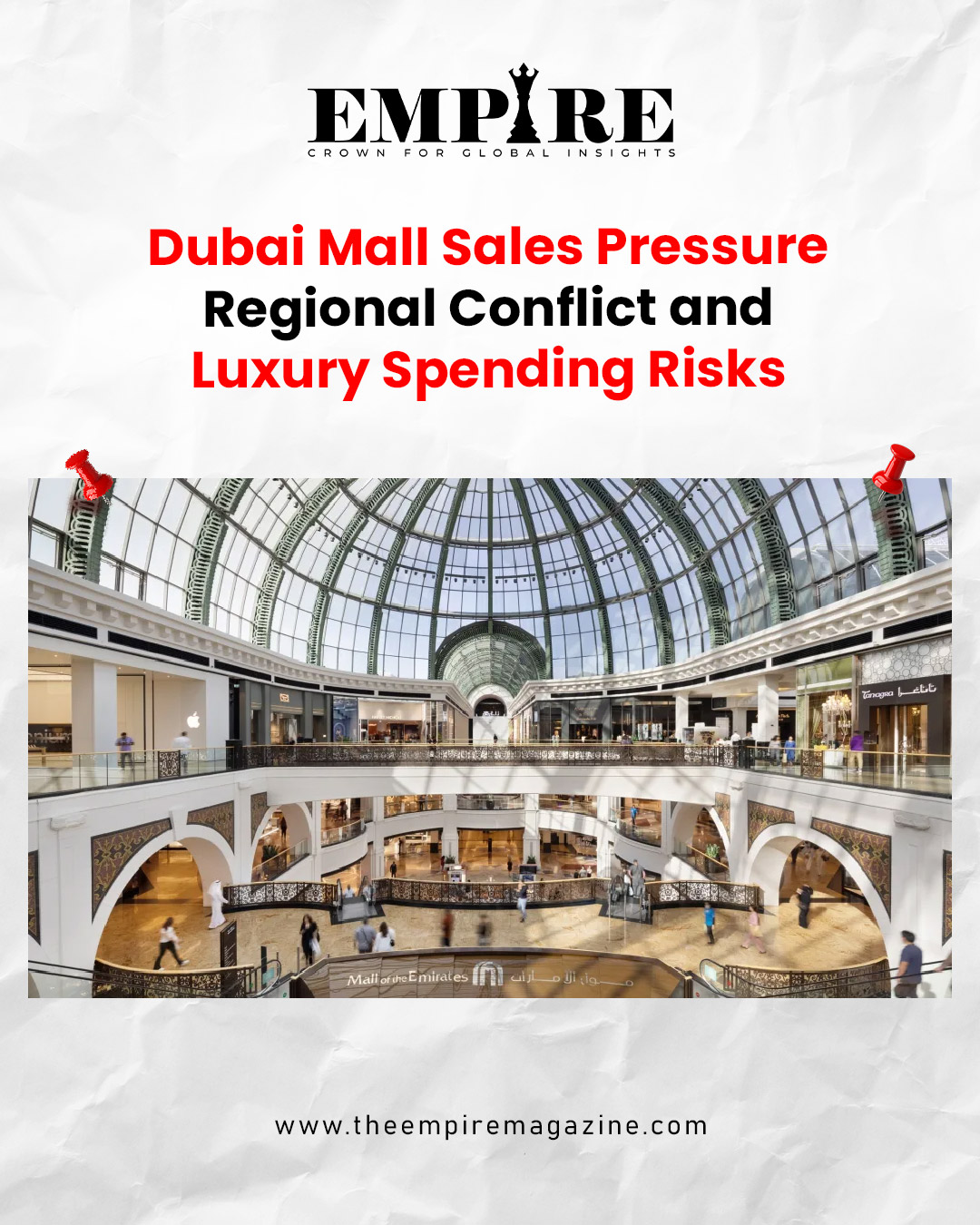
Dubai Mall is not only a shopping destination. It is a global retail landmark connected to tourism, luxury fashion, hospitality, entertainment, and international brand visibility. Located in Downtown Dubai beside Burj Khalifa, it attracts residents, tourists, business travelers, and high-net-worth shoppers from across the Gulf, Asia, Europe, Africa, and beyond.
The mall’s importance makes it a useful case study for understanding how regional conflict can affect luxury spending. Even when Dubai itself remains stable and open for business, nearby geopolitical tension can influence travel decisions, flight operations, consumer confidence, and spending behavior. Luxury purchases are often emotional and confidence-driven. When uncertainty rises, some shoppers delay discretionary purchases such as designer fashion, watches, jewelry, leather goods, beauty products, and premium lifestyle items.
Dubai Mall Sales Pressure in a Global Retail Hub
Dubai Mall Sales Pressure matters because Dubai Mall is one of the most important shopping centers in the world. The mall has become a symbol of Dubai’s ambition to position itself as a global destination for luxury retail, tourism, entertainment, and hospitality.
Dubai’s retail strength is closely linked to tourism. In 2025, Dubai recorded another strong year for international visitors, showing its continued role as a global travel destination. This visitor base supports hotels, restaurants, malls, luxury boutiques, entertainment venues, and transport services.
Luxury retail in Dubai benefits from a mix of local and international demand. Emirati customers, Gulf visitors, tourists from India and China, European travelers, and global business visitors all contribute to the city’s premium shopping ecosystem. Dubai Mall sits at the center of this ecosystem because it combines luxury stores, global brands, dining, attractions, and destination experiences.
Dubai Mall Sales Pressure and Tourism Dependence
Dubai Mall Sales Pressure can increase when tourism slows or travel sentiment weakens. Luxury shopping in Dubai is not driven only by residents. A large part of premium retail depends on international and regional visitors.
When conflict affects nearby airspace, airport operations, or travel confidence, tourists may delay trips, shorten stays, or avoid non-essential travel. Even a temporary change in travel patterns can affect luxury boutiques because premium sales are often concentrated around high-spending visitors.
Tourism-driven retail is especially sensitive to confidence. A shopper visiting Dubai for leisure may plan to buy a luxury handbag, watch, jewelry piece, or fashion item during the trip. If the trip is cancelled, delayed, or shortened, that purchase may disappear or move to another city.
Dubai Mall Sales Pressure and Regional Conflict
Dubai Mall Sales Pressure can rise during regional conflict because luxury retail depends on stability. The Middle East is an important luxury market, and Dubai is one of the region’s strongest luxury shopping centers. Any tension that affects travel, oil prices, investor mood, consumer sentiment, or regional mobility can create pressure on premium spending.
Luxury companies pay close attention to the Middle East because the region includes wealthy residents, high-spending tourists, and luxury-friendly retail environments. Dubai, in particular, has built a strong reputation for premium shopping, duty-free travel, five-star hotels, and destination retail.
However, luxury demand can weaken when regional uncertainty becomes intense. Shoppers may become more cautious. Tourists may change plans. Airlines may adjust routes. Retailers may see lower footfall from certain markets. Even if wealthy consumers still have spending power, their willingness to make discretionary purchases can change during periods of uncertainty.
Dubai Mall Sales Pressure and Consumer Confidence
Dubai Mall Sales Pressure is closely connected to consumer confidence. Luxury goods are discretionary purchases. Unlike basic goods, shoppers can delay buying a handbag, watch, jewelry item, or designer outfit if they feel uncertain about the economy or geopolitical situation.
Confidence affects both residents and tourists. Residents may reduce big-ticket spending if markets become volatile or regional tensions rise. Tourists may focus more on essential travel spending and less on luxury shopping. Wealthy shoppers may still buy, but they may become more selective.
This does not mean luxury demand disappears. Instead, spending can shift. Customers may buy fewer items, choose more timeless products, wait for better conditions, or focus on brands with strong heritage and resale value.
Dubai Mall Sales Pressure and Luxury Brand Exposure
Dubai Mall Sales Pressure also matters for global luxury brands because Dubai is a major regional showcase. Many luxury houses operate flagship boutiques in Dubai Mall or nearby premium retail areas. These stores are not only sales points; they are brand statements.
A luxury boutique in Dubai Mall gives a brand access to international visitors and affluent Gulf customers. It also supports brand visibility through store design, events, launches, VIP appointments, and seasonal campaigns. If regional conflict reduces foot traffic or lowers tourist spending, luxury brands may feel pressure in both sales and customer engagement.
Luxury companies also use Dubai as a bridge between markets. The city connects Europe, Asia, Africa, and the wider Middle East. Because of this, Dubai retail performance can reflect broader regional confidence.
Dubai Mall Sales Pressure and High-Value Categories
Dubai Mall Sales Pressure may be stronger in high-value categories such as watches, jewelry, designer handbags, couture fashion, and premium leather goods. These categories depend heavily on confident spending and strong tourist traffic.
Luxury beauty and smaller accessories may be more resilient because they have lower entry prices. A shopper who delays a luxury watch purchase may still buy perfume, cosmetics, sunglasses, or small leather goods. This means pressure may not affect all categories equally.
High-end brands often monitor product mix carefully during uncertain periods. If shoppers become cautious, boutiques may focus more on classic products, clienteling, private appointments, and loyal customers rather than depending only on walk-in tourist demand.
Dubai Mall Sales Pressure and Travel Disruption
Dubai Mall Sales Pressure can also come from travel disruption. Regional conflict can affect air routes, airport schedules, insurance costs, and traveler decisions. Dubai is one of the world’s most connected aviation hubs, and its retail economy benefits from that connectivity.
If flights are delayed, rerouted, or reduced, tourism-linked retail can feel the effect. Even short-term disruptions can affect weekend shopping trips, holiday travel, business visits, and luxury tourism. High-end shoppers often travel for shopping events, fashion launches, watches, jewelry, and luxury experiences.
Dubai has strong infrastructure and a proven ability to handle global travel demand. However, external regional events can still create uncertainty. Retailers in major malls must be prepared for sudden changes in visitor flows.
Dubai Mall Sales Pressure During Peak Shopping Seasons
Dubai Mall Sales Pressure may become more visible during peak shopping and travel seasons. Dubai benefits from winter tourism, holiday travel, shopping festivals, Ramadan-related movement, Eid holidays, and regional vacation periods.
If regional conflict overlaps with these periods, the impact can be stronger. Luxury brands often plan campaigns and inventory around seasonal demand. A weaker-than-expected travel season can affect sales targets and store performance.
At the same time, Dubai’s position as a safe, premium, and well-connected destination can help protect its long-term retail strength. The city has repeatedly shown resilience through global economic cycles, travel disruptions, and changing consumer trends.
Dubai Mall Sales Pressure and Dubai’s Retail Strength
Dubai Mall Sales Pressure should also be viewed alongside Dubai’s long-term retail strength. Dubai continues to invest in tourism, real estate, hospitality, transport, and luxury experiences. These investments support the city’s position as a global retail destination.
Emaar has announced a major AED 1.5 billion expansion of Dubai Mall, adding new luxury retail and dining options. This shows continued confidence in the mall’s future as a premium destination. Expansion plans suggest that long-term demand for luxury retail in Dubai remains strong, even if short-term pressure appears during geopolitical uncertainty.
Dubai’s retail strategy is also supported by its international image. The city attracts visitors for shopping, business events, entertainment, luxury hotels, restaurants, and lifestyle experiences. This diversified appeal helps reduce dependence on only one type of customer.
Dubai Mall Sales Pressure and Experience-Based Retail
Dubai Mall Sales Pressure can be managed partly through experience-based retail. Modern luxury malls are no longer just places to buy products. They are destinations for dining, entertainment, brand events, immersive displays, and lifestyle experiences.
Dubai Mall already benefits from this model. Visitors come for shopping, but also for attractions, restaurants, views, and family experiences. This gives the mall a broader value than traditional retail.
Luxury brands can use events, private previews, limited collections, client appointments, and personalized services to maintain customer interest during uncertain periods. Strong relationships with loyal customers become especially important when tourist spending is less predictable.
Dubai Mall Sales Pressure and the Luxury Spending Outlook
Dubai Mall Sales Pressure reflects a wider shift in global luxury. After years of strong growth, luxury brands have faced softer demand in several markets. Consumers are becoming more selective, and premium brands must work harder to justify price increases.
Regional conflict adds another layer of pressure. It can affect travel, confidence, logistics, and financial markets. For Dubai Mall and luxury retailers, the key issue is not only whether customers have money, but whether they feel confident enough to spend.
Dubai remains a strong luxury market because of its tourism base, wealthy residents, global connectivity, and premium retail infrastructure. However, luxury spending is sensitive to mood. When uncertainty rises, the most expensive purchases can slow first.
Dubai Mall Sales Pressure and Brand Strategy
Dubai Mall Sales Pressure means luxury brands need sharper strategy. They may need to focus on loyal clients, high-quality service, exclusive products, and flexible marketing. Instead of relying only on footfall, brands must build deeper relationships with customers.
Clienteling becomes important in this environment. Sales teams can contact regular customers, offer private appointments, highlight rare products, and create personal shopping experiences. This helps protect sales even when walk-in traffic becomes less predictable.
Brands also need to understand regional customer behavior. Gulf shoppers, international tourists, and Dubai residents may respond differently to uncertainty. A strong luxury strategy must balance local loyalty with global tourism demand.
Dubai Mall Sales Pressure and the Future of Luxury Retail
Dubai Mall Sales Pressure shows how luxury retail is connected to global events. A premium mall in Dubai can be affected by regional conflict, international tourism flows, airline operations, currency movements, and consumer psychology.
The long-term outlook for Dubai Mall remains supported by Dubai’s tourism growth, luxury positioning, infrastructure investment, and global brand presence. However, short-term pressure can still appear when regional conflict creates uncertainty.
For luxury retailers, the future will depend on resilience. Stores must combine strong product demand with experience, service, digital engagement, and loyal customer relationships. Dubai Mall’s scale and reputation give it an advantage, but luxury brands still need to adapt when external risks affect consumer spending.
For more business and luxury market insights, read more on The Empire Magazine.
Follow The Empire Magazine on Facebook and Instagram.
– The Empire Magazine
Crown For Global Insights