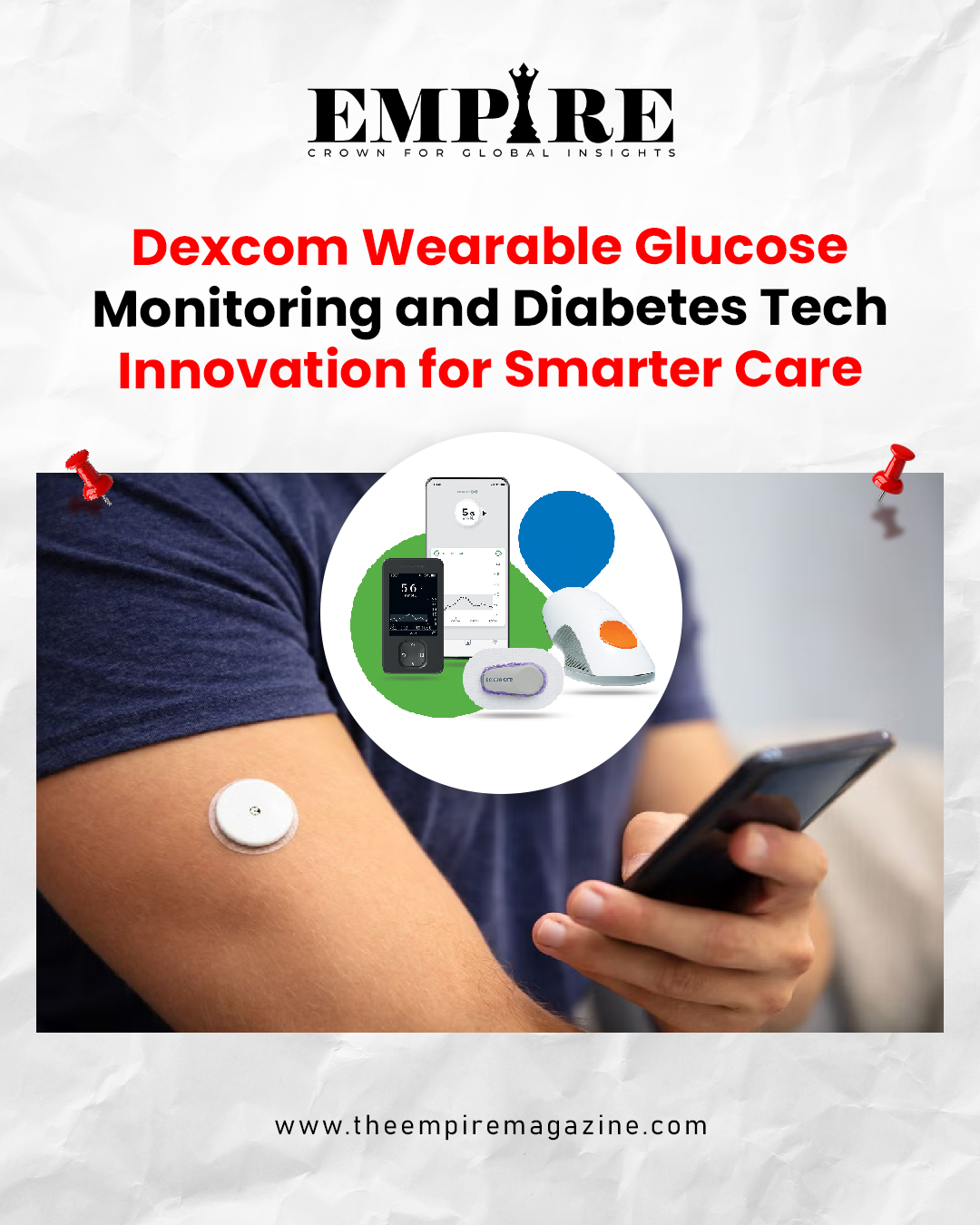
Dexcom Wearable Glucose Monitoring has become one of the most important developments in modern diabetes technology. For millions of people living with diabetes, glucose management is a daily responsibility that affects food choices, exercise, sleep, medication, and long-term health. Dexcom has helped change this experience by building continuous glucose monitoring systems that provide real-time glucose information through small wearable sensors.
Dexcom, Inc. is a global medical technology company known for continuous glucose monitoring, often called CGM. Instead of relying only on fingerstick blood glucose testing, CGM systems use a small sensor worn on the body to measure glucose levels in interstitial fluid. The data is then sent to a compatible smartphone, receiver, or connected device, helping users see their glucose number, direction, and trends.
This shift is important because diabetes care is no longer only about checking a number at one moment. It is about understanding how glucose changes throughout the day and night. Dexcom’s technology helps users and healthcare professionals identify patterns, respond to highs and lows, and make more informed treatment decisions.
Dexcom Wearable Glucose Monitoring and the Rise of CGM
Dexcom Wearable Glucose Monitoring reflects the larger rise of CGM in diabetes care. Traditional glucose testing gives a single reading at a specific time. CGM gives continuous information, which can help users understand how meals, activity, stress, sleep, and medication affect glucose levels.
For people with diabetes, this information can be powerful. Glucose levels can change quickly, especially for people using insulin. A CGM system can show whether glucose is rising, falling, or staying steady. This trend information can be more useful than a single reading because it helps users understand what may happen next.
Dexcom’s CGM systems are designed to support people with Type 1 diabetes, Type 2 diabetes, and gestational diabetes, depending on the product and local availability. The company’s products are part of a broader movement toward digital health, wearable medical devices, and more personalized diabetes management.
Dexcom Wearable Glucose Monitoring Helps Users Track Trends
Dexcom Wearable Glucose Monitoring is valuable because it helps users track glucose trends over time. A glucose number alone may not tell the full story. For example, a reading may look normal, but if glucose is dropping quickly, the user may need to take action soon. Trend arrows and alerts help provide that context.
This is one reason CGM has become important for diabetes care. It gives users more visibility between meals, during exercise, overnight, and during daily routines. Many people with diabetes worry about low glucose during sleep or unexpected highs after meals. Continuous data can help reduce uncertainty.
Dexcom also offers data-sharing features through supported apps and connected tools. This allows users to share glucose information with caregivers, family members, or healthcare teams where available. For children, older adults, and people who need support, this can add another layer of safety and confidence.
Dexcom Wearable Glucose Monitoring and Dexcom G7
Dexcom Wearable Glucose Monitoring advanced further with Dexcom G7, one of the company’s key CGM systems. Dexcom G7 is designed as a smaller, all-in-one wearable sensor that sends glucose information to a compatible smart device or receiver.
Dexcom G7 includes features such as a shorter warm-up time, customizable alerts, and a simplified app experience. The system is designed to help users spend more time in range, understand glucose patterns, and manage diabetes with greater convenience.
The Dexcom G7 system is also part of Dexcom’s strategy to make CGM easier to use. Wearable medical devices must be accurate, discreet, comfortable, and simple enough for daily life. If a device is too difficult to use, people may stop wearing it. Dexcom’s innovation has focused not only on glucose measurement, but also on user experience.
Dexcom Wearable Glucose Monitoring and Dexcom G7 15 Day
Dexcom Wearable Glucose Monitoring continued to expand with Dexcom G7 15 Day. In 2025, Dexcom announced that the U.S. Food and Drug Administration had cleared Dexcom G7 15 Day for adults 18 and older with diabetes in the United States. The company described it as its longest-lasting and most accurate CGM sensor.
A longer sensor life is important because it can reduce the number of sensor changes a user needs each month. This can improve convenience and may also reduce waste. For people managing diabetes every day, small improvements in comfort and ease can have a major impact on long-term use.
Dexcom G7 15 Day also reflects a competitive direction in diabetes technology. Companies are working to improve sensor accuracy, wear time, app design, alerts, affordability, and insurance access. The goal is to make CGM more useful and more widely adopted.
Dexcom Wearable Glucose Monitoring and Stelo
Dexcom Wearable Glucose Monitoring also entered a new category with Stelo by Dexcom. Stelo is an over-the-counter glucose biosensor cleared by the FDA for adults 18 and older who are not using insulin. It is designed to provide glucose insights directly to a smartphone without requiring a prescription.
This is a major development because it expands glucose monitoring beyond traditional prescription CGM users. Many adults with Type 2 diabetes do not use insulin but can still benefit from understanding glucose patterns. Stelo can help users see how food, activity, sleep, and lifestyle choices affect glucose levels.
Dexcom has positioned Stelo as a simpler glucose biosensor experience compared with full-featured CGM systems designed for intensive diabetes management. It is not meant for every diabetes use case, especially for people who need real-time insulin dosing support. However, it represents a major step toward broader access to glucose data.
Dexcom Wearable Glucose Monitoring Expands Access
Dexcom Wearable Glucose Monitoring is becoming more accessible through products like Stelo. Over-the-counter glucose biosensors can help people who may not qualify for traditional CGM coverage or who want easier access to glucose insights.
This shift also shows how diabetes technology is moving into preventive health, metabolic awareness, and lifestyle management. While medical guidance remains important, more people are becoming interested in understanding glucose behavior before complications become serious.
For people with Type 2 diabetes who are not using insulin, real-time glucose information can support healthier decisions. Seeing glucose responses after meals or activity can make diabetes management more visible and practical.
Dexcom Wearable Glucose Monitoring and Mobile Health
Dexcom Wearable Glucose Monitoring is closely connected to mobile health. The value of CGM is not only in the sensor, but also in the software that displays and organizes glucose data. Dexcom apps allow users to view readings, trends, alerts, and reports on compatible devices.
Mobile integration makes CGM more convenient because many users already carry smartphones throughout the day. Instead of using only a separate medical device, glucose data can become part of the user’s digital routine.
Dexcom also supports tools such as Dexcom Clarity, which helps users and healthcare professionals review glucose patterns. This kind of data can support conversations during medical appointments. Instead of relying only on memory or occasional readings, users can bring detailed glucose trends to their healthcare team.
Dexcom Wearable Glucose Monitoring Supports Data-Driven Care
Dexcom Wearable Glucose Monitoring supports data-driven diabetes care. Healthcare professionals can use CGM reports to understand time in range, glucose variability, highs, lows, and recurring patterns.
Time in range has become an important metric in diabetes management because it shows how much time glucose stays within a target range. This can provide a more complete picture than a single lab result alone. CGM data helps users and clinicians understand daily glucose behavior more clearly.
This does not replace medical advice, but it can improve the quality of diabetes conversations. Better data can help guide treatment adjustments, lifestyle changes, and risk reduction strategies.
Dexcom Wearable Glucose Monitoring and Diabetes Innovation
Dexcom Wearable Glucose Monitoring is part of a larger wave of diabetes innovation. Diabetes technology now includes CGM systems, insulin pumps, smart pens, connected apps, automated insulin delivery systems, digital coaching, and remote monitoring tools.
Dexcom has played a major role in this ecosystem by building CGM systems that can connect with other diabetes devices and platforms. Integration is important because diabetes care often involves multiple tools. A CGM system becomes more powerful when it can work with insulin delivery systems, apps, and healthcare data platforms.
The long-term direction of diabetes technology is toward more connected and personalized care. Instead of one-size-fits-all management, users can receive insights based on their own glucose patterns and daily behavior.
Dexcom Wearable Glucose Monitoring and Patient Confidence
Dexcom Wearable Glucose Monitoring can also improve confidence for people living with diabetes. Managing diabetes can be stressful because glucose can change unexpectedly. Continuous monitoring can help users feel more aware of what is happening in their body.
Alerts can be especially important for people at risk of hypoglycemia or hyperglycemia. A warning before glucose becomes too high or too low can help users respond earlier. This can be valuable during exercise, sleep, travel, work, or school.
For caregivers and families, shared glucose data can also bring peace of mind. Parents of children with diabetes, partners, and caregivers may feel more informed when supported sharing features are available.
Dexcom Wearable Glucose Monitoring and the Business of Health Tech
Dexcom Wearable Glucose Monitoring also shows how health technology has become a major business category. Diabetes is a global health challenge, and demand for better monitoring tools continues to grow. Companies that can combine medical accuracy, wearable design, software, and data services are becoming important players in healthcare innovation.
Dexcom’s growth reflects the increasing importance of medical wearables. Unlike general fitness trackers, CGM systems are regulated medical devices. This means they must meet standards for safety, accuracy, and reliability. That makes innovation more complex, but also more valuable.
The market for glucose monitoring is expanding because diabetes rates remain high and healthcare systems are looking for better long-term management tools. CGM can support earlier intervention, better self-management, and more informed clinical care.
Dexcom Wearable Glucose Monitoring Faces Key Challenges
Dexcom Wearable Glucose Monitoring still faces challenges. Cost, insurance coverage, product access, user education, and device compatibility can affect adoption. Not every person with diabetes has equal access to CGM technology.
Another challenge is data overload. Continuous data can be helpful, but users also need clear guidance on what the numbers mean. Good app design, healthcare support, and education are important so users do not feel overwhelmed.
Dexcom must also continue improving accuracy, comfort, sensor life, and affordability. As more companies enter the glucose monitoring market, competition will push the industry toward better products and broader access.
Dexcom Wearable Glucose Monitoring and the Future of Diabetes Care
Dexcom Wearable Glucose Monitoring points toward a future where diabetes care is more connected, personalized, and proactive. Wearable sensors can help users understand their glucose patterns in real time. Mobile apps can organize the data. Healthcare professionals can use reports to guide better decisions.
The future of diabetes technology will likely include longer-lasting sensors, easier access, stronger device integration, and more personalized insights. Dexcom’s work with G7, G7 15 Day, and Stelo shows how the company is expanding from traditional CGM users to a broader group of people who want glucose visibility.
For people living with diabetes, technology can never replace care, discipline, or medical support. But it can make daily management more informed and less uncertain. Dexcom’s role in wearable glucose monitoring shows how medical technology can move from occasional testing to continuous understanding.
For more healthcare technology and business insights, read more on The Empire Magazine.
Follow The Empire Magazine on Facebook and Instagram.
– The Empire Magazine
Crown For Global Insights