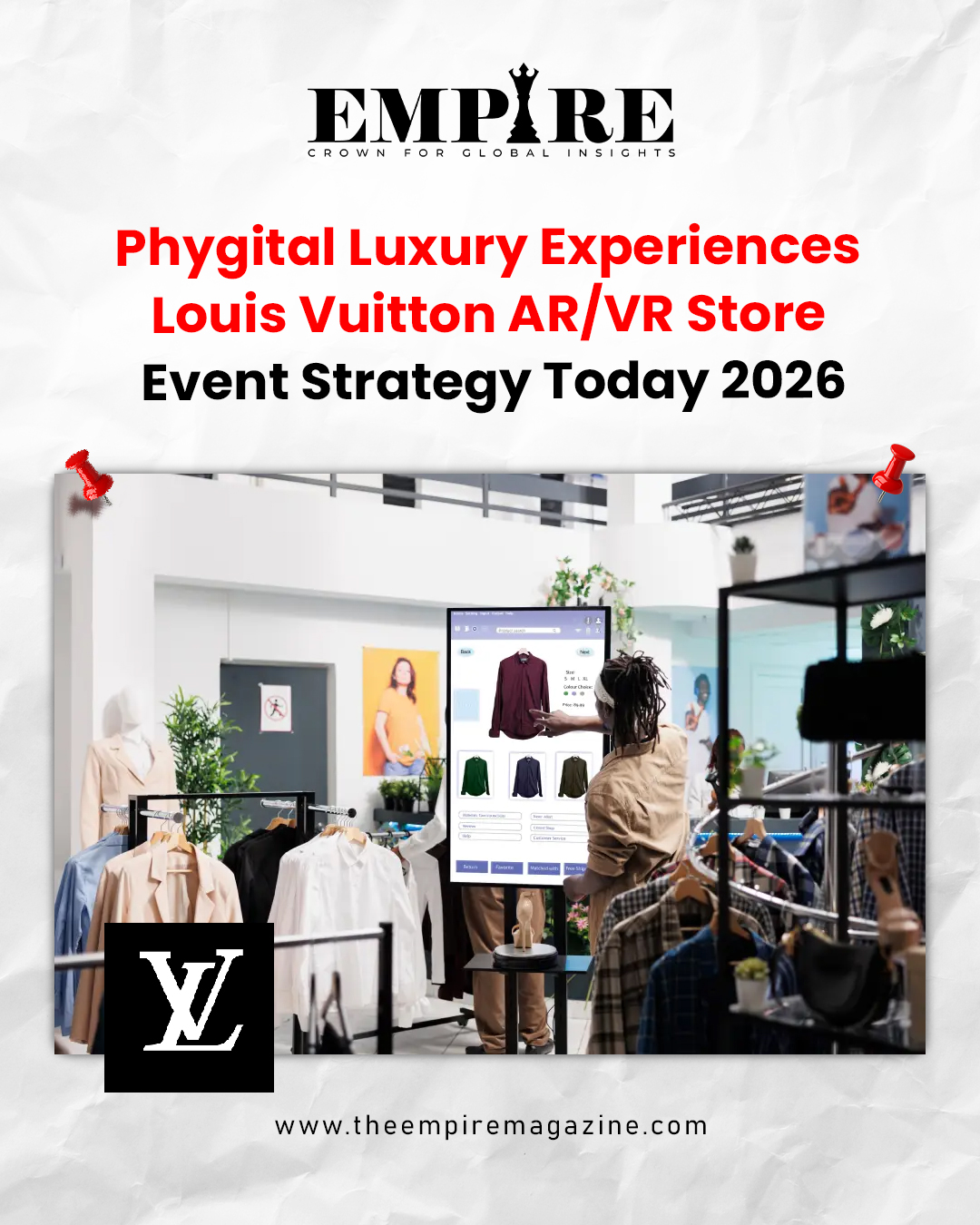
Phygital luxury experiences are becoming an important part of modern premium retail. Luxury brands are no longer depending only on beautiful stores, high-end products, and personal service. They are also adding digital layers such as augmented reality, virtual reality, mobile apps, connected products, immersive displays, and interactive events.
This shift is called “phygital” because it combines the physical and digital worlds. In luxury, the goal is not to replace the store. The goal is to make the store more memorable, more emotional, and more connected to the customer’s digital lifestyle.
Louis Vuitton is one of the strongest examples of this movement. The French luxury house has built its brand around travel, craftsmanship, heritage, and innovation. Its Horizon line, connected products, immersive shopping app, and experimental retail experiences show how luxury can move beyond traditional product display.
The rise of phygital retail is connected to changing customer behavior. Luxury consumers now discover products through social media, apps, fashion shows, online campaigns, virtual experiences, and physical boutiques. A customer may see a product online, explore it through a mobile app, visit a store event, and then purchase through a boutique or digital channel. This mixed journey is now part of modern luxury shopping.
Phygital Luxury Experiences and the Louis Vuitton Horizon Collection
Phygital luxury experiences can be clearly seen in Louis Vuitton’s Horizon collection and connected product strategy. The Horizon name has been used by Louis Vuitton across travel, luggage, watches, earphones, and connected lifestyle objects. These products reflect the brand’s historic connection with travel while also showing how technology can be integrated into luxury design.
The Louis Vuitton Horizon Light Up Speaker is one example of this direction. It combines sound, light, movement, and luxury design in one connected object. Instead of being treated only as a speaker, it becomes a lifestyle object and a design piece. This is important for luxury because high-end consumers often buy products for emotional value, craftsmanship, identity, and experience, not only basic function.
Louis Vuitton also supports connected objects through its digital ecosystem. The Louis Vuitton Connected app allows users to connect and configure items such as the Tambour Horizon Light Up connected watch, Horizon Light Up speaker, and earphones. This shows how luxury products are no longer limited to the moment of purchase. They can continue to interact with the customer after the product leaves the store.
Phygital Luxury Experiences Turn Products Into Stories
Phygital luxury experiences help luxury brands turn products into stories. A traditional store display may show a bag, watch, speaker, or luggage piece on a shelf. A phygital experience can add animation, sound, product storytelling, digital customization, virtual try-on, or interactive content.
For Louis Vuitton, this fits naturally with its brand history. The company began as a travel trunk maker in 1854 and has always connected its identity with movement, exploration, and craftsmanship. The Horizon collection continues that travel story, but with a modern technology layer.
This is why AR/VR and connected product events are powerful in luxury. They allow brands to present products as part of a larger world. Customers can experience the mood, movement, design inspiration, and lifestyle around the product instead of only looking at it physically.
Phygital Luxury Experiences in Physical Stores
Phygital luxury experiences are especially valuable inside physical stores. Luxury boutiques remain important because they offer personal attention, premium interiors, product touch, and brand atmosphere. However, customers now expect more than standard shopping. They want exclusive moments, memorable visuals, and experiences worth sharing.
AR and VR can support this by creating immersive store journeys. A customer may scan a QR code, open a brand app, see animated elements around a product, explore digital storytelling, or view campaign visuals in a new way. These features can make the customer spend more time in the store and build a stronger emotional connection with the brand.
Louis Vuitton has used digital innovation in several retail and campaign experiences. One example is its AR use connected to the “Zoooom with Friends” characters introduced during Virgil Abloh’s creative era. The brand used animated digital characters and app-based interaction to create a playful bridge between physical retail and digital storytelling.
Phygital Luxury Experiences Help Drive Store Footfall
Phygital luxury experiences can also help bring customers back into stores. After the rise of online shopping, luxury brands needed new reasons for customers to visit physical boutiques. Exclusive events, pop-ups, AR activations, product launches, and private previews give customers something they cannot fully experience online.
This matters because luxury stores are not only sales locations. They are brand theaters. A store can communicate heritage, status, exclusivity, service quality, and emotional value. When AR/VR is added carefully, the boutique becomes more than a showroom. It becomes a live experience.
For Louis Vuitton, this is especially important because the brand has a large global store network and a strong event culture. Fashion shows, product launches, travel collections, art collaborations, and digital campaigns all support the larger brand universe.
Phygital Luxury Experiences and AR/VR Technology
Phygital luxury experiences depend on technologies such as augmented reality and virtual reality. AR adds digital content to the real world, usually through a smartphone, tablet, or wearable device. VR creates a fully digital environment that can be experienced through a headset or immersive screen.
In luxury retail, AR is often more practical than full VR because it works easily inside stores and on mobile devices. Customers can interact with products without needing complex equipment. AR can be used for product visualization, animation, virtual try-on, campaign storytelling, or interactive pop-ups.
VR is useful for deeper brand storytelling. It can take customers into a virtual runway, digital atelier, museum-style brand archive, or immersive travel environment. For luxury houses, VR can communicate craftsmanship and heritage in a way that feels premium and cinematic.
Phygital Luxury Experiences Must Protect the Luxury Feeling
Phygital luxury experiences only work when technology supports the brand, not when it distracts from it. Luxury customers expect elegance, quality, privacy, and personal service. If a digital experience feels cheap, confusing, or forced, it can weaken the premium image.
This is why luxury brands must use AR/VR carefully. The technology should feel seamless, beautiful, and useful. It should help customers understand the product, enjoy the brand world, or feel closer to the story. It should not feel like a gimmick.
Louis Vuitton’s connected products show this balance. The Horizon Light Up Speaker, for example, is not just a technology product with a logo. It is designed as a luxury object with sound, light, movement, and visual identity. That combination is what makes it relevant to phygital luxury.
Phygital Luxury Experiences and Customer Expectations
Phygital luxury experiences are growing because customers are changing. Younger luxury buyers are highly digital, but they still value physical products and real experiences. They want access, personalization, storytelling, and exclusivity.
A customer who buys luxury today may expect the brand to offer online discovery, store appointments, app-based services, digital content, event invitations, and post-purchase support. Luxury retail is becoming a long-term relationship instead of a single transaction.
Louis Vuitton’s app ecosystem supports this shift. The official Louis Vuitton app allows customers to explore products, news, fashion shows, gifting ideas, and store-related services. This type of digital companion keeps the brand close to the customer before and after the store visit.
Phygital Luxury Experiences Support Personalization
Phygital luxury experiences can also support personalization. Luxury has always valued personal service, but digital tools can make that service more connected. A customer may receive product recommendations, appointment reminders, event invitations, repair support, or connected-object updates through digital channels.
This does not remove the need for human advisors. In fact, it can make client advisors more effective. When digital tools are used well, the physical boutique experience becomes more informed and personal.
For brands such as Louis Vuitton, this is important because high-value customers expect recognition and consistency. Whether they interact through a store, app, event, or digital product, the experience should feel connected.
Phygital Luxury Experiences and Brand Storytelling
Phygital luxury experiences give brands a stronger way to tell stories. Luxury is built on emotion, heritage, design, scarcity, and cultural meaning. AR/VR can make these stories more visual and interactive.
For example, a travel collection can be presented through digital landscapes, animated luggage journeys, airport-style displays, or immersive city environments. A connected speaker can be shown through light, sound, and motion. A fashion collection can be supported by virtual show replays, behind-the-scenes content, or interactive campaign elements.
Louis Vuitton has long connected fashion with travel, art, architecture, and culture. Phygital retail allows the brand to extend these themes into new formats. Instead of only showing products, the brand can invite customers into a designed world.
Phygital Luxury Experiences Create Shareable Moments
Phygital luxury experiences also create shareable moments. Modern luxury customers often share store visits, launch events, product displays, and immersive installations on social media. A visually powerful AR or VR experience can become part of the brand’s marketing beyond the store.
This is valuable because luxury marketing depends on aspiration. When customers share an immersive store experience, they extend the brand’s reach organically. The boutique becomes both a selling space and a content space.
However, the experience must still feel exclusive. Luxury brands must balance social visibility with privacy and prestige. The best phygital events create excitement without making the brand feel too accessible or mass-market.
Phygital Luxury Experiences as a Business Strategy
Phygital luxury experiences are not only creative experiments. They are also business strategy. They can support customer engagement, store traffic, product education, event marketing, clienteling, and brand loyalty.
For luxury houses, physical retail is expensive. Flagship stores, pop-ups, events, visual merchandising, and staff training require major investment. Digital layers can make these spaces more productive by increasing customer attention and deepening the experience.
Louis Vuitton’s Horizon strategy shows how product innovation and digital experience can work together. Connected products create ongoing interaction. Store activations create emotional engagement. Apps provide digital access. Events create exclusivity. Together, these parts form a modern luxury ecosystem.
Phygital Luxury Experiences Will Shape Premium Retail
Phygital luxury experiences will continue to shape premium retail because customers now live across both physical and digital spaces. The future of luxury will not be only online or only offline. It will be a combination of both.
For Louis Vuitton and other global luxury brands, the challenge is to keep technology elegant, useful, and emotionally powerful. AR/VR should not replace craftsmanship, product quality, or human service. It should enhance them.
The brands that succeed in phygital luxury will be the ones that understand this balance. They will use digital tools to deepen storytelling, not dilute it. They will make stores more immersive, not less personal. They will use connected products to extend the relationship, not simply add technology for attention.
For more business and luxury brand insights, read more on The Empire Magazine.
Follow The Empire Magazine on Facebook and Instagram.
The Empire Magazine
Crown For Global Insights