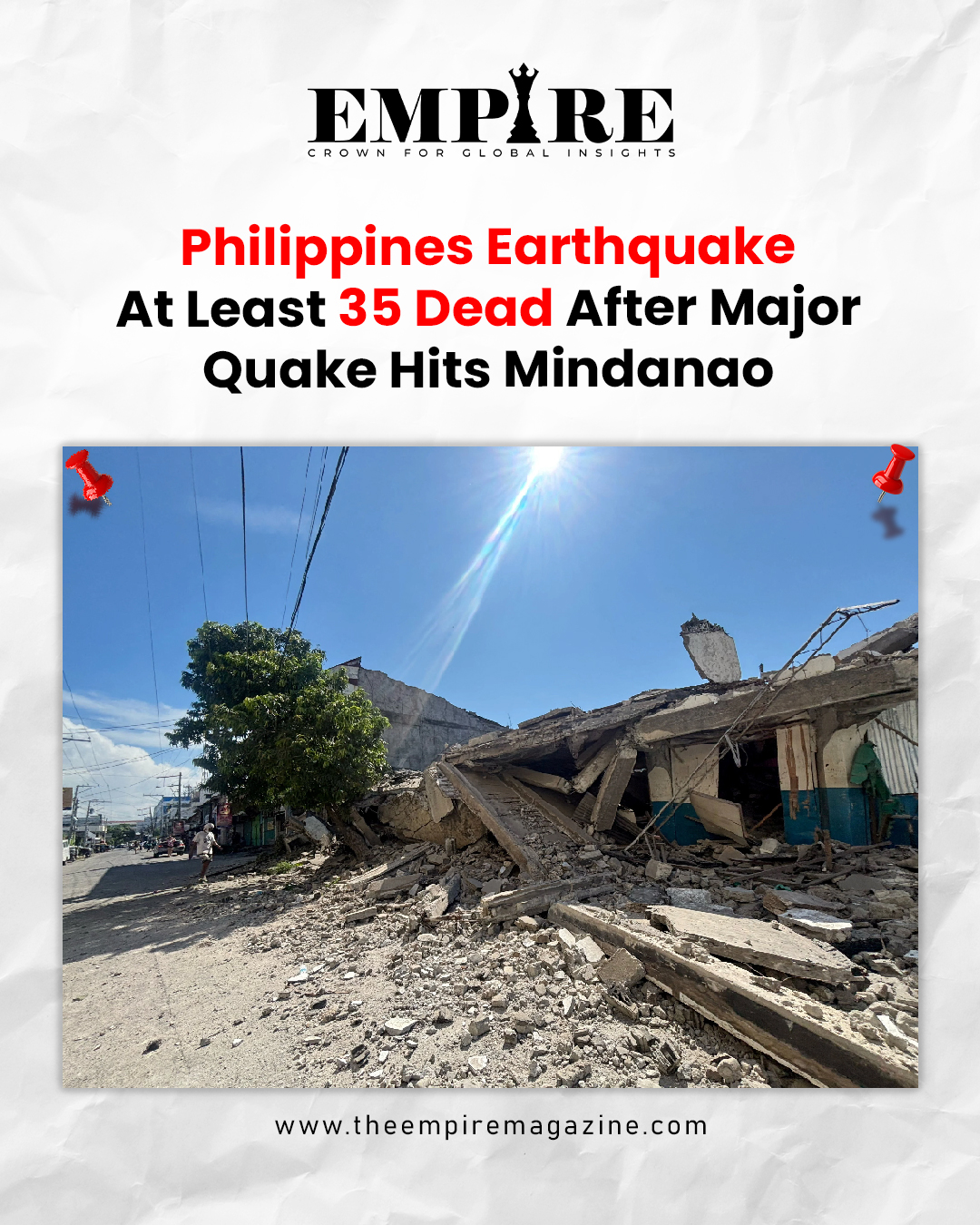
Philippines Earthquake has caused major destruction in the country’s southern region after a powerful quake struck near Mindanao, killing at least 35 people and injuring hundreds. The earthquake hit close to General Santos City, one of the major urban centers in the southern Philippines, damaging buildings, forcing evacuations, disrupting power, and triggering tsunami warnings that were later lifted.
The disaster has once again shown why the Philippines remains one of the world’s most earthquake-prone countries. Located along the Pacific Ring of Fire, the nation faces frequent seismic activity, volcanic hazards, and tsunami risks. For people living in coastal and earthquake-prone zones, the latest disaster has brought fear, loss, and urgent questions about preparedness, rescue operations, infrastructure safety, and disaster response.
The quake struck early in the day, when many people were starting work, school, and daily activities. Buildings shook strongly, students and workers rushed outside, and emergency teams were sent to assess collapsed structures, injured residents, and displaced families. The damage was especially serious in areas around Mindanao, where authorities continued rescue and relief work while aftershocks added to public anxiety.
Philippines Earthquake and the Scale of the Disaster
Philippines Earthquake reports show that the impact was severe across parts of Mindanao. The quake was measured at magnitude 7.8, making it a major seismic event capable of causing widespread structural damage, landslides, power outages, and casualties.
General Santos City and nearby areas were among the hardest hit. Several buildings were damaged or collapsed, including commercial structures and school facilities. Hospitals also faced pressure as injured people arrived for emergency treatment. In some cases, medical services had to be moved into temporary spaces because of building damage or safety concerns.
The number of deaths and injuries may change as rescue teams continue checking affected areas. In major earthquakes, official figures often rise over time because some communities are difficult to reach immediately after the disaster. Damaged roads, unstable buildings, power cuts, and communication disruptions can slow down rescue and reporting.
Why Mindanao Was Badly Affected
Mindanao is located in a seismically active region. The Philippines sits on the Pacific Ring of Fire, where several tectonic plates meet and create frequent earthquakes and volcanic activity. This makes the country highly vulnerable to strong ground shaking.
A powerful earthquake can cause damage in different ways. The most immediate danger is building collapse. Older structures, poorly built homes, and buildings that do not meet strong seismic standards are especially at risk. In coastal areas, tsunami danger can add another layer of threat.
In this event, tsunami warnings were issued after the earthquake because a strong offshore quake can disturb the sea floor and generate waves. Authorities later lifted the warnings, but the initial alerts caused evacuations and fear in coastal communities.
Tsunami Warnings and Coastal Evacuations
Tsunami warnings are taken seriously in the Philippines because many communities live near the coast. After a major offshore earthquake, people in low-lying coastal areas may be told to move to higher ground until the threat is assessed.
Even when a tsunami does not become catastrophic, evacuation is still necessary because early warnings can save lives. The difficulty is that people may have only a short time to respond. This is why clear communication, evacuation routes, and community drills are essential.
In the latest Philippines Earthquake, tsunami warnings were eventually lifted, but the alerts added pressure to emergency teams already responding to collapsed buildings and injured residents.
Human Impact of the Earthquake
The human cost of the earthquake is the most serious part of the disaster. At least 35 people were reported dead, with hundreds more injured. Families lost loved ones, homes were damaged, and many residents were forced to leave unsafe buildings.
Students were among those affected as the quake struck during morning hours. Schools in affected areas were suspended as authorities inspected buildings and assessed risks from aftershocks. For children and families, earthquakes can create deep emotional stress because aftershocks may continue for hours or days.
Hospitals and emergency workers faced difficult conditions. During a major quake, hospitals must treat injuries while also checking whether their own buildings remain safe. Medical workers may have to operate under pressure, sometimes in tents or temporary spaces if hospital structures are damaged.
Displaced Families and Emergency Shelters
Thousands of people were affected by the earthquake, and many families were displaced. When homes are damaged or aftershocks continue, residents may be moved to evacuation centers or open areas for safety.
Emergency shelters must provide food, water, sanitation, medical support, and safe sleeping spaces. This becomes harder when power and communication systems are disrupted. Families may also need psychological support, especially those who experienced building collapses or lost relatives.
For local governments, managing evacuation centers is a major challenge after a disaster. They must balance urgent safety needs with the longer task of helping people return home or rebuild.
Damage to Buildings and Infrastructure
The earthquake damaged buildings, roads, schools, commercial areas, and public infrastructure. Videos and reports from affected areas showed panic as people rushed away from shaking buildings and damaged structures.
Infrastructure damage can slow recovery. If roads are cracked or blocked, rescue teams may struggle to reach certain areas. If power lines are down, communication and medical services become harder. If water systems are damaged, health risks increase.
Building safety will now become a major concern. Engineers and local officials will need to inspect schools, hospitals, offices, bridges, and homes before people can safely return. Even buildings that appear standing may have hidden structural damage after strong shaking.
Government Response and Relief Operations
The Philippine government has mobilized rescue and relief operations in affected areas. President Ferdinand Marcos Jr. assured the public that authorities were responding and supporting Mindanao. Local disaster management teams, emergency workers, health officials, police, military units, and volunteers are expected to continue rescue and relief work.
Disaster response after a major earthquake usually happens in phases. The first phase focuses on search and rescue, emergency medical care, evacuation, and public warnings. The second phase includes shelter, food distribution, damage assessment, and restoring basic services. Later phases involve rebuilding homes, repairing infrastructure, and supporting affected communities.
Why Aftershocks Remain Dangerous
Aftershocks are common after major earthquakes. They can be strong enough to damage already weakened buildings and create more fear among residents. This is why authorities often warn people not to return immediately to damaged structures.
Aftershocks can also complicate rescue work. Emergency teams entering collapsed buildings must consider the risk of further shaking. Residents may sleep outdoors or in shelters until buildings are inspected.
For people in affected areas, staying alert to official updates is essential. False information can spread quickly after disasters, so verified government and emergency alerts are important.
Philippines and the Ring of Fire
The Philippines is one of the countries most exposed to natural hazards because of its location along the Pacific Ring of Fire. This region is known for frequent earthquakes and volcanic activity. The country also faces typhoons, floods, landslides, and storm surges.
Because earthquakes cannot be predicted precisely, preparedness is the strongest protection. This includes stronger building codes, regular drills, safe school structures, early warning systems, public education, emergency kits, and clear evacuation plans.
The latest Philippines Earthquake shows why disaster preparedness must remain a national priority. A powerful quake can strike without warning, and the difference between survival and tragedy often depends on building quality, fast response, and public awareness.
Lessons for Urban Safety
Cities like General Santos need strong earthquake planning because urban areas have dense populations, schools, hospitals, markets, offices, and transport networks. A major quake in a city can create mass casualties if buildings are weak or emergency routes are blocked.
Urban safety requires strict construction standards, inspections, retrofitting of old buildings, and strong emergency planning. Public buildings such as schools and hospitals must be especially safe because they serve vulnerable groups during disasters.
For businesses, earthquake preparedness is also important. Companies need emergency plans, backup power, data protection, insurance, employee safety procedures, and continuity planning.
Economic Impact of the Philippines Earthquake
A major earthquake can affect the local economy in many ways. Businesses may close temporarily, supply routes may be disrupted, and workers may be unable to travel. Damaged shops, schools, hospitals, and offices can slow daily activity.
The cost of recovery can also be high. Governments must fund emergency relief, infrastructure repair, housing support, medical care, and rebuilding. Insurance claims may rise, and small businesses may struggle if they lose inventory, equipment, or operating space.
In areas where families depend on daily income, even a short disruption can create hardship. Relief operations therefore need to support not only immediate safety but also recovery of livelihoods.
Why Disaster Communication Matters
Clear communication is critical after earthquakes. Residents need to know where to evacuate, which roads are safe, whether tsunami warnings are active, where shelters are located, and how to get medical help.
Authorities also need to correct misinformation. During disasters, rumors about stronger quakes, fake warnings, or false casualty numbers can spread quickly. Accurate updates from official agencies help reduce panic.
Media coverage plays an important role, but responsible reporting is essential. Casualty figures should be updated carefully, and rescue efforts should not be disrupted by speculation.
What Happens Next in Mindanao
The next steps in Mindanao will include search and rescue, medical treatment, damage assessment, aftershock monitoring, and support for displaced families. Authorities will also need to inspect public buildings and decide when schools, offices, and businesses can reopen safely.
The death toll may still change as officials verify reports and reach affected areas. Long-term rebuilding will depend on the level of structural damage and the support available from national agencies, local governments, humanitarian groups, and communities.
The Philippines Earthquake has again shown the vulnerability of communities living in seismic zones. It has also highlighted the courage of emergency responders, medical workers, local volunteers, and residents helping each other during a major disaster.
Readers can also explore more global banking and infrastructure insights through this related article: Japan’s Banking Strategy: How Nomura Is Competing in the U.S. and Europe.
For more updates from The Empire Magazine, follow us on Facebook and Instagram.
– The Empire Magazine
Crown For Global Insights