Agentic AI is rapidly moving from concept to reality in 2026, and Google is emerging as one of the strongest players in this space. With major updates to Gemini agents, a redesigned Search experience, and advanced multimodal tools, Google is gaining significant traction and accelerating the shift toward autonomous AI systems capable of handling complex white-collar tasks.
What is Agentic AI?
Agentic AI refers to autonomous artificial intelligence systems that can plan, reason, use tools, and execute multi-step tasks with minimal human intervention. Unlike traditional chatbots that simply respond to prompts, Agentic AI can break down goals, adapt to new information, interact with software, and complete complex workflows independently.
Google’s Strong Push into Agentic AI
In early 2026, Google made several high-impact announcements that have positioned it at the forefront of the Agentic AI revolution:
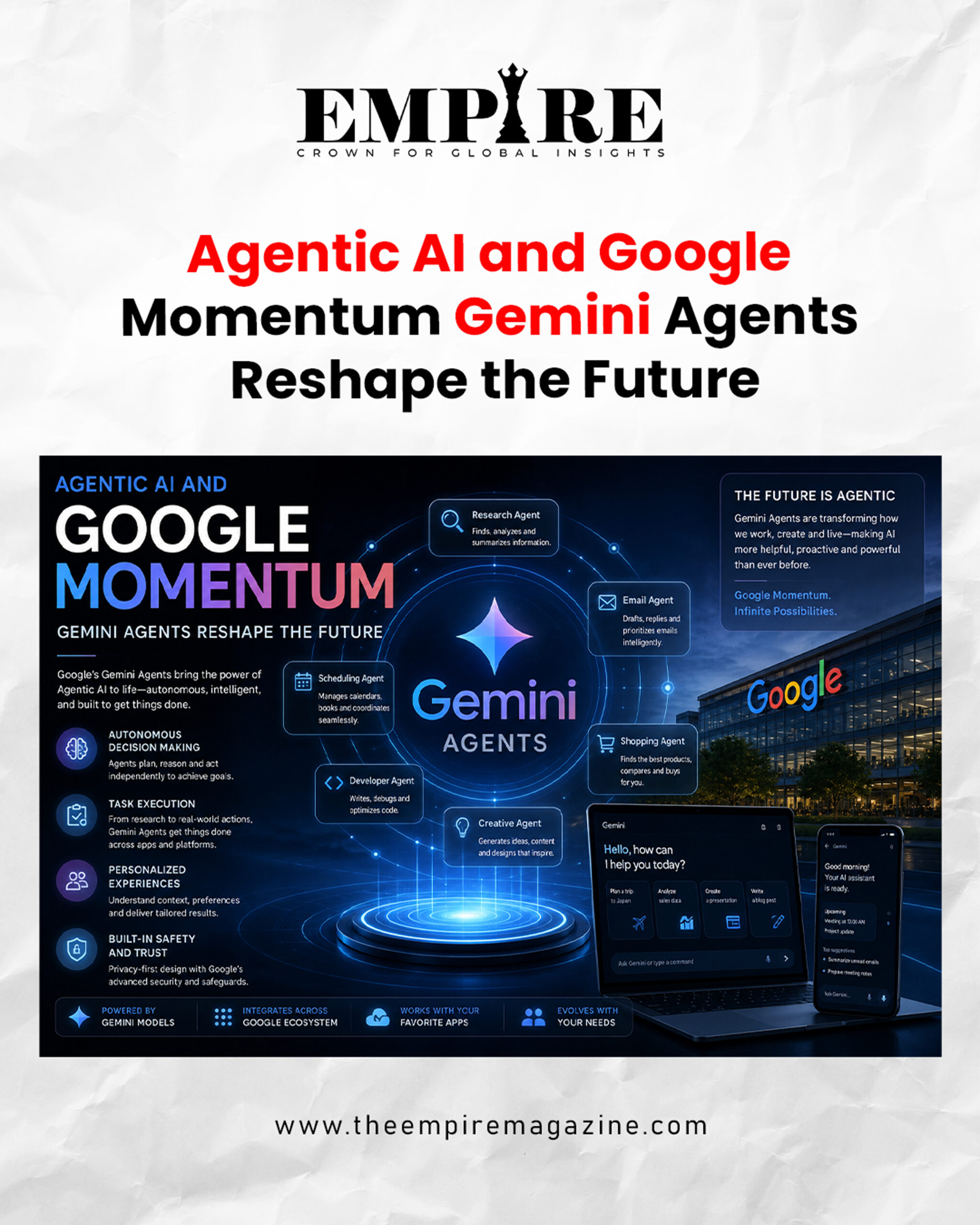
- Gemini Agents: Google rolled out advanced Gemini agents capable of handling sophisticated tasks such as research, data analysis, scheduling, email management, and even coding projects. These agents can operate across multiple tools and platforms while maintaining context over long periods.
- Redesigned Google Search: The company introduced “AI Mode” in Search, which goes beyond traditional links to deliver comprehensive, agent-driven answers. Users can now assign complex research tasks directly to Search, which uses Agentic capabilities to gather, synthesize, and present information.
- Multimodal Tools: Gemini now seamlessly processes text, images, video, audio, and code together. This allows agents to understand and act on rich, real-world data — for example, analyzing a screenshot of an error message and automatically fixing the code.
These updates have received strong positive feedback from developers and enterprises, with many reporting significant productivity improvements.
Momentum and Adoption
Google’s Agentic AI push is gaining rapid traction:
- Over 40 million developers and businesses are actively using Gemini agents as of May 2026.
- Enterprise adoption has grown over 300% quarter-over-quarter.
- Major corporations in finance, healthcare, marketing, and legal sectors are piloting agentic workflows for routine but complex tasks.
- Google Cloud has integrated Agentic capabilities deeply into its workspace and cloud offerings.
Analysts believe Google’s deep integration of agents across Search, Workspace, Android, and Cloud gives it a structural advantage over competitors.
The Coming Wave: Automation of White-Collar Tasks
Experts predict that 2026–2027 will mark the beginning of widespread automation of white-collar jobs through Agentic AI. Tasks most likely to be impacted soon include:
- Market research and competitive analysis
- Financial reporting and basic accounting
- Legal document review and contract generation
- Customer support escalation handling
- Software debugging and maintenance
- Content strategy and multi-channel marketing
Unlike previous automation waves that mainly affected manual labor, Agentic AI is targeting knowledge work — a development that could reshape the global job market significantly.
Challenges and Concerns
While momentum is strong, challenges remain:
- Reliability and hallucination issues in complex scenarios
- Data privacy and security concerns
- Potential for job displacement
- Ethical questions around autonomous decision-making
- Regulatory scrutiny as agents become more powerful
Google has emphasized responsible AI development, implementing strict safety layers and human oversight options in its agentic systems.
The Road Ahead
Google’s aggressive moves in Agentic AI signal a new phase in the artificial intelligence revolution — one where AI doesn’t just assist but actively works alongside humans as capable digital colleagues.
As Agentic systems mature, the competitive battle between Google, OpenAI, Anthropic, and emerging players like DeepSeek will intensify. For now, Google’s vast ecosystem, powerful multimodal models, and integration across consumer and enterprise products give it a formidable position.
The era of truly autonomous AI agents is no longer distant — it is unfolding rapidly in 2026, with Google playing a leading role.
For more insights on Agentic AI and Google’s latest developments, read our detailed coverage here: Agentic AI and Google Momentum
Agentic AI is rapidly moving from concept to reality in 2026, and Google is emerging as one of the strongest players in this space. With major updates to Gemini agents, a redesigned Search experience, and advanced multimodal tools, Google is gaining significant traction and accelerating the shift toward autonomous AI systems capable of handling complex white-collar tasks.
What is Agentic AI?
Agentic AI refers to autonomous artificial intelligence systems that can plan, reason, use tools, and execute multi-step tasks with minimal human intervention. Unlike traditional chatbots that simply respond to prompts, Agentic AI can break down goals, adapt to new information, interact with software, and complete complex workflows independently.
Google’s Strong Push into Agentic AI
In early 2026, Google made several high-impact announcements that have positioned it at the forefront of the Agentic AI revolution:
- Gemini Agents: Google rolled out advanced Gemini agents capable of handling sophisticated tasks such as research, data analysis, scheduling, email management, and even coding projects. These agents can operate across multiple tools and platforms while maintaining context over long periods.
- Redesigned Google Search: The company introduced “AI Mode” in Search, which goes beyond traditional links to deliver comprehensive, agent-driven answers. Users can now assign complex research tasks directly to Search, which uses Agentic capabilities to gather, synthesize, and present information.
- Multimodal Tools: Gemini now seamlessly processes text, images, video, audio, and code together. This allows agents to understand and act on rich, real-world data — for example, analyzing a screenshot of an error message and automatically fixing the code.
These updates have received strong positive feedback from developers and enterprises, with many reporting significant productivity improvements.
Momentum and Adoption
Google’s Agentic AI push is gaining rapid traction:
- Over 40 million developers and businesses are actively using Gemini agents as of May 2026.
- Enterprise adoption has grown over 300% quarter-over-quarter.
- Major corporations in finance, healthcare, marketing, and legal sectors are piloting agentic workflows for routine but complex tasks.
- Google Cloud has integrated Agentic capabilities deeply into its workspace and cloud offerings.
Analysts believe Google’s deep integration of agents across Search, Workspace, Android, and Cloud gives it a structural advantage over competitors.
The Coming Wave: Automation of White-Collar Tasks
Experts predict that 2026–2027 will mark the beginning of widespread automation of white-collar jobs through Agentic AI. Tasks most likely to be impacted soon include:
- Market research and competitive analysis
- Financial reporting and basic accounting
- Legal document review and contract generation
- Customer support escalation handling
- Software debugging and maintenance
- Content strategy and multi-channel marketing
Unlike previous automation waves that mainly affected manual labor, Agentic AI is targeting knowledge work — a development that could reshape the global job market significantly.
Challenges and Concerns
While momentum is strong, challenges remain:
- Reliability and hallucination issues in complex scenarios
- Data privacy and security concerns
- Potential for job displacement
- Ethical questions around autonomous decision-making
- Regulatory scrutiny as agents become more powerful
Google has emphasized responsible AI development, implementing strict safety layers and human oversight options in its agentic systems.
The Road Ahead
Google’s aggressive moves in Agentic AI signal a new phase in the artificial intelligence revolution — one where AI doesn’t just assist but actively works alongside humans as capable digital colleagues.
As Agentic systems mature, the competitive battle between Google, OpenAI, Anthropic, and emerging players like DeepSeek will intensify. For now, Google’s vast ecosystem, powerful multimodal models, and integration across consumer and enterprise products give it a formidable position.
The era of truly autonomous AI agents is no longer distant — it is unfolding rapidly in 2026, with Google playing a leading role.
For more insights on Agentic AI and Google’s latest developments, read our detailed coverage here: Agentic AI and Google Momentum
Follow The Empire Magazine for more updates on Artificial Intelligence, technology trends, and future of work:
– The Empire Magazine
Crown For Global Insights