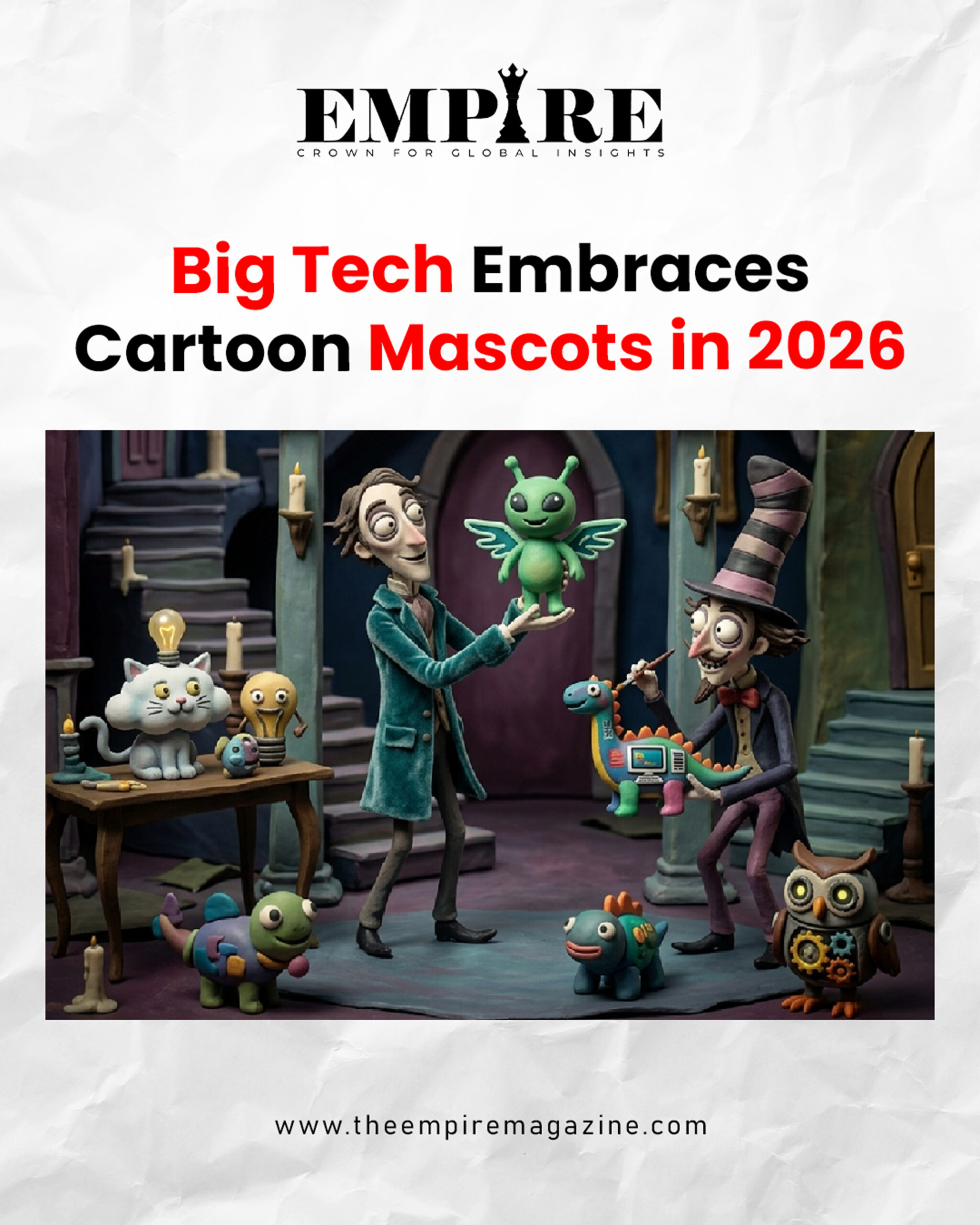
Big Tech companies are undergoing a major branding shift in 2026. Apple, Microsoft, and Google are increasingly using cartoon characters and friendly mascots to make their products appear more approachable, fun, and emotionally engaging.
Why Big Tech is Turning to Mascots
After years of projecting a sleek, powerful, and sometimes intimidating image, technology giants are now humanizing their brands. The goal is to reduce user anxiety around AI, build emotional connections, and appeal to younger audiences (Gen Z and Gen Alpha).
Apple’s Playful Evolution
Apple, famous for minimalism, has introduced “Apple Friends” — a series of charming cartoon characters. These mascots represent different products and services in animated videos, App Store promotions, and educational content. The move marks a clear departure from its traditional minimalist aesthetic toward a warmer, family-friendly identity.
Microsoft’s Mascot Revival
Microsoft has aggressively embraced mascots:
- Revived and modernized the iconic Clippy as an AI-powered cartoon assistant.
- Introduced multiple friendly avatars for Copilot, including animals and robots.
- These characters are now integrated across Windows, Microsoft 365, and Xbox.
This strategy aims to make AI tools feel less mechanical and more like helpful companions.
Google’s Mascot Strategy
Google leads the trend with the widest use of characters:
- Gemini Buddies — A family of cartoon AI agents with unique personalities.
- Updated Android mascot with regular new themes.
- Interactive cartoon characters in Google Doodles, YouTube Kids, and Workspace.
Google’s approach spans across Search, Assistant, Cloud, and consumer apps, creating a consistent friendly universe.
Reasons Behind This Corporate Shift
- Building Trust — Soften concerns around privacy and AI power.
- Emotional Connection — Users engage more with friendly, relatable characters.
- Attracting Younger Users — Cartoon mascots perform strongly with children and teens.
- Differentiation — Stand out in a crowded, competitive tech market.
- Humanizing AI — Make advanced technology feel safe and approachable.
Early Results
Initial feedback and data in 2026 show positive outcomes:
- Higher user engagement rates with mascot-driven interfaces.
- Improved brand perception among younger demographics.
- Stronger emotional recall in marketing campaigns.
The Bigger Picture
This mascot trend reflects a deeper change in Big Tech’s strategy — moving from “cool and distant” to “friendly and relatable.” As AI becomes more powerful and integrated into daily life, companies are realizing the importance of warmth and personality in branding.
While some view this as clever marketing, it signals a maturing industry attempting to balance innovation with emotional intelligence.
The era of cartoon mascots in Big Tech has officially begun — and it may define how users interact with technology in the years ahead.
For more insights on Big Tech branding trends, read our detailed coverage here: Big Tech Mascots 2026
Big Tech companies are undergoing a major branding shift in 2026. Apple, Microsoft, and Google are increasingly using cartoon characters and friendly mascots to make their products appear more approachable, fun, and emotionally engaging.
Why Big Tech is Turning to Mascots
After years of projecting a sleek, powerful, and sometimes intimidating image, technology giants are now humanizing their brands. The goal is to reduce user anxiety around AI, build emotional connections, and appeal to younger audiences (Gen Z and Gen Alpha).
Apple’s Playful Evolution
Apple, famous for minimalism, has introduced “Apple Friends” — a series of charming cartoon characters. These mascots represent different products and services in animated videos, App Store promotions, and educational content. The move marks a clear departure from its traditional minimalist aesthetic toward a warmer, family-friendly identity.
Microsoft’s Mascot Revival
Microsoft has aggressively embraced mascots:
- Revived and modernized the iconic Clippy as an AI-powered cartoon assistant.
- Introduced multiple friendly avatars for Copilot, including animals and robots.
- These characters are now integrated across Windows, Microsoft 365, and Xbox.
This strategy aims to make AI tools feel less mechanical and more like helpful companions.
Google’s Mascot Strategy
Google leads the trend with the widest use of characters:
- Gemini Buddies — A family of cartoon AI agents with unique personalities.
- Updated Android mascot with regular new themes.
- Interactive cartoon characters in Google Doodles, YouTube Kids, and Workspace.
Google’s approach spans across Search, Assistant, Cloud, and consumer apps, creating a consistent friendly universe.
Reasons Behind This Corporate Shift
- Building Trust — Soften concerns around privacy and AI power.
- Emotional Connection — Users engage more with friendly, relatable characters.
- Attracting Younger Users — Cartoon mascots perform strongly with children and teens.
- Differentiation — Stand out in a crowded, competitive tech market.
- Humanizing AI — Make advanced technology feel safe and approachable.
Early Results
Initial feedback and data in 2026 show positive outcomes:
- Higher user engagement rates with mascot-driven interfaces.
- Improved brand perception among younger demographics.
- Stronger emotional recall in marketing campaigns.
The Bigger Picture
This mascot trend reflects a deeper change in Big Tech’s strategy — moving from “cool and distant” to “friendly and relatable.” As AI becomes more powerful and integrated into daily life, companies are realizing the importance of warmth and personality in branding.
While some view this as clever marketing, it signals a maturing industry attempting to balance innovation with emotional intelligence.
The era of cartoon mascots in Big Tech has officially begun — and it may define how users interact with technology in the years ahead.
For more insights on Big Tech branding trends, read our detailed coverage here: Big Tech Mascots 2026
Follow The Empire Magazine for more updates on technology, branding, and business strategies:
– The Empire Magazine
Crown For Global Insights