
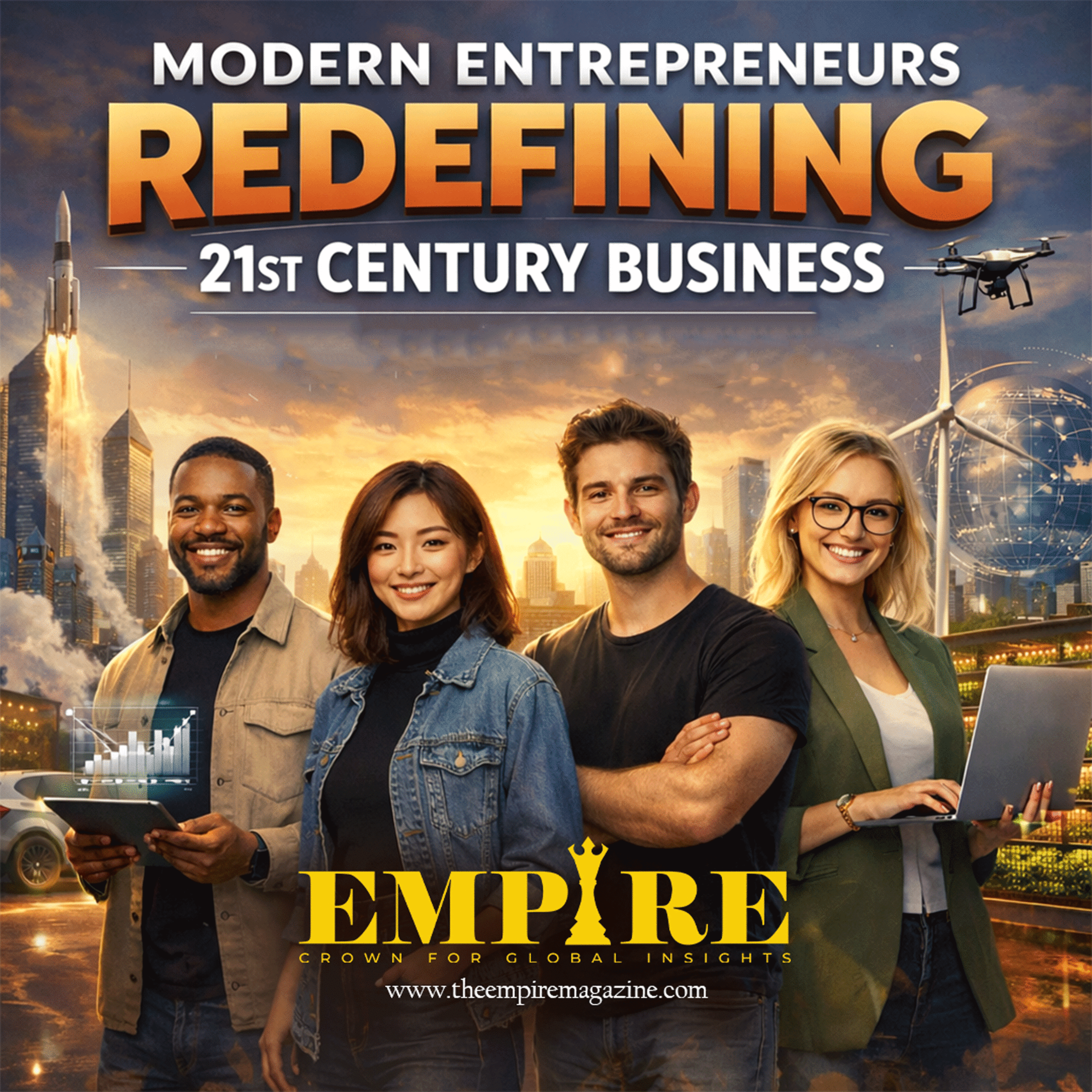
Introduction: The Rise of Modern Entrepreneurs
Modern Entrepreneurs are transforming how businesses are built, scaled, and sustained in the 21st century. The traditional path of slowly growing a company over decades has been replaced by fast-paced innovation, digital expansion, and global connectivity. Today, entrepreneurship is not merely a career choice; it is a mindset rooted in adaptability, technology, and purpose.
The new generation of business leaders measures success not only in revenue but also in cultural relevance, innovation, and long-term impact. Modern Entrepreneurs blend creativity with strategic thinking, building ventures that move beyond products and create ecosystems.
The Vision That Builds Empires
Every business empire begins with an idea, but what distinguishes Modern Entrepreneurs is vision. Vision enables leaders to anticipate trends, identify gaps, and transform small ideas into global movements.
Entrepreneurs such as Elon Musk and Sara Blakely demonstrated how clarity of purpose turns innovative ideas into transformative industries. Vision guides long-term strategy while maintaining flexibility for rapid market shifts.
In today’s volatile economy, foresight is more valuable than ever.
Innovation as the Competitive Edge
Innovation is the foundation upon which Modern Entrepreneurs build sustainable advantage.
Technologies such as:
- Artificial Intelligence
- Blockchain
- E-commerce platforms
- Data analytics
- Automation
have democratized competition. Small startups now challenge established corporations.
Fintech disruptors, direct-to-consumer brands, and digital-first enterprises are rewriting traditional business models. Modern Entrepreneurs do not simply create products; they solve real problems while improving customer experiences.
Innovation is no longer optional. It is survival.
Agility: The Ultimate Strategic Advantage
The pace of business has accelerated dramatically. Modern Entrepreneurs succeed because they adapt quickly.
During global crises, agile businesses pivoted to online platforms, subscription models, and digital services. Those who failed to adapt struggled.
Agility enables:
- Rapid decision-making
- Market responsiveness
- Risk mitigation
- Sustainable resilience
Modern Entrepreneurs understand that flexibility often determines longevity.
Building Brands Beyond Products
In the 21st century, brand identity carries as much weight as product quality.
Modern Entrepreneurs focus on storytelling, authenticity, and emotional connection. Consumers increasingly support brands aligned with their values.
Purpose-driven brands like Patagonia have proven that transparency and social responsibility strengthen loyalty.
Community building, digital engagement, and mission clarity now define brand power.
Global Expansion in the Digital Era
Technology has eliminated geographical barriers.
A startup in Asia can reach European or American markets instantly through digital channels. Modern Entrepreneurs leverage:
- Social media marketing
- Cross-border logistics
- E-commerce platforms
- Digital payments
to scale globally.
However, global ambition requires regulatory awareness. Legal frameworks, compliance, and governance matter more than ever. Entrepreneurs must understand evolving regulatory landscapes.
For deeper insight into how regulatory reforms impact business environments globally, read our analysis here:
👉 https://theempiremagazine.com/lebanon-legal-reforms-2026/
This interplay between entrepreneurship and legal frameworks is shaping the modern business ecosystem.
Financial Strategy and Smart Capital
Access to funding has expanded dramatically through:
- Venture capital
- Angel investors
- Crowdfunding
- Bootstrapping
Modern Entrepreneurs combine financial literacy with strategic fundraising. They balance rapid scaling with long-term sustainability.
Cash flow management, capital efficiency, and investor alignment are critical components of empire-building.
Leadership in the Age of Human-Centered Business
Even in a technology-driven world, business remains deeply human.
Modern Entrepreneurs prioritize:
- Talent development
- Inclusive leadership
- Emotional intelligence
- Collaborative culture
Empathy-driven leadership enhances innovation and productivity. Teams built on trust outperform those built solely on hierarchy.
The 21st-century leader must be both visionary and human-centered.
Purpose and Social Impact
Modern Entrepreneurs are redefining success by aligning profit with purpose.
Sustainability, ESG commitments, ethical sourcing, and community engagement are becoming strategic imperatives. Investors and customers increasingly demand responsible business practices.
Companies that integrate purpose into their core operations build stronger long-term reputations.
Profit and purpose are no longer opposing forces.
Challenges Facing Modern Entrepreneurs
Despite opportunities, significant challenges remain:
- Market saturation
- Regulatory complexity
- Economic volatility
- Rapid technological disruption
- Burnout and mental strain
Modern Entrepreneurs succeed by viewing obstacles as opportunities for innovation.
Resilience, strategic discipline, and continuous learning are essential.
Conclusion: The New Definition of Business Success
Modern Entrepreneurs are not merely building companies. They are shaping industries, influencing culture, and redefining what success means in the 21st century.
Revenue alone no longer defines greatness. Vision, agility, innovation, leadership, and social responsibility collectively shape true empire-building.
The future belongs to those who combine strategic thinking with creativity, technology with humanity, and ambition with responsibility.
In the era of Modern Entrepreneurs, ideas do not remain ideas.
They become empires.
– The Empire Magazine
Crown For Global Insights