
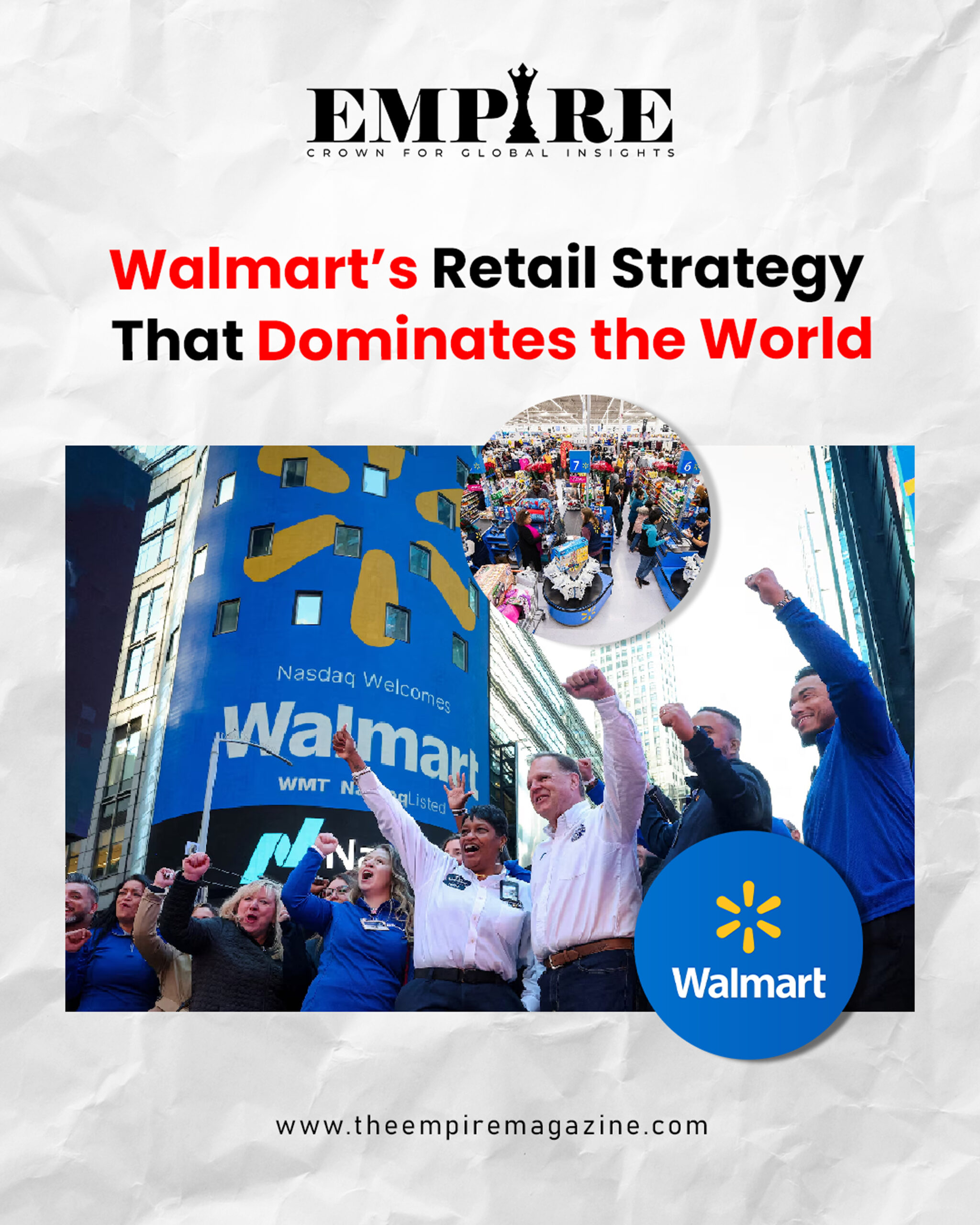
Walmart’s retail strategy stands as one of the most successful and studied business models in the world. From a single discount store in Arkansas in 1962 to the largest retailer on the planet, Walmart has consistently dominated the industry through relentless focus on efficiency, low prices, and customer obsession. Even in 2026, Walmart continues to set the benchmark for modern retail.
The Foundation: Sam Walton’s Vision
Sam Walton founded Walmart with a simple but powerful philosophy: offer the lowest possible prices every day and pass the savings to customers. This “Everyday Low Prices” (EDLP) strategy became the cornerstone of Walmart’s success. Unlike competitors who relied on frequent sales and promotions, Walmart focused on consistently low prices across all products.
By 2026, this philosophy remains deeply embedded in Walmart’s DNA. The company operates over 10,500 stores across 19 countries and generates more than $650 billion in annual revenue, making it the world’s largest retailer by revenue.
Core Pillars of Walmart’s Retail Strategy
1. Everyday Low Prices (EDLP) Walmart’s commitment to EDLP is unmatched. By maintaining razor-thin profit margins and high sales volumes, the company creates a powerful flywheel effect. Customers trust Walmart to deliver the best value without waiting for sales events.
2. Supply Chain Mastery Walmart’s legendary supply chain is considered one of its greatest competitive advantages. The company pioneered cross-docking, advanced inventory management, and real-time data sharing with suppliers. In 2026, Walmart’s AI-powered supply chain can predict demand with high accuracy, reducing stockouts and minimizing waste.
3. Economies of Scale With massive buying power, Walmart negotiates the lowest possible costs from suppliers. This advantage allows the retailer to offer prices that smaller competitors simply cannot match.
4. Technology and Data-Driven Decisions Walmart has heavily invested in technology. The company uses:
- Artificial Intelligence for demand forecasting and personalized offers
- Automation and robotics in fulfillment centers
- Advanced analytics to optimize store layouts and product placement
- Walmart+ membership program to compete directly with Amazon Prime
Omnichannel Dominance: The New Retail Playbook
One of Walmart’s smartest moves has been its seamless integration of physical and digital retail. Instead of viewing e-commerce as a threat, Walmart turned its vast store network into a competitive advantage.
Key initiatives include:
- Buy Online, Pick Up In Store (BOPIS) — One of the fastest-growing segments
- Same-day delivery through partnerships and in-house services
- Walmart+ — Offering unlimited free delivery, fuel discounts, and more
- Store-as-fulfillment centers, allowing rapid order processing from nearby locations
This hybrid model has helped Walmart capture significant market share in e-commerce while maintaining the strength of its brick-and-mortar stores.
Global Expansion Strategy
Walmart’s international strategy focuses on adapting to local markets rather than imposing a one-size-fits-all approach. In markets like India, Mexico, and China, the company has customized its offerings, store formats, and supply chains to suit local preferences and regulations.
By 2026, Walmart International contributes substantially to overall revenue, with strong growth in emerging markets where the middle class continues to expand.
Sustainability and Social Responsibility
Modern Walmart has placed increasing focus on sustainability. The company has set ambitious goals for zero emissions, renewable energy usage, and responsible sourcing. It has also improved labor practices and diversity initiatives to strengthen its brand image among younger consumers.
Challenges and How Walmart Overcomes Them
Despite its dominance, Walmart faces several challenges:
- Intense competition from Amazon, Costco, and regional players
- Changing consumer preferences toward premium and organic products
- Regulatory scrutiny in multiple countries
- Supply chain disruptions caused by global events
Walmart has responded by expanding its private label brands, investing heavily in technology, and continuously refining its customer experience.
Current Standing in 2026
As of 2026, Walmart remains the undisputed leader in retail. The company continues to grow both in-store and online sales. Its market capitalization and operational efficiency keep it ahead of most competitors. Walmart’s ability to adapt — from rural discount stores to a sophisticated omnichannel giant — showcases its strategic agility.
Lessons from Walmart’s Retail Strategy
- Customer Obsession Wins: Always prioritize value for the customer.
- Operational Excellence Matters: Superior supply chain and cost control create lasting advantages.
- Embrace Change: Walmart successfully transitioned from traditional retail to digital leadership.
- Scale Intelligently: Use size as a strength, not a weakness.
- Long-term Thinking: Focus on sustainable growth rather than short-term profits.
Walmart’s journey proves that a clear strategy, disciplined execution, and continuous innovation can build a retail empire that dominates the world for decades.
For more inspiring stories of leadership, technology, and global business, read our detailed coverage here.
Follow The Empire Magazine for more updates on business, startups, technology, and global insights: Instagram | Faceboo
– The Empire Magazine
Crown For Global Insights