
Information checked on 25 September 2026.
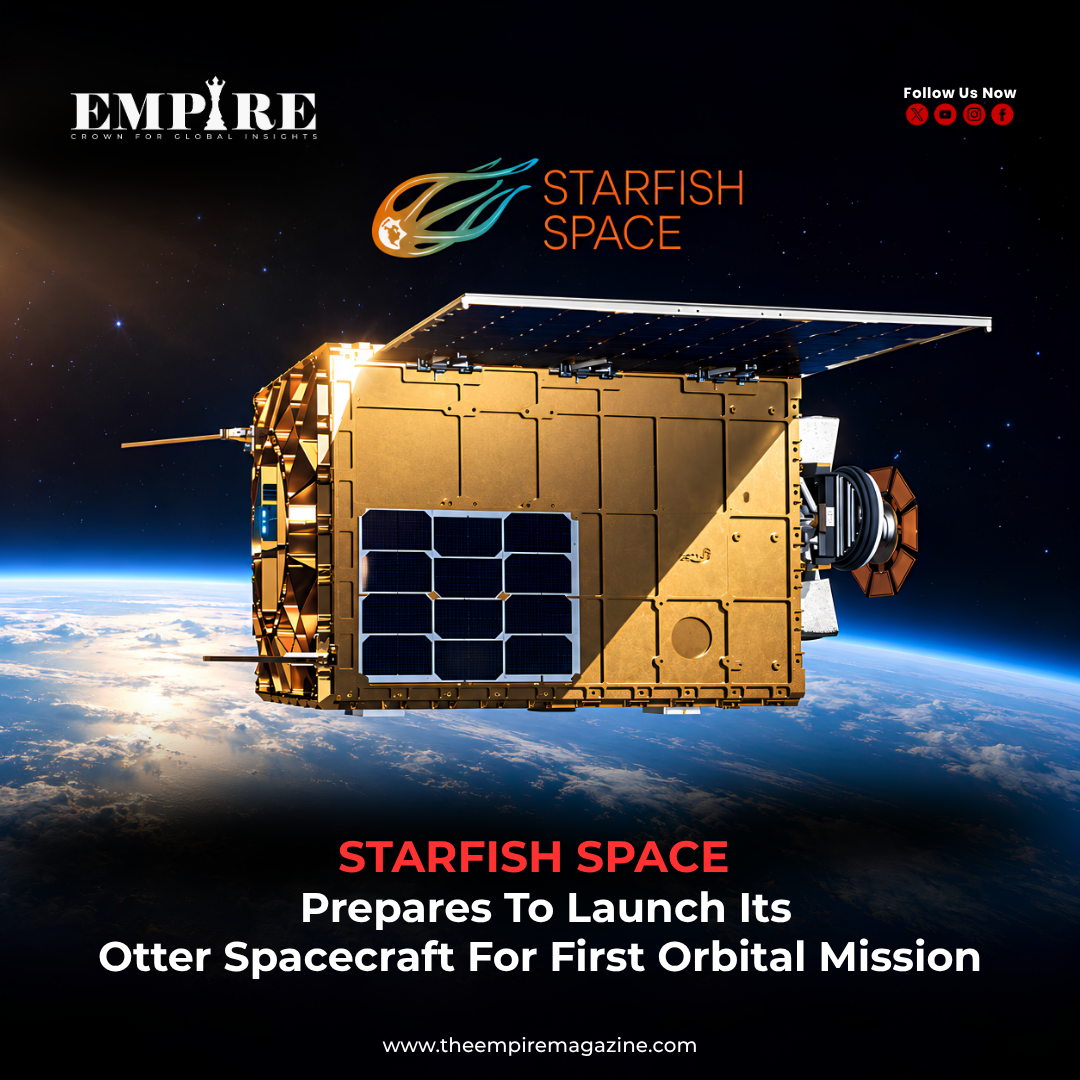
Starfish Space is preparing to launch its first full Otter satellite servicing spacecraft, taking a significant step towards delivering services for customers in orbit. In a 24 September 2026 announcement, the Washington-based company said Otter is scheduled to fly no earlier than October 2026 aboard SpaceX’s Transporter-18 rideshare mission.
The spacecraft’s first assignment will be NASA’s Small Spacecraft Propulsion and Inspection Capability (SSPICY) mission. It will examine inactive objects in low Earth orbit, collecting information that could support future satellite servicing and debris management.
The milestone follows earlier Otter Pup flights and other demonstrations. Those missions helped test Starfish’s technology; the upcoming flight will be the orbital debut of its full Otter servicing vehicle.
What the First Otter Mission Will Do
NASA’s mission overview says Otter will inspect up to four inoperable objects of U.S. origin, potentially including satellites and rocket bodies. Electric propulsion will help it travel between targets and approach within hundreds of metres. The mission is expected to last approximately two years, with inspections beginning in 2027.
These operations will assess the condition of objects already in orbit. NASA says docking is outside SSPICY’s demonstration objectives, although Otter carries docking hardware that could support follow-on missions.
Why Close-Up Inspection Matters
NASA awarded Starfish $15 million over three years for SSPICY through its Small Business Innovation Research programme. The agency describes it as its first funded commercial space-debris inspection mission.
Otter is expected to collect information about how objects rotate and the condition of their surface materials. These observations can inform decisions about possible servicing, reuse or disposal. NASA identifies inactive spacecraft as a concern because collisions and fragmentation can create additional debris.
For a future servicing mission, that information helps answer a basic question: what will the approaching vehicle encounter? Knowing an object’s physical condition and motion is an important step towards deciding how to interact with it.
How Otter Will Navigate Around Other Spacecraft
NASA identifies four key Starfish technologies for SSPICY, integrated on a spacecraft platform developed by Astro Digital. Their roles cover navigation, movement and potential future docking.
| Technology | Function |
|---|---|
| CETACEAN | Uses computer vision and sensor data to estimate an object’s relative position and motion. |
| CEPHALOPOD | Uses navigation data to plan approaches and evaluate when to abort. |
| Manta | Points the propulsion thruster using an articulated robotic boom. |
| Nautilus | Provides a docking mechanism that could support follow-on servicing missions. |
What Earlier Tests Have Demonstrated
Starfish and Impulse Space reported completing their Remora demonstration in December 2025. Using Starfish’s software, an Impulse Mira spacecraft approached another Mira to approximately 1,250 metres.
An onboard camera supplied images to navigation software, which estimated the other vehicle’s relative location. Guidance software then calculated manoeuvres and commanded thruster firings, repeating the process as new images arrived.
The result demonstrated autonomous rendezvous and proximity operations. It provided evidence about the approach-and-navigation part of servicing, while physical capture and the subsequent service involve additional mission steps. Starfish Space
How Otter Builds on the Otter Pup Missions
Starfish’s first Otter Pup launched in June 2023. After deployment and propulsion difficulties, the company adapted its mission with D-Orbit. In April 2024, D-Orbit’s ION spacecraft manoeuvred to within approximately one kilometre of Otter Pup, whose cameras photographed it.
The flight gave engineers practical experience of camera operations, planning close approaches and adapting a mission after hardware problems. Its results contributed data to Starfish’s continuing navigation work.
A second demonstrator, Otter Pup 2, was designed to approach and attempt docking with a D-Orbit ION spacecraft that had not been modified for the mission. Starfish’s May 2025 announcement positioned it as a test of the software and capture technologies required for the wider Otter programme.
That distinction matters when following the company’s progress. Otter Pup demonstrations, the first full Otter launch and completed customer services are different milestones, each contributing a different type of evidence.
Why Satellite Operators Are Interested in Servicing
Starfish’s wider Otter programme addresses two main uses: extending the operational lives of geostationary satellites and disposing of satellites in low Earth orbit when their useful lives end. The company also aims to support spacecraft that were not originally designed for servicing.
Extending a Satellite’s Operational Life
In June 2024, Intelsat announced an agreement for Otter life-extension services. The published plan began with docking and manoeuvring a retired satellite in a geostationary graveyard orbit. Otter would then attach to an operational satellite and use its own propulsion to keep that spacecraft in service for additional years.
This illustrates a specific service model: providing manoeuvring capability from another spacecraft. The arrangement could help an operator continue using a satellite whose communications systems remain useful but whose ability to maintain its orbit needs support.
From a business perspective, the value would depend on the remaining usefulness of the customer satellite, the duration of the extension and the cost of the servicing mission. Those factors determine whether extending an existing asset makes commercial sense.
Managing Satellites at the End of Their Lives
On 21 January 2026, Starfish announced a $52.5 million contract with the U.S. Space Force’s Space Development Agency. The agreement covers an Otter mission to dispose of satellites in the agency’s Proliferated Warfighter Space Architecture, a network in low Earth orbit.
Starfish is to build, launch and operate the vehicle, with launch targeted for 2027. The contract includes an initial deorbit operation and options for additional disposals.
Such a service could give constellation operators an external option when a satellite reaches retirement and cannot remove itself. It could also make disposal a contracted operational service alongside the work of deploying and running a constellation.
Another Space Force Contract Expands Otter’s Role
Separately, Starfish announced a $54.5 million contract on 7 February 2026 to deliver a second Otter to the U.S. Space Force’s Space Systems Command. The vehicle is intended for operations in geosynchronous orbit, with delivery scheduled for 2028.
Under this programme, Otter is designed to dock autonomously with national security satellites and manoeuvre them. The contract follows an earlier Space Systems Command acquisition in 2024.
NASA’s inspection mission, the SDA disposal programme and Space Systems Command’s manoeuvring requirements illustrate different uses for the spacecraft. Their significance lies in the services each customer expects to receive, with separate delivery schedules and mission objectives.
Funding Supports the Move Towards Customer Delivery
Starfish Space, founded in 2019 and based in Tukwila, Washington, announced a Series B funding round of more than $100 million in April 2026. Point72 Ventures led the round, with Activate Capital and Shield Capital as co-leads.
The company said the proceeds would support contracted Otter missions, expansion of its satellite servicing business and team growth. It also reported having raised more than $150 million in venture capital funding in total.
Building a servicing business requires reliable delivery across successive missions. Starfish will need to build vehicles, launch them, complete demanding orbital work and support its customers. The NASA flight can provide evidence about delivery, while expansion will depend on carrying out that process consistently over time.
What to Watch After the Otter Launch
Starfish says it will commission Otter after launch before starting customer operations. Commissioning involves checking a spacecraft’s systems in orbit and preparing them for mission work.
The most useful milestones to watch will be completion of those checks, the first controlled approach, delivery of inspection imagery and findings from successive targets. These are practical indicators for assessing whether the spacecraft can perform the work promised to its customer.
For Starfish, the planned launch begins a test of its ability to turn demonstrated technology into a service. The inspection results and subsequent customer missions will provide the evidence needed to assess Otter’s wider role in satellite operations.
Explore more global business, technology and innovation coverage in The Empire Magazine’s article archive.
Read our related business coverage: https://theempiremagazine.com/agnes-studer-performance-humanity/
Follow The Empire Magazine for global business, technology, innovation, and leadership insights:
Facebook: The Empire Magazine
Instagram: @the_empire_magazine
The Empire Magazine | Crown For Global Insights