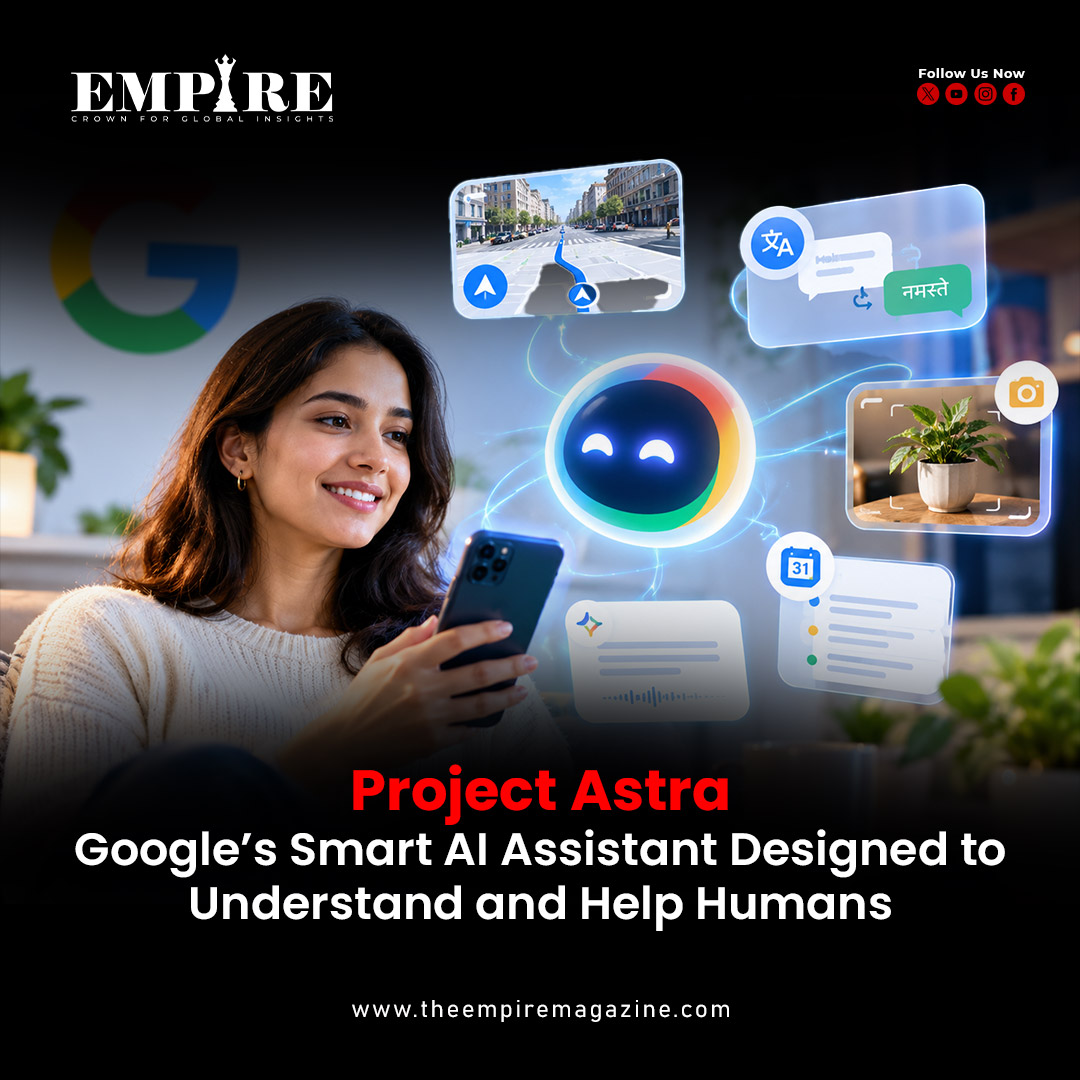
Project Astra represents Google’s vision for the future of artificial intelligence assistants that can understand, respond, and interact with humans in a more natural way. Developed by Google DeepMind, Project Astra is an experimental AI assistant designed to process information from the world around it using multiple forms of input, including images, video, audio, and conversations.
Unlike traditional digital assistants that mainly respond to specific commands, it focuses on creating a more human-like interaction experience. The technology aims to help users understand their surroundings, answer questions in real time, and provide assistance based on context.
The development of Project Astra highlights the next phase of AI evolution, where artificial intelligence systems are moving beyond text-based conversations toward multimodal understanding.
Project Astra Introduces Google’s Vision for Next-Generation AI Assistants
Project Astra is part of Google DeepMind’s efforts to develop AI systems that can interact with users in more flexible and intelligent ways.
Google introduced Project Astra as a universal AI assistant concept capable of understanding information from cameras, microphones, and conversations. The goal is to create an AI system that can see, hear, remember, and respond to users based on real-world situations.
Traditional AI assistants often depend on written commands or limited voice interactions. Project Astra explores a future where AI can understand the environment around a person and provide assistance based on what it observes.
Potential applications include:
- Identifying objects through a camera
- Answering questions about surroundings
- Helping users understand information
- Supporting learning and productivity
- Providing real-time assistance
Project Astra Uses Multimodal AI to Understand the Human World
One of the most important features of Project Astra is its multimodal capability.
Multimodal AI allows artificial intelligence systems to process different types of information together, such as:
- Images
- Video
- Audio
- Text
- Speech
This approach allows AI systems to develop a richer understanding of user requests.
For example, instead of a user only typing a question, an AI assistant could analyse what the user is seeing through a camera and provide relevant information.
Project Astra demonstrates Google’s focus on building AI systems that can understand context rather than simply respond to isolated commands.
Project Astra Enables More Natural Human-AI Conversations
Project Astra focuses on improving the way humans communicate with artificial intelligence.
Current digital assistants often require users to speak in specific ways or provide detailed instructions. Google’s vision with Project Astra is to create interactions that feel more natural.
The assistant is designed to understand:
Real-Time Conversations
Users can communicate through natural speech rather than structured commands.
Visual Information
The AI can analyse information captured through cameras and understand what is happening around the user.
Contextual Understanding
The system aims to remember previous information within a conversation to provide more relevant responses.
This approach could change how people interact with AI systems in everyday situations.
Project Astra and Google DeepMind’s AI Research
Project Astra was introduced by Google DeepMind, Google’s artificial intelligence research division responsible for developing advanced AI technologies.
The Project Astra builds on Google’s research in areas such as:
- Machine learning
- Computer vision
- Natural language processing
- Artificial intelligence reasoning
Google DeepMind has worked on several major AI developments, including AlphaGo and advanced AI models.
Project Astra represents another step in Google’s broader AI strategy, focusing on creating systems that can assist people across different environments.
Project Astra Could Transform Everyday Digital Assistance
The future of AI assistants could extend far beyond simple searches and reminders.
Project Astra demonstrates how AI could become a more integrated part of daily life by helping users solve problems and understand information more effectively.
Possible future uses include:
Education Support
AI assistants could help students understand concepts, explain information, and support learning.
Workplace Productivity
AI systems could assist professionals by organising information and helping complete tasks.
Accessibility
AI assistants could provide support for people who need additional help understanding their surroundings.
Personal Assistance
AI could help users manage information, make decisions, and interact with digital services.
Project Astra Focuses on AI Memory and Context Understanding
A major challenge in artificial intelligence is enabling systems to understand context.
Human communication depends heavily on memory and previous experiences. People naturally remember conversations, recognise objects, and understand situations.
Explores how AI systems can improve contextual awareness.
The ability to maintain context could allow AI assistants to provide more useful responses because they understand not only individual questions but also the broader situation.
This represents a significant difference between traditional assistants and future AI agents.
The Future Challenges of Advanced AI
While Project Astra represents major progress in artificial intelligence, advanced AI systems also create important challenges.
Developers must address issues related to:
Privacy Protection
AI assistants that process images, audio, and personal information require strong privacy safeguards.
Accuracy and Reliability
AI systems must provide dependable information and avoid incorrect interpretations.
Responsible Development
Companies need to ensure advanced AI technologies are developed with safety and ethical considerations.
The discussion around responsible AI development continues across the technology industry. Similar concerns around advanced technology and security are also shaping global technology conversations.
Read more about technology developments here: https://theempiremagazine.com/anthropic-ai-safety-concerns/
Project Astra Represents Google’s Future Vision for AI Interaction
Project Astra reflects Google’s ambition to create AI assistants that are more connected, intelligent, and useful.
The project shows how artificial intelligence is moving toward systems that can understand multiple forms of information and interact with humans more naturally.
As AI technology continues developing, projects like Astra demonstrate the direction of future digital assistants: systems designed not only to answer questions but also to understand the world around users.
Follow The Empire Magazine for global business, technology, innovation, and leadership insights:
Facebook: https://www.facebook.com/profile.php?id=61573749076160
Instagram: https://www.instagram.com/the_empire_magazine/
The Empire Magazine | Crown For Global Insights