
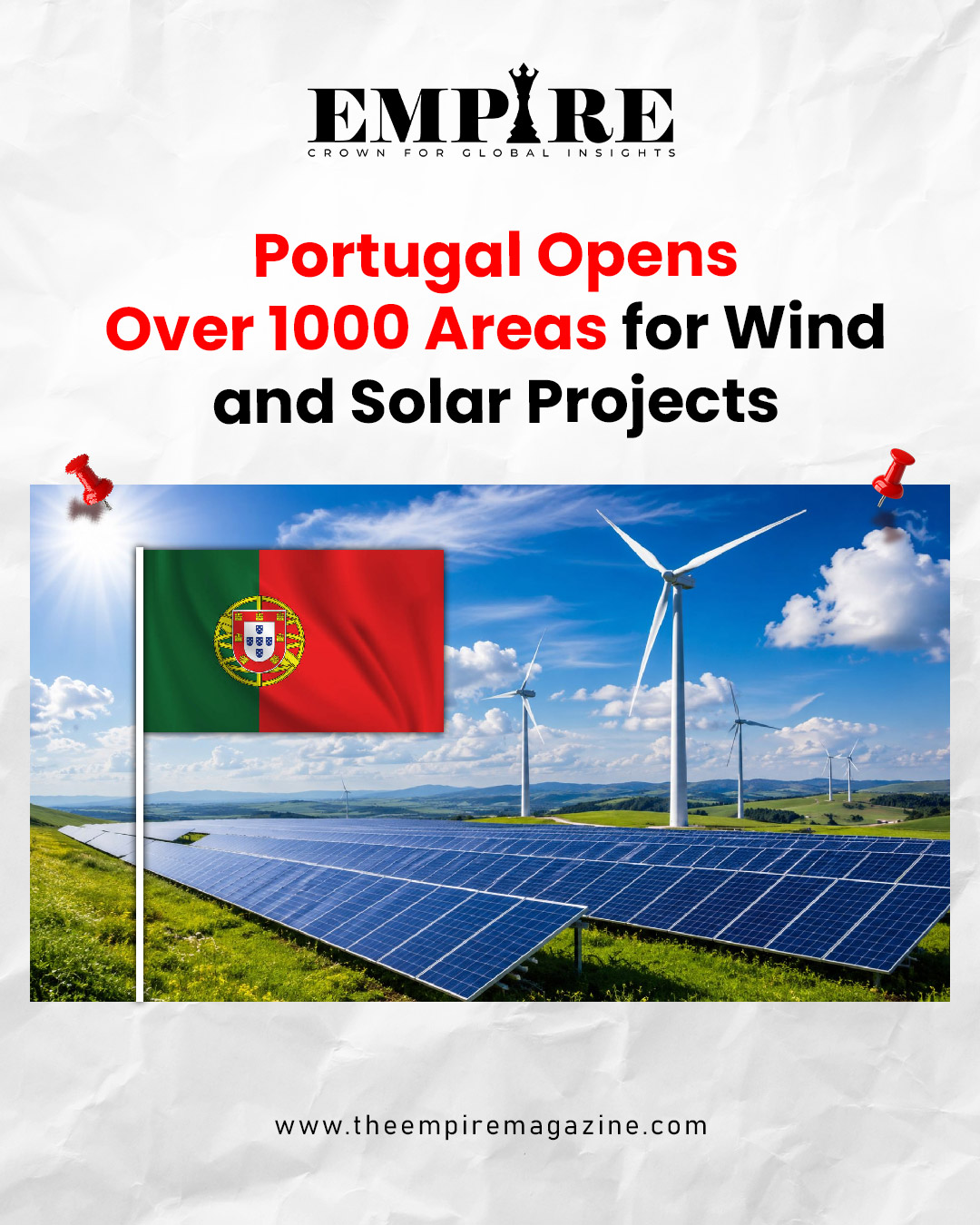
Portugal has opened more than 1,000 areas for wind and solar energy development, marking a major milestone in Europe’s renewable energy transition. Here’s what it means for investors, businesses, and the global clean energy market.
Portugal Unveils a Massive Renewable Energy Expansion
Portugal has taken another decisive step toward becoming one of Europe’s renewable energy leaders by opening more than 1,000 designated areas for the development of wind and solar power projects. The initiative represents one of the country’s most ambitious clean energy programs to date and reflects a broader European effort to reduce dependence on fossil fuels while strengthening long-term energy security. At a time when governments across the continent are racing to meet climate targets, Portugal’s decision signals confidence that renewable energy is no longer just an environmental priority but an economic opportunity capable of attracting billions in investment. The newly identified locations have been selected following extensive environmental assessments and grid planning, allowing developers to identify suitable sites with greater certainty and fewer regulatory hurdles. By making this information publicly accessible, Portuguese authorities hope to accelerate project approvals, encourage domestic and international investment, and shorten development timelines that have traditionally slowed renewable infrastructure. The move comes as demand for clean electricity continues to grow due to electrification across industries, transportation, and residential sectors. With abundant sunshine, strong Atlantic winds, and a favorable geographic position, Portugal already enjoys natural advantages that make renewable generation highly competitive. The latest announcement strengthens its ambition of becoming one of Europe’s clean energy powerhouses while supporting economic growth, technological innovation, and job creation. For investors and businesses watching Europe’s evolving energy landscape, Portugal’s latest policy represents more than another renewable initiative, it reflects a strategic shift toward building an energy system that is cleaner, more resilient, and increasingly independent from volatile global fuel markets.
Why Portugal Is Betting Big on Wind and Solar
Portugal’s aggressive renewable energy strategy has been shaped by both environmental necessity and economic opportunity. Like many European nations, the country has experienced the effects of fluctuating natural gas prices and geopolitical uncertainties that exposed vulnerabilities in traditional energy supply chains. These experiences have accelerated the government’s commitment to expanding renewable electricity generation while reducing reliance on imported fossil fuels. Wind and solar technologies have matured significantly over the past decade, with installation costs declining and efficiency improving, making them among the most affordable sources of new electricity generation. Portugal already generates a significant share of its electricity from renewable sources, and policymakers believe the next stage of growth lies in expanding utility-scale wind farms, solar parks, and complementary energy storage systems. Opening more than 1,000 potential development zones gives energy companies greater clarity about where projects can move forward while minimizing conflicts related to environmental conservation, urban planning, and land use. The initiative also aligns with broader European Union objectives aimed at increasing renewable capacity, cutting greenhouse gas emissions, and achieving climate neutrality over the coming decades. Beyond environmental benefits, renewable expansion is expected to create thousands of skilled jobs across engineering, construction, manufacturing, digital infrastructure, and maintenance services. Universities and technology companies are also likely to benefit from increased research opportunities in battery storage, smart grids, and energy management systems. As renewable electricity becomes a larger share of Portugal’s energy mix, businesses could enjoy more stable long-term electricity prices, strengthening industrial competitiveness while encouraging foreign companies to establish operations in the country. The government’s latest announcement therefore represents a carefully balanced strategy that combines sustainability, economic resilience, and long-term national competitiveness.
What the New Renewable Zones Mean for Investors
For renewable energy developers, infrastructure funds, institutional investors, and technology companies, Portugal’s announcement creates a significantly more predictable investment environment. One of the biggest challenges facing renewable energy projects worldwide has been the lengthy process of identifying suitable land, securing permits, completing environmental studies, and connecting projects to electricity transmission networks. By proactively mapping more than 1,000 suitable development areas, Portuguese authorities are effectively reducing many of these early-stage uncertainties that often discourage investment or delay construction by several years. Greater regulatory clarity allows investors to allocate capital with higher confidence while enabling developers to move from planning to execution much faster than under traditional approval systems. International companies specializing in wind turbines, solar modules, battery storage, grid technology, and engineering services are also expected to closely monitor upcoming project opportunities as Portugal expands its renewable capacity. Financial institutions increasingly view renewable infrastructure as a long-term asset class capable of generating stable returns while supporting environmental, social, and governance (ESG) objectives that have become central to global investment strategies. The initiative could also strengthen Portugal’s position as a preferred destination for green industrial investments, including hydrogen production facilities, electric vehicle manufacturing, and data centers seeking access to low-carbon electricity. As governments worldwide compete to attract sustainable investment, policies that reduce administrative complexity while maintaining environmental safeguards are becoming increasingly valuable. Portugal’s decision demonstrates how thoughtful planning can simultaneously accelerate private-sector participation, improve energy security, and reinforce national climate commitments, making the country one of Europe’s most attractive renewable investment destinations.
Challenges Surrounding Portugal’s renewable energy expansion: Next phase
Despite the optimism surrounding Portugal’s renewable energy expansion, the journey from identifying suitable locations to generating electricity is unlikely to be without challenges. Developing large-scale wind and solar infrastructure requires substantial investments in transmission networks, energy storage, and grid modernization to ensure that renewable electricity can be delivered efficiently across the country. As renewable generation increases, balancing electricity supply during periods of fluctuating wind and sunlight will become even more important, making battery storage systems and smart grid technologies essential components of the country’s long-term strategy. Environmental concerns will also continue to play a critical role, as renewable projects must be developed in ways that protect biodiversity, wildlife habitats, and local communities. Public consultations, transparent planning, and sustainable land-use practices will remain essential for maintaining public support and avoiding delays. Financing conditions could also influence the pace of development, particularly as global interest rates and construction costs fluctuate. However, Portugal’s proactive approach of pre-identifying development areas significantly reduces regulatory uncertainty, which is often one of the biggest obstacles facing renewable investments. By combining streamlined planning with environmental safeguards, the country hopes to strike a balance between accelerating clean energy deployment and preserving the natural landscapes that make Portugal unique. Success will ultimately depend not only on government policies but also on effective collaboration between developers, investors, technology providers, local authorities, and communities working toward a shared vision of a cleaner and more resilient energy future.
Europe’s Green Energy Race Gains Momentum
Portugal’s latest initiative reflects a much larger transformation taking place across Europe, where governments are accelerating renewable energy deployment to strengthen energy independence and achieve ambitious climate objectives. Following recent geopolitical disruptions and volatile fossil fuel markets, European nations have increasingly recognized that expanding domestic renewable capacity is both an environmental necessity and a strategic economic decision. Countries across the continent are investing heavily in offshore wind farms, large-scale solar parks, battery storage facilities, and upgraded electricity grids to create more resilient energy systems capable of supporting future economic growth. Portugal’s decision to make more than 1,000 renewable development areas available demonstrates how national governments are moving beyond policy commitments and implementing practical measures that encourage private investment. This approach also aligns with the European Union’s broader objectives of reducing greenhouse gas emissions, improving energy security, and expanding clean industrial capacity. As renewable electricity becomes more abundant, Europe is positioning itself to support emerging industries such as green hydrogen, sustainable manufacturing, electric mobility, and advanced digital infrastructure powered by low-carbon energy. International investors are increasingly viewing countries with clear renewable policies and predictable regulatory environments as preferred destinations for long-term infrastructure investment. Portugal’s latest announcement therefore strengthens not only its domestic energy ambitions but also Europe’s collective effort to remain globally competitive in the rapidly evolving clean energy economy. The initiative highlights how renewable energy has become a central pillar of economic strategy rather than simply an environmental policy, reinforcing Europe’s position as one of the world’s leading regions for sustainable development.
What Portugal’s Move Means for the Global Energy Future
Portugal’s decision to open more than 1,000 areas for wind and solar development sends a strong message to governments, investors, and industries around the world that the global energy transition is entering a more mature and investment-driven phase. Instead of focusing solely on ambitious climate targets, countries are increasingly creating practical frameworks that make renewable energy projects easier, faster, and more attractive to develop. By reducing administrative barriers and providing greater certainty for investors, Portugal is demonstrating how thoughtful planning can accelerate the shift toward cleaner electricity while supporting economic growth and energy security at the same time. The initiative is expected to attract international developers, strengthen domestic industries, and create new opportunities across engineering, manufacturing, digital technologies, and green infrastructure. As electricity demand continues to rise because of electric vehicles, artificial intelligence, industrial electrification, and data centers, access to reliable renewable power will become an increasingly valuable competitive advantage. Portugal’s natural resources, combined with supportive government policies, place the country in a strong position to benefit from this long-term transformation. While challenges related to infrastructure, financing, and environmental protection remain, the overall direction is clear: renewable energy is becoming the foundation of future economic development. Portugal’s latest announcement is therefore not merely about opening new locations for wind and solar farms, it represents a strategic investment in national resilience, technological innovation, and sustainable prosperity. As countries across the world search for effective ways to balance economic growth with climate responsibility, Portugal’s bold renewable energy expansion offers a compelling example of how careful planning, policy certainty, and long-term vision can work together to shape the future of global energy.
For more business and retail insights, read more on The Empire Magazine
Previous article: Rolex Gold Watch Prices amidst Economic uncertainty
Magazine Feautures | Podcasts: Empire Global Talks
Follow The Empire Magazine on Facebook | Instagram | LinkedIn
The Empire Magazine | Crown for Global Insights