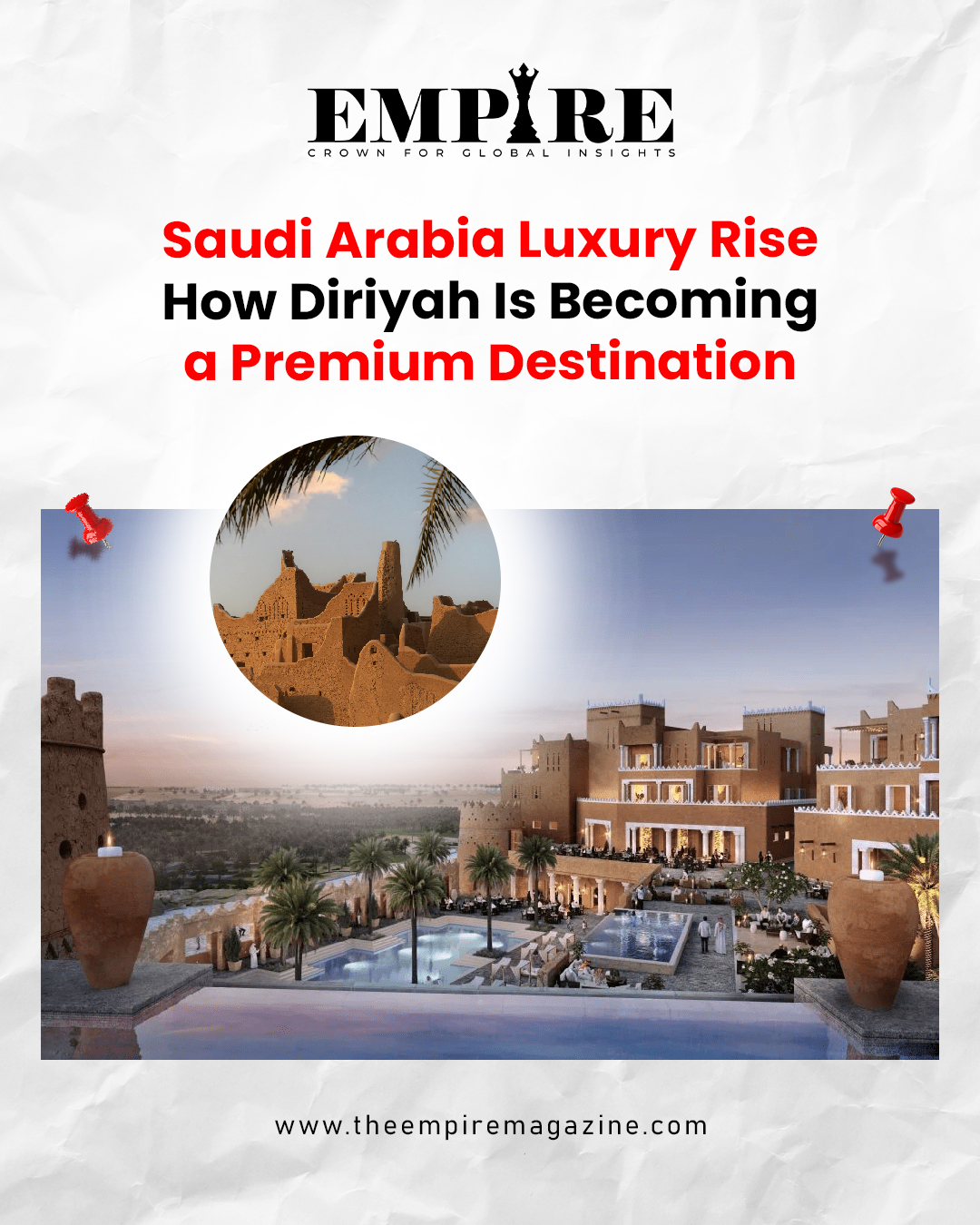
Saudi Arabia Luxury Rise is becoming one of the most important stories in global tourism, retail, hospitality, and lifestyle development. At the center of this shift is Diriyah, a historic district near Riyadh that is being transformed into a premium cultural and luxury destination under Saudi Arabia’s Vision 2030 strategy.
Diriyah is known as the birthplace of the Saudi state and is home to At-Turaif, a UNESCO World Heritage Site connected to the country’s early history. Today, the destination is being developed as a place where heritage, hospitality, luxury retail, wellness, dining, hotels, culture, and residential living come together. This makes Diriyah more than a tourism project. It is a major part of Saudi Arabia’s plan to diversify its economy beyond oil and build a new global image.
The development is backed by the Public Investment Fund and is described under Vision 2030 as a $62.2 billion giga-project. Its goal is to create a walkable, sustainable, heritage-led city that attracts visitors, residents, investors, and luxury brands. For global businesses, Diriyah shows how Saudi Arabia is turning cultural identity into premium destination value.
Saudi Arabia Luxury Rise and the Vision 2030 Strategy
Saudi Arabia Luxury Rise is closely connected to Vision 2030, the national transformation plan aimed at reducing dependence on oil, growing tourism, attracting investment, and expanding culture, entertainment, and lifestyle sectors. Luxury tourism and premium retail are important parts of this strategy because they attract high-spending visitors, international brands, hospitality groups, and real estate investors.
Diriyah fits this vision because it combines Saudi history with modern infrastructure. Instead of building only a new commercial district, Saudi Arabia is using Diriyah’s heritage to create a destination with emotional and cultural depth. This gives the project a stronger identity than a standard luxury development.
The destination is designed to include hotels, restaurants, museums, cultural venues, wellness spaces, retail districts, homes, offices, and public areas. This mixed-use model reflects how luxury destinations are changing globally. High-end visitors no longer want only shopping. They want culture, experience, design, hospitality, and storytelling.
Why Diriyah Matters to Saudi Arabia
Diriyah matters because it carries national meaning. It is linked to the origins of the Saudi state and reflects traditional Najdi architecture, which uses earth-toned materials, geometric design, courtyards, and cultural details rooted in the region. This gives Diriyah a strong sense of place.
At-Turaif is one of the most important parts of the destination. As a UNESCO World Heritage Site, it attracts visitors interested in Saudi history, architecture, and culture. Its location near premium dining and lifestyle areas helps connect heritage with modern tourism.
For Saudi Arabia, Diriyah is also a soft-power project. It helps tell the country’s story to international visitors. As more tourists come to the Kingdom, destinations like Diriyah can shape how they understand Saudi culture, hospitality, design, and ambition.
Heritage as a Luxury Asset
Heritage is becoming a powerful luxury asset. Around the world, premium travelers want places that feel authentic, meaningful, and culturally rich. Diriyah’s advantage is that it does not need to invent a story. It already has one.
Luxury brands and hospitality groups benefit from this setting because the destination provides emotional value. A hotel, restaurant, or boutique in Diriyah can feel different from the same brand in a standard shopping district. The architecture, history, and location add meaning to the experience.
This is why Diriyah is attractive to global luxury companies. It allows them to connect with Saudi consumers and international visitors in a setting that feels both premium and culturally specific.
Bujairi Terrace and the Luxury Dining Experience
Bujairi Terrace has become one of Diriyah’s most visible lifestyle attractions. It is an upscale dining and leisure destination overlooking At-Turaif, bringing together local and international restaurants in a heritage-inspired setting. The area has become a key example of how Saudi Arabia is creating premium social spaces around culture and hospitality.
Dining is central to luxury tourism because food creates experience. Visitors may come for heritage, but they often stay for restaurants, views, atmosphere, and social moments. Bujairi Terrace gives Diriyah a strong lifestyle layer, making it attractive for families, tourists, executives, and luxury consumers.
The destination also reflects Saudi hospitality culture. In the Kingdom, food, coffee, gathering, and family experiences are deeply important. By combining fine dining with local identity, Diriyah creates a luxury environment that feels connected to Saudi lifestyle.
From Tourism Site to Lifestyle Destination
Diriyah is not only being built as a place to visit once. It is being shaped as a lifestyle destination where people can dine, shop, stay, live, work, attend events, and return regularly. This repeat-visit model is important for long-term business success.
A heritage site can attract tourists, but a lifestyle destination can attract local residents, international travelers, corporate guests, and premium consumers throughout the year. This helps create consistent demand for hotels, restaurants, retail stores, cultural venues, and wellness services.
Diriyah’s growth therefore depends on more than sightseeing. It depends on building a complete ecosystem.
Luxury Hotels and Hospitality Growth
Hospitality is one of the strongest pillars of Diriyah’s premium strategy. The destination is expected to include major luxury hotels, resorts, branded residences, wellness retreats, and high-end hospitality concepts. Diriyah Company has announced major construction contracts linked to luxury hotels and the Royal Diriyah Equestrian & Polo Club in Wadi Safar.
The presence of global luxury hotel brands is important because hotels shape the visitor experience. Premium travelers expect high service standards, design quality, privacy, wellness, dining, and cultural programming. Diriyah’s hospitality strategy aims to combine these expectations with Saudi-style architecture and hospitality.
Bab Samhan, a Luxury Collection Hotel, Diriyah, is one example of how international hospitality is already entering the destination. It connects luxury accommodation with Diriyah’s historic environment and nearby cultural attractions.
Wadi Safar and Resort-Style Luxury
Wadi Safar is another major part of the Diriyah vision. It is being developed as a premium destination with luxury resorts, cultural assets, and lifestyle facilities. The Royal Diriyah Equestrian & Polo Club is part of this high-end positioning.
Equestrian culture, polo, resorts, and private hospitality all fit the premium market. These elements help Diriyah appeal to high-net-worth visitors and residents who are looking for exclusive experiences, not only hotel rooms.
This resort-style approach also supports Saudi Arabia’s wider tourism ambitions. The Kingdom wants to attract international visitors while also giving Saudi residents more domestic luxury options.
Retail, Wellness and Lifestyle Brands
Diriyah’s premium destination strategy also includes retail, wellness, and lifestyle brands. Diriyah Company has announced new brands for Diriyah Square, including names from wellness, sport, health, lifestyle, and essential services. Brands such as Alo Yoga, On Running, Adidas, Seven Luxury Wellness, Spinneys, OliOli, Al Dawaa Pharmacy, and Fakeeh Clinic have been included in recent announcements.
This mix is important because modern luxury is not limited to fashion boutiques. Wellness, fitness, healthcare, family experiences, premium grocery, sportswear, and lifestyle services are all part of how affluent consumers live.
Saudi consumers are increasingly interested in wellness, fitness, fashion, beauty, luxury dining, and premium retail. Diriyah is positioning itself to serve these everyday luxury needs while also attracting international tourists.
Diriyah Square as a Retail Hub
Diriyah Square is expected to become a major retail and lifestyle district. Its role is to bring together fashion, dining, wellness, culture, and services in a walkable urban environment. This is important because luxury retail is changing from isolated stores to integrated destination districts.
A luxury shopper may want to visit a boutique, have lunch, attend an event, book a wellness service, and explore cultural sites in one day. Diriyah’s masterplan supports this behavior by mixing retail with hospitality and heritage.
For brands, this creates stronger customer engagement. They are not simply selling products. They are becoming part of a destination experience.
Why Global Luxury Brands Are Interested
Global luxury brands are interested in Diriyah because Saudi Arabia’s premium consumer market is growing. The Kingdom has a young population, rising tourism spending, major infrastructure investment, and increasing international attention. Luxury brands want to be present where future demand is forming.
Saudi consumers also have strong interest in fashion, fragrance, beauty, watches, jewellery, hospitality, and personalization. Cultural moments such as Ramadan, Eid, weddings, family gatherings, and gifting seasons create important luxury demand.
Diriyah gives brands a location that feels culturally meaningful and premium. Instead of entering only through malls, brands can create flagship experiences in a heritage destination that matches Saudi Arabia’s national transformation story.
Sustainability and Walkable Urban Design
Saudi Vision 2030 describes Diriyah as a sustainable landmark focused on water conservation, energy efficiency, wellness, culture, heritage preservation, and climate resilience. The destination is also designed as a fully walkable city, which supports healthier movement and better visitor experience.
Walkability matters because luxury destinations are increasingly judged by comfort and atmosphere. Visitors want shaded paths, beautiful streets, public spaces, easy movement, and human-scale design. A walkable Diriyah can feel more intimate and premium than car-dependent developments.
Sustainability is also important for global luxury travelers and investors. Premium destinations now need to show that they are not only beautiful but also responsible and future-ready.
Heritage Preservation and Modern Development
One of Diriyah’s biggest challenges is balancing heritage preservation with modern development. The destination must protect its historic character while adding hotels, retail, transport, dining, and entertainment.
If done well, this balance can make Diriyah unique. If done poorly, the development could feel artificial. The strength of the project depends on keeping Saudi identity at the center while building world-class infrastructure around it.
The use of Najdi-inspired architecture helps create continuity between past and present. It allows new buildings to feel connected to the destination’s cultural roots.
What Diriyah Means for Saudi Tourism
Diriyah is part of Saudi Arabia’s wider tourism growth plan. The Kingdom wants to become a major global tourism destination, attracting both regional and international visitors. Premium destinations such as Diriyah, the Red Sea, AlUla, and Riyadh’s new districts are helping build that image.
Diriyah’s advantage is proximity to Riyadh. As the capital grows into a larger business, finance, sports, and cultural hub, Diriyah can serve executives, diplomats, tourists, residents, and investors. It can become both a local luxury escape and an international cultural destination.
This makes Diriyah strategically important. It sits close to the center of Saudi decision-making while offering a heritage-led luxury experience.
The Future of Diriyah as a Premium Destination
Saudi Arabia Luxury Rise is not only about luxury shopping or hotel openings. It is about creating destinations that combine national identity with global standards. Diriyah is one of the strongest examples of this strategy.
The project connects Saudi heritage, Vision 2030 investment, tourism growth, luxury hospitality, premium retail, wellness, dining, and cultural storytelling. For global brands, it offers access to a growing Saudi consumer market. For visitors, it offers a way to experience Saudi history in a modern premium setting.
Diriyah’s future will depend on execution. Hotels must deliver service, retail districts must attract strong brands, cultural sites must be protected, and the visitor experience must feel seamless. If these pieces come together, Diriyah could become one of the Middle East’s most important luxury and cultural destinations.
Readers can also explore more enterprise AI and startup insights through this related article: Cohere: Canada’s Enterprise AI Startup Building Business-Focused Models.
For more updates from The Empire Magazine, follow us on Facebook and Instagram.
– The Empire Magazine
Crown For Global Insights