Leadership Begins with Education: Class to Boardroom
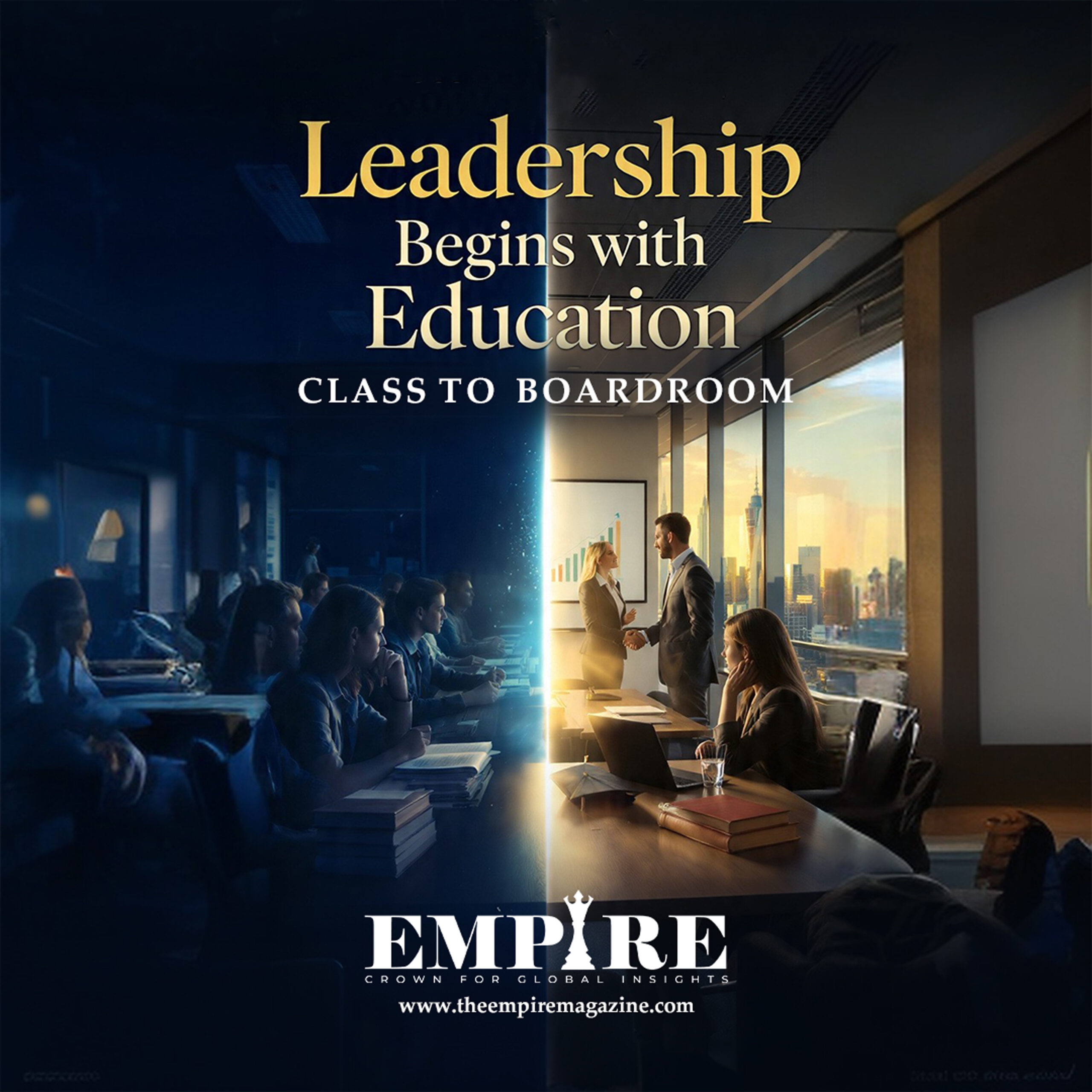
Leadership Begins with Education. Long before an individual enters a corporate boardroom, delivers a keynote speech, or leads a nation, the foundations of leadership are quietly formed inside classrooms. Leadership is often associated with CEOs, politicians, or influential public figures. Yet the truth is far deeper. The habits, character, and confidence required to lead are not suddenly acquired in adulthood — they are developed early through structured learning, mentorship, and life experiences within educational environments.
Education does more than prepare people for employment. It shapes mindset, values, and decision-making abilities. In schools and universities across the world, students are not only absorbing academic knowledge but also cultivating communication skills, resilience, empathy, and responsibility — the true building blocks of leadership.
The Classroom: Where Leadership First Takes Shape
If we look closely, the classroom functions as the first training ground for leadership. When children enter school, they step into a structured social ecosystem. They learn to cooperate with peers, respect rules, resolve disagreements, and share ideas.
These early interactions mirror the dynamics of future workplaces.
When a student leads a group assignment, they practice organization, delegation, and accountability. When they participate in debates, they develop confidence and persuasive communication. Even handling academic setbacks builds resilience — a quality every leader must possess.
Leadership Begins with Education because the classroom provides a safe environment for experimentation and growth. Mistakes become lessons rather than failures. Responsibility is introduced gradually. Over time, students internalize the discipline and collaborative spirit that later define effective leadership.
Teachers as the First Leadership Mentors
Behind every confident leader is often a teacher who believed in them first. Teachers play a critical role in proving that Leadership Begins with Education.
Educators model integrity, fairness, patience, and critical thinking. When teachers encourage curiosity and open dialogue, students learn to question assumptions and seek innovative solutions. When teachers challenge students to present, collaborate, or solve complex problems, they are nurturing leadership behaviors.
A teacher’s influence can change a student’s trajectory. A shy child encouraged to speak publicly may grow into a persuasive communicator. A struggling learner guided with patience may later become a resilient executive. These subtle interventions shape leadership long before professional titles are earned.
Education and Character Formation
Leadership is not simply about authority or intelligence. It is about character — integrity, empathy, accountability, and vision.
Education plays a profound role in shaping these qualities. Literature teaches empathy by exposing students to diverse perspectives. History reveals the consequences of ethical and unethical leadership. Sports instill teamwork, discipline, and perseverance.
When students learn to respect diversity in school, they carry inclusivity into workplaces. When they accept responsibility for academic mistakes, they develop professional integrity. This moral foundation reinforces the principle that Leadership Begins with Education.
Schools are therefore not just knowledge centers — they are environments where ethical frameworks are built.
Critical Thinking and Innovation
Modern leadership demands adaptability and innovation. Boardrooms today require leaders who can solve problems creatively and respond to rapid change. These capabilities are first cultivated in educational settings that prioritize inquiry over memorization.
When students are encouraged to ask questions, challenge assumptions, and explore solutions independently, they develop analytical strength. Project-based learning and collaborative exercises stimulate problem-solving abilities.
Many global innovators credit their academic environments for nurturing curiosity. Whether in technology startups or multinational corporations, leaders who innovate often trace their mindset back to educational experiences that rewarded exploration.
Leadership Begins with Education because the habit of thinking critically is established early.
Global Leaders Shaped by Education
History consistently demonstrates the link between education and leadership. Nelson Mandela emphasized the transformative power of education in building justice and equality. Malala Yousafzai’s advocacy underscores how access to education creates leaders who inspire global change.
Corporate leaders echo similar sentiments. Satya Nadella has spoken about how his education encouraged curiosity and adaptability. Indra Nooyi credits her academic background for building confidence and resilience in competitive environments.
These examples reinforce a clear truth: education is not separate from leadership — it is the soil from which leadership grows.
Leadership Beyond the Curriculum
Formal education extends beyond textbooks. Student councils, sports teams, volunteer programs, and community projects provide practical leadership experiences.
When students organize events, they manage budgets, coordinate teams, and solve logistical challenges. Community service fosters empathy and social responsibility. These activities develop leaders who balance competence with compassion.
Leadership Begins with Education because schools create opportunities for young individuals to practice responsibility in real-world scenarios before entering professional environments.
Universities and Advanced Leadership Development
Universities elevate leadership preparation further. Exposure to diverse perspectives, internships, research opportunities, and public speaking experiences expand intellectual and social horizons.
Higher education encourages independent thinking and global awareness. Students interact with mentors and build networks that shape career pathways. These formative years often define the leadership styles individuals carry into boardrooms.
The friendships, challenges, and collaborations experienced during university life contribute to emotional intelligence and strategic thinking.
The Importance of Lifelong Learning
In today’s fast-changing world, leadership does not end with graduation. Continuous education is a hallmark of effective leaders.
Executives attend workshops, enroll in advanced courses, and engage in ongoing training to stay relevant. The mindset of lifelong learning — first cultivated in school — becomes a competitive advantage in corporate leadership.
Leadership Begins with Education, but it continues through a commitment to growth.
Why Early Investment Matters
Leadership is not developed overnight. Early exposure to teamwork, communication, and responsibility shapes how individuals handle power later in life.
Countries that invest in strong education systems often produce globally respected leaders. Education strengthens nations by fostering citizens who think critically and act responsibly.
When young people are empowered through learning, they gain the confidence to lead communities, businesses, and institutions with purpose.
The Future of Leadership and Education
As the world faces complex challenges — climate change, technological disruption, inequality — future leaders must combine intelligence with compassion.
This requires classrooms that nurture creativity and collaboration as much as academic excellence. Teachers must recognize leadership potential in every student, not just the outspoken or high-performing.
Leadership Begins with Education, and the quality of that education will determine the resilience of future societies.
Conclusion
From classrooms to boardrooms, leadership is a journey that begins early and evolves continuously. Education provides the intellectual tools, ethical grounding, and emotional intelligence necessary to guide others effectively.
Every debate, group project, teacher interaction, and academic challenge contributes to leadership formation. When societies invest in education, they invest in the leaders who will shape the future.
Leadership Begins with Education — and its impact echoes far beyond the classroom walls.
Previous Feature: Human-Centered Urbanism : For deeper insight into how cities are being reimagined around people’s health, wellbeing, and community, check our earlier article on designing healing cities:
👉 https://theempiremagazine.com/designing-cities-that-heal-human-centered-urbanism/
The Empire Magazine
Crown for Global Insights