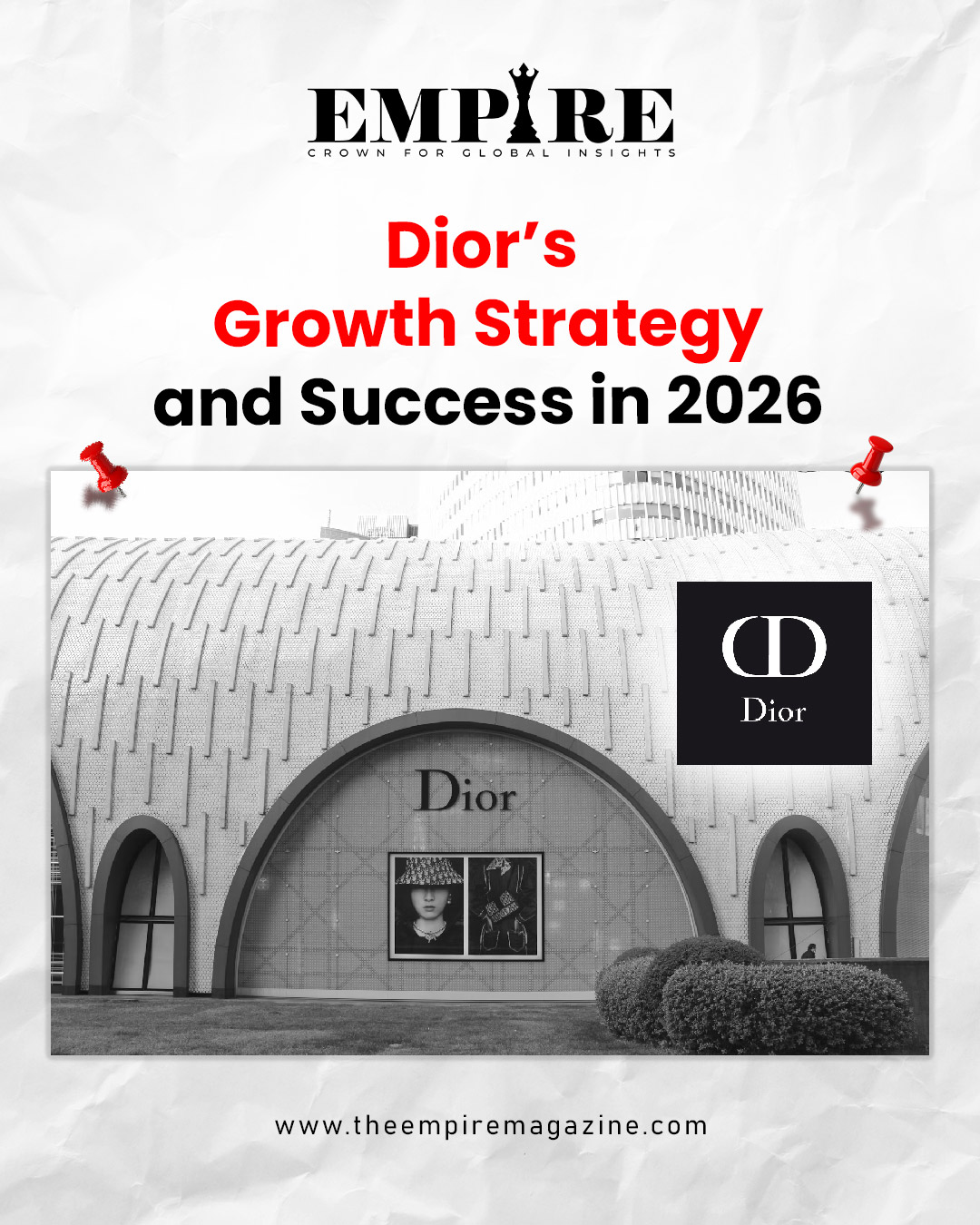
For decades, Dior has represented the pinnacle of French luxury, combining timeless craftsmanship with evolving fashion trends. Yet in an increasingly competitive luxury market, heritage alone is no longer enough. Consumer expectations are shifting, digital commerce is redefining shopping experiences, and younger luxury buyers demand authenticity alongside exclusivity.
Despite broader economic uncertainty affecting discretionary spending across several global markets, Dior continues to maintain remarkable momentum. The brand remains one of the strongest pillars within LVMH’s Fashion & Leather Goods division, benefiting from diversified product categories, strategic investments, global retail expansion, and powerful brand storytelling. While LVMH has reported moderation in luxury demand across some regions during 2025 and early 2026, Dior has continued investing heavily in long-term brand equity rather than chasing short-term volume growth.
Instead of competing on price or mass accessibility, Dior’s strategy focuses on creating aspiration, preserving exclusivity, and strengthening emotional connections with consumers worldwide. This approach has helped the fashion house remain resilient even as the luxury sector experiences changing consumer behavior.
Dior Growth Strategy 2026 Prioritizes Brand Value Over Rapid Expansion
Unlike many consumer brands that rely on aggressive volume growth, Dior continues to build its business through scarcity, premium positioning, and exceptional customer experiences.
Luxury consumers are increasingly willing to spend on products that represent heritage, craftsmanship, and exclusivity rather than simply following seasonal fashion trends. Dior has carefully preserved this perception by limiting overexposure while continuously introducing fresh collections across haute couture, ready-to-wear, leather goods, jewelry, fragrances, and beauty products.
This strategy has allowed the brand to maintain pricing power even during periods when inflation and economic uncertainty have slowed luxury spending in parts of Europe and North America. Rather than offering discounts, Dior continues emphasizing craftsmanship, personalized shopping experiences, and limited-edition launches that reinforce exclusivity.
Being part of LVMH also provides Dior with significant strategic advantages. Access to global retail infrastructure, premium real estate, advanced manufacturing capabilities, and large-scale marketing investments enables the brand to execute long-term growth initiatives while maintaining operational efficiency.
Dior’s Craftsmanship Strategy Continues to Differentiate the Luxury House
One of the strongest pillars behind Dior’s success is its unwavering commitment to craftsmanship. Luxury consumers today are increasingly interested in understanding how products are created rather than simply purchasing recognizable logos. Dior has responded by highlighting the artisans, ateliers, embroidery techniques, leather craftsmanship, and haute couture traditions that define the brand.
Its collections continue to showcase meticulous hand-finishing, complex tailoring, and artistic detailing that cannot easily be replicated by fast-fashion competitors.
This emphasis on craftsmanship serves two strategic purposes. First, it justifies premium pricing in a competitive luxury environment. Second, it strengthens Dior’s identity as a heritage maison rather than merely another fashion label.
The company has also invested in preserving artisanal expertise by supporting skilled craftspeople and maintaining traditional production methods while integrating modern technologies where appropriate. As luxury increasingly becomes experience-driven, craftsmanship itself has become a powerful marketing asset.
Digital Innovation Is Reshaping Dior’s Growth Strategy
Luxury shopping has evolved dramatically over the past decade, and Dior has invested heavily in creating seamless digital experiences without compromising exclusivity.
The brand’s online platforms now extend far beyond traditional e-commerce. Consumers can explore runway collections, experience virtual product launches, book personalized consultations, and access exclusive content that deepens engagement with the Dior universe.
Artificial intelligence is also playing a growing role across the luxury industry. While Dior has been selective in adopting AI, LVMH has expanded investments in data analytics, personalization technologies, inventory optimization, and customer relationship management. These capabilities help Dior better understand purchasing behavior while maintaining the highly personalized service expected in luxury retail.
Social commerce has become another important component of Dior’s digital strategy. Rather than focusing solely on direct sales, the brand uses platforms such as Instagram, TikTok, YouTube, and regional social channels to tell compelling stories around craftsmanship, fashion shows, beauty launches, and behind-the-scenes creative processes.
Instead of treating digital platforms as simple advertising channels, Dior increasingly positions them as extensions of the luxury customer experience. This approach helps attract younger consumers while preserving the prestige associated with the brand.
Celebrity Partnerships Continue Fueling Dior’s Global Success
Celebrity ambassadors have long played a significant role in Dior’s marketing strategy, but the approach has evolved considerably in recent years. Rather than relying solely on Hollywood endorsements, Dior collaborates with internationally recognized actors, musicians, athletes, fashion icons, and influential personalities across Asia, Europe, the Middle East, and North America. This diversified ambassador strategy enables the brand to remain culturally relevant across multiple regions.
These partnerships extend beyond traditional advertising campaigns. Ambassadors frequently appear at fashion weeks, product launches, red carpet events, global exhibitions, and digital campaigns that generate extensive media coverage and social engagement.
Importantly, Dior carefully selects personalities whose public image aligns with the brand’s emphasis on elegance, sophistication, creativity, and timeless luxury. This consistency reinforces consumer trust while enhancing brand desirability among both established luxury buyers and younger aspirational audiences.
Product Diversification Keeps Dior’s Growth Strategy Resilient
One of the defining strengths of Dior’s business model is that it is no longer dependent on a single product category. While the maison is synonymous with haute couture, its commercial success today is driven by a carefully balanced portfolio that spans fashion, leather goods, fine jewellery, watches, fragrances, beauty products and accessories. This diversification allows the brand to remain resilient even when consumer demand shifts across different luxury segments.
Beauty and fragrance continue to play a particularly important role in Dior’s global growth. Iconic perfume collections and premium cosmetics introduce millions of consumers to the brand at a more accessible price point, often serving as their first interaction with the Dior universe. Many of these customers eventually progress to purchasing handbags, ready-to-wear collections or high jewellery, creating a long-term customer journey rather than a one-time transaction.
Leather goods remain another significant growth engine. Signature handbags, seasonal collections and limited-edition releases consistently generate strong demand while reinforcing Dior’s positioning as an aspirational luxury brand. Rather than flooding the market with inventory, the company carefully manages supply to preserve exclusivity a strategy that has become increasingly important as luxury consumers place greater value on rarity.
This balanced product ecosystem enables Dior to weather fluctuations in individual categories while strengthening customer loyalty across multiple aspects of luxury lifestyle spending.
Sustainability Is Quietly Becoming Part of Dior’s Growth Strategy
Sustainability has moved from being a niche concern to a strategic priority across the global luxury industry, and Dior is gradually integrating responsible practices into its long-term vision without allowing sustainability messaging to overshadow the brand’s heritage.
As part of the broader LVMH ecosystem, Dior benefits from group-wide initiatives focused on responsible sourcing, biodiversity protection, traceability, renewable energy adoption and circular design principles. These efforts include improving the transparency of raw material sourcing, reducing environmental impacts across manufacturing operations and investing in more sustainable packaging solutions.
The company has also increased attention on preserving craftsmanship by supporting skilled artisans and extending the lifespan of luxury products through quality construction. In the luxury sector, durability itself is becoming an important sustainability advantage. A meticulously crafted handbag or couture garment designed to last for decades represents a different consumption model from fast fashion’s rapid production cycles.
Consumers, particularly Millennials and Generation Z, are increasingly evaluating luxury brands on environmental responsibility alongside design and quality. Dior’s approach reflects an understanding that sustainability is no longer simply a corporate responsibility initiative. It is becoming part of how premium brands build long-term trust and relevance.
Regional Expansion Continues to Drive Dior’s Success in 2026
Although Europe remains central to Dior’s identity, the brand’s future growth increasingly depends on a geographically diversified customer base.
Asia continues to be one of the most influential luxury markets despite periods of slower consumer spending in China. Dior has maintained a strong presence across key cities while also strengthening relationships with consumers in Japan, South Korea, Singapore and other high-growth markets where demand for premium fashion remains robust.
The Middle East has emerged as another strategic region, supported by rising disposable incomes, expanding luxury retail destinations and growing tourism. Dior has responded by enhancing flagship boutiques and offering highly personalised retail experiences tailored to local clientele.
Meanwhile, North America continues to represent one of the brand’s largest revenue contributors, supported by strong demand for leather goods, fine jewellery and beauty products. Rather than relying solely on opening more stores, Dior has increasingly focused on elevating flagship locations into immersive brand destinations that combine fashion, art, architecture and personalised service.
Beyond established luxury capitals, the company is also carefully evaluating opportunities in emerging affluent markets where rising wealth is creating a new generation of luxury consumers. This measured expansion strategy reflects Dior’s preference for sustainable long-term growth over rapid retail proliferation.
Leadership and Creative Evolution Are Shaping Dior’s Next Chapter
One of the most significant developments influencing Dior’s future has been the evolution of its creative leadership. In 2025, designer Jonathan Anderson was appointed to oversee Dior’s womenswear, menswear and haute couture collections, marking the first time since Christian Dior that a single creative director has led all three divisions.
This leadership transition represents more than a change in artistic direction. It signals Dior’s ambition to create greater cohesion across its collections while preserving the craftsmanship and elegance that define the maison. Anderson, widely recognised for blending innovation with respect for heritage, is expected to introduce fresh creative energy without compromising the brand’s identity.
Creative evolution has become increasingly important in luxury fashion, where consumers seek both timeless appeal and contemporary relevance. Dior’s willingness to embrace new artistic perspectives while remaining rooted in its history demonstrates a balance that few heritage brands have managed consistently.
At the same time, the backing of LVMH provides Dior with the financial stability to invest in long-term creativity rather than responding to short-term market pressures. This combination of visionary leadership and strategic patience continues to distinguish the brand within an intensely competitive luxury landscape.
What Dior’s Growth Strategy Means for the Luxury Industry
Dior’s performance in 2026 offers valuable insights into how global luxury brands are adapting to an increasingly complex marketplace. Economic uncertainty, changing consumer expectations and rapid technological advances have transformed the rules of premium retail, yet Dior continues to demonstrate that long-term brand building often delivers stronger results than chasing rapid expansion.
Its strategy is built on several interconnected pillars: preserving craftsmanship, strengthening digital engagement, expanding thoughtfully into high-growth regions, diversifying product categories and investing in creativity without diluting exclusivity. Rather than competing on accessibility, Dior continues to reinforce the idea that luxury is defined by exceptional quality, storytelling and emotional connection.
As the next generation of affluent consumers reshapes the global luxury market, brands that successfully combine heritage with innovation are likely to emerge as industry leaders. Dior’s continued evolution suggests that enduring success in luxury will depend not only on creating desirable products but also on building experiences and values that remain relevant across generations.
For the wider fashion industry, Dior’s journey illustrates that heritage alone is no guarantee of future success. It is the ability to reinterpret that heritage through innovation, disciplined brand management and evolving consumer expectations that will determine which luxury houses continue to thrive in the years ahead.
Dior: Disciplined brand positioning
Dior’s growth strategy in 2026 is not defined by aggressive expansion or fleeting trends but by disciplined brand stewardship. The maison has strengthened its position by investing in craftsmanship, embracing digital transformation, expanding into promising markets and evolving creatively while preserving the exclusivity that has defined it for nearly eight decades.
In an era where luxury consumers seek authenticity as much as aspiration, Dior has shown that sustainable growth comes from balancing tradition with innovation. As the global luxury landscape continues to evolve, the brand’s ability to adapt without losing its identity positions it to remain one of fashion’s most influential and resilient success stories.
For more insights, navigate on The Empire Magazine
Previous article: Genesis AI
Magazine Feautures | Podcasts: Empire Global Talks
Follow The Empire Magazine on Facebook | Instagram | LinkedIn
The Empire Magazine | Crown for Global Insights