America’s AI revolution is creating a new class of billionaires and millionaires
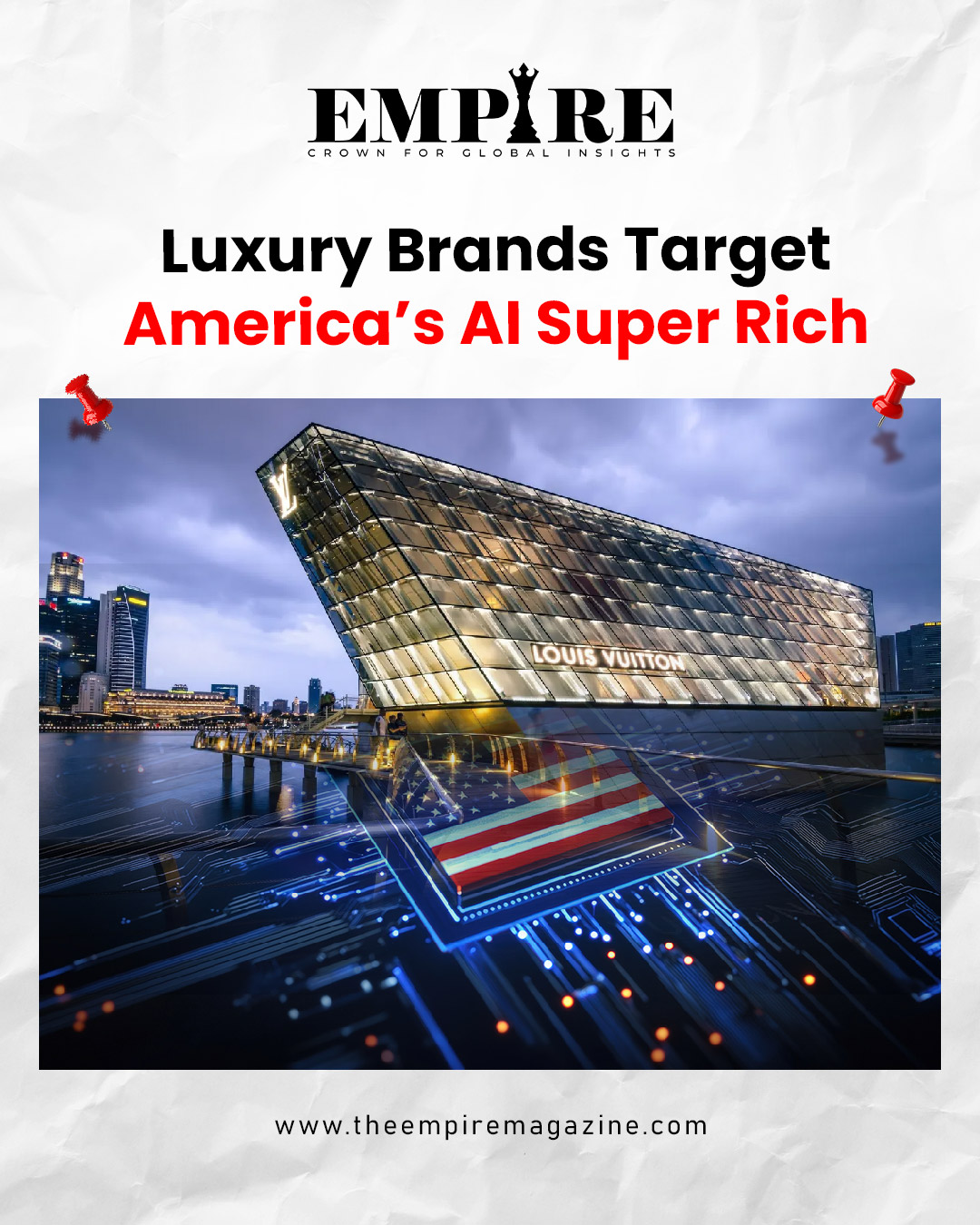
America’s AI revolution is creating a new class of billionaires and millionaires. Discover how luxury brands are reinventing their strategies to win over AI entrepreneurs, investors, and executives reshaping the future of wealth.
Luxury has always followed wealth. From Wall Street financiers in the 1980s to tech entrepreneurs during the internet revolution, every economic boom has introduced a new generation of affluent consumers with distinct tastes and aspirations. Today, another transformation is unfolding, this time powered by artificial intelligence. Across the United States, AI startups are achieving record-breaking valuations, venture capital investment is soaring, and company founders are becoming multimillionaires almost overnight. This unprecedented wealth creation is quietly reshaping one of the world’s most competitive industries: luxury.
For global luxury houses, the challenge is no longer simply selling premium products. It is understanding an entirely different customer. Unlike previous generations of wealthy buyers who celebrated status through logos and extravagance, many AI entrepreneurs have built their fortunes while wearing hoodies, sneakers, and minimalist watches. Their lifestyles appear understated, but their purchasing power is extraordinary. Behind the scenes, they are spending millions on bespoke travel, private aviation, rare collectibles, exclusive memberships, wellness retreats, and highly personalized services rather than traditional displays of wealth.
This shift has become impossible for luxury brands to ignore. Executives from some of the world’s most prestigious fashion houses are increasing their presence in technology hubs, organizing invitation-only events, and strengthening relationships with venture capital firms and AI founders. Their objective is not simply to sell products but to build lifelong relationships with individuals who could become the defining luxury consumers of the next two decades.
As artificial intelligence continues to reshape industries worldwide, it is also rewriting the rules of luxury marketing. The companies that understand this new generation of wealth early may secure long-term loyalty, while those relying solely on traditional luxury playbooks risk becoming increasingly disconnected from the world’s fastest-growing affluent demographic.
America’s AI Boom Is Creating a New Luxury Consumer
The rise of artificial intelligence has triggered one of the fastest wealth creation cycles in modern business history. Companies developing foundation models, AI infrastructure, semiconductor technologies, cybersecurity platforms, and enterprise automation solutions have attracted billions of dollars in investments over the past two years. Many startups have reached billion-dollar valuations before generating substantial revenue, while employees holding stock options have suddenly found themselves among America’s newest millionaires.
Unlike previous technology booms, today’s AI ecosystem is producing wealth across a broader spectrum of professionals. Founders remain at the center of this transformation, but venture capital partners, early engineers, research scientists, infrastructure specialists, and senior executives are also experiencing life-changing financial success. This expanding pool of high-net-worth individuals has become an attractive opportunity for luxury companies seeking new customers as traditional markets experience slower growth.
Recent industry observations indicate that American consumers are now playing a larger role in sustaining global luxury sales, especially as demand in some international markets has softened. This changing geographic balance has encouraged luxury brands to focus more aggressively on the United States, particularly technology-driven regions such as Silicon Valley, San Francisco, Seattle, Austin, New York, and Miami, where AI entrepreneurship continues to flourish.
However, selling to this audience requires a fundamentally different mindset. AI entrepreneurs often reject conspicuous consumption and instead prioritize craftsmanship, exclusivity, authenticity, and innovation. Rather than purchasing products solely to signal status, they seek meaningful experiences and brands that align with their personal values. For luxury companies, understanding this subtle but important shift has become just as valuable as designing the products themselves.
Why Luxury Brands Are Racing Toward America’s Silicon Valley
For decades, luxury fashion’s global influence revolved around cities such as Paris, Milan, London, and New York. Today, another destination is rapidly becoming just as important, not because of fashion weeks or luxury boutiques, but because it is home to the people building tomorrow’s trillion-dollar companies.
Leading luxury houses have increasingly begun hosting exclusive dinners, private client events, invitation-only product previews, and networking experiences specifically designed for technology founders, venture capital investors, and AI executives. These gatherings focus less on immediate sales and more on relationship-building. Luxury companies recognize that today’s startup founder could become tomorrow’s billionaire, making early engagement an invaluable long-term investment.
This strategic shift also reflects changing consumer psychology. Many AI leaders value access over ownership, personalization over mass recognition, and discretion over publicity. Instead of showcasing wealth through heavily branded products, they often gravitate toward understated luxury, custom craftsmanship, limited-edition pieces, and services unavailable to the general public. As a result, luxury brands are increasingly investing in bespoke experiences, private shopping appointments, exclusive travel partnerships, personalized concierge services, and invitation-only communities that create emotional loyalty rather than transactional purchases.
Another factor driving this transformation is the remarkable pace of AI wealth creation. Unlike traditional industries where fortunes accumulated gradually over decades, artificial intelligence has accelerated financial success at an unprecedented rate. Startup funding rounds frequently elevate founders into elite wealth brackets almost overnight, while successful acquisitions and public listings continue to generate new high-net-worth individuals across the technology ecosystem. Luxury executives understand that establishing relationships during these early stages can create customers whose lifetime value extends far beyond a single purchase.
Perhaps most importantly, luxury brands see striking similarities between themselves and AI companies. Both thrive on innovation, exceptional talent, meticulous craftsmanship, and the ability to shape aspiration. While one creates timeless products and the other builds transformative technologies, each depends on creating emotional value that goes beyond functionality. That shared philosophy is making Silicon Valley one of luxury’s most important frontiers; not merely as a market, but as the birthplace of the industry’s next generation of global patrons.
America’s Rich Want Experiences, Not Just Expensive Products
The biggest misconception about America’s new AI elite is that they spend like the wealthy generations before them. In reality, many of today’s technology entrepreneurs have redefined what luxury means. For them, exclusivity is no longer measured by the size of a diamond or the visibility of a logo but by access, personalization, and unforgettable experiences. This shift is forcing luxury brands to rethink everything from product design to customer engagement. Instead of focusing solely on selling handbags, watches, or couture, companies are creating private communities, invitation-only events, bespoke craftsmanship, and immersive brand experiences that resonate with high-net-worth technology leaders. Whether it is a private fashion presentation, a curated travel itinerary, or a custom-designed timepiece, luxury is becoming increasingly personal. This evolution is particularly important because many AI founders value authenticity over tradition. Having built companies that challenge conventional industries, they naturally gravitate toward brands that demonstrate innovation while preserving craftsmanship. Luxury houses are responding by combining heritage with modernity, integrating digital experiences, sustainability initiatives, and personalized services into their offerings. Industry analysts believe this strategy is becoming essential as younger wealthy consumers increasingly prioritize meaningful purchases over impulsive spending. For luxury brands, success is no longer determined by simply attracting affluent customers but by creating relationships that evolve alongside their lifestyles. The AI generation wants brands that understand them, anticipate their needs, and deliver experiences that cannot be replicated elsewhere. In many ways, luxury itself is becoming a service rather than merely a product, reflecting the changing aspirations of a generation that has accumulated extraordinary wealth through technology rather than inheritance.
How AI Is Changing the Future of Luxury
Artificial intelligence is not only creating new luxury consumers it is also transforming how luxury brands operate. Behind the glamorous storefronts and fashion campaigns, AI is becoming an essential business tool for forecasting demand, managing inventory, personalizing recommendations, improving customer service, and strengthening client relationships. Many leading luxury companies are investing heavily in machine learning and predictive analytics to understand purchasing patterns more accurately and deliver highly tailored experiences. This technological transformation allows brands to anticipate customer preferences before they are even expressed, creating an elevated level of personalization that aligns perfectly with the expectations of AI-savvy consumers. At the same time, luxury executives remain aware of the economic uncertainty surrounding global markets. Demand in regions such as China has moderated compared to previous years, making the United States an increasingly important growth engine for premium brands. The rapid expansion of America’s AI ecosystem provides an opportunity to offset slower performance elsewhere while establishing long-term relationships with one of the world’s fastest-growing affluent demographics. Yet competition is intensifying. Every luxury house is pursuing the same customers, making differentiation more important than ever. Brands that successfully combine timeless craftsmanship with technological innovation, sustainability, exclusivity, and personalized engagement are likely to emerge as leaders in this evolving landscape. The luxury sector has always adapted to changing definitions of wealth, and the AI revolution represents another pivotal chapter in that history. Companies willing to embrace this transformation are positioning themselves not only for stronger financial performance but also for greater cultural relevance in an increasingly technology-driven world.
A New Chapter for Luxury in the Age of Artificial Intelligence
The rise of artificial intelligence is proving to be far more than a technological revolution, it is reshaping global consumer behavior, investment trends, and the future of luxury itself. Every major economic transformation creates new winners, and the AI boom is producing an unprecedented generation of entrepreneurs, engineers, researchers, and investors whose influence extends well beyond Silicon Valley. Their spending habits are redefining what prestige looks like in the twenty-first century, encouraging luxury brands to move beyond traditional symbols of wealth and embrace experiences, personalization, discretion, and innovation.
For luxury houses, the opportunity is enormous, but so is the challenge. Winning over the AI super-rich requires more than exceptional products; it demands authenticity, emotional connection, and an ability to understand a customer whose success has been built on disruption rather than convention. The brands that can seamlessly blend centuries-old craftsmanship with modern technology will be best positioned to thrive as wealth continues shifting toward artificial intelligence.
The story unfolding today is reminiscent of previous economic revolutions that reshaped industries and consumer cultures. Just as finance transformed luxury in the 1980s and the internet redefined it in the early 2000s, artificial intelligence is now writing the next chapter. The difference is that this transformation is happening at an unprecedented speed. Billion-dollar startups are emerging in months instead of years, fortunes are being created faster than ever before, and luxury companies are racing to build relationships before the next generation of global icons fully emerges.
Ultimately, the convergence of AI and luxury reflects a broader truth about modern business: innovation does not simply create new technologies, it creates new lifestyles, new aspirations, and entirely new markets. As artificial intelligence continues to reshape the global economy, it is also redefining who the world’s luxury consumers are and what they value most. For the luxury industry, America’s AI super-rich are not just another customer segment, they represent the future of premium consumption, where exclusivity is measured not by what you own, but by the experiences, craftsmanship, and meaningful connections that money alone cannot easily buy.
For more business and retail insights, read more on The Empire Magazine
Previous article: Baseten and the AI Inference
Magazine Feautures | Podcasts: Empire Global Talks
Follow The Empire Magazine on Facebook | Instagram | LinkedIn
The Empire Magazine | Crown for Global Insights