ASML Is Powering the Global Semiconductor Industry
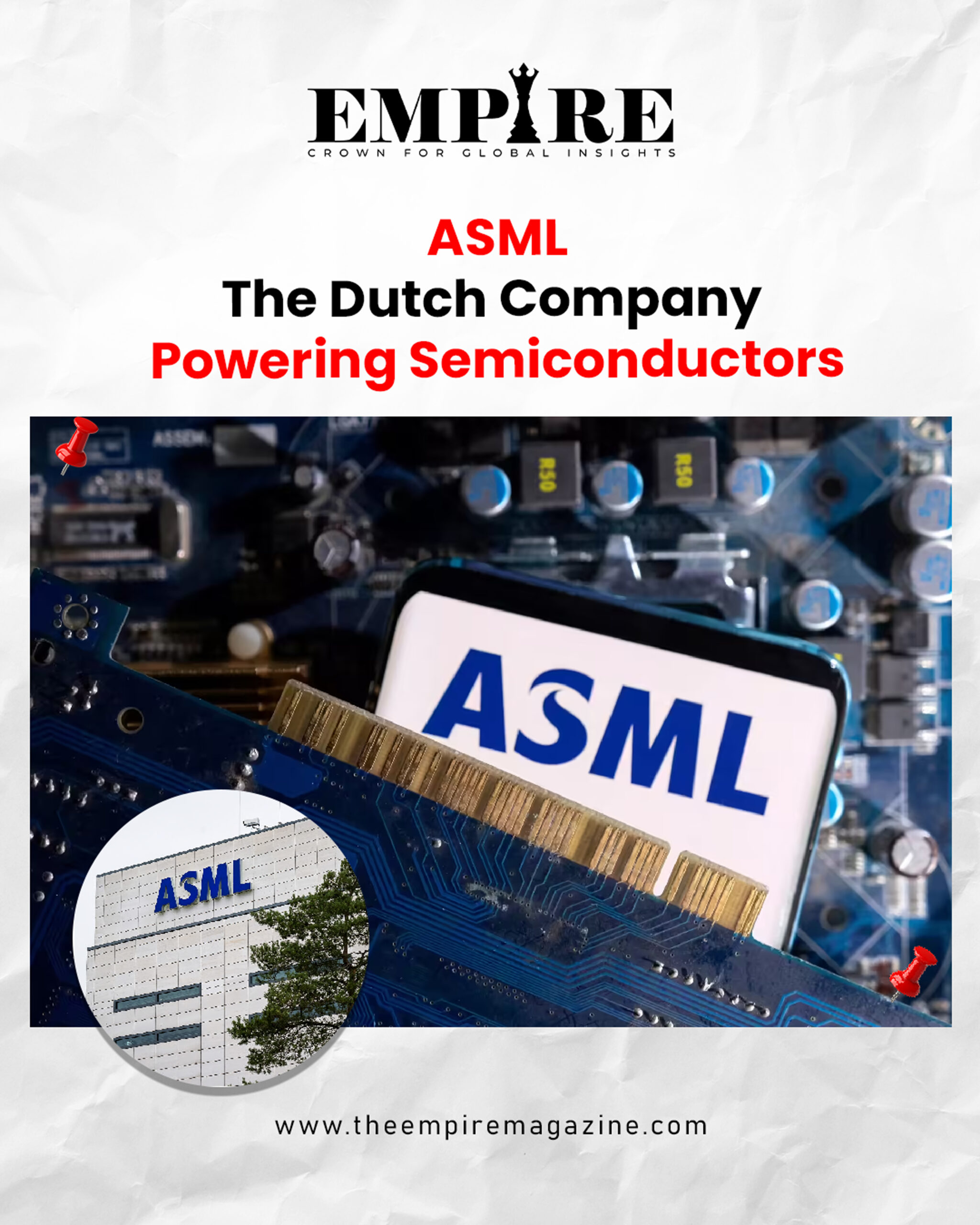
ASML is one of the most important companies in the global semiconductor industry. The Dutch company, headquartered in Veldhoven, the Netherlands, makes advanced lithography machines used by chip manufacturers to produce semiconductors. These chips power smartphones, laptops, data centers, cars, artificial intelligence systems, medical devices, industrial machines, and many other technologies.
ASML does not make chips itself. Instead, it makes the machines that allow companies such as TSMC, Samsung, Intel, SK hynix, and other chipmakers to manufacture advanced chips. This gives ASML a critical role in the semiconductor supply chain. Without advanced lithography tools, the production of leading-edge chips would be extremely difficult.
The company is especially important because it is the only commercial supplier of extreme ultraviolet lithography machines, known as EUV systems. EUV technology is essential for producing the most advanced semiconductors used in artificial intelligence, high-performance computing, smartphones, and next-generation electronics.
What ASML Does
ASML builds lithography systems, which are used during chip manufacturing. Lithography is the process of printing tiny patterns onto silicon wafers. These patterns form the circuits inside chips. As chips become smaller and more powerful, the patterns must become extremely precise.
ASML’s machines use light, lenses, mirrors, software, and mechanical systems to create these patterns at very small scales. The process must be accurate because even the smallest error can affect chip performance.
Lithography and Chip Manufacturing
Chip manufacturing involves many steps, but lithography is one of the most important. A wafer goes through repeated cycles of coating, exposure, development, etching, and cleaning. Lithography defines where the chip’s microscopic features will be placed.
ASML’s systems help chipmakers create smaller, faster, and more energy-efficient semiconductors. This is why ASML is central to the technology industry.
EUV Technology and ASML’s Advantage
ASML’s biggest strength is its EUV lithography technology. EUV uses extremely short-wavelength light to print very fine patterns on wafers. This allows chipmakers to produce advanced nodes with more transistors packed into smaller areas.
EUV machines are among the most complex industrial systems in the world. They contain advanced optics, high-powered light sources, vacuum systems, precision stages, sensors, and software. These machines require thousands of parts and a global supply chain.
Why EUV Matters
EUV matters because the semiconductor industry needs smaller and more powerful chips. Artificial intelligence, 5G, cloud computing, advanced smartphones, and high-performance computing all depend on chips with high transistor density and strong efficiency.
Without EUV, chipmakers would need more complicated and expensive manufacturing steps to produce advanced chips. EUV helps reduce complexity and supports the continued progress of semiconductor technology.
High-NA EUV and the Next Stage of Chipmaking
ASML is also developing High-NA EUV systems, the next generation of EUV lithography. High-NA stands for high numerical aperture. These systems are designed to print even smaller features than current EUV machines.
High-NA EUV is expected to support future generations of advanced chips. ASML has said that this technology can help chipmakers continue scaling semiconductors as traditional chip miniaturization becomes harder.
Why High-NA Is Important
High-NA EUV can help chipmakers reduce the number of manufacturing steps required for certain advanced patterns. This can improve accuracy and support future chip designs. However, High-NA machines are also very expensive and technically complex.
Major chipmakers are still evaluating how and when to use High-NA EUV in high-volume manufacturing. The technology is important because it represents the next phase of advanced semiconductor production.
ASML’s Role in the AI Chip Race
Artificial intelligence has increased demand for advanced chips. AI systems need powerful GPUs, CPUs, memory, networking chips, and custom accelerators. These chips require advanced manufacturing, and ASML’s lithography machines are part of that production process.
AI data centers need chips that can process huge amounts of data quickly and efficiently. Chipmakers depend on ASML’s EUV tools to manufacture many of the advanced chips used in AI infrastructure.
AI Demand Supports ASML’s Growth
AI demand has strengthened the semiconductor equipment market. As companies invest in data centers, cloud computing, and AI hardware, chipmakers need more advanced production capacity. This supports demand for ASML’s systems.
ASML reported €32.7 billion in total net sales for 2025, along with major investment in research and development. The company’s business performance reflects the importance of lithography in the modern technology economy.
ASML’s Customers and Global Supply Chain
ASML sells its machines to the world’s leading semiconductor manufacturers. Its customers include companies that produce logic chips, memory chips, and advanced processors. These customers operate large fabrication plants, also known as fabs.
TSMC, Samsung, and Intel
TSMC, Samsung, and Intel are among the most important users of advanced lithography tools. TSMC manufactures chips for companies such as Apple, Nvidia, AMD, Qualcomm, and many others. Samsung produces memory and logic chips. Intel designs and manufactures processors and is also expanding its foundry business.
These companies depend on advanced lithography to compete in leading-edge chip production. ASML’s machines are therefore connected to many of the world’s most important technology products.
Why ASML Has a Strategic Position
ASML has a strategic position because semiconductor manufacturing is difficult to replicate. EUV technology took decades of research, engineering, supplier development, and customer collaboration. The company works with highly specialized suppliers, including companies that provide precision optics, lasers, mechanical systems, and software.
A Highly Specialized Business
ASML’s business is not easy for competitors to copy. EUV lithography requires deep expertise in physics, engineering, optics, plasma generation, precision motion, and semiconductor manufacturing. The company has built this expertise over many years.
This gives ASML a strong position in the semiconductor supply chain. It also makes the company important to governments, investors, and technology companies.
Geopolitics and Export Controls
ASML’s role in advanced chipmaking has made it part of global technology politics. Governments are paying close attention to semiconductor equipment because advanced chips are important for artificial intelligence, defense, telecommunications, and economic security.
The Netherlands, the United States, and other governments have placed restrictions on the export of certain advanced chipmaking tools to China. These rules affect ASML because some of its machines are considered strategically sensitive.
China and Semiconductor Equipment Demand
China has been an important market for ASML, especially for deep ultraviolet lithography systems, known as DUV systems. However, advanced EUV systems are restricted from export to China.
This creates a complex business environment. ASML must manage customer demand, government rules, geopolitical risk, and long-term technology strategy.
Research and Development at ASML
ASML invests heavily in research and development because the semiconductor industry constantly requires better tools. Smaller chip features, higher productivity, better yield, and lower energy use all require new technology.
The company works on EUV, High-NA EUV, DUV systems, metrology, inspection, computational lithography, and software. These areas help customers improve chip manufacturing accuracy and efficiency.
Innovation Across the Chipmaking Process
ASML’s innovation is not limited to one machine. It includes systems that measure, inspect, and improve the lithography process. This helps chipmakers reduce defects, improve yields, and produce more chips from each wafer.
As chips become more advanced, the connection between hardware and software becomes more important. ASML’s computational tools help optimize chip patterns before and during manufacturing.
Why ASML Matters for the Future of Technology
ASML matters because nearly every major technology trend depends on semiconductors. Artificial intelligence, electric vehicles, smartphones, cloud computing, robotics, defense systems, medical technology, and clean energy all need advanced chips.
The company sits behind the scenes, but its machines help make the digital economy possible. As demand for advanced chips grows, ASML’s role in the semiconductor industry remains critical.
For more technology and business insights, read this feature on The Empire Magazine.
Follow The Empire Magazine on Instagram and Facebook.
– The Empire Magazine
Crown For Global Insights