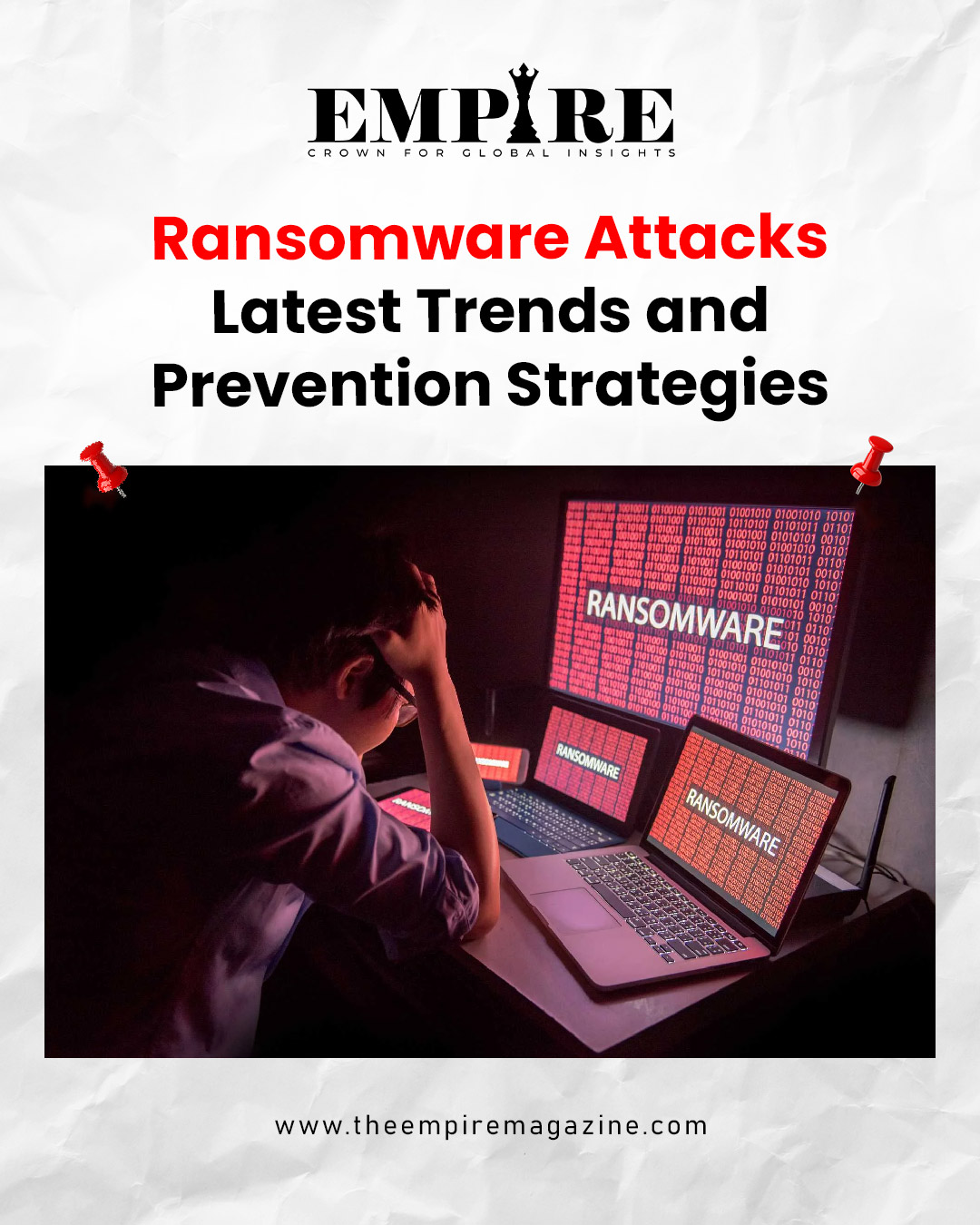
Cybercrime has evolved from isolated hacking incidents into one of the world’s most profitable criminal industries, and ransomware sits at its center. Once viewed as a threat primarily affecting large corporations, ransomware has now become a global cybersecurity challenge capable of disrupting hospitals, schools, governments, manufacturing plants, financial institutions, and even critical infrastructure.
The numbers illustrate the scale of the problem. Security researchers estimate that ransomware damages now cost organizations hundreds of billions of dollars annually when ransom payments, operational downtime, legal expenses, regulatory penalties, and reputational losses are taken into account. At the same time, cybercriminal groups are becoming increasingly organized, operating with business-like structures that provide customer support, affiliate programs, and even revenue-sharing models for hackers.
What makes ransomware particularly dangerous in 2026 is not just its frequency but its sophistication. Artificial intelligence, automation, stolen credentials, cloud vulnerabilities, and supply chain compromises have significantly reduced the time attackers need to infiltrate networks and encrypt valuable data. Modern ransomware campaigns often combine technical expertise with psychological pressure, making recovery far more complex than simply restoring encrypted files.
For organizations and individuals alike, cybersecurity is no longer just an IT responsibility, it has become a business continuity and risk management priority.
Ransomware Attacks in 2026 Are Faster, Smarter and More Automated
Traditional ransomware attacks typically followed a predictable pattern: attackers gained access to a computer, encrypted files, and demanded payment in exchange for a decryption key. While that model still exists, today’s ransomware operations are far more sophisticated.
Modern cybercriminals spend weeks or even months inside compromised networks before launching an attack. During this period, they quietly map IT infrastructure, identify critical systems, steal confidential information, disable backups, and obtain administrator credentials. By the time ransomware is activated, attackers often possess everything they need to maximize disruption.
Automation has accelerated this process considerably. Advanced malware can rapidly scan networks, identify vulnerable endpoints, move laterally across connected systems, and encrypt thousands of devices within hours. Security analysts have observed that the average “breakout time” the period between initial compromise and widespread network access has continued to shrink, leaving organizations with little time to detect and contain attacks.
Cloud environments have also become an increasingly attractive target. As businesses migrate data and applications to hybrid and multi-cloud infrastructures, attackers are exploiting misconfigured storage, exposed APIs, weak identity controls, and compromised cloud credentials to gain unauthorized access.
Rather than targeting only encrypted data, modern ransomware groups aim to cripple entire business operations, ensuring that victims face maximum financial and operational pressure.
AI Is Transforming the Ransomware Threat Landscape
Artificial intelligence has emerged as one of the most significant factors reshaping cybercrime. While AI offers enormous benefits for cybersecurity professionals through faster threat detection and automated response, the same technology is also being exploited by cybercriminals.
Attackers now use generative AI to create highly convincing phishing emails that mimic legitimate business communications with remarkable accuracy. AI tools can also help personalize social engineering campaigns by analyzing publicly available information from company websites, professional networking platforms, and social media profiles.
Machine learning enables attackers to automate vulnerability discovery, prioritize high-value targets, and adapt malware behavior based on the security tools detected within an organization’s network. Some security researchers have even identified AI-assisted ransomware capable of modifying its techniques to evade traditional detection systems.
Another emerging concern is the use of AI-generated voice cloning and deepfake technology. Fraudsters are increasingly impersonating executives or trusted employees to manipulate staff into transferring funds, revealing credentials, or bypassing security procedures that ultimately facilitate ransomware deployment.
These developments mean organizations can no longer rely solely on signature-based antivirus software. Modern cybersecurity increasingly depends on behavioral analysis, continuous monitoring, zero-trust architectures, and AI-powered defensive systems capable of identifying suspicious activity before ransomware is executed.
Ransomware-as-a-Service Is Fueling a Global Cybercrime Business
One of the biggest reasons ransomware attacks continue to rise is the rapid expansion of Ransomware-as-a-Service (RaaS).
Much like legitimate software companies sell subscription-based products, experienced cybercriminal groups now develop ransomware platforms that affiliates can rent or license. These affiliates do not necessarily possess advanced programming skills. Instead, they receive ready-made ransomware tools, user-friendly dashboards, technical documentation, and even customer support from the developers.
Profits are typically shared between the ransomware operators and their affiliates, creating an ecosystem that resembles a franchise business model. This arrangement has significantly lowered the barrier to entry, allowing more criminals to launch sophisticated attacks without building malware from scratch.
RaaS operators continuously update their software with new encryption techniques, evasion capabilities, and attack methods, making their products increasingly difficult for traditional security solutions to detect. Many also provide negotiation services, helping affiliates communicate with victims and maximize ransom payments.
As this underground economy grows, law enforcement agencies face greater challenges because ransomware developers, affiliates, cryptocurrency laundering services, and hosting providers often operate across multiple jurisdictions, making investigations and prosecutions increasingly complex.
Double Extortion Has Changed the Economics of Ransomware Attacks
Encrypting files alone is no longer enough for many cybercriminals. Today’s ransomware groups increasingly rely on double extortion, a tactic that dramatically increases pressure on victims.
Before encrypting systems, attackers first steal sensitive corporate data, including customer records, financial information, intellectual property, employee files, and confidential business documents. If the victim refuses to pay, the criminals threaten to publish or sell the stolen information on dark web marketplaces or leak sites.
This approach has fundamentally changed incident response. Even organizations with reliable backups may still face difficult decisions because restoring encrypted systems does not prevent stolen data from being exposed.
Some groups have escalated even further by adopting triple extortion, targeting customers, suppliers, business partners, or even launching distributed denial-of-service (DDoS) attacks while ransom negotiations are underway. The objective is simple: create enough operational, financial, and reputational damage that paying the ransom appears less costly than resisting.
As a result, ransomware has evolved from a purely technical threat into a multidimensional business crisis involving cybersecurity teams, executives, legal advisors, insurers, regulators, and public relations professionals.
Critical Infrastructure Has Become a Prime Target for Ransomware Attacks
The impact of ransomware is no longer confined to private businesses. Over the past few years, cybercriminals have increasingly targeted critical infrastructure, recognising that organisations providing essential public services are often under immense pressure to restore operations quickly.
Hospitals, power utilities, water treatment facilities, transportation networks, telecommunications providers and government agencies have all experienced ransomware incidents that disrupted essential services. In healthcare, for example, an attack can delay surgeries, interrupt access to patient records and affect emergency response systems. Manufacturing companies, meanwhile, may face production shutdowns that ripple through global supply chains.
Small and medium-sized businesses (SMBs) are also becoming frequent victims. Many lack dedicated cybersecurity teams or enterprise-grade security solutions, making them attractive targets for attackers seeking quicker financial returns. Cybersecurity experts warn that attackers often view smaller organisations as stepping stones into larger enterprises through trusted supplier relationships.
The rise in supply chain attacks further complicates the threat landscape. Rather than attacking a large company directly, cybercriminals compromise third-party software vendors, managed service providers (MSPs) or technology partners to gain access to multiple organisations simultaneously. A single compromised vendor can potentially expose hundreds or even thousands of customers.
These developments demonstrate that ransomware is no longer solely an IT issue. It has become a national security, economic and operational resilience challenge affecting organisations of every size.
Ransomware Prevention Strategies Businesses Should Prioritise
Although ransomware attacks continue to evolve, cybersecurity professionals agree that many successful attacks exploit preventable weaknesses. Building resilience requires organisations to adopt a layered security approach rather than relying on a single defence mechanism.
One of the most effective safeguards remains maintaining secure, offline and regularly tested backups. Backup systems should be isolated from production networks so that attackers cannot encrypt or delete them during an attack. Organisations should also conduct routine recovery exercises to ensure critical systems can be restored quickly.
Identity and access management is equally important. Implementing multi-factor authentication (MFA), enforcing strong password policies and applying the principle of least privilege significantly reduce opportunities for attackers to compromise privileged accounts. Continuous monitoring of user activity can also help identify suspicious behaviour before ransomware spreads across the network.
Patch management continues to be another critical defence. Many ransomware groups exploit known software vulnerabilities that remain unpatched despite security updates being readily available. Regular vulnerability assessments and prompt software updates reduce the attack surface considerably.
Cybersecurity awareness training should not be overlooked. Employees remain one of the most common entry points for ransomware through phishing emails, malicious attachments or fraudulent links. Ongoing education helps staff recognise social engineering attempts and report suspicious activity before damage occurs.
Finally, organisations should develop and regularly test an incident response plan. Clear procedures for isolating infected systems, notifying stakeholders, engaging forensic experts and communicating with customers can significantly reduce confusion during a real-world cyber incident.
Individuals Can Also Reduce Their Risk of Ransomware Attacks
While businesses are frequent targets, individual users are far from immune. Personal computers, smartphones and home networks can all become entry points for ransomware, particularly as remote work and digital lifestyles continue to expand.
Keeping operating systems, browsers and applications updated remains one of the simplest yet most effective security measures. Software updates often contain patches for vulnerabilities that attackers actively exploit.
Users should also avoid downloading software from unofficial sources or opening unexpected email attachments, even if they appear to come from trusted contacts. AI-generated phishing messages have become increasingly convincing, making it essential to verify requests involving sensitive information or financial transactions.
Regular backups of important documents, family photos and personal files provide an additional layer of protection. Storing backups on external drives or secure cloud services with version history can help users recover data without paying a ransom.
Installing reputable endpoint security software, enabling multi-factor authentication wherever possible and using unique passwords for different online accounts further reduce the likelihood of successful attacks.
Ultimately, good cybersecurity habits are becoming as important in everyday life as locking the front door or safeguarding financial information.
The Future of Ransomware Will Be Defined by AI and Cyber Resilience
Looking ahead, cybersecurity experts expect ransomware to become even more sophisticated as artificial intelligence, automation and cloud technologies continue to evolve. Attackers are likely to use AI to identify vulnerabilities faster, personalise phishing campaigns with greater accuracy and automate large portions of the attack lifecycle.
At the same time, defenders are deploying AI-driven security tools capable of analysing enormous volumes of network activity, detecting unusual behaviour in real time and responding to threats before significant damage occurs. This growing technological competition is creating an ongoing race between cybercriminals and cybersecurity professionals.
Governments around the world are also strengthening cybersecurity regulations, encouraging mandatory incident reporting, improving international cooperation and imposing stricter security requirements for organisations operating critical infrastructure. Cyber insurance providers are similarly tightening their standards, requiring stronger cybersecurity controls before issuing or renewing coverage.
These developments suggest that future success will depend less on preventing every attack a nearly impossible goal and more on building cyber resilience. Organisations that can detect threats quickly, contain incidents effectively and recover operations with minimal disruption will be far better positioned to withstand an increasingly hostile digital environment.
Ransomware attacks and safety of organisations
Ransomware attacks have evolved into one of the most significant cybersecurity challenges of the digital age. What began as relatively simple file-encryption malware has transformed into a sophisticated criminal enterprise powered by artificial intelligence, ransomware-as-a-service platforms and increasingly aggressive extortion tactics. Businesses, governments, healthcare providers and individuals now face a threat that extends well beyond financial losses, affecting operational continuity, public trust and national security.
The good news is that ransomware is not unstoppable. Organisations that invest in strong cyber hygiene, employee awareness, secure backups, proactive monitoring, identity protection and well-tested incident response plans are significantly better equipped to minimise the impact of an attack. Likewise, individuals who follow basic cybersecurity practices can greatly reduce their personal risk.
As technology continues to reshape both cybercrime and cyber defence, resilience will become the defining factor in cybersecurity. In 2026 and beyond, success will not be measured solely by an organisation’s ability to prevent ransomware attacks, but by how quickly it can detect, respond to and recover from them while protecting the people, data and services that matter most.
For more insights, navigate on The Empire Magazine
Previous article: Dior’s Strategy
Magazine Feautures | Podcasts: Empire Global Talks
Follow The Empire Magazine on Facebook | Instagram | LinkedIn
The Empire Magazine | Crown for Global Insights