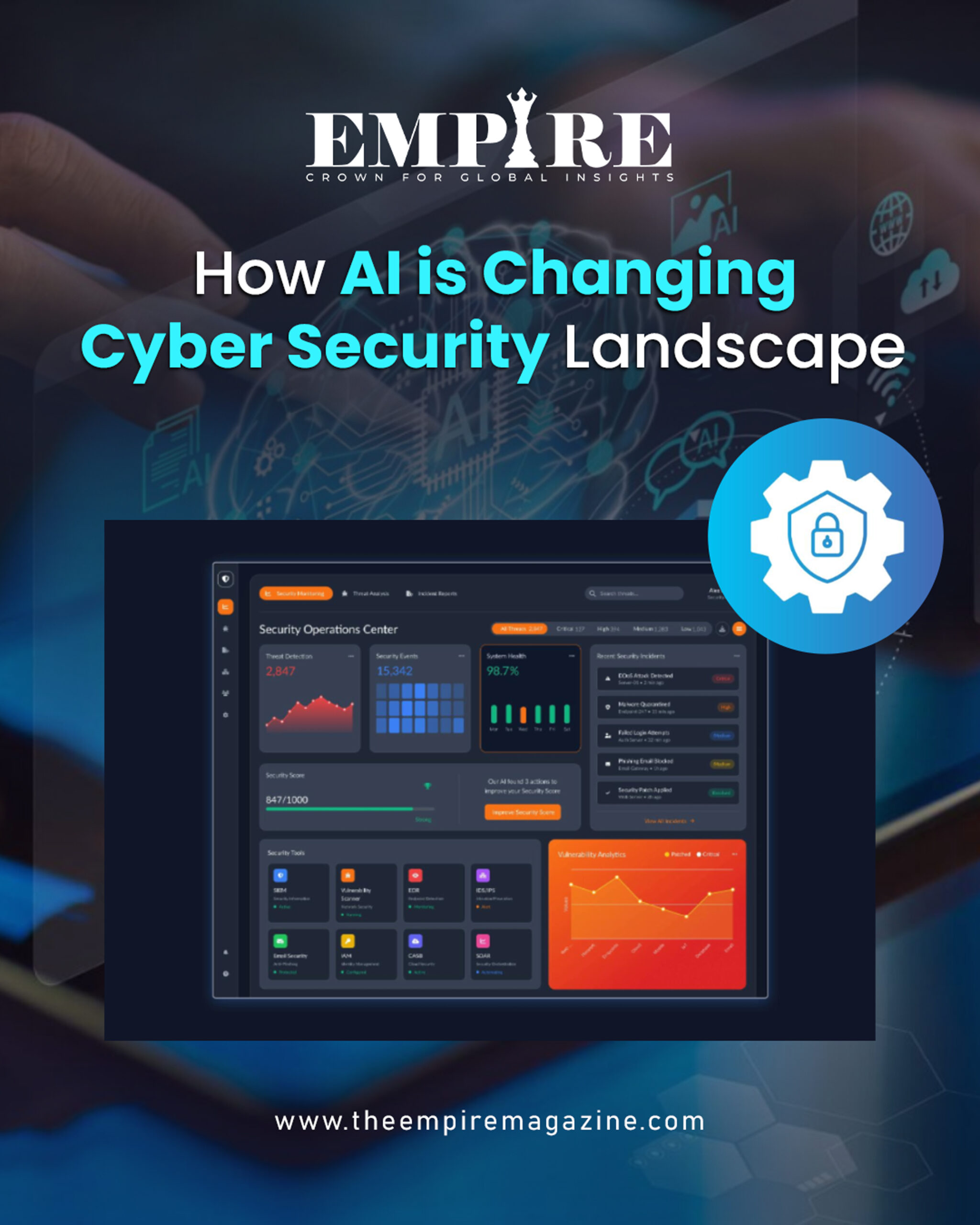
How AI is Changing Cyber Security is one of the most important developments in technology today. In 2026, artificial intelligence has fundamentally transformed the cybersecurity landscape, shifting it from reactive defense to proactive, intelligent protection. Both cyber attackers and defenders are leveraging AI, creating a powerful new arms race in digital security.
The Evolution of Cyber Threats and AI’s Role
Traditional cybersecurity relied heavily on signature-based detection and manual monitoring. These methods are no longer sufficient against today’s sophisticated threats. Modern cyberattacks are faster, more automated, and increasingly evasive. This is where AI is making a dramatic impact.
AI-powered systems can analyze massive volumes of data in real time, detect anomalies, and respond to threats faster than any human team. Machine learning models continuously learn from new attack patterns, making security systems more adaptive and intelligent with each passing day.
Key Ways AI is Revolutionizing Cyber Security
1. Advanced Threat Detection AI excels at identifying threats that traditional tools miss. By analyzing user behavior, network traffic, and system logs, AI can detect subtle anomalies that signal a potential breach. This includes identifying zero-day exploits and insider threats with high accuracy and minimal false positives.
2. Predictive Security One of the biggest advantages of AI is its ability to predict attacks before they happen. By studying patterns from millions of previous incidents, AI models can forecast which systems are likely to be targeted and what methods attackers might use. This allows organizations to strengthen defenses proactively.
3. Automated Incident Response AI dramatically reduces response time by automating routine security tasks. When a threat is detected, AI systems can isolate affected devices, block malicious traffic, and even roll back changes automatically. This speed is critical in minimizing damage during a cyberattack.
4. Phishing and Social Engineering Defense AI tools now scan emails, messages, and websites in real time to detect sophisticated phishing attempts. Natural language processing helps identify subtle manipulation tactics that might fool even experienced users.
5. Vulnerability Management AI scans codebases and infrastructure continuously to find weaknesses before attackers can exploit them. Predictive analytics help security teams prioritize the most dangerous vulnerabilities based on real-world risk rather than generic severity scores.
The Dark Side: AI-Powered Cyber Attacks
While AI strengthens defense, it is also empowering attackers. Cybercriminals use AI to create more convincing phishing emails, develop polymorphic malware that changes its signature to avoid detection, and launch large-scale automated attacks.
Deepfake technology powered by AI poses a growing threat to identity verification systems. AI can also be used to find vulnerabilities in software much faster than humans, accelerating the discovery of exploitable weaknesses.
This creates a challenging situation where defenders and attackers are both using advanced AI tools, making the cybersecurity battlefield more complex and dynamic.
Benefits for Organizations
Businesses adopting AI-driven cybersecurity solutions are seeing significant advantages:
- Reduced security operation costs through automation
- Faster detection and response times
- Better protection against sophisticated threats
- Improved compliance and reporting capabilities
- Enhanced visibility across complex IT environments
Small and medium businesses, which traditionally struggled with limited security resources, now have access to enterprise-grade protection through AI-powered platforms.
Challenges and Limitations
Despite its advantages, AI in cybersecurity is not without challenges. AI models can be fooled through adversarial attacks, where attackers manipulate data to bypass detection. There are also concerns about data privacy, as AI systems require large amounts of sensitive data to function effectively.
Another challenge is the skills gap. Organizations need professionals who understand both cybersecurity and artificial intelligence — a rare and expensive combination today. Over-reliance on AI without proper human oversight can also create dangerous blind spots.
The Future of AI in Cyber Security
In the coming years, AI will become even more integrated into security operations. We can expect to see greater use of autonomous security systems, AI-driven threat intelligence sharing across organizations, and self-healing networks that automatically recover from attacks.
The integration of AI with quantum computing and advanced encryption techniques will further reshape the field. Security teams that successfully combine human expertise with AI capabilities will hold a significant advantage.
Final Thoughts
How AI is Changing Cyber Security represents both an opportunity and a challenge. Organizations that embrace AI-driven security will be better protected in an increasingly hostile digital environment. However, success requires careful implementation, continuous monitoring, and skilled professionals who can interpret AI insights and make strategic decisions.
As cyber threats continue to evolve, AI is no longer a futuristic concept — it has become an essential component of modern cybersecurity strategy. Businesses that invest wisely in AI-powered security today will be far more resilient tomorrow.
For more technology and business insights, explore related coverage here: Internal Link.
Follow The Empire Magazine on Instagram and Facebook for the latest updates.
– The Empire Magazine
Crown For Global Insights