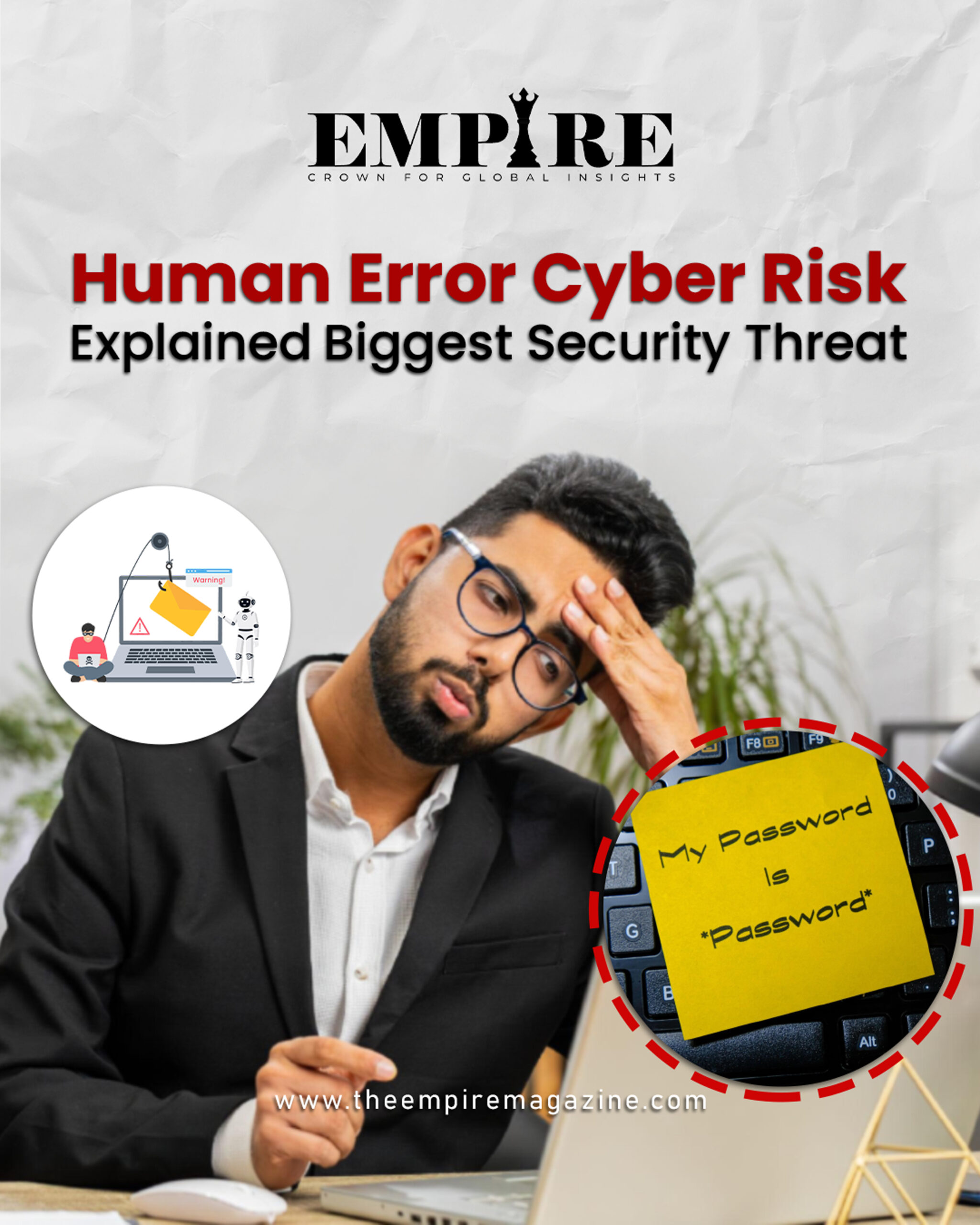
Human Error Cyber Risk Explained: Biggest Security Threat and how employee mistakes lead to cyberattacks while strategies help prevent costly data breaches.
In an era where digital transformation is reshaping industries, cybersecurity has become one of the most critical priorities for organizations worldwide. Despite massive investments in advanced technologies such as firewalls, encryption systems, and artificial intelligence, one fundamental vulnerability continues to persist—human error. Human Error Cyber Risk Explained: Biggest Security Threat highlights a crucial reality: the greatest risk to cybersecurity is not always sophisticated hackers, but simple human mistakes.
Organizations often focus on strengthening their technical infrastructure, assuming that better tools will automatically result in stronger security. However, even the most advanced systems can be compromised if users unknowingly create vulnerabilities. From clicking on malicious links to using weak passwords, small actions can lead to major consequences.
Understanding Human Error Cyber Risk
Human error cyber risk refers to security breaches caused by unintentional mistakes made by individuals within an organization. These errors are rarely deliberate. Instead, they occur due to lack of awareness, time pressure, or complex systems that are difficult to navigate.
Research consistently shows that a vast majority of cybersecurity incidents involve human error in some capacity.
This makes human behavior one of the most critical factors in cybersecurity. While technology can provide protection, it cannot fully compensate for poor user practices.
Why Human Error Is the Biggest Threat
The concept of human error cyber risk emphasizes a simple but powerful truth: people are often the weakest link in the security chain. Even well-designed systems depend on correct human usage.
Several factors contribute to this vulnerability:
- Employees often prioritize speed over security
- Complex systems lead to confusion and mistakes
- Lack of training reduces awareness of threats
- Overconfidence results in risky behavior
When employees take shortcuts—such as reusing passwords or ignoring updates—they unintentionally expose the organization to cyber risks.
Common Types of Human Errors in Cybersecurity
1. Phishing and Social Engineering
Phishing attacks exploit human psychology rather than technical flaws. Attackers impersonate trusted sources to trick employees into sharing sensitive information or clicking malicious links.
These attacks are highly effective because they rely on human behavior, not system vulnerabilities.
2. Weak Password Practices
Using simple or repeated passwords is one of the most common security mistakes. Weak credentials make it easier for hackers to gain unauthorized access.
Poor password management remains a major contributor to data breaches.
3. Failure to Update Systems
Delaying software updates leaves systems vulnerable to known threats. Cybercriminals often exploit these gaps before organizations can fix them.
4. Data Mishandling
Accidentally sending confidential information to the wrong recipient or storing sensitive data on unsecured devices can lead to serious breaches.
5. Unsafe Use of Personal Devices
With remote work becoming more common, employees frequently use personal devices and unsecured networks, increasing exposure to cyber threats.
The Role of Human Behavior
Human behavior plays a central role in cybersecurity. Employees are not intentionally careless, but certain conditions increase the likelihood of mistakes:
- Complicated security protocols that are difficult to follow
- High workloads and tight deadlines
- Lack of proper training and guidance
- Misunderstanding of potential risks
When systems are too complex, employees often look for shortcuts. These shortcuts may seem harmless but can create serious vulnerabilities.
The Growing Impact of Cyberattacks
Cyberattacks are becoming more frequent and costly, affecting organizations across industries. The consequences of a single mistake can be severe:
- Financial losses due to data breaches
- Damage to brand reputation
- Loss of customer trust
- Legal and regulatory penalties
- Operational disruptions
The global cost of cybercrime has reached staggering levels, highlighting the importance of addressing human error as a key risk factor.
Strategies to Reduce Human Error Cyber Risk
While human error cannot be completely eliminated, organizations can take proactive steps to reduce its impact.
1. Cybersecurity Awareness Training
Regular training programs help employees recognize threats such as phishing attacks and understand best practices.
Educated employees are more likely to make informed decisions and avoid risky behavior.
2. Simplifying Security Processes
Complex systems increase the likelihood of errors. Organizations should design user-friendly security measures that are easy to follow.
3. Strong Authentication Measures
Encouraging strong passwords and implementing multi-factor authentication (MFA) adds an additional layer of protection.
4. Regular Updates and Maintenance
Ensuring that systems are updated regularly reduces vulnerabilities and prevents exploitation.
5. Monitoring and Access Control
Limiting access to sensitive data and monitoring user activity can help detect and prevent breaches early.
6. Building a Security-First Culture
Creating a culture where cybersecurity is a shared responsibility encourages employees to prioritize safe practices.
Turning Employees into the First Line of Defense
Instead of viewing employees as a weakness, organizations should empower them as a key part of their security strategy. With proper training and support, employees can become the first line of defense against cyber threats.
They can:
- Identify suspicious emails and activities
- Prevent unauthorized access
- Protect sensitive information
- Report potential risks quickly
When employees are equipped with the right knowledge, they transform from potential vulnerabilities into valuable security assets.
The Need for a Holistic Approach
Managing human error cyber risk requires more than just technology. It demands a comprehensive approach that integrates people, processes, and systems.
Organizations should:
- Develop clear and simple security policies
- Conduct regular risk assessments
- Encourage accountability at all levels
- Continuously improve training programs
By addressing both technical and human factors, businesses can create a more resilient cybersecurity framework.
For more insights, visit:
https://theempiremagazine.com/?p=6082
Stay connected:
Instagram: https://www.instagram.com/the_empire_magazine/
Facebook: https://www.facebook.com/profile.php?id=61573749076160
– The Empire Magazine
Crown For Global Insights