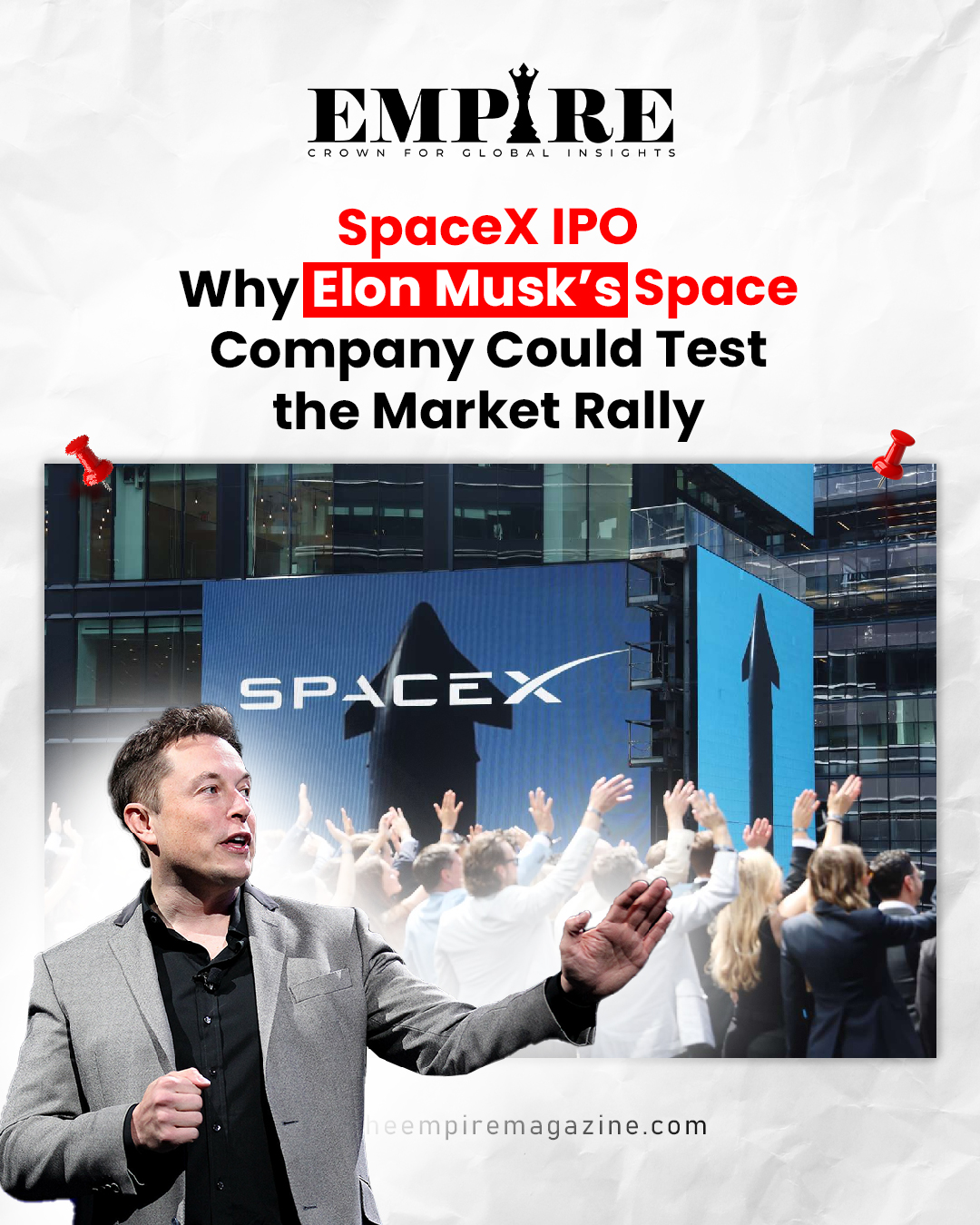
SpaceX IPO is becoming one of the most closely watched financial events in the U.S. stock market because Elon Musk’s space company is preparing for a potential public listing at a scale rarely seen in global markets. SpaceX is reportedly targeting a valuation of around $1.75 trillion and a record-sized offering that could raise about $75 billion, making it one of the biggest IPOs in history if completed successfully.
The company is already one of the most valuable private businesses in the world. It has built a powerful position through reusable rockets, Starlink satellite internet, government contracts, commercial launches, and ambitious plans for Starship, Mars exploration, and future space-based infrastructure. But moving from private markets to public markets will bring a new level of scrutiny.
For investors, the SpaceX IPO is not just about one company. It could become a major test of the U.S. stock market rally, the strength of technology enthusiasm, and the willingness of investors to pay high valuations for future growth.
SpaceX IPO and the U.S. Stock Market Rally
SpaceX IPO plans are arriving at a time when U.S. stocks have been supported by strong investor interest in technology, artificial intelligence, cloud infrastructure, advanced chips, and high-growth companies. A successful listing could show that markets still have strong appetite for large, future-focused businesses.
However, the IPO could also test how much investors are willing to pay for ambition. SpaceX is not a traditional profitable industrial company. It is a high-growth, capital-intensive business with huge opportunities but also major risks. Its valuation depends heavily on expectations for Starlink, reusable rockets, Starship, defense contracts, and future space services.
If SpaceX performs well after listing, it could strengthen confidence in the broader technology rally. If the stock struggles, it may raise questions about whether private-market valuations have become too aggressive.
Why SpaceX Is Different From Normal IPOs
The SpaceX IPO is different because the company already has a global brand, a powerful founder, and multiple business lines before going public. Many IPOs involve young companies still trying to prove demand. SpaceX has already proven that it can launch rockets, land boosters, build a satellite network, carry astronauts, and win major government and commercial contracts.
At the same time, SpaceX remains unusual because of its long-term vision. Investors are not only buying into current launch and satellite revenue. They are also buying into Elon Musk’s larger plan for reusable space transportation, Mars missions, Starship, global broadband, and possibly space-based AI infrastructure.
This makes the IPO both attractive and risky. The story is extremely powerful, but the valuation requires strong belief in future execution.
Elon Musk’s Founder Premium
Elon Musk is a major part of the SpaceX IPO story. His track record with Tesla and SpaceX gives investors confidence that he can build companies in difficult industries. Musk turned electric vehicles into a mainstream business category and helped make reusable rockets a reality.
This creates what many investors call a founder premium. Some buyers may be willing to pay more because they believe Musk can keep pushing SpaceX into new markets. His public profile can attract retail investors, institutional investors, and media attention.
However, founder-driven companies also carry governance questions. If one person holds significant control, investors must decide whether that concentration of power is an advantage or a risk. Musk’s leadership is a central reason investors are excited, but it also means the company’s public-market identity will remain closely tied to him.
Starlink as the Core Growth Engine
Starlink is one of the most important parts of SpaceX’s valuation. The satellite internet business gives SpaceX recurring revenue beyond rocket launches. It serves homes, businesses, aircraft, ships, remote regions, emergency services, and governments.
Starlink is also strategically important because it depends on SpaceX’s reusable launch system. The company can launch its own satellites more frequently and at lower cost than many competitors. This vertical integration is one of SpaceX’s biggest advantages.
For public investors, Starlink could be the clearest revenue-growth story. Launch services can be large, but satellite broadband has the potential to become a global communications business. If Starlink continues expanding subscribers, enterprise services, and direct-to-cell partnerships, it could support the high valuation SpaceX is targeting.
Why Starlink Matters for Investors
Investors often prefer businesses with recurring revenue. Starlink gives SpaceX a subscription-style model, which is different from one-time launch contracts. This can make the company’s financial story more attractive.
Starlink also positions SpaceX inside the global connectivity market. Rural broadband, maritime internet, aviation Wi-Fi, military communication, and disaster response are all areas where satellite internet has demand.
The challenge is competition and cost. Amazon’s satellite network, telecom partnerships, regulatory approvals, satellite replacement costs, and pricing pressure could affect future margins. Public investors will want to see whether Starlink can remain profitable as it scales.
Reusable Rockets and Launch Dominance
SpaceX’s reusable rocket technology is the foundation of its business revolution. Falcon 9 became the first orbital-class rocket to land and fly again at commercial scale. This changed launch economics and allowed SpaceX to build a high launch cadence.
Reusable boosters reduce the cost of access to space and give SpaceX a major advantage over many traditional launch providers. The company can serve commercial satellite operators, NASA, national security missions, and its own Starlink network.
This launch dominance gives SpaceX a strong moat. Competitors are trying to build reusable rockets, but SpaceX has years of operational experience, data, and infrastructure. That advantage is one reason public investors may value the company differently from other space businesses.
Starship and the Big Future Bet
Starship is one of the biggest reasons SpaceX’s valuation could be so high. The vehicle is designed to be a fully reusable heavy-lift rocket system. If it works as planned, it could dramatically increase payload capacity and reduce launch costs.
Starship is central to several future goals. It is needed for SpaceX’s Mars ambitions, NASA’s Artemis lunar plans, larger Starlink deployment, and potentially future space manufacturing or orbital infrastructure. It could also support massive satellite launches and new space businesses that are not practical with smaller rockets.
But Starship is still a development program. It has faced testing challenges, regulatory reviews, engineering hurdles, and delays. Public investors will need to decide how much value to assign to a system that could be transformational but is not yet fully operational at scale.
Why Starship Is Both Opportunity and Risk
Starship gives SpaceX a huge upside story. If successful, it could make SpaceX even more dominant in launch services. It could also open new markets that do not exist today.
However, it also creates risk. Full reusability is difficult. Launch approvals, safety requirements, production scale, engine reliability, and mission performance all matter. If Starship takes longer than expected, investors may question the valuation.
This is why the SpaceX IPO could test market patience. Investors may be buying not only current revenue but also future possibilities that require years of execution.
Why the IPO Could Test Investor Appetite
The SpaceX IPO could test investor appetite because of its size and valuation. A $75 billion raise would absorb a huge amount of market capital. Investors would need to decide whether SpaceX deserves one of the largest valuations ever attached to a public company at IPO.
The company’s story is powerful, but public markets are less forgiving than private markets. After listing, SpaceX would face quarterly reporting, analyst questions, shareholder expectations, and constant market pricing.
If investors are excited, the IPO could become a symbol of renewed risk appetite. If demand weakens, it could show that even strong brands face limits when valuations become too high.
Retail Investors and Market Psychology
SpaceX may attract major retail investor interest because of Elon Musk’s popularity and the company’s futuristic appeal. Tesla’s public-market rise showed how retail investors can become deeply connected to a founder-led technology story.
Reports suggest SpaceX may make a meaningful portion of shares available to retail investors. If that happens, the IPO could become one of the most widely followed retail investing events in years.
Retail enthusiasm can support demand, but it can also increase volatility. If expectations become too emotional, the stock could move sharply after listing. SpaceX may become a market story as much as a company story.
Comparison With Tesla
SpaceX will naturally be compared with Tesla because both companies are closely tied to Musk. Tesla became one of the most valuable companies in the world by combining technology, manufacturing, brand loyalty, and investor belief in the future.
SpaceX has similarities but also differences. It operates in a more government-linked, capital-intensive, and technically complex sector. Its customers include governments, satellite companies, consumers, businesses, and defense clients.
Tesla’s rise may encourage investors to believe in SpaceX. But the two businesses are not the same. SpaceX’s public-market performance will depend on its own revenue, margins, contracts, technology, and execution.
Governance and Control Questions
Governance will be a key issue for institutional investors. Reports indicate that Musk is expected to retain strong voting control even after the IPO. This may reassure investors who want Musk to remain central to SpaceX’s vision, but it may concern those who prefer stronger shareholder influence.
Founder control is common in high-growth technology companies, but at SpaceX’s scale, it becomes especially important. Investors will need to understand how decisions are made, how capital is allocated, and how the company balances long-term missions with shareholder expectations.
Governance questions may not reduce demand immediately, but they will matter over time as SpaceX becomes a public company.
What It Means for the Space Industry
The SpaceX IPO could reshape the global space industry. A successful listing would give SpaceX enormous financial power and public-market credibility. It could fund Starship, Starlink expansion, satellite manufacturing, defense projects, and future orbital infrastructure.
It could also raise valuations across the space sector. Smaller space startups may benefit if investors become more interested in launch, satellites, space manufacturing, lunar infrastructure, and defense space systems.
At the same time, a weak IPO performance could hurt sentiment around space companies. That is why the listing may become a benchmark for the entire industry.
Why the SpaceX IPO Matters for the U.S. Market
The SpaceX IPO matters because it combines several major market themes: artificial intelligence infrastructure, satellite communications, defense technology, reusable rockets, founder-led investing, and retail market participation.
If the offering succeeds, it could support the view that the U.S. market still rewards bold technology stories. If it struggles, investors may become more cautious about high valuations and futuristic business models.
The IPO will also show whether public investors are ready to treat space infrastructure as a mainstream business category. SpaceX has already changed how rockets are launched. Its public listing could now change how Wall Street values the space economy.
Readers can also explore more health and global policy insights through this related article: Ebola Congo Outbreak: Why Rapid Spread Has Revived Travel Restrictions.
For more updates from The Empire Magazine, follow us on Facebook and Instagram.
– The Empire Magazine
Crown For Global Insights