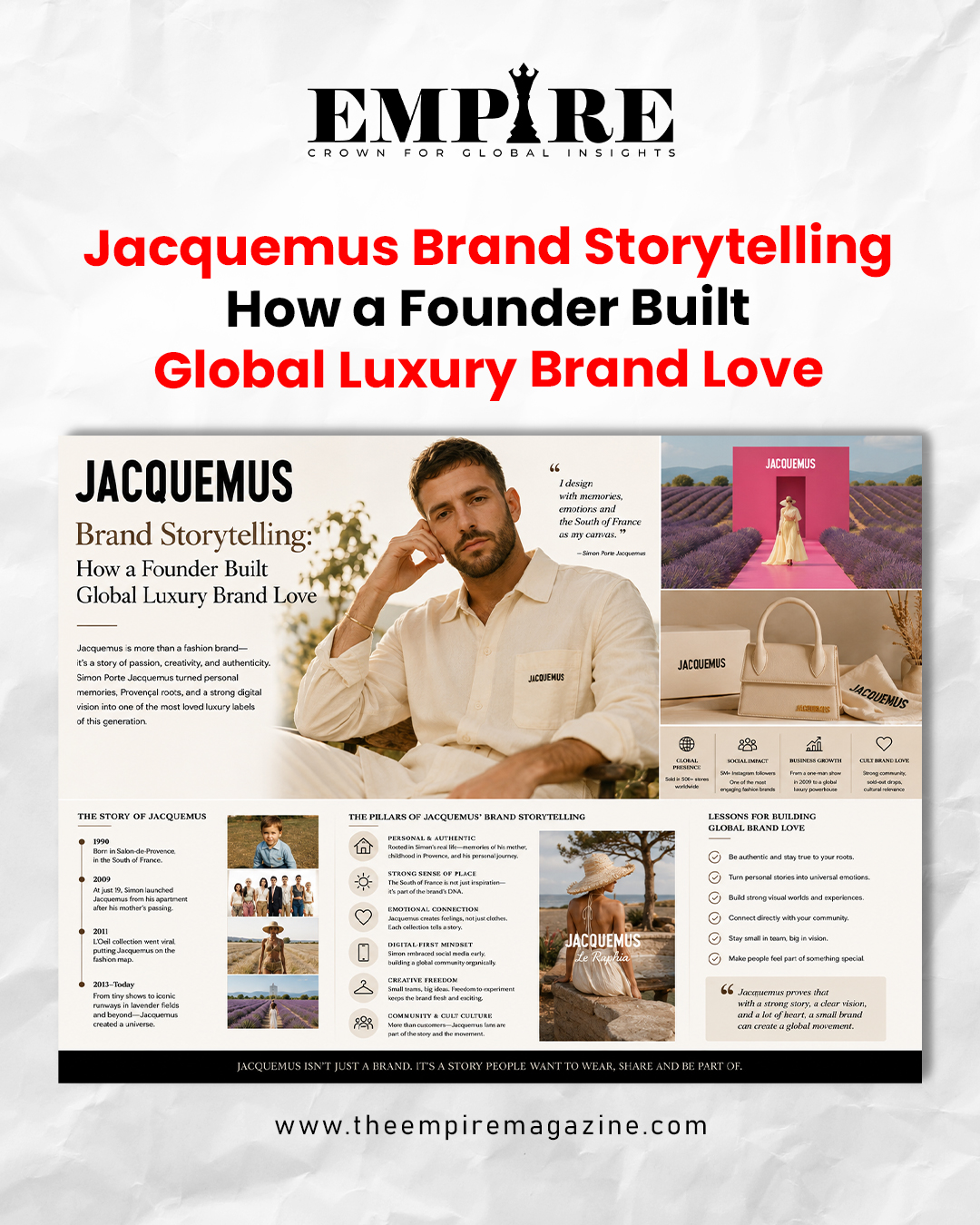
Jacquemus Brand Storytelling has become one of the most powerful examples of how a founder-led fashion house can build emotional value in modern luxury. Founded in Paris in 2009 by Simon Porte Jacquemus, the brand grew from a young independent label into one of the most recognizable names in contemporary fashion. Its rise did not happen only because of clothing, bags, runway shows, or celebrity dressing. It happened because Jacquemus created a world people wanted to enter.
The brand is named after Simon Porte Jacquemus’s late mother, using her maiden name. That personal origin is central to the emotional power of the house. From the beginning, Jacquemus was not presented as a cold luxury label. It felt intimate, sunny, human, and connected to memory. The designer’s South of France roots, love of family, Mediterranean light, rural landscapes, simple beauty, and playful proportion all became part of the brand language.
In a luxury market often dominated by large groups and heritage houses, Jacquemus built a different kind of desire. It used founder-led storytelling, social media, cinematic runway locations, strong visual identity, and accessible emotional codes to create brand love.
Jacquemus Brand Storytelling and the Power of a Personal Founder
Jacquemus Brand Storytelling works because the founder is not hidden behind the brand. Simon Porte Jacquemus is central to the story. His personality, memories, references, family history, and visual taste are closely connected to the products and campaigns.
Many luxury brands are built around heritage. Jacquemus is younger, so it had to create emotional value in a different way. Instead of relying on a century-old archive, the brand turned the founder’s personal world into a living archive. Provence, sun, blue skies, white shirts, stripes, oversized hats, tiny bags, wheat fields, beaches, family photographs, and intimate moments became part of the brand’s identity.
This founder-led approach makes the brand feel direct and personal. Customers do not only see a fashion house. They see the world of Simon Porte Jacquemus. That connection creates loyalty because people feel they are following a story, not only buying seasonal products.
Why Founder-Led Storytelling Builds Brand Love
Founder-led storytelling builds brand love because it gives a brand a human face. In modern luxury, consumers want more than beautiful products. They want meaning, personality, authenticity, and emotional connection.
Jacquemus understands this very well. The brand’s communication often feels like a diary, a postcard, or a memory rather than a standard advertising campaign. This makes the brand feel warm and approachable while still maintaining luxury desirability.
Simon Porte Jacquemus has used social media as a storytelling tool rather than only a sales channel. His Instagram presence often blends personal life, brand imagery, campaign visuals, family references, behind-the-scenes moments, and runway announcements. This gives followers the feeling that they are part of the brand journey.
The South of France as a Brand World
The South of France is one of the strongest parts of the Jacquemus identity. The brand often uses Mediterranean colors, rural landscapes, sunlit imagery, and relaxed sensuality to create a recognizable world.
This matters because luxury brands need strong visual codes. Chanel has tweed and camellias. Hermès has equestrian craft. Louis Vuitton has travel. Jacquemus has the sun, Provence, playful minimalism, and emotional simplicity.
Runway shows have helped turn this world into global fashion moments. Jacquemus has staged memorable shows in locations such as lavender fields, wheat fields, beaches, and the Villa Malaparte in Capri. These settings are not random. They make the clothes part of a larger dream.
How Social Media Changed Jacquemus
Jacquemus became one of the strongest fashion examples of social media-native luxury. The brand grew in a period when Instagram became central to fashion discovery. Instead of treating social media as a side activity, Jacquemus made it part of the brand’s core identity.
The brand’s visual language works well online because it is simple, bold, colorful, and emotional. A tiny handbag, a giant straw hat, a pink runway through a lavender field, or a sunlit campaign can be understood instantly on a phone screen.
This helped Jacquemus compete with much larger luxury houses. While bigger brands had larger advertising budgets, Jacquemus created images that people naturally wanted to share. Its strength was not only media spending. It was visual clarity.
The Viral Power of Le Chiquito
Le Chiquito is one of the most important products in the Jacquemus story. The tiny top-handle bag became a viral symbol of the brand’s playful approach to luxury. It was small, sculptural, humorous, and instantly recognizable.
The bag showed that modern luxury value can come from emotion and conversation. Le Chiquito was not only practical. It was memorable. It created a reaction. People photographed it, discussed it, shared it, and recognized it immediately.
This is what strong brand storytelling does. It turns a product into a cultural object. Le Chiquito helped Jacquemus become known beyond traditional fashion circles and gave the brand an accessory icon that supported commercial growth.
Runway Shows as Emotional Marketing
Jacquemus runway shows are often designed as cinematic experiences. They are not only presentations of clothes. They are visual stories that connect landscape, music, movement, color, and emotion.
The 10th anniversary show in a lavender field in Provence became one of the brand’s most memorable moments. The long pink runway cutting through the purple landscape created an image that spread widely across fashion media and social platforms. It captured the brand’s mood perfectly: romantic, simple, sunny, and unforgettable.
These shows prove that luxury marketing does not always need heavy messaging. Sometimes one strong image can communicate a brand better than a long campaign. Jacquemus understands the power of visual memory.
Product Design and Emotional Simplicity
Jacquemus products often use simple shapes, strong proportions, and playful details. The brand’s clothing can feel sensual without being overly complicated. Its accessories can be minimal but still surprising.
This balance is important. Modern consumers often respond to products that are easy to recognize and easy to style. Jacquemus offers pieces that can feel special without becoming too formal or distant.
The brand’s bags, hats, dresses, shirts, and knitwear often carry a sense of summer, intimacy, and freedom. That emotional tone helps the products feel connected to the larger story.
Luxury That Feels Approachable
Jacquemus has built a rare position: it feels aspirational but not cold. Many luxury brands create distance through exclusivity. Jacquemus creates desire through warmth.
This does not mean the brand is mass-market. It still operates in the luxury and premium fashion space. But its storytelling makes the brand feel emotionally accessible. Followers can connect with the mood even if they do not own every product.
This is powerful for brand love. People may first become fans of the world, then later become customers. The emotional relationship starts before the purchase.
Retail Expansion and Beauty Ambitions
Jacquemus has also moved from digital attention into physical retail expansion. The brand opened its first store on Avenue Montaigne in Paris in 2022, then expanded with stores in markets such as Dubai, New York’s SoHo, and London’s New Bond Street.
Retail matters because founder-led storytelling must become physical at some point. A store allows customers to enter the brand world in real life. It gives Jacquemus a way to control design, service, atmosphere, and product presentation.
In 2025, L’Oréal announced a minority investment in Jacquemus to support the brand’s retail growth and expansion into beauty. This move is important because beauty can extend the Jacquemus lifestyle beyond fashion. Fragrance, skincare, or cosmetics could allow the brand’s sunny, sensual, Mediterranean identity to reach more consumers.
Why Beauty Fits the Jacquemus World
Beauty is a natural category for Jacquemus because the brand is already emotional and sensory. Its world is built around sun, skin, color, intimacy, and lifestyle. These ideas can translate into fragrance and beauty products more easily than many other categories.
For luxury brands, beauty is also a strong growth category because it allows more consumers to participate in the brand. A handbag or dress may be expensive, but a fragrance or beauty product can act as an entry point.
If Jacquemus enters beauty carefully, it can strengthen the brand world without weakening its fashion identity.
Why Jacquemus Matters in Modern Luxury
Jacquemus matters because it shows that modern luxury can be built through founder emotion, visual storytelling, and community. The brand does not have the long archive of a traditional luxury giant, but it has built a strong emotional archive through images, products, places, and personal memories.
The company’s success also shows the value of independence. Jacquemus remained founder-led while growing into a globally recognized label. This gives the brand a clear voice, which is harder to maintain inside larger corporate structures.
At the same time, the L’Oréal minority investment shows how independent luxury brands may partner with larger groups to support expansion while keeping creative identity.
The Future of Founder-Led Luxury Brands
Jacquemus Brand Storytelling offers a lesson for the wider luxury industry. Consumers are looking for brands that feel human, memorable, and emotionally clear. They want products, but they also want stories that make those products meaningful.
Founder-led brands can have a major advantage when the founder’s world is strong enough to become the brand’s world. Simon Porte Jacquemus has built that connection through consistency, honesty, visual discipline, and emotional storytelling.
In a market filled with logos and campaigns, Jacquemus proves that brand love can come from something simple: a personal story told beautifully, again and again, across clothes, images, runway moments, stores, and culture.
Readers can also explore more luxury and technology insights through this related article: Luxury Meets Technology: How Global Luxury Brands Are Using AI and Digital Experiences.
For more updates from The Empire Magazine, follow us on Facebook and Instagram.
– The Empire Magazine
Crown For Global Insights