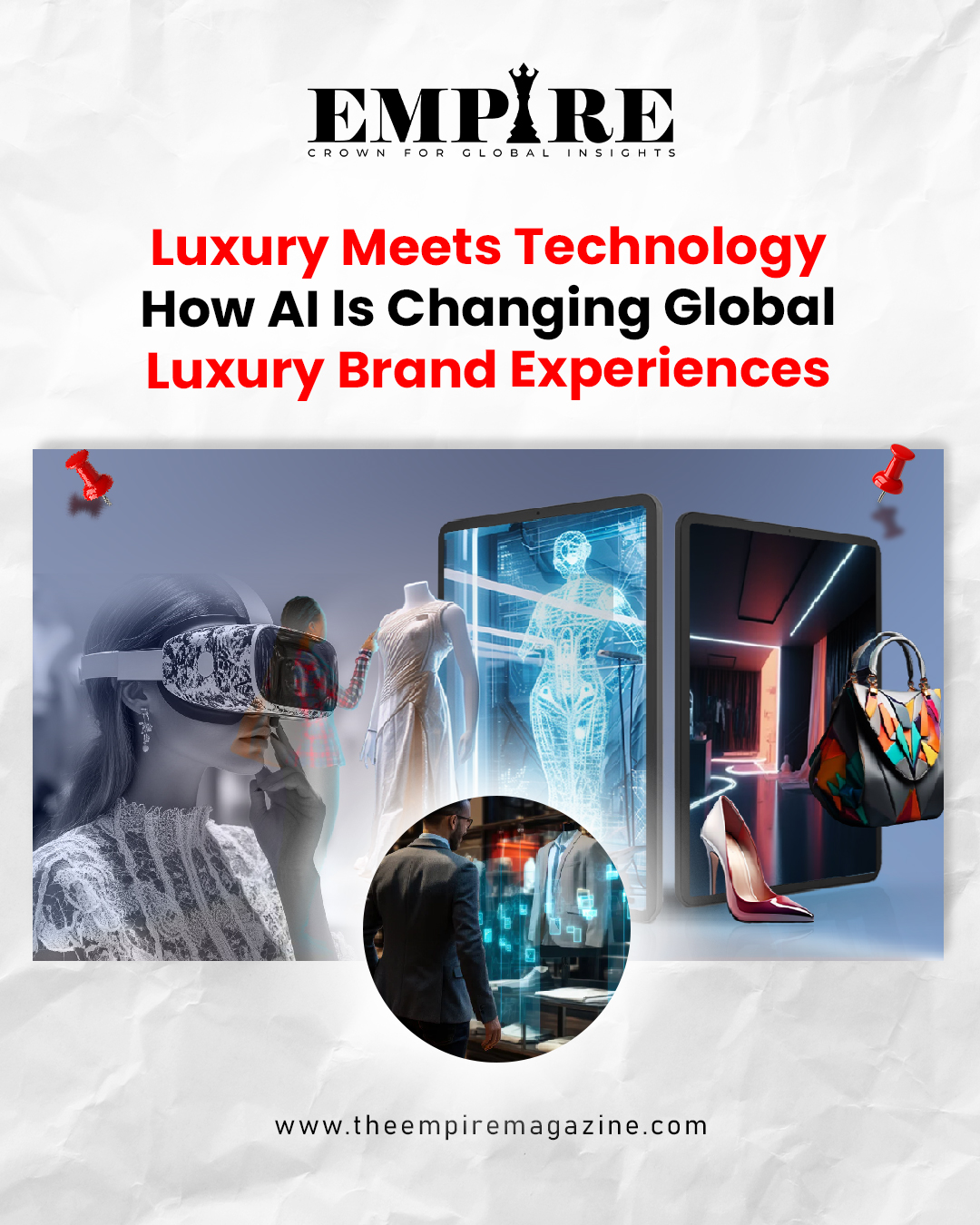
Luxury Meets Technology is becoming one of the most important shifts in the global luxury industry. Luxury brands are no longer relying only on heritage, craftsmanship, boutiques, celebrity campaigns, and runway shows. They are now using artificial intelligence, augmented reality, virtual try-on, data platforms, digital clienteling, immersive e-commerce, and personalized experiences to connect with modern consumers.
The luxury industry has always been built on exclusivity, emotion, quality, and storytelling. Technology does not replace those values. Instead, the smartest luxury brands are using technology quietly in the background to improve service, understand clients better, support store teams, and create digital experiences that still feel premium.
This is especially important because luxury shoppers now move between physical boutiques, websites, apps, social media, private events, and digital communities. A customer may discover a product on Instagram, research it on a brand website, visit a boutique, talk to a client advisor, and complete the purchase later online. Luxury brands need technology that can connect these moments without making the experience feel cold or mass-market.
Luxury Meets Technology in the New Retail Era
Luxury Meets Technology because consumer behavior has changed. Wealthy customers still value private service, craftsmanship, and exclusivity, but they also expect speed, convenience, personalization, and digital access. This creates a challenge for luxury houses: how can they use advanced technology while protecting brand emotion and human service?
Brands such as Louis Vuitton, Dior, Tiffany & Co., Gucci, Burberry, Prada, and other global luxury names have been exploring digital experiences for years. The difference now is that artificial intelligence is making these experiences more personalized and more useful.
AI can help brands analyze customer preferences, predict demand, recommend products, improve inventory planning, support client advisors, create content drafts, and personalize marketing. Augmented reality can help customers try products virtually. 3D technology can support product visualization and digital design. Digital stores can create more interactive shopping journeys.
The goal is not to make luxury feel automated. The goal is to make luxury feel more personal, more seamless, and more connected.
How LVMH Uses AI Behind the Scenes
One of the strongest examples of technology in luxury is LVMH, the group behind brands such as Louis Vuitton, Dior, Fendi, Tiffany & Co., Bulgari, Sephora, and many other maisons. LVMH has worked with Google Cloud to build data and AI capabilities across the group. Google Cloud described this approach as “quiet tech,” meaning technology that improves the luxury experience without becoming the center of attention.
This approach fits luxury well. Customers do not always want to see technology everywhere. They want better service, better recommendations, smoother shopping, and stronger personalization. If technology works properly, it should feel invisible.
For example, Google Cloud has described how AI tools help Tiffany & Co. client advisors understand client tastes, suggest items, and build stronger relationships. This is important because luxury sales often depend on trust between the customer and the advisor. AI can support the advisor by organizing information faster, but the human relationship remains central.
AI Clienteling and Personal Service
Clienteling is a major part of luxury retail. It means building personal relationships with customers through detailed knowledge of their tastes, purchase history, preferences, occasions, and lifestyle. In the past, clienteling depended heavily on the memory and skill of individual sales advisors.
AI can make clienteling more powerful. A client advisor can use data to understand what a customer may like, when they may be interested in a new launch, or which products match their past purchases. This can help the advisor make more thoughtful suggestions.
However, luxury brands must use this carefully. Too much automation can feel intrusive. The best AI clienteling supports human service rather than replacing it. The advisor still provides emotion, judgment, taste, and trust.
Virtual Try-On and Augmented Reality
Virtual try-on is one of the clearest ways luxury brands are using digital experiences. Customers can use smartphones, apps, or web tools to see how sunglasses, makeup, shoes, watches, jewellery, or accessories may look before buying.
This is useful because luxury shopping often depends on visual confidence. A customer buying high-end sunglasses or lipstick wants to know whether the product suits them. Virtual try-on reduces uncertainty and makes online shopping more interactive.
Brands including Dior, Gucci, Prada, Louis Vuitton, Burberry, and Michael Kors have been linked with different forms of augmented reality or virtual try-on experiences across beauty, eyewear, footwear, and accessories. These tools help bring the boutique experience closer to the digital shopper.
Why Virtual Try-On Matters for Luxury
Virtual try-on matters because it combines convenience with emotion. A product page with only photos can feel flat. An AR experience lets the customer participate. It makes the product feel closer and more personal.
For luxury brands, this can increase engagement without discounting the brand. Instead of using price promotions, a brand can use immersive tools to make customers spend more time with products. This supports premium positioning.
Virtual try-on also helps reduce returns. If customers understand fit, color, shape, and style better before purchase, they may make more confident buying decisions. In luxury e-commerce, reducing returns is important because products are expensive, packaging is premium, and customer expectations are high.
Digital Experiences and Brand Storytelling
Luxury brands are using technology not only for sales but also for storytelling. Digital experiences allow brands to explain craftsmanship, heritage, design inspiration, materials, and runway concepts in more interactive ways.
A luxury handbag, watch, gown, or jewellery piece is rarely bought only for function. Customers buy the story behind it. They want to know why it matters, how it was made, what it represents, and how it connects to the brand’s world.
Technology can make that story richer. A brand can use immersive video, 3D product views, virtual showrooms, interactive campaigns, and digital events to bring customers closer to the creative process.
Digital Showrooms and Immersive Commerce
Digital showrooms became more important during the pandemic, when physical travel and in-person fashion appointments were limited. Even after stores reopened, many luxury brands continued investing in digital product presentations.
A digital showroom can help buyers, press, VIP customers, and international clients view collections remotely. It can also support wholesale, private previews, and global launches.
For luxury brands, immersive commerce is not only about replacing stores. It is about extending access. A boutique in Paris, Milan, New York, Dubai, or Tokyo can remain central, while digital experiences help global customers connect with the brand from anywhere.
AI in Design, Forecasting, and Operations
AI is also changing the business side of luxury. Behind the scenes, luxury groups use data tools for demand forecasting, inventory planning, pricing analysis, customer segmentation, and supply chain management.
This is important because luxury brands must balance scarcity and availability. Too much inventory can weaken exclusivity and create pressure for markdowns. Too little inventory can frustrate customers and limit revenue. AI can help brands better understand demand and produce more accurately.
In design and creative operations, AI may help teams explore mood boards, materials, color directions, and visual references. However, luxury brands must be careful not to weaken originality. Creativity remains deeply human, especially in high fashion, jewellery, fragrance, and watchmaking.
The strongest use of AI in luxury is not replacing designers. It is supporting research, planning, and execution while keeping human creativity at the center.
The Role of AI Storefronts
AI storefronts are another emerging trend. Vogue recently reported on companies building AI-powered storefronts that can create more interactive luxury shopping journeys, including conversational search, styling help, virtual try-ons, and checkout support.
This matters because normal e-commerce websites often feel less personal than boutiques. A luxury store has advisors who guide customers, answer questions, and help style products. An AI storefront tries to bring some of that interaction online.
For luxury brands, the challenge is control. A brand must ensure that the AI voice matches its identity. It must also protect customer data and avoid generic recommendations. Luxury customers expect service that feels refined, not automated.
Brand Voice and Digital Trust
Trust is essential in luxury. If a customer is buying a high-value handbag, watch, or jewellery piece, they want confidence in authenticity, privacy, and service. Digital tools must reinforce that trust.
This is why brand-owned AI experiences may become more important than third-party shopping assistants. If a luxury brand controls its own digital environment, it can protect brand language, customer data, and product presentation.
Technology must feel like part of the brand world. A luxury AI assistant should not sound like a generic chatbot. It should reflect the brand’s tone, service standards, and product knowledge.
Luxury, Data, and Privacy
Luxury brands collect valuable customer data, but they must use it responsibly. High-net-worth customers often expect privacy and discretion. They may not want aggressive retargeting, over-personalized messages, or visible tracking.
This makes privacy a major part of luxury technology strategy. Brands must balance personalization with respect. A useful recommendation can feel elegant. Too much data use can feel uncomfortable.
The best luxury technology is subtle. It helps a client advisor remember preferences, suggests meaningful products, and improves service without making the customer feel watched.
Why Digital Experiences Matter for Younger Luxury Consumers
Younger luxury consumers are digital-first. They discover brands through social media, influencers, online campaigns, gaming culture, digital communities, and mobile shopping. They still value physical luxury, but they expect brands to be active in digital spaces.
For Gen Z and millennial luxury shoppers, digital experience can shape brand perception. A weak website, poor mobile journey, or outdated online store can damage a luxury brand’s image. A strong digital experience can make the brand feel modern and desirable.
This is why luxury brands are investing in AR, AI, digital events, virtual experiences, and personalized commerce. These tools help brands stay relevant without abandoning heritage.
How Technology Protects Luxury Value
Luxury Meets Technology because the future of premium branding depends on both emotion and intelligence. Craftsmanship, heritage, and creativity remain essential, but technology helps brands serve customers better and operate smarter.
AI can support client advisors. AR can make online shopping more engaging. Digital showrooms can expand access. Data platforms can improve planning. Immersive storytelling can deepen emotional connection.
The luxury brands that succeed will be those that use technology without losing soul. Technology should not make luxury feel ordinary. It should make the experience more personal, more beautiful, more efficient, and more memorable.
Readers can also explore more space innovation and business insights through this related article: Varda Space: The Startup Building Products in Orbit.
For more updates from The Empire Magazine, follow us on Facebook and Instagram.
– The Empire Magazine
Crown For Global Insights