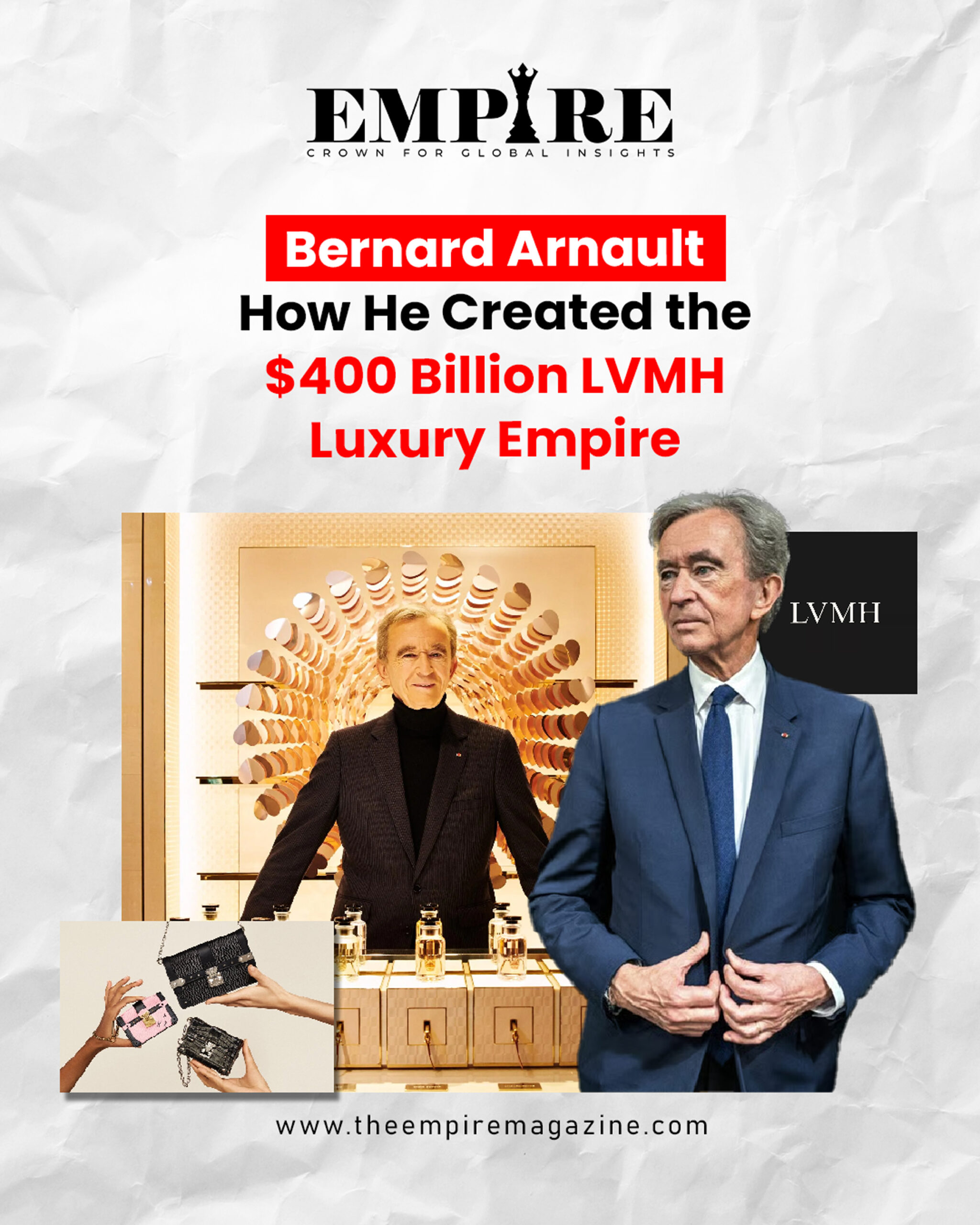
Bernard Arnault is widely regarded as the architect of the world’s largest luxury goods empire. As Chairman and CEO of LVMH Moët Hennessy Louis Vuitton, he has built a $400+ billion empire that dominates the global luxury industry. His remarkable journey from a modest family construction business in France to becoming one of the richest and most powerful people in the world showcases exceptional strategic vision, bold deal-making, and a deep understanding of brand power.
Early Life and Entry into Business
Born on March 5, 1949, in Roubaix, France, Bernard Arnault grew up in a family that ran a construction and civil engineering company called Ferret-Savinel. He graduated from the prestigious École Polytechnique and initially joined his family’s business, where he successfully expanded its real estate division.
However, Arnault’s ambition extended far beyond construction. In 1984, at the age of 35, he made his first major move into the luxury world by acquiring the bankrupt textile company Boussac Saint-Frères, which owned the Christian Dior brand. This acquisition marked the beginning of his legendary career in luxury goods.
The Bold Takeover of LVMH
The defining moment in Bernard Arnault’s journey came in 1989 when he orchestrated a daring takeover of LVMH. At the time, LVMH was a newly formed group resulting from the merger of Louis Vuitton, Moët Hennessy, and other brands, but it was struggling with internal conflicts and financial difficulties.
Arnault quietly acquired a significant stake and eventually gained control of the company. By 1990, he had become Chairman and CEO. Many considered his move risky, but Arnault saw immense untapped potential in the fragmented luxury sector.
Building the LVMH Empire: Strategic Masterstrokes
Bernard Arnault’s strategy for LVMH was clear and disciplined. He focused on three core principles:
- Brand Portfolio Expansion Arnault aggressively acquired iconic luxury houses while preserving their heritage and creativity. Key acquisitions included:
- Louis Vuitton
- Christian Dior
- Givenchy
- Fendi
- Bulgari
- Tiffany & Co. (acquired in 2021 for $15.8 billion)
- Tag Heuer, Hublot, and Zenith in watches
- Creative Freedom with Financial Discipline He gave creative directors artistic independence while maintaining strict financial control and operational efficiency. This balance between creativity and profitability became LVMH’s secret sauce.
- Globalization and Vertical Integration Arnault expanded LVMH aggressively into Asia, the United States, and emerging markets. He also invested heavily in supply chain control, retail stores, and production facilities.
By 2026, LVMH owns over 75 prestigious brands across fashion, watches & jewelry, wines & spirits, perfumes & cosmetics, and selective retailing.
Leadership Style and Business Philosophy
Bernard Arnault is known for his calm demeanor, sharp intellect, and long-term thinking. Key aspects of his leadership include:
- Patient Capital: Willing to invest for decades rather than chasing short-term profits.
- Brand Respect: He believes in protecting the DNA and heritage of each luxury house.
- Talent Management: Attracting and retaining the world’s best designers, such as Marc Jacobs, Nicolas Ghesquière, and Virgil Abloh.
- Digital Transformation: Successfully navigating the shift to e-commerce and digital storytelling while maintaining exclusivity.
Challenges and Resilience
Arnault has faced numerous challenges, including:
- Family succession battles
- Economic crises (2008 financial crisis and COVID-19 pandemic)
- Geopolitical tensions affecting luxury demand in China
- Criticism over luxury pricing and sustainability
Despite these hurdles, LVMH has shown remarkable resilience. During the pandemic, the group adapted quickly by strengthening its digital presence and later achieved record revenues as demand for luxury rebounded.
Current Standing in 2026
As of 2026, LVMH remains the undisputed leader of the global luxury industry with a market capitalization exceeding $400 billion. The group continues to deliver strong growth, particularly in Asia and the United States. Bernard Arnault’s children — Delphine, Antoine, Alexandre, Frédéric, and Jean — hold key positions across the group, ensuring smooth family succession.
Lessons from Bernard Arnault’s Leadership
- Think Long Term: Build institutions that last for generations.
- Balance Creativity and Commerce: Great luxury brands need both artistic excellence and business discipline.
- Acquire Wisely: Focus on timeless brands with strong heritage.
- Global Vision: Understand and adapt to different cultural markets.
- Control Your Destiny: Vertical integration and ownership provide strategic advantages.
Conclusion
Bernard Arnault’s creation of the LVMH luxury empire is a masterclass in strategic business building. He didn’t just acquire brands — he created the world’s most powerful luxury ecosystem. His ability to blend French elegance with global ambition has redefined the luxury industry for the 21st century.
From a small family business to a $400 billion global icon, Arnault’s journey proves that extraordinary success comes from vision, courage, and unwavering focus on excellence.
For more inspiring stories of leadership, technology, and global business, read our detailed coverage here.
Follow The Empire Magazine for more updates on business, startups, technology, and global insights: Instagram | Facebook
– The Empire Magazine
Crown For Global Insights