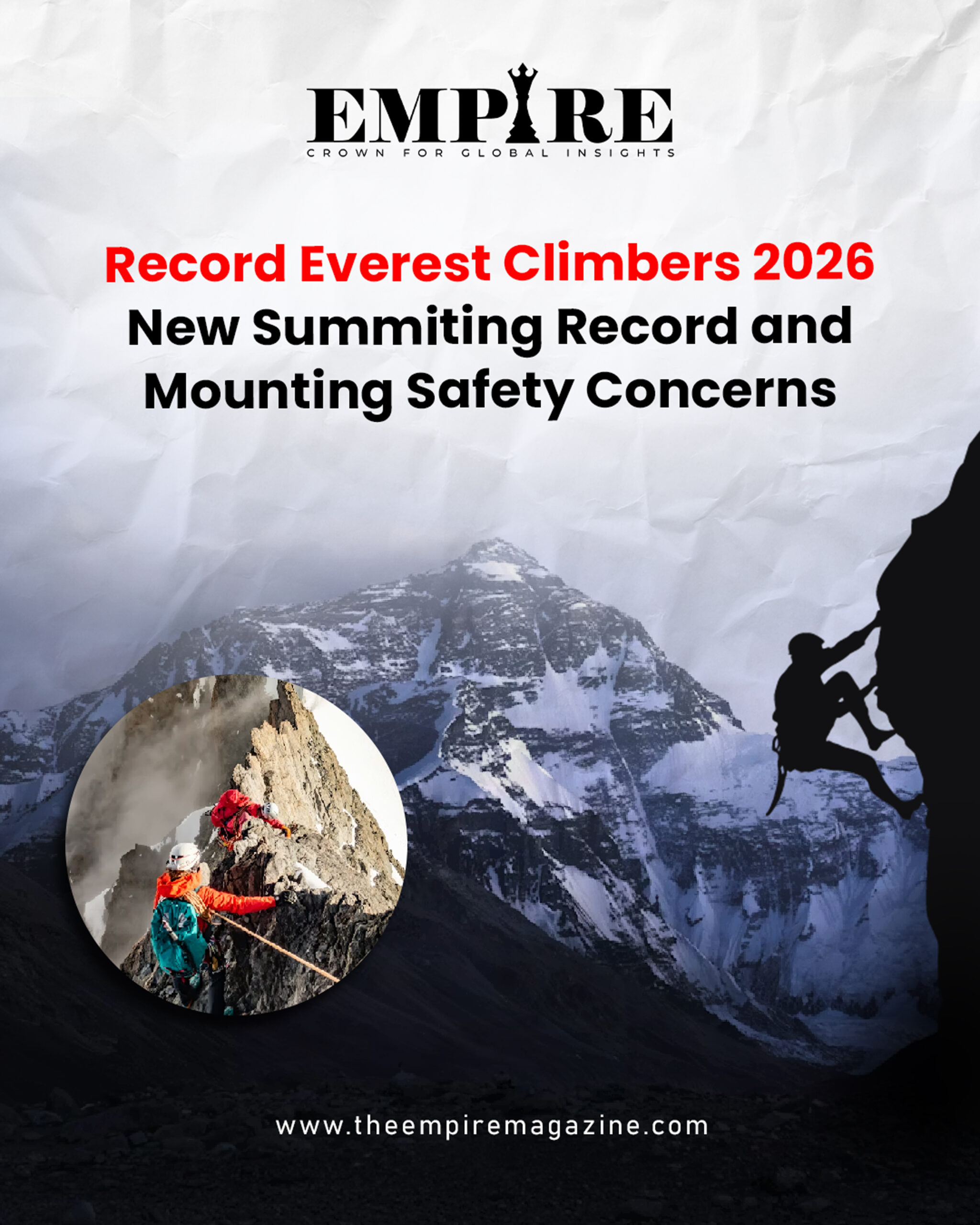
The 2026 Mount Everest climbing season has become one of the most discussed chapters in the mountain’s modern history. With a record number of climbers successfully reaching the summit, the Everest Climbers 2026 season stands out for both extraordinary human achievement and growing safety challenges. As more adventurers head to the world’s highest peak, this season highlights the increasing tension between commercial mountaineering success and the need for responsible practices on Everest.
Historic Summit Achievements in Everest Climbers 2026
The Everest Climbers 2026 season witnessed an unprecedented surge in summit success rates. On May 20, 2026, between 274 and 278 climbers reached the 8,848-meter summit from the Nepali side within a single 24-hour window. This marked the highest single-day summit count ever recorded on the south route, breaking all previous records.
By the end of May 2026, the total number of successful summits had already crossed 600. Experts project that the final tally for the entire season could reach between 850 and 900 climbers. This massive turnout was largely because the northern route from Tibet remained closed, directing nearly all expeditions toward the Nepali side.
A standout moment came from Kami Rita Sherpa, who summited Everest for his 32nd time. His repeated success continues to highlight the critical contribution of experienced Sherpa teams in enabling climbers from across the globe to achieve their dreams. Many repeat summiteers and professional guides also added impressive numbers to their personal records, making the Everest Climbers 2026 season a landmark year filled with mountaineering milestones.
Reasons Behind the Surge in Everest Climbers 2026
Multiple factors drove the record participation during the Everest Climbers 2026 season. Advances in logistics, more reliable weather forecasting tools, and enhanced support services have made the expedition more accessible than ever before. The growing popularity of adventure tourism across Asia has attracted a diverse group of climbers. Rising interest from nations such as India and China has been particularly notable, fueled by an expanding middle class eager for transformative, bucket-list experiences.
Authorities issued a record 492 to 495 climbing permits this season. This high demand not only generates significant revenue for the local economy but also provides vital livelihood opportunities for hundreds of Sherpas and support personnel who are essential to every successful expedition.
Despite these positive developments, the rapid increase in numbers has created visible challenges. The heavy concentration of climbers along one primary route has resulted in crowded conditions, especially in the dangerous Death Zone above 8,000 meters. In this extreme environment, oxygen levels drop dramatically, and even small delays can become life-threatening.
Safety Concerns and Challenges in the Everest Climbers 2026 Season
Although the summit numbers are impressive, the Everest Climbers 2026 season has brought serious safety concerns into focus. At least five climbers lost their lives during the season. Several incidents involved Indian climbers who passed away during descent. One case occurred near the Hillary Step due to sudden illness, while another was linked to exhaustion and cerebral edema triggered by snow blindness and prolonged exposure.
Overcrowding remains the primary issue. Long queues form in narrow, technical sections, forcing climbers to wait in harsh, high-altitude conditions. These delays increase the risks of oxygen depletion, frostbite, hypothermia, and accidental falls. In the Death Zone, every extra hour spent significantly drains both physical energy and limited oxygen supplies.
Experienced mountaineers have raised strong concerns about the pressure placed on Sherpa teams. The tasks of fixing ropes, carrying heavy loads, and conducting emergency rescues become even more demanding when large groups are moving simultaneously. Many believe that issuing a high volume of permits without sufficient controls can turn the mountain into a high-risk environment, particularly for climbers with limited high-altitude experience.
Environmental strain has also intensified. Greater numbers of climbers lead to increased amounts of waste, discarded climbing gear, and human waste left on the slopes. Although new guidelines require teams to carry down additional waste, maintaining consistent enforcement in such remote and difficult terrain remains a major challenge.
The Human Stories and Sherpa Contribution in Everest Climbers 2026
Behind the statistics of Everest Climbers 2026 lie powerful human stories of determination and resilience. Sherpas continue to showcase exceptional courage and skill. They guide clients safely through the treacherous Khumbu Icefall and other steep, technical sections. Their intimate knowledge of the mountain and years of hands-on experience often prove decisive in separating success from tragedy.
For international climbers, standing on the summit often represents years of physical training, financial commitment, and mental preparation. However, the events of the 2026 season serve as a clear reminder that reaching the top requires more than ambition. Proper acclimatization, physical fitness, and deep respect for the mountain’s unpredictable nature are essential.
Broader Implications for the Future of Mountaineering
The Everest Climbers 2026 season has sparked important conversations about the direction of commercial mountaineering. Should there be stricter daily limits on the number of summiteers? Should authorities enforce higher experience requirements or introduce staggered climbing schedules? These topics are gaining momentum as Everest’s popularity continues to rise each year.
There are two sides to this discussion. On one hand, the record numbers celebrate human ambition and bring substantial economic benefits to local communities in Nepal. On the other hand, the tragedies and bottlenecks emphasize the urgent need for sustainable practices that place safety and environmental protection above sheer volume.
Many experts suggest that a balanced approach — including better screening of climbers, improved regulations, and continued investment in mountain infrastructure — could help maintain Everest’s prestige while allowing future generations to safely pursue their dreams.
Looking Forward After Everest Climbers 2026
As the 2026 season draws to a close, Mount Everest once again proves it is both an inspiring symbol of human potential and a powerful teacher of humility and caution. The record summits achieved this year will motivate countless future adventurers. At the same time, the safety concerns that emerged must be carefully addressed to prevent unnecessary loss of life.
The experiences and lessons from Everest Climbers 2026 are expected to shape how upcoming seasons are planned and managed. Finding the right balance between accessibility and responsibility will be key to preserving the mountain’s integrity for years to come.
For more inspiring stories of human endurance and high-stakes achievement, read our detailed coverage here.
Follow The Empire Magazine for more updates on business, startups, and market analysis: Instagram | Facebook
– The Empire Magazine
Crown For Global Insights