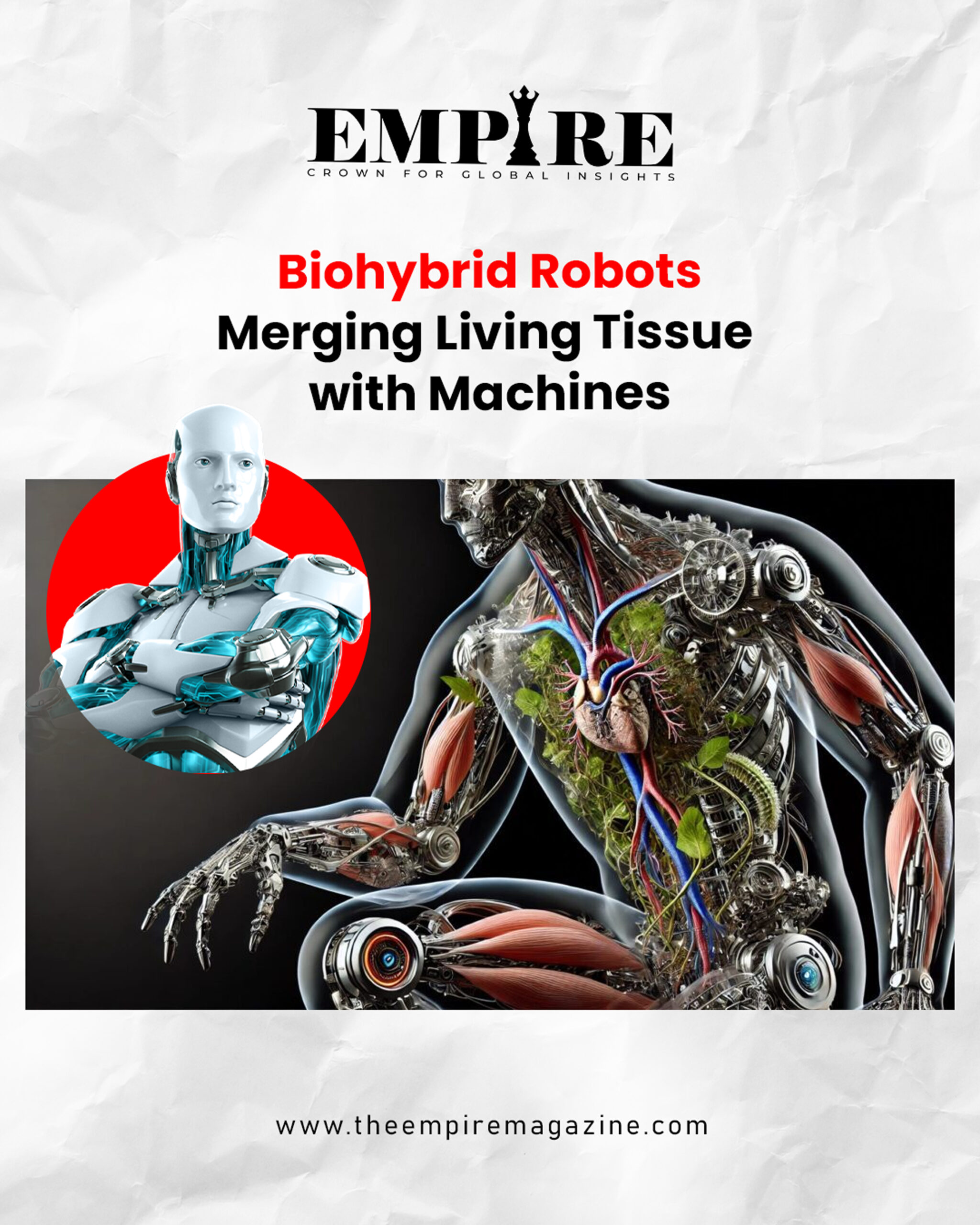
Biohybrid Robots represent one of the most groundbreaking frontiers in robotics and biotechnology. By combining living biological tissue with artificial mechanical systems, scientists are creating a new class of robots that possess the adaptability, self-healing capabilities, and energy efficiency of living organisms while maintaining the precision and durability of machines.
What Are Biohybrid Robots?
Biohybrid robots are advanced systems that integrate living cells, tissues, or organisms with synthetic robotic components. Unlike traditional robots made entirely of metal and electronics, biohybrid robots use biological materials such as muscle cells, heart cells, neurons, or even plant tissues to power movement, sensing, and decision-making.
This fusion creates machines that can grow, repair themselves, respond to environmental stimuli, and operate with remarkable energy efficiency — qualities that conventional robots struggle to achieve.
How Biohybrid Robots Work
The core idea behind biohybrid robots is to harness the natural abilities of living cells. For example:
- Muscle-powered bio-bots use living muscle tissue to generate movement, similar to how animals move.
- Neural-controlled systems integrate brain cells or neural networks to process information and make decisions.
- Plant-based hybrids use plant cells for natural sensing and energy generation through photosynthesis.
These living components are grown on 3D-printed scaffolds or flexible robotic frames. Scientists use electrical or optical stimulation to control the biological parts, creating a seamless interface between biology and machinery.
Major Breakthroughs in 2026
In 2026, the field of biohybrid robotics has seen significant progress:
- Researchers have developed biohybrid robots that can swim, walk, and crawl using real muscle tissue.
- Some advanced versions can self-heal when damaged and even adapt their behavior based on experience.
- Scientists at leading institutions have created miniature bio-bots using human heart cells that can continuously pump fluid for weeks.
- Hybrid systems combining insect antennae or plant roots with robotic platforms are being tested for environmental monitoring and search-and-rescue operations.
One of the most notable developments is the integration of living neural tissue with electronic circuits, allowing biohybrid robots to learn simple tasks and improve performance over time.
Key Applications of Biohybrid Robots
1. Healthcare and Medicine Biohybrid robots show immense potential in targeted drug delivery, minimally invasive surgery, and regenerative medicine. Tiny bio-bots could navigate inside the human body to deliver medicine directly to diseased cells or assist in tissue repair.
2. Environmental Monitoring These robots can be deployed in oceans, forests, or polluted areas where traditional machines struggle. Their biological components allow them to sense environmental changes more naturally and operate for longer periods with minimal energy input.
3. Search and Rescue Biohybrid systems could be used in disaster zones, combining the strength of machines with the adaptability of living tissues to navigate complex rubble or hazardous environments.
4. Agriculture and Exploration Plant-animal hybrid robots could monitor crop health or explore extreme environments like deep oceans and other planets where traditional power sources are limited.
5. Defense and Security Quiet, self-sustaining biohybrid systems could offer new capabilities for surveillance and reconnaissance.
Advantages of Biohybrid Robots
- Self-Healing: Biological tissues can repair themselves naturally.
- Energy Efficiency: Living cells convert energy more efficiently than most mechanical systems.
- Adaptability: They can respond and adapt to changing environments.
- Biocompatibility: Ideal for medical applications inside the human body.
- Sustainability: Reduced reliance on rare metals and toxic batteries.
Challenges and Ethical Concerns
Despite their promise, biohybrid robots face several hurdles:
- Short Lifespan: Living tissues have limited durability compared to synthetic materials.
- Control Complexity: Integrating biological and mechanical systems requires highly sophisticated interfaces.
- Scalability: Mass production remains difficult and expensive.
- Ethical Issues: The use of living tissues, especially animal or human cells, raises serious ethical and moral questions.
- Safety Risks: Ensuring biological components do not behave unpredictably is a major challenge.
Regulatory frameworks for biohybrid systems are still in early stages, and public acceptance will depend heavily on how transparently these technologies are developed.
The Future of Biohybrid Robotics
By the early 2030s, experts predict biohybrid robots will move from laboratories into real-world applications. The convergence of synthetic biology, advanced materials science, and artificial intelligence will accelerate this progress.
For countries like India, biohybrid technology offers exciting opportunities in healthcare, agriculture, and environmental conservation. With strong biotechnology and engineering talent, India could become a significant player in this emerging field.
The development of biohybrid robots marks a fundamental shift in how we think about machines — moving from purely mechanical creations to living, evolving systems that blur the line between biology and technology.
For more insights on cutting-edge robotics and biotechnology, read our detailed coverage here: Biohybrid Robots
Follow The Empire Magazine for more updates on future technologies, innovation, and scientific breakthroughs:
– The Empire Magazine
Crown For Global Insights