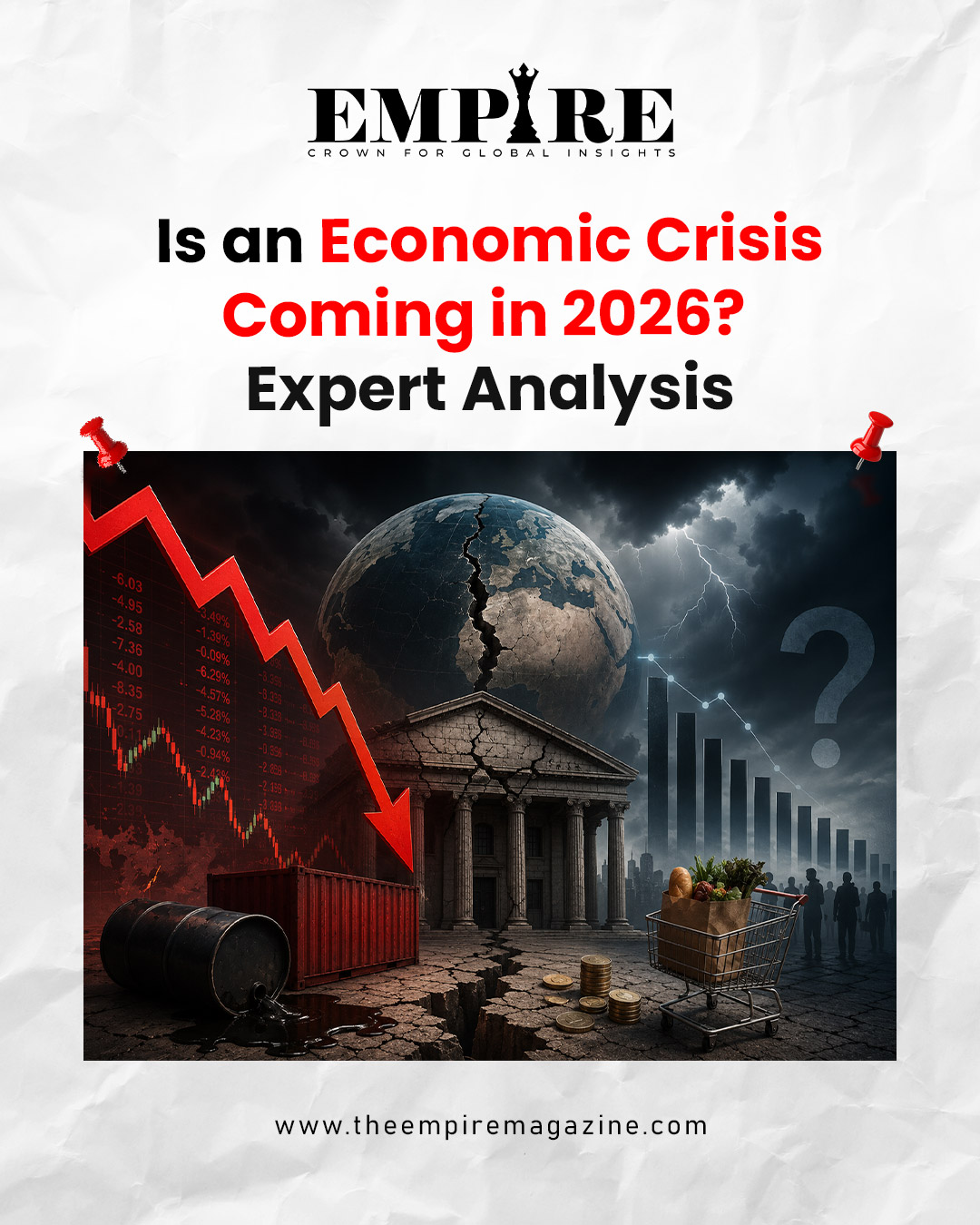
The global economy in 2026 is expected to navigate slower growth, geopolitical uncertainty, evolving trade policies, rapid AI adoption, and changing consumer behaviour. While experts are not predicting a certain global recession, businesses and investors should focus on resilience, diversification, technology, and long-term planning to manage economic uncertainty effectively.
Why Businesses and Investors Should Watch 2026 More Closely Than Ever
The global economy has entered a period where uncertainty has become the new normal. Over the past few years, businesses have adapted to inflation, rising interest rates, supply chain disruptions, geopolitical conflicts, and rapid technological change. As 2026 unfolds, the focus is shifting from recovery to resilience.
Although economists are not forecasting a guaranteed global economic crisis, many leading institutions caution that the world economy is becoming more vulnerable to external shocks. Growth is expected to continue, but at a slower pace, while inflation, public debt, energy prices, and geopolitical tensions remain key concerns. At the same time, artificial intelligence (AI), digital transformation, and infrastructure investments are creating new growth opportunities that could reshape industries across the globe.
For businesses and investors, success in 2026 will depend less on predicting the future and more on preparing for multiple possibilities. Understanding the major economic trends can help organisations make smarter decisions and build resilience in an unpredictable environment.
Economic Growth May Continue, But Businesses Should Prepare for Slower Momentum
After several years of recovery following global disruptions, many economies are entering a phase of moderate growth. International organisations such as the IMF and OECD expect the global economy to continue expanding, but they also warn that downside risks remain elevated due to geopolitical uncertainty, energy markets, and financial vulnerabilities.
For businesses, slower growth does not necessarily mean declining opportunities. Instead, it often results in more cautious consumer spending, longer purchasing cycles, and greater competition.
Companies that maintain strong cash flows, improve operational efficiency, and diversify revenue streams are generally better positioned during periods of slower economic expansion.
Investors should also remember that market performance does not always move in line with economic growth. Even during slower economic periods, sectors driven by innovation, healthcare, technology, renewable energy, and digital services may continue to outperform broader markets.
Inflation and Interest Rates Will Continue Influencing Business Decisions
Inflation remains one of the most closely watched economic indicators. Although price pressures have eased in many regions compared to previous years, economists warn that inflation could remain volatile due to energy prices, supply chain disruptions, labour shortages, and geopolitical events. Central banks are therefore expected to remain cautious when adjusting monetary policy.
For businesses, borrowing costs remain an important consideration. Companies planning expansion, hiring, or large capital investments should closely monitor interest-rate movements because financing costs can directly affect profitability.
Consumers also tend to become more selective when borrowing becomes expensive. This can influence demand across sectors such as automobiles, housing, consumer electronics, and discretionary retail. Businesses that focus on productivity improvements rather than relying solely on expansion may find themselves in a stronger competitive position.
Artificial Intelligence Could Become the Biggest Competitive Advantage
Few technologies have transformed business discussions as rapidly as artificial intelligence. In 2026, AI is no longer viewed simply as an emerging technology. It is increasingly becoming a core business tool that helps organisations automate repetitive tasks, improve customer service, analyse data, optimise supply chains, and enhance productivity.
Companies across manufacturing, healthcare, banking, education, logistics, retail, and professional services are investing heavily in AI-powered solutions. However, AI also presents new challenges.
Businesses must prepare for evolving regulations surrounding data privacy, ethical AI usage, cybersecurity, and workforce transformation. Organisations that invest in employee training while adopting AI responsibly are likely to gain a long-term competitive advantage.
For investors, AI continues to create opportunities, but experts also caution against excessive speculation and inflated valuations. Sustainable businesses with strong fundamentals are likely to remain more resilient than companies driven purely by market hype.
Geopolitical Risks Could Influence Markets More Than Expected
Geopolitical developments are becoming increasingly important in shaping global economic conditions. Conflicts, trade disputes, sanctions, energy security concerns, and diplomatic tensions can quickly influence commodity prices, financial markets, and investor confidence.
Recent events have shown how disruptions in energy-producing regions can affect global oil prices, transportation costs, and inflation across multiple economies. These ripple effects often extend far beyond the countries directly involved.
Businesses with diversified suppliers, regional manufacturing capabilities, and flexible logistics networks are generally better equipped to handle unexpected disruptions. Investors should also pay attention to industries directly influenced by geopolitical developments, including energy, defence, commodities, shipping, and cybersecurity.
Supply Chain Resilience Will Remain a Business Priority
The disruptions experienced over recent years have permanently changed how companies think about supply chains.
Instead of relying heavily on a single supplier or manufacturing region, businesses are increasingly adopting diversified sourcing strategies, regional production hubs, and digital supply chain management systems.
This shift is expected to continue throughout 2026. Companies investing in supply chain visibility, automation, inventory management, and risk planning are likely to recover faster from unexpected disruptions. For investors, firms with resilient supply chains often demonstrate greater operational stability during uncertain economic periods.
Consumer Behaviour Is Changing Faster Than Many Businesses Realise
One of the biggest lessons from recent years is that consumer preferences can shift rapidly. Economic uncertainty often encourages households to prioritise essential spending while becoming more cautious about discretionary purchases.
At the same time, consumers increasingly expect convenience, digital experiences, personalised services, and faster customer support. Businesses that understand these changing expectations are more likely to retain customer loyalty.
Subscription models, digital platforms, omnichannel retail, personalised marketing, and AI-powered customer engagement are becoming increasingly important competitive advantages.
Companies that continue investing in customer experience even during uncertain periods often emerge stronger when economic conditions improve.
Financial Discipline Could Separate Strong Businesses from Weak Ones
Periods of economic uncertainty often reward disciplined organisations. Businesses with healthy balance sheets, manageable debt levels, diversified revenue, and strong cash reserves generally have greater flexibility to navigate market volatility.
Rather than pursuing aggressive expansion, many successful organisations are prioritising operational efficiency, digital transformation, workforce development, and strategic partnerships.
Similarly, investors are increasingly focusing on companies with sustainable earnings, strong governance, and long-term growth potential rather than short-term market momentum. Maintaining financial flexibility allows businesses to respond more effectively to changing market conditions and unexpected opportunities.
Emerging Markets Continue to Offer Long-Term Opportunities
While developed economies face slower growth, many emerging markets continue to attract investor interest due to favourable demographics, expanding middle-class populations, digital adoption, and infrastructure investment.
Countries such as India remain well positioned because of their large domestic markets, growing startup ecosystems, digital public infrastructure, and increasing technology adoption.
Although emerging markets may experience periods of volatility, many analysts believe their long-term growth potential remains attractive for businesses seeking expansion and investors looking for diversification.
Understanding regional economic trends rather than relying solely on global headlines can help organisations identify new opportunities.
Resilience, Not Fear, Should Shape Business and Investment Decisions
The biggest takeaway for 2026 is that uncertainty does not automatically translate into crisis.
Economic cycles naturally include periods of slower growth, changing market conditions, and evolving business priorities. History shows that organisations capable of adapting quickly often emerge stronger than those waiting for certainty before making decisions.
Rather than reacting emotionally to every market headline, businesses should focus on strengthening operational resilience, investing in technology, managing risks proactively, and maintaining financial discipline.
For investors, diversification, patience, and long-term thinking remain among the most effective strategies during periods of uncertainty. While the global economy faces genuine challenges from inflation and public debt to geopolitical tensions and technological disruption it also presents significant opportunities driven by innovation, digital transformation, and productivity gains. Major institutions continue to see growth, albeit with heightened risks rather than an inevitable global recession.
The businesses and investors who succeed in 2026 are unlikely to be those who perfectly predict the future. Instead, they will be the ones who remain informed, embrace change, manage risk wisely, and adapt their strategies as the economic landscape continues to evolve.
For more insights, navigate on The Empire Magazine
Previous article: Kunal Shah Becomes WhatsApp Global Head: The Strategy Behind Meta’s Decision
Magazine Feautures | Podcasts: Empire Global Talks
Follow The Empire Magazine on Facebook | Instagram | LinkedIn
The Empire Magazine | Crown for Global Insights