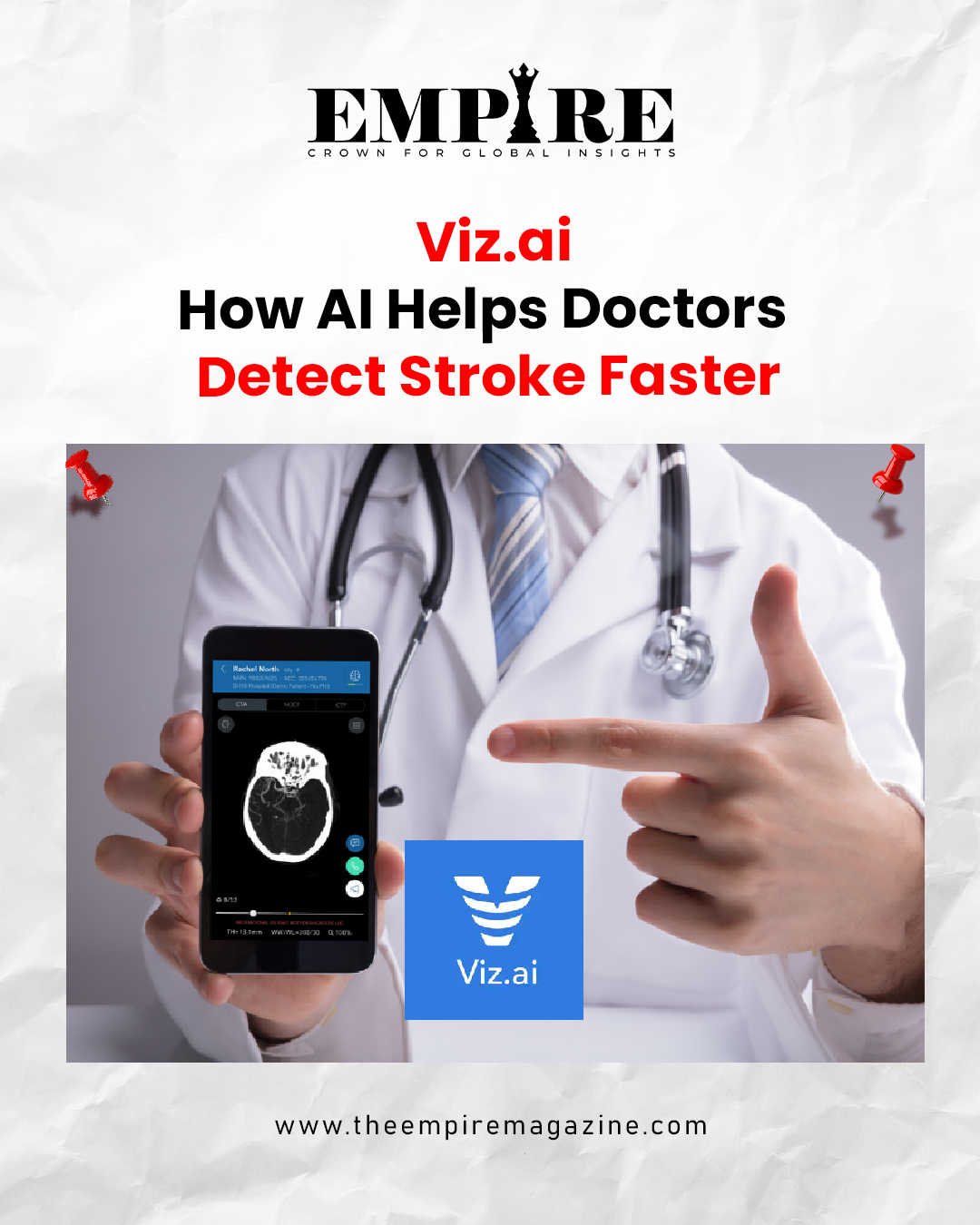
Viz.ai is a healthcare technology company using artificial intelligence to help hospitals detect and coordinate care for time-sensitive diseases, especially stroke. The company is best known for its AI-powered stroke platform, which helps identify suspected large vessel occlusion strokes from brain imaging and alerts specialist teams so treatment decisions can happen faster.
Stroke care is one of the most urgent areas in medicine. When a person has an ischemic stroke, blood flow to part of the brain is blocked. In some severe cases, the blockage happens in a large blood vessel, known as a large vessel occlusion, or LVO. These cases can require fast specialist evaluation and, in eligible patients, a procedure called mechanical thrombectomy to remove the clot.
Viz.ai became important because it focuses not only on image detection but also on care coordination. In stroke care, speed matters at every step: scanning, diagnosis, specialist notification, transfer decisions, and treatment. A delay of even minutes can affect brain tissue and patient outcomes. Viz.ai’s platform is designed to reduce delays by connecting the right medical teams with the right information as quickly as possible.
Viz.ai and the Need for Faster Stroke Detection
Stroke is a medical emergency, and hospitals must act quickly when a patient arrives with symptoms such as face drooping, arm weakness, speech difficulty, vision changes, severe dizziness, or sudden confusion. Doctors often use CT or CT angiography imaging to understand whether there is bleeding, blockage, or another brain-related emergency.
In large vessel occlusion strokes, fast identification is especially important because patients may need advanced treatment at a comprehensive stroke center. Not every hospital has the same stroke-treatment capabilities. Some hospitals can perform thrombectomy, while others may need to transfer the patient to a specialized center.
This is where Viz.ai’s technology can support the workflow. Its stroke platform analyzes imaging and alerts appropriate specialists when suspected LVO findings are detected. The goal is not to replace doctors, but to support faster communication and decision-making between emergency teams, radiologists, neurologists, and interventional specialists.
How Viz.ai Works in Stroke Care
Viz.ai’s stroke solution uses artificial intelligence to analyze CT angiography images for signs of suspected large vessel occlusion. When the system identifies a possible LVO, it can send alerts to stroke specialists through a secure mobile and desktop workflow.
This type of tool is known as computer-aided triage and notification software. It helps prioritize urgent cases so that specialists can review imaging quickly. In a stroke network, this can be especially useful when a patient is first seen at a smaller hospital and may need transfer to a larger stroke center.
The platform is also designed to fit into hospital systems, including radiology workflows, electronic health records, and care-team communication processes. This is important because a healthcare tool must work inside real clinical environments. Hospitals need technology that connects with existing systems rather than creating extra steps.
FDA Clearance and Clinical Use
Viz.ai received important regulatory recognition in 2018 when the U.S. Food and Drug Administration permitted marketing of its Viz.AI Contact application. The FDA described the tool as software designed to analyze brain CT images and send a text notification to a neurovascular specialist if a suspected large vessel blockage is identified.
This was a major moment for AI in medicine because it showed how artificial intelligence could be used for triage in a time-sensitive clinical setting. Since then, Viz.ai has expanded its platform beyond the original stroke workflow and has built additional solutions in neurovascular, cardiovascular, and other disease areas.
For stroke care, the company’s Viz LVO solution remains one of its most recognized products. It focuses on suspected large vessel occlusion detection and care-team notification, helping hospitals coordinate faster review and treatment planning.
Why Speed Matters in Stroke Treatment
The phrase “time is brain” is commonly used in stroke care because brain cells can be damaged quickly when blood flow is blocked. The faster a stroke team can identify the problem and begin the right treatment, the better the chance of reducing disability.
Large vessel occlusion strokes are among the most serious ischemic strokes. Eligible patients may benefit from mechanical thrombectomy, but timing, imaging, patient condition, and specialist availability all matter. If the patient is at a hospital that cannot perform thrombectomy, transfer time becomes a critical part of care.
Viz.ai’s platform is designed to reduce communication delays. Instead of waiting for multiple phone calls, manual image review steps, or slower transfer coordination, stroke teams can receive alerts and access imaging faster. This can help teams decide whether a patient should stay at the current hospital or move quickly to a thrombectomy-capable center.
Transfer Workflow and Hospital Networks
Stroke care often depends on hub-and-spoke hospital networks. A smaller hospital, called a spoke, may first receive the patient. A larger comprehensive stroke center, called a hub, may provide advanced procedures such as thrombectomy.
In these networks, communication is essential. The spoke hospital must identify the emergency, the specialist team must review the imaging, and transfer must be arranged when needed. Any delay in this chain can affect treatment time.
Viz.ai’s care coordination model helps connect teams across hospitals. By sharing imaging alerts and patient information faster, the platform can support better coordination between emergency departments, neurologists, radiologists, and interventional teams.
Real-World Evidence Behind Viz.ai
Viz.ai has been studied in real-world stroke workflows. Several studies have examined whether AI-assisted LVO detection and notification can reduce treatment delays, transfer times, and workflow inefficiencies.
Research has shown that AI-based care coordination platforms can help expedite contact with neurointerventional specialists and improve stroke workflow metrics. Some studies have reported reductions in door-in-door-out time, which measures how long it takes for a patient to be evaluated, coordinated, and transferred from one hospital to another.
Viz.ai has also reported clinical data showing reductions in interfacility transfer time for patients with large vessel occlusion stroke. These workflow improvements are important because stroke treatment depends on fast movement from imaging to specialist decision-making and, when appropriate, intervention.
It is also important to understand that AI tools are not a guarantee of better outcomes in every case. Stroke care is complex, and outcomes depend on many factors, including stroke severity, time of arrival, imaging findings, patient health, treatment eligibility, and hospital systems. However, faster detection and care coordination can improve the process of getting patients to the right team sooner.
The Broader Viz.ai Platform
Although Viz.ai is widely known for stroke, the company has expanded into a broader AI-powered care coordination platform. Its Viz.ai One platform is designed to help multidisciplinary care teams coordinate across mobile, desktop, and radiology workflows.
The company’s broader solutions include neurovascular care, cardiovascular care, and other disease-detection workflows. Viz.ai has also received FDA clearances for different clinical algorithms, including tools related to aneurysm detection, intracerebral hemorrhage quantification, and subdural hemorrhage workflows.
This expansion shows that Viz.ai is not only a stroke-detection company. It is building a broader healthcare platform around time-sensitive disease detection and care coordination. The same basic problem exists in many medical conditions: patients need the right specialist quickly, and delays can affect care quality.
Why Hospitals Use AI Workflow Tools
Hospitals use AI workflow tools because healthcare teams are often overloaded with information. Emergency departments, radiology teams, and specialists manage many urgent cases at the same time. A tool that flags possible critical findings can help prioritize cases that need fast attention.
In stroke care, this can be especially valuable during nights, weekends, or busy hospital periods. AI alerts can help make sure suspected LVO cases are reviewed quickly by the correct specialist team.
However, AI tools must be used responsibly. They should support trained clinicians, not replace them. Doctors remain responsible for diagnosis, treatment decisions, patient communication, and clinical judgment. Viz.ai’s role is to help surface information faster and improve coordination around urgent cases.
Viz.ai and the Future of Stroke Care
Viz.ai represents a broader shift in healthcare technology. Hospitals are moving from simple digital records toward systems that can actively support faster decision-making. In time-sensitive medicine, AI can be useful when it helps reduce delays, improve communication, and organize patient care across teams.
For stroke patients, the benefit of faster detection can be meaningful. A quicker alert can bring specialists into the case earlier. Faster coordination can help determine whether transfer is needed. Better workflow can support treatment decisions during the critical early window of care.
The future of stroke care will likely involve a mix of advanced imaging, specialist networks, emergency medical services, telemedicine, and AI-powered care coordination. Viz.ai is one of the companies helping shape this direction by showing how artificial intelligence can support real hospital workflows.
Readers can also explore more technology and innovation insights through this related article: Anduril: How Defense Tech Became a Startup Category.
For more updates from The Empire Magazine, follow us on Facebook and Instagram.
– The Empire Magazine
Crown For Global Insights