Van Cleef & Arpels is one of the most respected high jewellery maisons in the world, known for craftsmanship, poetic design, rare gemstones, and technical mastery. Founded in Paris in 1906 by Alfred Van Cleef and his father-in-law Salomon Arpels, the maison built its reputation through exceptional jewellery, watches, nature-inspired creations, and designs connected to romance, movement, and elegance.
Today, Van Cleef & Arpels is part of Richemont, the Swiss luxury group that also owns Cartier, Buccellati, Vhernier, Piaget, Vacheron Constantin, IWC, Jaeger-LeCoultre, and several other luxury maisons. Within Richemont, jewellery has become one of the group’s strongest growth areas, and Van Cleef & Arpels plays an important role alongside Cartier in the group’s high jewellery strength.
Modern luxury is not only about logos or price. It is increasingly about heritage, artistry, authenticity, craftsmanship, storytelling, and emotional value. Van Cleef & Arpels represents this shift clearly because its brand power comes from skilled handwork, recognizable motifs, and a long history of jewellery innovation.
The Origins of Van Cleef & Arpels
Van Cleef & Arpels began in Paris after the marriage of Estelle Arpels and Alfred Van Cleef brought together two families connected to jewellery. The maison opened at 22 Place Vendôme, one of the most important addresses in French luxury jewellery.
Place Vendôme helped position Van Cleef & Arpels among the leading Parisian jewellery houses. Over time, the maison became known for elegant pieces created for royal families, collectors, artists, celebrities, and high jewellery clients.
A Parisian High Jewellery Maison
Paris has long been one of the global centers of luxury jewellery. Van Cleef & Arpels grew in this environment by combining design creativity with technical excellence. The maison’s identity became connected to femininity, nature, fairies, flowers, birds, dance, couture, and precious stones.
This poetic identity made the maison different from jewellery houses focused mainly on status or formality. Van Cleef & Arpels created a softer, more imaginative luxury language.
Craftsmanship as a Luxury Advantage
Craftsmanship is central to Van Cleef & Arpels. High jewellery requires skilled artisans who can select stones, cut gems, design settings, polish metal, create movement, and assemble delicate pieces by hand.
In modern luxury, craftsmanship is a competitive advantage because it cannot be copied quickly. A brand can create advertising, but it cannot instantly create generations of expertise, atelier knowledge, or technical trust.
The Role of the Atelier
The atelier is where jewellery ideas become physical creations. Designers, gemologists, stone setters, polishers, goldsmiths, and master artisans work together to create pieces that meet the maison’s standards.
This process can take many months or even years for exceptional high jewellery pieces. The time, skill, and precision involved help explain why craftsmanship remains important in luxury.
The Mystery Set and Technical Innovation
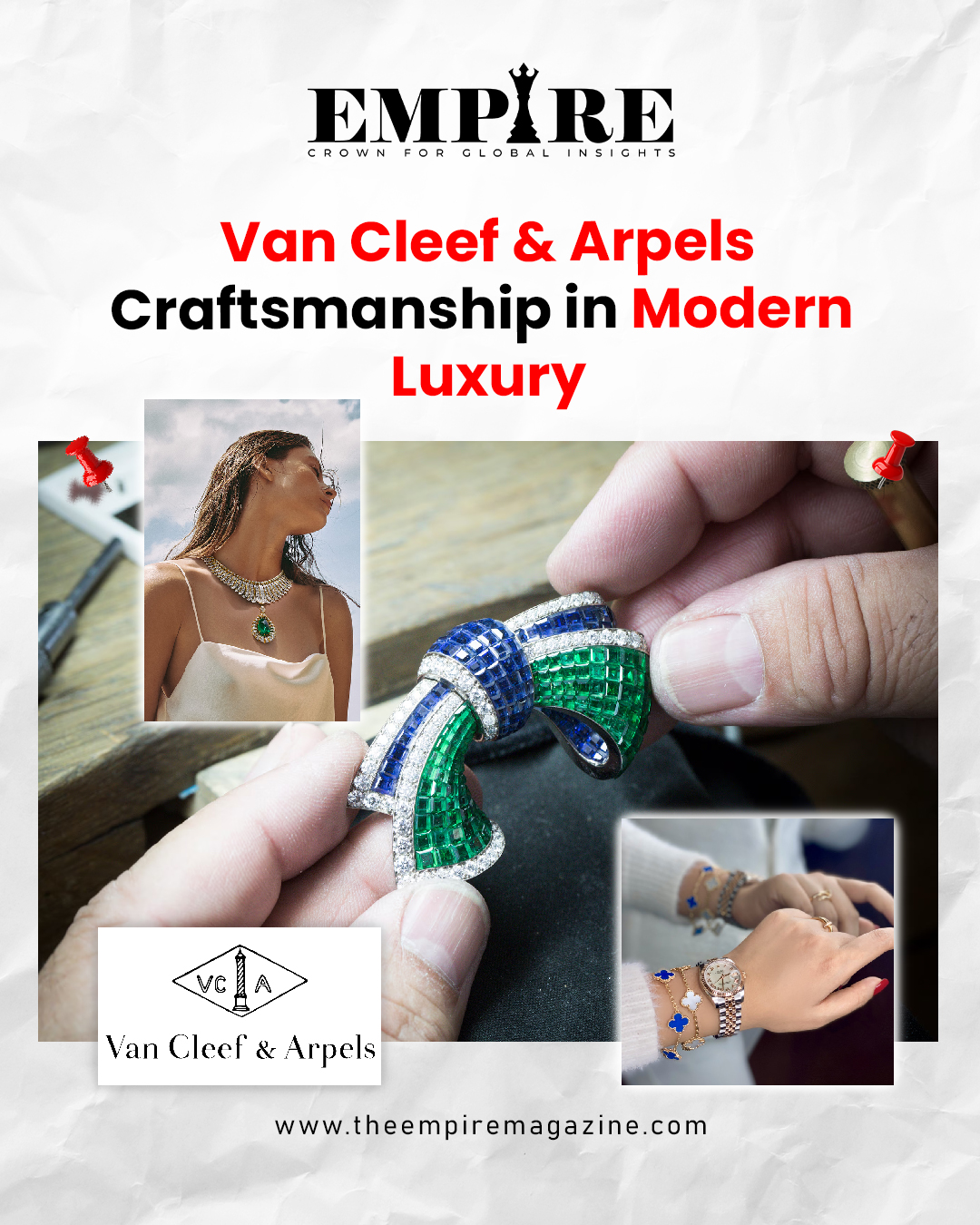
One of Van Cleef & Arpels’ most famous innovations is the Mystery Set. The maison patented this technique in 1933. It allows gemstones to be set in a way that hides the metal structure, making the stones appear as a smooth surface of colour.
Van Cleef & Arpels explains that the technique uses gold rails into which specially cut stones are individually inserted. Rubies, sapphires, emeralds, and diamonds can be used in this process. The result is a seamless visual effect that requires extreme precision.
Why the Mystery Set Matters
The Mystery Set matters because it shows how craftsmanship can become brand identity. This technique is difficult, time-consuming, and closely associated with Van Cleef & Arpels.
Luxury clients value such techniques because they show human skill and rarity. In a market where many products can look similar, technical craftsmanship creates distinction.
Alhambra and Everyday Luxury
The Alhambra collection is one of Van Cleef & Arpels’ most recognizable designs. First created in 1968, Alhambra is known for its four-leaf clover shape, often connected to luck, harmony, and timeless elegance.
The collection includes necklaces, bracelets, rings, earrings, and watches. Materials can include mother-of-pearl, malachite, onyx, carnelian, diamonds, and gold.
Why Alhambra Became Iconic
Alhambra became iconic because it is recognizable but refined. It is simple enough for everyday wear and meaningful enough to feel special. This balance helped the collection attract different generations of luxury consumers.
The success of Alhambra also shows how jewellery houses build long-term value. A strong design can remain desirable for decades when it is supported by craftsmanship, heritage, and consistent brand storytelling.
Nature, Poetry, and Storytelling
Van Cleef & Arpels often draws inspiration from nature, dance, fairy tales, astronomy, and romance. Flowers, butterflies, birds, ballerinas, fairies, and celestial symbols appear across its jewellery and watch collections.
Emotional Luxury
This storytelling approach gives the maison emotional power. A jewel is not only a precious object; it can represent love, luck, movement, memory, or imagination.
Modern luxury consumers often want meaning as well as material value. Van Cleef & Arpels uses storytelling to create emotional connections around its designs.
Jewellery as Richemont’s Growth Strength
Richemont has become increasingly dependent on jewellery as one of its strongest business areas. The group’s jewellery maisons include Cartier, Van Cleef & Arpels, Buccellati, and Vhernier. Reuters reported that Richemont’s jewellery sales rose 14% in a recent quarter, far ahead of the 1% growth in its watch division, helping the group outperform several luxury competitors.
Richemont also reported strong momentum in its jewellery maisons, which continue to benefit from demand for high-end jewellery and branded luxury pieces. The group describes Van Cleef & Arpels as a maison known for high jewellery, stones, and the Mystery Set technique.
Why Jewellery Is Resilient
Jewellery is often more resilient than seasonal fashion because it carries emotional, cultural, and long-term value. Customers buy jewellery for weddings, anniversaries, inheritance, celebration, personal identity, and collecting.
High jewellery also attracts ultra-high-net-worth clients who may continue buying even when broader luxury demand slows. This makes jewellery an important growth engine for luxury groups.
Van Cleef & Arpels and Modern Luxury Consumers
Modern luxury consumers are more informed than before. They research brands, compare designs, study resale value, and look for authenticity. Van Cleef & Arpels benefits from this because its value is based on recognizable craftsmanship and design heritage.
Beyond Logo Luxury
Van Cleef & Arpels is not built around loud branding. Its pieces are recognized through shape, material, technique, and design codes. This fits a luxury market where many consumers prefer quiet elegance, craftsmanship, and lasting value.
The maison’s appeal comes from details that knowledgeable clients understand: stone quality, setting technique, finishing, proportion, movement, and storytelling.
High Jewellery and Client Relationships
High jewellery is a relationship-driven business. Clients often buy through private appointments, exclusive events, maison presentations, and long-term relationships with sales teams and specialists.
Van Cleef & Arpels uses high jewellery collections to showcase its most advanced craftsmanship. These pieces often include rare stones, complex settings, and poetic themes.
Private Luxury Experiences
In high jewellery, the buying experience matters almost as much as the product. Clients expect discretion, knowledge, personalization, and service. Luxury maisons build loyalty by offering access to exceptional pieces and memorable experiences.
This is why high jewellery remains a powerful business category. It creates deep relationships with top clients and reinforces the prestige of the maison.
Preserving Craft Knowledge
Van Cleef & Arpels also supports jewellery education through L’École, School of Jewelry Arts. The school was founded with the support of the maison and offers education around jewellery history, savoir-faire, and gemstones in cities including Paris, Hong Kong, and Dubai.
Education as Brand Culture
Jewellery education helps preserve craft knowledge and build appreciation for the field. It also strengthens the maison’s cultural role beyond selling products.
By supporting education, Van Cleef & Arpels reinforces the idea that jewellery is an art form connected to history, technique, and human skill.
Competition in High Jewellery
Van Cleef & Arpels competes with major jewellery houses such as Cartier, Bulgari, Tiffany & Co., Chopard, Harry Winston, Graff, Boucheron, Chaumet, and Piaget. Competition is strong because high jewellery clients expect originality, rarity, service, and exceptional quality.
Richemont’s Jewellery Portfolio Advantage
Richemont benefits from owning several strong jewellery maisons with different identities. Cartier is known for royal heritage and iconic collections. Van Cleef & Arpels is known for poetic craftsmanship and technical mastery. Buccellati brings Italian goldsmithing heritage, while Vhernier adds modern Italian jewellery design.
This portfolio gives Richemont depth across jewellery customers and markets.
Why Van Cleef & Arpels Matters in Luxury
Van Cleef & Arpels matters because it shows how craftsmanship remains powerful in modern luxury. In a world of digital marketing, fast trends, and global competition, the maison continues to build value through handwork, heritage, design codes, and emotional storytelling.
Its success proves that modern luxury is not only about scale. It is about trust, rarity, creativity, and the ability to turn materials into meaningful objects.
For more luxury and business insights, read this feature on The Empire Magazine.
Follow The Empire Magazine on Instagram and Facebook.
– The Empire Magazine
Crown For Global Insights