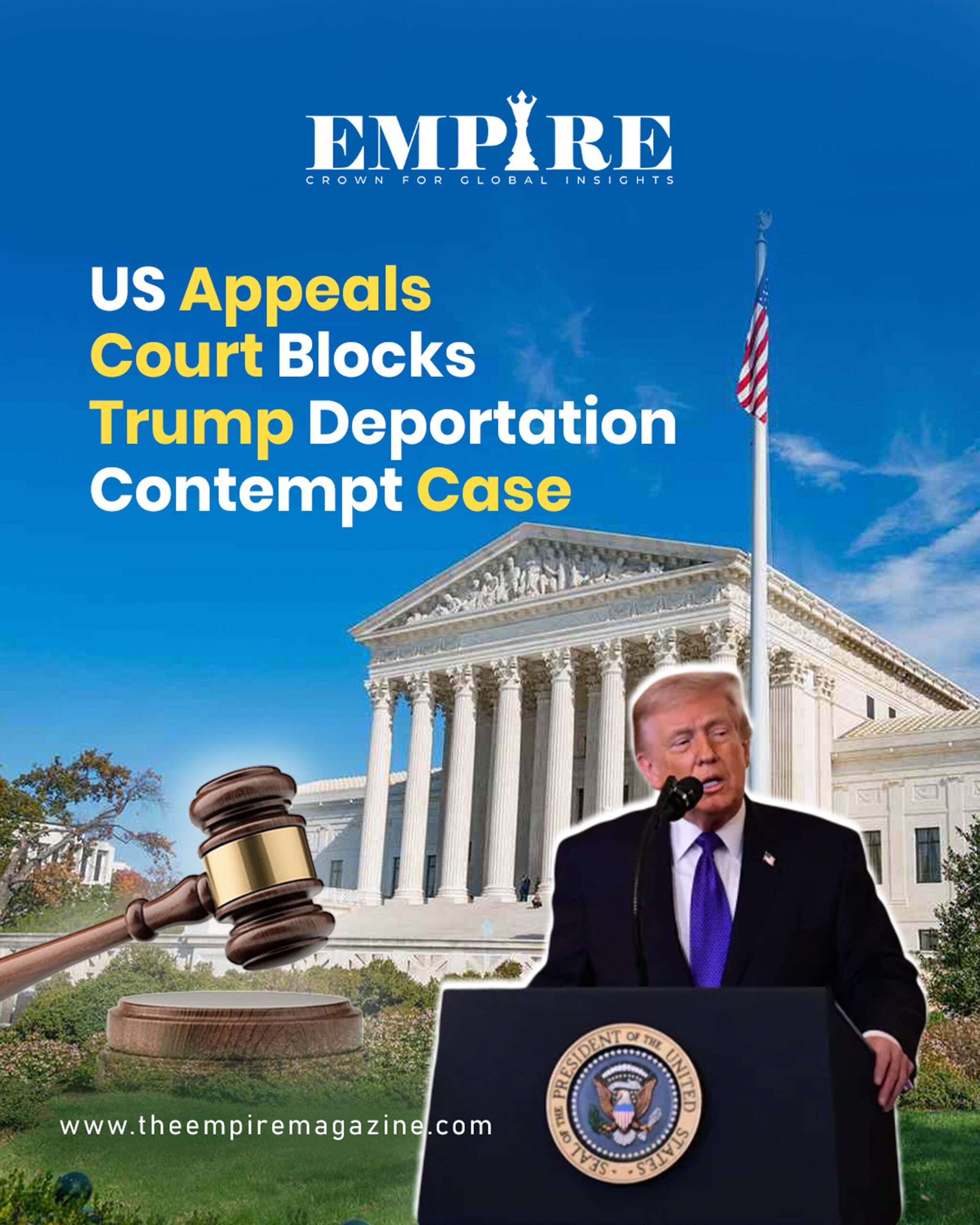
The US appeals court blocks Trump deportation contempt case in a decision that has reignited debate over executive authority, judicial oversight, and immigration policy. This ruling marks a significant moment in an ongoing legal and political conflict surrounding deportation flights carried out in March 2025, raising important questions about the balance of power within the American legal system.
At the center of the controversy is whether government officials violated a court order when deportation flights carrying Venezuelan migrants proceeded despite a temporary restraining order issued by a federal judge. The appeals court’s decision to halt contempt proceedings against the administration has added a new layer of complexity to an already contentious issue.
Background of the Deportation Case
The case originates from a series of deportation flights in March 2025, when over a hundred Venezuelan nationals were removed from the United States and transferred to El Salvador. These individuals were accused by authorities of having links to criminal organizations.
A federal district judge had issued an emergency order instructing authorities to halt or turn around the flights while legal proceedings were underway. However, the flights continued, leading to allegations that the administration had ignored or violated the court’s directive.
This situation triggered a potential criminal contempt investigation aimed at determining whether officials acted willfully in defiance of the court’s authority.
Appeals Court Decision
In a divided ruling, the appeals court concluded that the lower court judge had overstepped his authority by pursuing contempt proceedings. The majority opinion emphasized that criminal contempt requires a clear and specific violation of a court order.
According to the ruling, the original directive did not explicitly prohibit transferring the migrants into foreign custody. As a result, the appeals court determined that further investigation into contempt charges was not legally justified.
The judges also expressed concern that the inquiry could intrude into sensitive areas such as national security and diplomatic decision-making. They argued that such investigations could lead to unnecessary exposure of high-level government deliberations.
Legal Interpretation and Key Arguments
The decision largely hinged on how the court order was interpreted. The majority opinion stated that for contempt charges to apply, the directive must be unambiguous. Since the order did not clearly prohibit the specific actions taken, the administration could not be held in criminal contempt.
On the other hand, dissenting voices argued that the ruling undermines judicial authority. Critics believe that allowing such interpretations could weaken the ability of courts to enforce their decisions, particularly in cases involving executive actions.
This divergence in opinion highlights a broader legal debate about how strictly court orders should be interpreted and enforced.
The Role of Executive Power
The case also brings attention to the scope of executive authority in matters of immigration and national security. The deportations were carried out under a rarely used legal framework that grants the government broad powers during times of perceived threat.
Supporters of the administration argue that such authority is necessary to ensure national security and maintain control over immigration processes. They believe that the executive branch must have the flexibility to act quickly in critical situations.
However, critics argue that this approach risks bypassing due process and undermining legal protections for individuals. They contend that even in matters of security, government actions must remain subject to judicial oversight.
Impact on Migrants and Due Process
The deportation flights have raised serious concerns about the rights of the individuals involved. Legal representatives argued that the migrants were not given sufficient opportunity to challenge their removal, potentially violating their right to due process.
Some claims also suggested that individuals were misidentified or wrongly accused, highlighting the risks of rapid decision-making in complex legal cases.
The broader implication is the need for a balance between enforcing immigration laws and protecting individual rights within the legal framework.
Political and Institutional Tensions
This case has become a flashpoint in the ongoing tension between different branches of government. The executive branch has defended its actions, while the judiciary has sought to assert its authority in reviewing those actions.
The appeals court’s decision reflects how deeply divided opinions can be within the legal system itself. It also underscores the political dimensions of immigration policy, which often intersect with legal and constitutional issues.
Such conflicts are not uncommon, but they play a crucial role in shaping how laws are interpreted and applied in the future.
Broader Implications for the Legal System
The ruling may have long-term implications for how courts handle contempt proceedings and enforce compliance with their orders. If court directives are interpreted narrowly, it could limit the judiciary’s ability to hold officials accountable.
At the same time, the decision reinforces the importance of clarity in legal language. Judges may need to ensure that their orders are explicit and comprehensive to avoid ambiguity in enforcement.
This case could also influence future disputes involving executive actions, particularly in areas related to national security and immigration.
What Lies Ahead
While the appeals court has halted the contempt proceedings, the legal battle may not be over. Further appeals or reviews could still take place, potentially bringing the case before higher judicial authorities.
Additionally, the issues raised by this case are likely to continue influencing public debate and policy discussions. Questions about executive power, judicial oversight, and individual rights remain central to the broader conversation.
For more insights, visit:
https://theempiremagazine.com/?p=6024
Stay connected with us:
Instagram: https://www.instagram.com/the_empire_magazine/
Facebook: https://www.facebook.com/profile.php?id=61573749076160
– The Empire Magazine
Crown For Global Insights