
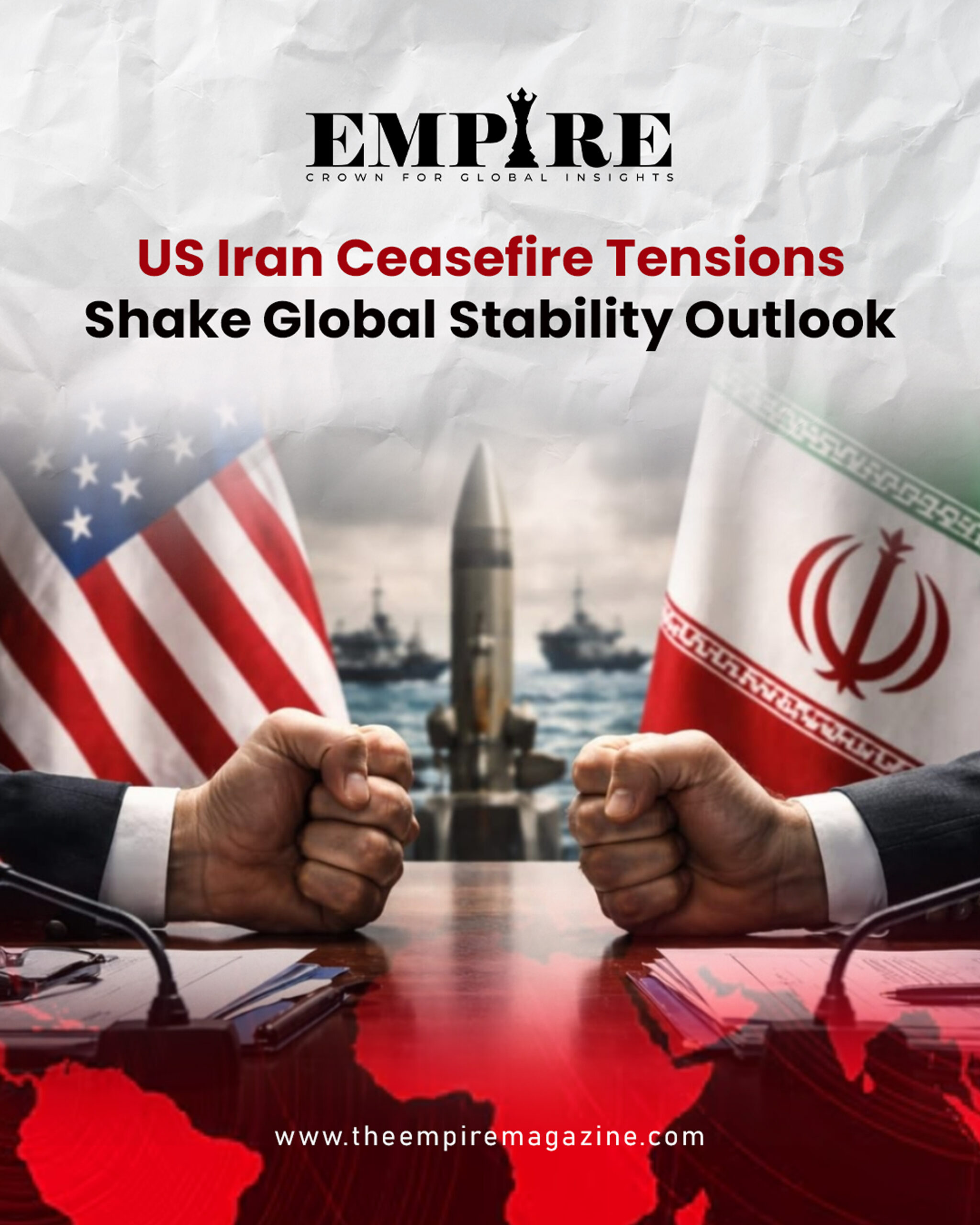
US Iran Ceasefire tensions shake global stability outlook as conflict escalates, impacting oil markets, diplomacy, and geopolitical balance worldwide.
US Iran Ceasefire tensions shake global stability outlook as uncertainty continues to grow in the Middle East. What initially appeared to be a temporary pause in conflict has quickly turned into a fragile and unpredictable situation, with rising mistrust, renewed military actions, and stalled diplomatic efforts threatening to undo any progress made.
The current environment highlights a critical reality in global geopolitics: ceasefires are not resolutions. They are often just pauses in a larger conflict, and without trust, cooperation, and clear agreements, they can collapse just as quickly as they are formed.
A Fragile Ceasefire Under Pressure
The ongoing ceasefire between the United States and Iran was designed to reduce tensions and create space for negotiations. However, the situation has rapidly deteriorated due to conflicting actions and accusations from both sides.
Recent developments indicate that Iran has expressed no intention of participating in upcoming negotiations, signaling a breakdown in diplomatic momentum.
At the same time, the United States has continued strategic actions in the region, including intercepting and seizing an Iranian cargo vessel attempting to bypass maritime restrictions. This move has been viewed by Iran as a violation of the ceasefire, further escalating tensions.
The result is a dangerous cycle: actions provoke reactions, and reactions deepen mistrust.
The Collapse of Diplomatic Confidence
Diplomacy relies on trust, consistency, and mutual commitment. In this case, all three elements appear to be weakening.
Iran has openly questioned the seriousness of diplomatic efforts, pointing to continued military and economic pressure as evidence that negotiations are not being pursued in good faith. On the other hand, the United States maintains a strategy focused on increasing pressure to achieve strategic concessions.
This disconnect has created a scenario where:
- Negotiations are uncertain or delayed
- Agreements are viewed with skepticism
- Each side prepares for escalation rather than compromise
Without a shared commitment to dialogue, ceasefires lose their purpose.
Strategic Moves and Military Signaling
One of the most critical triggers in the current situation is the interception of an Iranian cargo ship. The action involved disabling the vessel and taking control after warnings were reportedly ignored.
From a strategic perspective, this move serves multiple purposes:
- Enforcing maritime control
- Demonstrating military capability
- Sending a message of deterrence
However, from Iran’s perspective, it is perceived as aggression and a direct violation of the ceasefire agreement.
In response, Iran has indicated that it may retaliate, including reports of drone activity targeting US vessels. Although no significant damage has been reported, the symbolic impact is clear: tensions are escalating, and the risk of direct confrontation is increasing.
Global Economic Impact: Oil Markets React
One of the most immediate consequences of rising tensions is volatility in global energy markets.
The Strait of Hormuz, a critical shipping route for global oil supply, has become a focal point of uncertainty. Any disruption in this region has a direct impact on oil prices and global trade.
Recent developments have already led to:
- A surge in oil prices
- Increased market uncertainty
- Declining investor confidence
Energy markets are highly sensitive to geopolitical risk. Even the possibility of disruption can trigger significant price fluctuations, affecting economies worldwide.
For businesses and governments, this creates challenges in:
- Cost management
- Supply chain planning
- Economic forecasting
The Role of Geopolitics in Escalation
Beyond the immediate conflict, the situation reflects a broader geopolitical struggle. The Middle East remains a region of strategic importance, with global powers closely monitoring developments.
Countries with economic and political interests in the region are responding cautiously, calling for renewed dialogue and stability. However, competing interests and alliances complicate efforts to achieve a unified approach.
This multi-layered dynamic means that the conflict is not just bilateral—it has global implications.
Why Ceasefires Often Fail
The current situation highlights several reasons why ceasefires can fail:
Lack of Clear Agreements
Ceasefires that do not address core issues tend to be temporary. Without clear terms and enforcement mechanisms, violations become more likely.
Absence of Trust
Trust is essential for any agreement. When parties believe the other side is acting in bad faith, cooperation becomes impossible.
Continued Strategic Pressure
Maintaining economic or military pressure during a ceasefire undermines its effectiveness and signals a lack of commitment to peace.
External Influences
Geopolitical interests from other nations can complicate negotiations and create additional challenges.
The Risk of Escalation
As the ceasefire approaches its end, the risk of escalation increases. Both sides appear to be preparing for multiple scenarios, including the possibility of renewed conflict.
Key risks include:
- Direct military confrontation
- Disruption of global trade routes
- Increased regional instability
Even small incidents can trigger larger consequences in such a volatile environment.
The Path Forward: Can Stability Be Restored?
Despite the current challenges, there are still opportunities to de-escalate tensions. However, this requires a shift in approach from both sides.
Rebuilding Trust
Confidence-building measures are essential to restore faith in the negotiation process.
Clear Communication
Transparent and consistent communication can reduce misunderstandings and prevent unnecessary escalation.
Focus on Long-Term Solutions
Short-term ceasefires must be supported by long-term agreements addressing core issues.
International Mediation
Neutral parties can play a critical role in facilitating dialogue and ensuring accountability.
Lessons for Global Stability
The ongoing tensions offer important lessons for global diplomacy and conflict management:
- Ceasefires are only effective when supported by genuine commitment
- Military actions during negotiations undermine trust
- Economic and geopolitical factors play a major role in conflict dynamics
- Stability requires collaboration, not confrontation
These lessons are relevant not just for this conflict but for global diplomacy as a whole.
For more insights, visit:
https://theempiremagazine.com/?p=6053
Stay connected:
Instagram: https://www.instagram.com/the_empire_magazine/
Facebook: https://www.facebook.com/profile.php?id=61573749076160
– The Empire Magazine
Crown For Global Insights