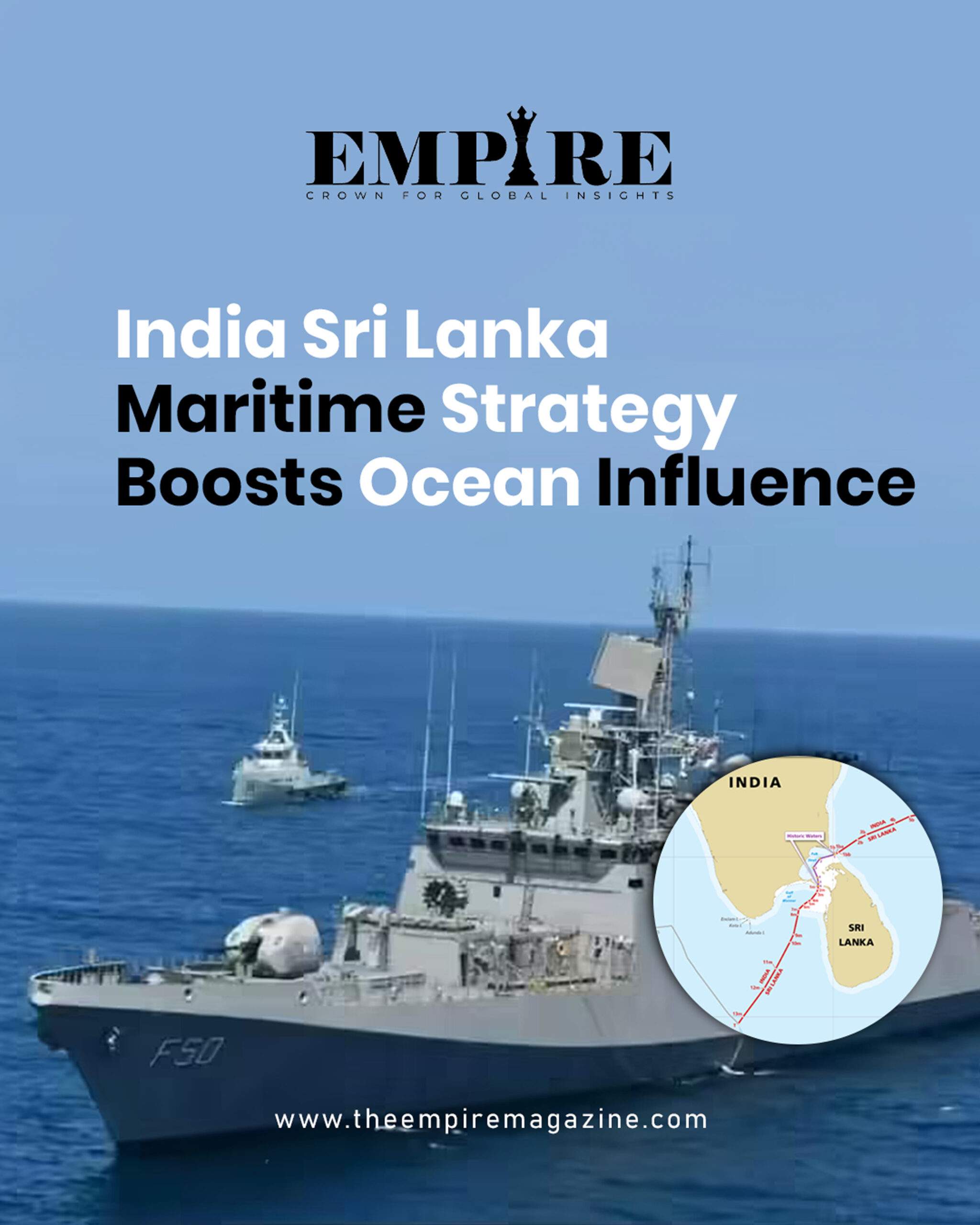
The India Sri Lanka maritime strategy is rapidly emerging as a key pillar in reshaping power dynamics across the Indian Ocean region. As global trade routes become more competitive and geopolitics intensifies, India is strengthening its presence in Sri Lanka through strategic investments, partnerships, and infrastructure expansion.
This growing engagement is not only about economic cooperation but also about securing critical maritime routes, enhancing logistics capabilities, and countering increasing foreign influence in the region. The developments reflect a broader vision where India aims to position itself as a dominant maritime power while ensuring long-term supply chain resilience.
A Strategic Shift in the Indian Ocean
The Indian Ocean has become one of the most important global trade corridors, connecting major economies across Asia, Africa, and Europe. For India, maintaining a strong presence in this region is essential for both economic growth and national security.
The India Sri Lanka maritime strategy highlights a shift from passive engagement to active investment. By strengthening ties with Sri Lanka, India is creating a multi-layered presence that includes cargo operations, energy logistics, and shipbuilding capabilities.
This approach allows India to secure its maritime interests while building long-term partnerships with a neighboring country that holds strategic geographic importance.
Key Investments Strengthening Maritime Presence
One of the most significant developments in this strategy is the acquisition of a controlling stake in Colombo Dockyard PLC by Mazagon Dock Shipbuilders Limited. This move marks the first overseas shipyard acquisition by an Indian company and represents a major milestone in India’s maritime expansion.
With this acquisition, India gains operational control over a major shipyard facility located within the Port of Colombo. The facility includes multiple dry docks capable of handling large vessels, enabling ship repairs, maintenance, and construction activities.
In addition, the Dredging Corporation of India has partnered with the dockyard to provide dry docking, fleet upgrades, and repair services. This collaboration strengthens operational integration and ensures that Indian shipping assets can rely on regional infrastructure for maintenance.
These investments demonstrate how the India Sri Lanka maritime strategy is evolving into a comprehensive ecosystem rather than isolated projects.
Countering Regional Influence
A major driving force behind India’s growing involvement in Sri Lanka is the need to counter external influence in the region. Sri Lanka has long been a focal point for global maritime investments due to its strategic location along key shipping routes.
The presence of long-term foreign-controlled port infrastructure in the region has raised concerns about balance and influence. In response, India’s multi-layered investments aim to create a counterbalance by strengthening its own footprint.
Rather than focusing on a single sector, India is building an integrated presence that includes:
- Port operations and cargo handling
- Fuel and energy logistics
- Shipbuilding and maintenance
- Infrastructure development
This diversified approach ensures that India’s influence is sustainable and resilient.
Expanding Logistics and Supply Chain Capabilities
Another critical aspect of the India Sri Lanka maritime strategy is the focus on supply chain security. Global trade disruptions and geopolitical tensions have highlighted the importance of reliable logistics networks.
By investing in Sri Lanka’s port ecosystem, India is creating alternative routes and support systems for its maritime operations. This reduces dependency on external hubs and enhances efficiency in cargo movement.
The development of container terminals, fuel infrastructure, and ship repair facilities ensures that India can support its trade activities across the Indian Ocean. These capabilities are particularly important in times of uncertainty, where access to reliable logistics infrastructure becomes a strategic advantage.
Economic and Commercial Benefits
While the geopolitical implications are significant, the economic benefits of this strategy are equally important. The investments are expected to boost trade, create jobs, and improve infrastructure in both countries.
The operationalization of modern container terminals has already increased cargo handling capacity and throughput. This not only benefits Indian trade but also strengthens Sri Lanka’s position as a regional logistics hub.
Furthermore, the integration of shipbuilding and repair services creates new revenue streams and enhances maritime capabilities. This collaboration supports long-term economic growth while fostering stronger bilateral relations.
Challenges and Areas for Improvement
Despite the progress, there are challenges that India must address to fully realize the potential of its maritime strategy. One of the key issues is the competitiveness of domestic ports.
A significant portion of India’s container cargo is still routed through foreign ports due to higher costs and limited infrastructure at home. This highlights the need for:
- Modern deep-draft port infrastructure
- Competitive pricing structures
- Improved efficiency in cargo handling
- Enhanced logistics connectivity
Strengthening domestic capabilities will complement overseas investments and create a more balanced maritime ecosystem.
The Role of Strategic Vision
India’s maritime expansion is aligned with its long-term vision of becoming a global maritime hub. The strategy focuses on building self-reliance while enhancing international partnerships.
The acquisition of overseas assets, development of logistics infrastructure, and integration of maritime services all contribute to this vision. By leveraging its geographic position and economic potential, India is positioning itself as a key player in global trade.
The India Sri Lanka maritime strategy is a crucial component of this broader vision, serving as a gateway to expanded influence across the Indian Ocean.
Future Outlook
Looking ahead, the partnership between India and Sri Lanka is expected to deepen further. Additional investments, technological integration, and policy coordination will play a key role in shaping the future of this collaboration.
Emerging trends such as digital logistics, green shipping, and smart port technologies are likely to influence the next phase of development. By embracing innovation, both countries can enhance efficiency and sustainability in maritime operations.
At the same time, maintaining a balance between economic growth and strategic interests will be essential for long-term success.
For more insights, visit:
https://theempiremagazine.com/?p=6020
Stay connected with us:
Instagram: https://www.instagram.com/the_empire_magazine/
Facebook: https://www.facebook.com/profile.php?id=61573749076160
– The Empire Magazine
Crown For Global Insights