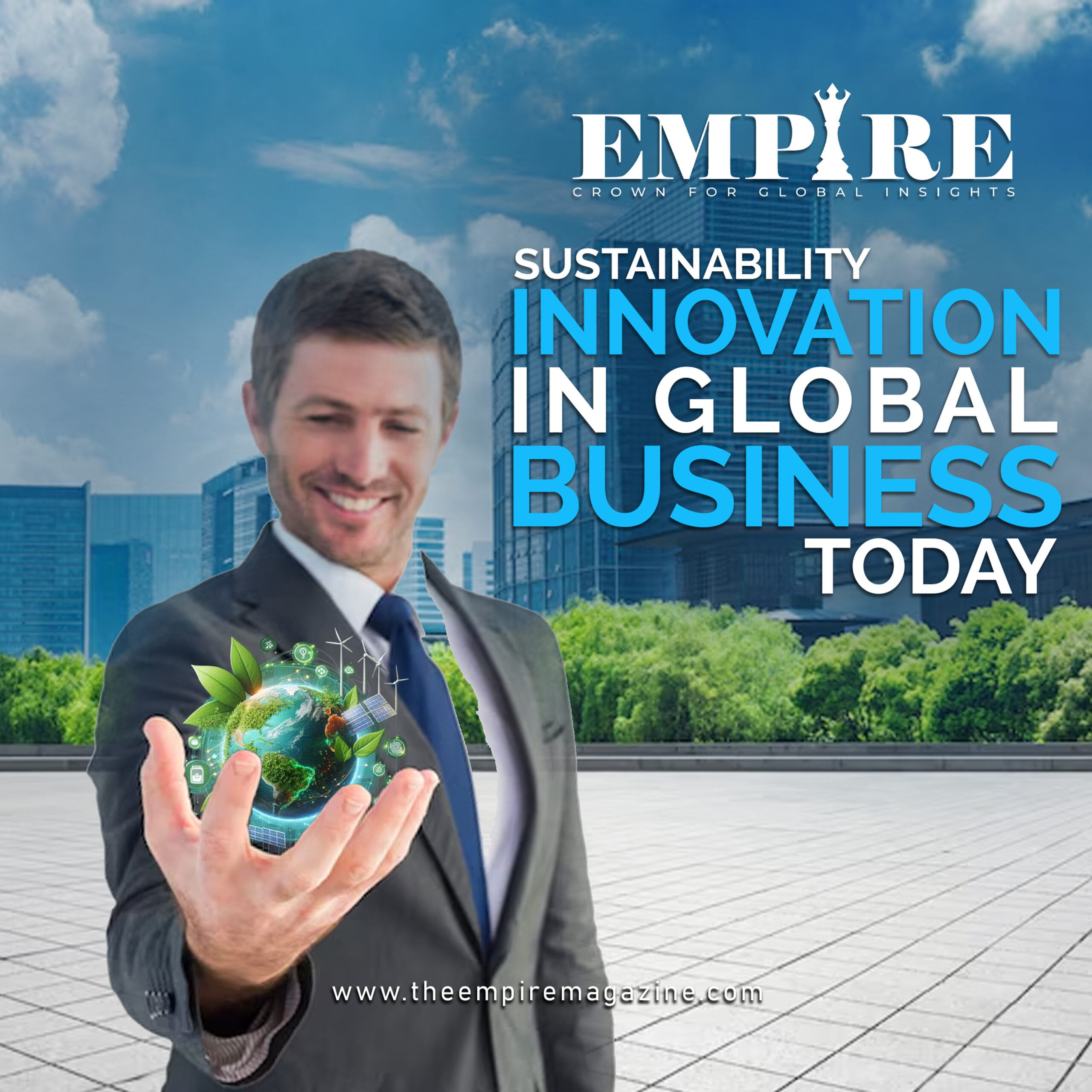
Sustainability is no longer a side initiative reserved for corporate social responsibility reports. It has become a defining force in modern strategy. Across industries, Sustainability Innovation in Global Business is reshaping how companies design products, manage supply chains, allocate capital, and compete in international markets.
From energy and automotive to finance and technology, global enterprises are embedding sustainability into their core business models. What was once viewed as a regulatory obligation is now recognized as a strategic advantage. The companies that innovate responsibly are gaining trust, attracting investment, and positioning themselves for long-term growth.
From Compliance to Competitive Advantage
For decades, sustainability was often treated as compliance-driven. Businesses focused on meeting environmental regulations and reducing reputational risk. Today, the approach is fundamentally different.
Organizations are realizing that sustainable innovation can reduce operational costs, unlock new revenue streams, and differentiate brands in competitive markets. Renewable energy adoption lowers long-term expenses. Circular supply chains reduce waste and improve efficiency. Sustainable product lines attract environmentally conscious consumers.
The shift reflects a broader understanding: sustainability is not an expense—it is an investment in resilience.
Tesla and the Transformation of Mobility
One of the clearest examples of Sustainability Innovation in Global Business is Tesla. By prioritizing electric mobility and sustainable energy solutions, Tesla redefined the automotive industry.
Rather than adapting to sustainability trends, Tesla built its entire model around them. Electric vehicles, battery storage systems, and solar energy integration represent not just product innovation but systemic change.
The company’s approach forced traditional automotive manufacturers to accelerate their own electric strategies. Today, nearly every major carmaker is investing heavily in electric vehicle development, demonstrating how sustainability-driven innovation can disrupt entire industries.
Tesla’s trajectory illustrates a powerful truth: when sustainability is embedded in corporate DNA, it becomes a driver of transformation rather than a marketing claim.
Investor Pressure and ESG Evolution
Global investors are increasingly integrating Environmental, Social, and Governance (ESG) criteria into decision-making. Asset managers and institutional investors now assess sustainability performance alongside financial metrics.
Companies that demonstrate strong environmental responsibility often gain improved access to capital. Sustainable innovation signals long-term viability, reducing perceived investment risk.
As discussed in our related feature on corporate transformation and global leadership trends:
https://theempiremagazine.com/?p=5415
Modern business strategy increasingly integrates purpose, innovation, and financial performance.
This alignment between profitability and responsibility defines the new era of corporate leadership.
Consumer Expectations Are Changing
Consumers are more informed and value-driven than ever before. Purchasing decisions increasingly reflect environmental awareness. Brands that demonstrate transparency in sourcing, manufacturing, and emissions reduction build stronger customer loyalty.
Younger generations, particularly Millennials and Gen Z, prioritize sustainability when choosing products and employers. For global businesses, ignoring this shift risks losing both market share and talent.
Sustainable innovation extends beyond environmental metrics—it encompasses ethical sourcing, fair labor practices, and community impact.
Technology as an Enabler of Sustainability
Technological advancements are accelerating Sustainability Innovation in Global Business. Artificial intelligence optimizes energy efficiency. Blockchain enhances supply chain transparency. Data analytics improves resource management.
Smart grids, renewable energy storage systems, and sustainable manufacturing technologies are reshaping infrastructure worldwide. Companies that invest in clean technology are not only reducing emissions but also improving operational resilience.
Innovation in materials science has also enabled biodegradable packaging, sustainable textiles, and energy-efficient construction.
The intersection of technology and sustainability is driving a new wave of industrial transformation.
Corporate Culture and Sustainable Leadership
Embedding sustainability into business strategy requires cultural change. Leadership teams must align corporate goals with environmental objectives.
Sustainable leadership involves:
- Setting measurable carbon reduction targets
- Encouraging cross-functional innovation
- Investing in research and development
- Promoting transparency in reporting
Organizations that treat sustainability as a core value rather than a branding exercise foster stronger employee engagement and innovation.
Corporate boards increasingly oversee sustainability metrics, integrating them into performance evaluations and strategic planning.
Supply Chain Transformation
Global supply chains are undergoing profound restructuring. Companies are reassessing sourcing strategies to reduce environmental impact and enhance resilience.
Nearshoring, renewable energy integration, and circular production models reduce dependency on volatile resources. Waste reduction initiatives lower operational costs while strengthening brand reputation.
Sustainable supply chain innovation enhances both efficiency and accountability.
Regulatory and Global Policy Influence
Governments worldwide are tightening environmental regulations and introducing carbon pricing mechanisms. Companies that proactively invest in sustainability are better prepared for regulatory shifts.
Forward-thinking organizations view policy evolution not as a threat but as an opportunity to lead. Early adoption of green standards positions businesses ahead of compliance requirements.
Global climate agreements and corporate sustainability pledges reinforce the strategic importance of innovation in environmental responsibility.
The Future Outlook
The future of global business will be defined by resilience, adaptability, and responsible innovation. Sustainability Innovation in Global Business is not a passing trend—it is a structural transformation.
Organizations that integrate sustainability into strategy will gain:
- Stronger brand loyalty
- Increased investor confidence
- Operational efficiency
- Regulatory readiness
- Long-term competitiveness
The narrative has shifted from “why invest in sustainability?” to “how fast can we innovate responsibly?”
Companies that understand this evolution will shape the next decade of global commerce.
Sustainability is no longer optional—it is a business advantage.
– The Empire Magazine
Crown For Global Insights