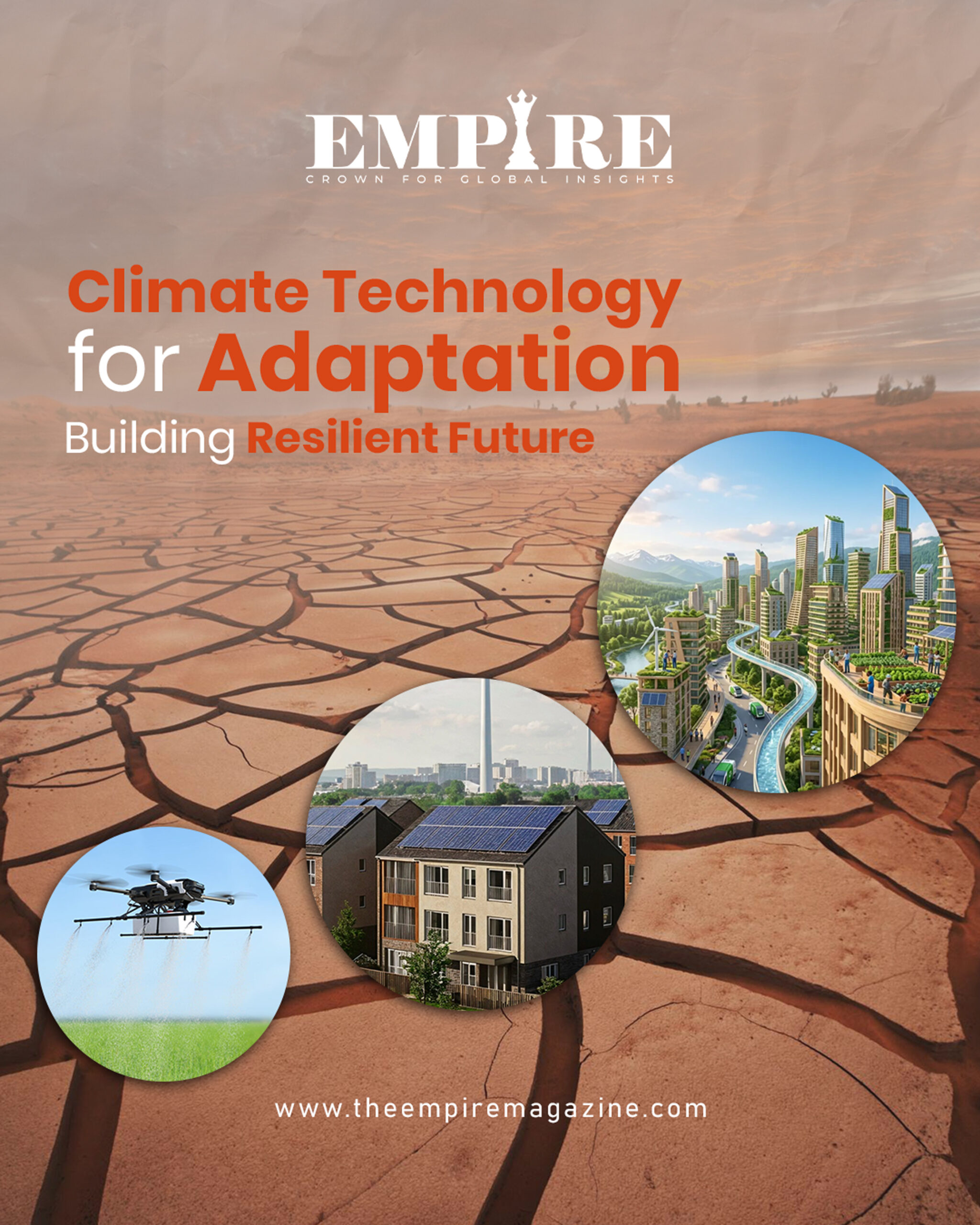
Climate technology for adaptation is rapidly emerging as one of the most powerful tools in addressing the real and immediate impacts of climate change. While reducing emissions remains critical, the world is already experiencing rising temperatures, extreme weather events, unpredictable rainfall, floods, and droughts. These challenges demand not only prevention but also adaptation. Today, climate technology for adaptation is helping communities prepare, respond, and thrive in a changing environment.
Understanding Climate Technology for Adaptation
Climate technology for adaptation focuses on creating practical solutions that help people and systems adjust to environmental changes. Instead of only trying to stop climate change, it equips societies with tools to manage its effects. From agriculture and water management to disaster response and urban planning, these technologies are turning risk into resilience.
Climate adaptation is no longer a distant concern—it is a present necessity. Farmers, governments, businesses, and individuals all require real-time data and intelligent systems to navigate environmental uncertainty. Climate technology bridges the gap between information and action, making resilience achievable on a large scale .
Transforming Agriculture with Smart Solutions
One of the most impactful applications of climate technology for adaptation can be seen in agriculture. Farmers across climate-sensitive regions often face unpredictable weather patterns, pest outbreaks, and water shortages. These challenges can lead to significant crop losses and financial instability.
Advanced technologies powered by artificial intelligence are changing this reality. By analyzing historical weather data and real-time conditions, predictive systems can generate accurate forecasts. These forecasts are then translated into actionable advice, such as when to plant crops, irrigate fields, or protect against pests.
When this information is delivered directly to farmers through mobile platforms, it empowers them to make informed decisions. The result is increased productivity, reduced losses, and improved livelihoods. Climate technology for adaptation is thus playing a crucial role in securing food systems and supporting rural economies.
Enhancing Water Security in a Changing Climate
Water scarcity is one of the most pressing challenges in many parts of the world. Climate technology for adaptation is addressing this issue by providing advanced tools for monitoring and managing water resources.
Modern systems use satellite data, sensors, and digital mapping to forecast drought conditions and track groundwater levels. This data allows communities and policymakers to take proactive measures before water shortages become critical.
For example, farmers can adjust irrigation schedules, and governments can plan resource distribution more effectively. By enabling early action, climate technology helps prevent crises and ensures sustainable water use in the long term .
Strengthening Disaster Preparedness and Response
Extreme weather events such as floods and storms are becoming more frequent and severe. Climate technology for adaptation is improving disaster management by enabling faster and more accurate responses.
In the past, weather data collection was often manual and slow, leading to delays in decision-making. Today, digital systems collect and transmit data in real time, allowing authorities to monitor rainfall, predict flood risks, and identify vulnerable areas.
Artificial intelligence analyzes this data to provide insights that can guide emergency planning. Early warning systems allow communities to evacuate in time, while disaster response teams can position resources more effectively. These advancements are not only saving property but also protecting human lives.
Preventing Wildfires with Early Detection
As global temperatures rise, the risk of wildfires has increased significantly. Climate technology for adaptation is helping to address this threat through early detection systems.
Modern solutions use solar-powered monitoring towers, sensors, and connected networks to identify potential fire risks. These systems can detect changes in temperature, smoke, and environmental conditions, providing early alerts to authorities.
Early detection enables faster response times, reducing the spread of fires and minimizing damage. It also improves evacuation planning and communication, ensuring that communities are better prepared for emergencies.
The Role of Advanced Technologies
Several emerging technologies are enhancing the effectiveness of climate technology for adaptation:
- Internet of Things (IoT): Enables real-time monitoring of soil, water, and environmental conditions.
- Remote Sensing: Drones and satellites provide detailed insights into land use and environmental changes.
- Blockchain: Improves transparency in environmental data and carbon tracking systems.
- Renewable Energy: Supports sustainable infrastructure and reduces dependency on fossil fuels.
These technologies work together to create integrated solutions that address multiple aspects of climate adaptation. They not only improve efficiency but also enable smarter decision-making across industries.
Opportunities for Innovation and Growth
Climate technology for adaptation is not just a solution—it is also an opportunity. Businesses and entrepreneurs are increasingly recognizing the potential of this sector.
In regions like India, where climate challenges are intensifying, there is a growing demand for innovative solutions. From resilient agriculture systems to advanced risk modeling tools, new products and services are emerging to address these needs.
This creates a dynamic ecosystem where technology, sustainability, and economic growth intersect. Companies that invest in climate adaptation technologies are not only contributing to environmental resilience but also unlocking new market opportunities.
Challenges in Scaling Climate Technology
Despite its potential, climate technology for adaptation faces several challenges. One of the primary issues is funding. Adaptation projects often receive less investment compared to mitigation efforts because their benefits are harder to quantify.
Additionally, these technologies can be expensive and may require customization to suit local conditions. What works in one region may not be effective in another. This makes scalability a complex process.
To overcome these challenges, collaboration is essential. Governments, private companies, and communities must work together to develop policies, provide funding, and ensure that solutions are accessible to those who need them most.
The Future of Climate Resilience
The future of climate technology for adaptation lies in its ability to integrate seamlessly into everyday life. As these technologies become more accessible and affordable, they will play a central role in building resilient communities.
The focus must be on expanding these solutions, tailoring them to local needs, and ensuring that they reach vulnerable populations. By doing so, climate technology can transform the way societies respond to environmental challenges.
For more insights into global innovation and sustainability, visit:
https://theempiremagazine.com/?p=5993
Stay connected with us:
Instagram: https://www.instagram.com/the_empire_magazine/
Facebook: https://www.facebook.com/profile.php?id=61573749076160
– The Empire Magazine
Crown For Global Insights